Basiran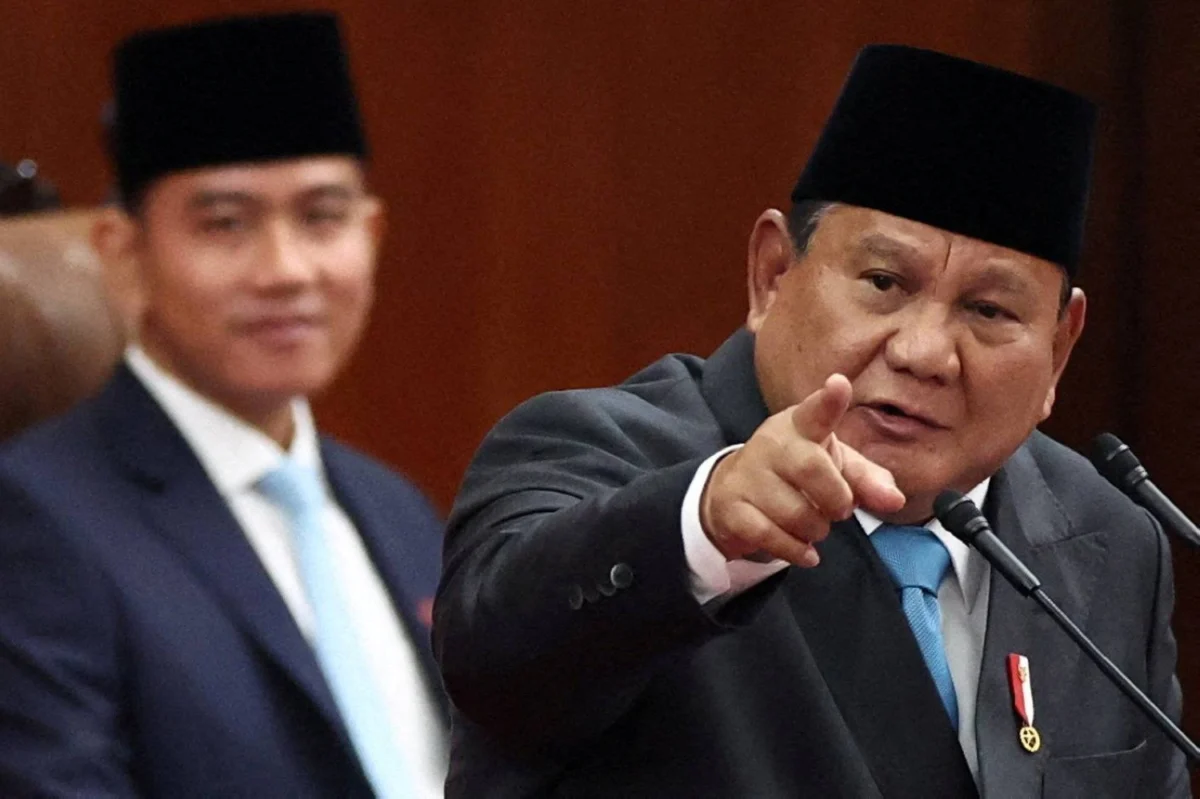
JAKARTA – In a move that has sent shockwaves through global supply chains and commodities trading houses, the Indonesian government has announced a radical shift in its economic architecture. President Prabowo Subianto, addressing the national parliament on Wednesday, unveiled a sweeping mandate to seize direct control over the export of the nation’s primary commodities. The policy, which aims to dismantle the long-standing intermediary system, marks a defining moment for Southeast Asia’s largest economy as it moves toward an era of aggressive resource nationalism.
For decades, Indonesia’s vast wealth—ranging from nickel and coal to palm oil—has been mediated by a complex network of global traders, logistics firms, and financial intermediaries. These actors, often based in Singapore, Switzerland, or London, have traditionally managed the logistics, trade financing, and export negotiations. President Prabowo’s administration now intends to bypass these middlemen, arguing that the country is hemorrhaging billions of dollars in "lost value" that could be recaptured to fuel national development.
The Core Mandate: Reclaiming the Value Chain
At the heart of the government’s 2027 fiscal plan is the establishment of a state-led mechanism to manage the outbound flow of raw materials. President Prabowo, a former general who assumed the presidency in 2024, has framed this as a matter of economic sovereignty.
"The era of our raw materials serving the balance sheets of foreign intermediaries while our own infrastructure and social programs suffer is coming to an end," Prabowo told parliament, with Vice President Gibran Rakabuming Raka observing from the podium.
The government’s rationale is built on the premise that a significant portion of the price spread between the pit-head and the global port is captured by entities that add little to the actual manufacturing process. By centralizing the export process, the state intends to leverage its position as a primary supplier to dictate terms, standardize shipping logistics, and retain a larger share of the "commodity rent."
A Chronology of Resource Nationalism
To understand the gravity of this shift, one must look at the trajectory of Indonesian economic policy over the last decade:
- 2014–2019: The "Downstreaming" Initiative. Under the previous administration, Indonesia began banning the export of raw nickel ore to force domestic processing, successfully turning the country into a global hub for electric vehicle (EV) battery components.
- 2024: Inauguration of President Prabowo. Campaigning on a platform of "Strong State, Prosperous People," Prabowo signaled a departure from the relatively liberalized trade policies of his predecessors, favoring a more interventionist approach to the national balance sheet.
- 2025: Strategic Assessment. The government launched a secret commission to audit the "lost value" in commodity exports, identifying billions in potential revenue lost to financing costs, insurance premiums, and speculative trading fees.
- 2026 (May): The Parliamentary Address. President Prabowo officially formalizes the shift, signaling that the state will take an active role in the physical and financial logistics of major commodity exports by 2027.
Supporting Data: The Cost of Intermediation
The government’s case for state intervention rests on a series of audits suggesting that Indonesia’s reliance on foreign intermediaries has historically eroded its GDP potential.
According to preliminary data released by the Ministry of Trade and Finance, the "intermediary tax"—the cumulative cost of third-party logistics, international trade financing, and foreign-denominated insurance—has accounted for an estimated 7% to 12% of the total export value of Indonesia’s top ten commodities. In the context of 2025 export volumes, this represents a multi-billion-dollar deficit that the government believes can be redirected into the state treasury.
Furthermore, proponents of the plan point to the volatility of global commodity markets. By controlling the export flow, the government argues it can implement "buffer zones" that stabilize prices for domestic producers, preventing the boom-and-bust cycles that have historically plagued rural communities in Kalimantan and Sumatra.
Official Responses and Political Friction
The announcement has elicited a polarized response from the international community and domestic stakeholders.

The Government Stance:
Finance Minister Sri Mulyani Indrawati has defended the plan as a "pragmatic necessity." In a follow-up briefing, she emphasized that the state is not seeking to eliminate private enterprise but to "level the playing field." She stated, "We are establishing a National Commodities Board that will integrate logistics and finance. We are not blocking trade; we are optimizing it for the Indonesian taxpayer."
The Industry Perspective:
Conversely, international trading houses have expressed deep concern. A representative from a major Singapore-based commodity house, speaking on condition of anonymity, noted, "This is not just a policy shift; it is a structural takeover. The complexity of moving bulk commodities involves deep expertise in maritime law, international arbitration, and credit risk. Replacing that with a state bureaucracy carries a significant risk of bottlenecking supply chains."
Domestic Business Sentiment:
Within Indonesia, the reaction is mixed. Large state-owned enterprises (SOEs) in the energy and mining sectors have welcomed the move, seeing it as an expansion of their influence. However, smaller private exporters fear that the move will lead to "red tape overload," where the state may prioritize political allies for export licenses, effectively creating a new class of state-sanctioned monopolies.
Implications: The Risks of the "General’s Economics"
President Prabowo’s approach has been widely described as a return to a more authoritarian, centralized model of governance. For international investors, the primary concern is the predictability of the rule of law.
1. Supply Chain Disruption
If the government successfully forces all exports through state-managed conduits, the risk of "logistical paralysis" is high. Global markets rely on the speed and reliability of private traders. Any transition period characterized by bureaucratic friction could lead to supply shortages in markets like China, Japan, and the European Union, potentially triggering a spike in global prices for nickel, palm oil, and coal.
2. Geopolitical Leverage
By controlling the "tap" of these raw materials, Indonesia is essentially turning its commodities into a geopolitical instrument. This provides Jakarta with significant leverage in trade negotiations with the West and the Global South. However, it also invites retaliation, including potential trade disputes at the World Trade Organization (WTO), where Indonesia has already faced challenges regarding its nickel export bans.
3. The Institutional Challenge
The success of this plan depends entirely on the state’s ability to manage operations that were previously handled by agile, profit-driven entities. If the state-managed system becomes inefficient or corrupt, the very revenue the government seeks to capture may evaporate through administrative overhead and mismanagement.
The Path Ahead: A Test of State Capacity
As Indonesia approaches 2027, the global business community will be watching closely. The move is a bold, high-stakes gamble that echoes the developmental states of the 20th century. For President Prabowo, the goal is clear: to ensure that the wealth generated by Indonesia’s soil remains firmly within its borders.
However, the transition involves more than just legislation; it requires the creation of a massive, efficient, and transparent logistics infrastructure capable of replacing the world’s most sophisticated trading networks. Whether this will lead to a new era of national prosperity or a stifling of the country’s export engine remains the most pressing question in the region’s economic landscape.
For now, the government has set its course. The transition teams are being assembled, and the legislative framework for the "National Commodity Directive" is expected to be fast-tracked through the parliament by the end of the year. The global commodity markets, meanwhile, remain in a state of cautious uncertainty, bracing for a new reality where the hand of the Indonesian state is no longer just a regulator, but the merchant itself.


 Neng Nana
 Asro
Asro