

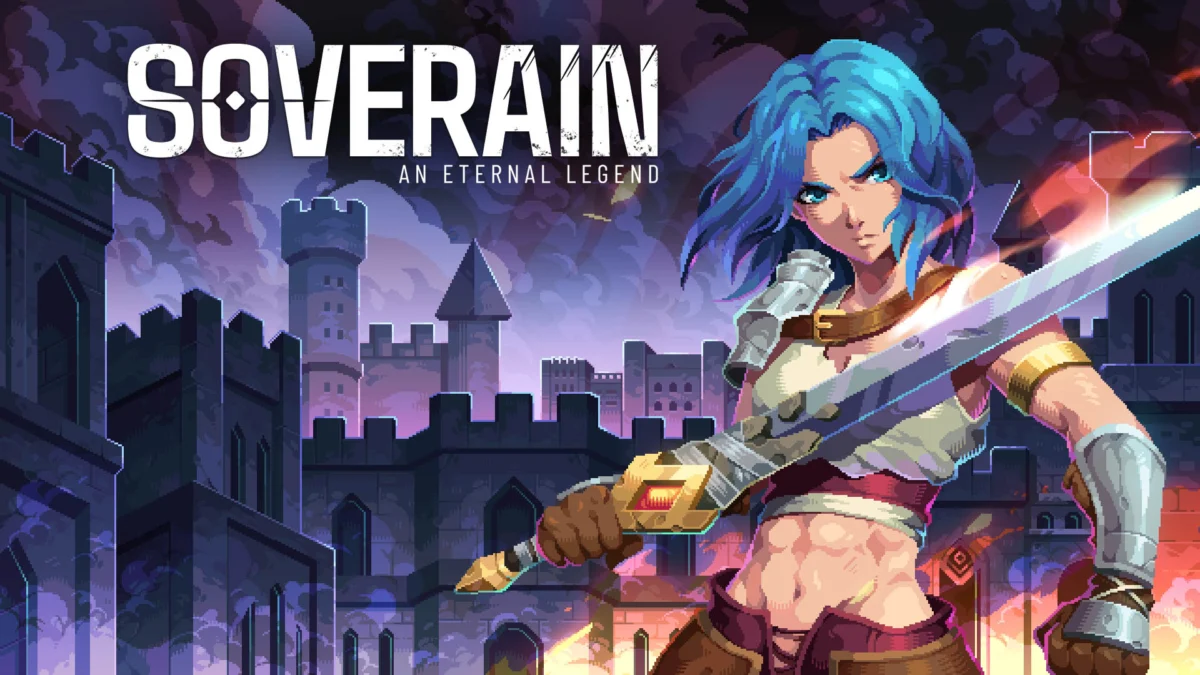
In the crowded landscape of indie gaming, where tactical RPGs often lean heavily on high-fantasy tropes or dungeon-crawling mechanics, a new project is emerging with a focus on something more nuanced: the gravity of political inheritance. Indie developer Jonathan Brassaud has officially pulled back the curtain on Soverain: An Eternal Legend, a title that marries the nostalgic aesthetic of retro pixel art with the complex, high-stakes narratives of courtly intrigue and dynastic turmoil.
Currently in development for Windows PC via Steam, Soverain: An Eternal Legend is not merely a game about combat; it is a game about the cost of power. As Brassaud seeks to bring the final pieces of his vision to life, he has launched a crowdfunding campaign on Kickstarter, inviting the community to take part in the creation of a world where every tactical decision could shift the balance of a kingdom.
The Narrative Foundation: A World Divided by Heaven and Earth
At the heart of Soverain lies a world defined by a fractured history. Thousands of years ago, a cataclysmic event shattered the barrier between the celestial heavens and the terrestrial soil, forcing the Bohmaj—divine entities once dwellers of the sky—to integrate with the Selcans, the mortal inhabitants of the earth. What was initially viewed as a blessing of divine contact eventually curdled into a landscape of suspicion.
As the centuries passed, the reverence for the celestial visitors transitioned into existential fear, and faith dissolved into the machinery of war. The continent now exists in a state of "fragile peace," a political stalemate managed by powerful noble houses.
The story finds its catalyst in the sudden, mysterious death of Samon Lenastie, the Lord of Eracline. His passing creates an immediate power vacuum, threatening to plunge the region back into the chaos of its ancient conflicts. The narrative follows the Lord’s younger son, Conor, who—in a subversion of the traditional "chosen one" trope—actively rejects the throne. His journey is driven not by a lust for power, but by the search for his missing brother, whom he believes is the only rightful heir to the crown. However, as is the way in such tales, Conor’s personal quest serves as the spark that ignites a long-smoldering powder keg, forcing him to navigate a web of alliances, betrayals, and tactical warfare.
Chronology of Development: From Concept to Campaign
The journey of Soverain has been one of calculated iteration. Jonathan Brassaud, serving as the lead architect of this project, has spent significant time refining the visual language and mechanical systems that define the game.
- Initial Concept Phase: Brassaud began by establishing the world-building lore, specifically the mythology of the Bohmaj and the Selcans, ensuring that the political tension felt rooted in the game’s history rather than grafted on as an afterthought.
- Visual Prototyping: Recognizing the market’s affinity for high-quality pixel art, the team focused on creating a distinct, readable visual style that could convey both the intimacy of character dialogue and the scale of tactical battlefield engagements.
- Gameplay Core: The tactical engine was developed with an emphasis on turn-based strategy, ensuring that unit positioning, terrain, and unit synergy are paramount.
- The Kickstarter Milestone: With the core mechanics in place and the narrative framework established, Brassaud turned to Kickstarter to secure the necessary funding to finalize assets, polish the soundtrack, and expand the game’s scope. The crowdfunding campaign represents the final hurdle in transitioning from a passion project to a retail-ready title.
Supporting Data: Why Tactical RPGs Persist
The tactical RPG (TRPG) genre remains a titan of the gaming industry, largely because it appeals to the player’s desire for agency and intellectual engagement. Data from the last decade of indie development indicates that players are increasingly drawn to "complex systems" games.
According to market analysis, titles that feature heavy narrative elements alongside grid-based combat (similar to Final Fantasy Tactics, Tactics Ogre, or Triangle Strategy) see a high retention rate because they offer replayability through character builds and branching decision-making. Soverain fits into this "Golden Era" resurgence of tactical games, leveraging the nostalgia of 16-bit graphics while providing the depth of modern storytelling. By focusing on political intrigue, Brassaud is positioning the game to compete with titles that prioritize player choice, suggesting that the game’s success will likely hinge on how effectively the player feels the "weight" of their decisions on the map.

Official Perspectives and Creative Vision
In the reveal trailer provided by Brassaud, the aesthetic direction of Soverain is immediately apparent. The pixel art is dense, colorful, and emotive, opting for a style that evokes the charm of 90s-era classics while utilizing modern lighting and particle effects to give the world a sense of atmosphere.
While the developer has kept the specifics of the combat mechanics somewhat guarded, the official documentation highlights "forging bonds" as a key feature. This implies that the tactical gameplay will be deeply tied to the social simulation aspect of the game. If the characters share a bond, they likely perform better in combat; if a character is betrayed or neglected, the tactical consequences could be dire. This "interpersonal-to-tactical" pipeline is what sets Soverain apart from more standard, combat-focused TRPGs. It suggests that the game isn’t just about winning a battle; it’s about maintaining the social fabric of your army during a period of civil unrest.
Implications for the Indie Sector
The rise of projects like Soverain: An Eternal Legend signals a healthy maturation in the indie development space. Developers are no longer just looking to replicate the mechanics of the past; they are looking to replicate the feeling of the past while adding modern narrative complexity.
If successful, Soverain will serve as a case study for how to effectively leverage Kickstarter to complete a mid-budget, high-concept indie game. The implications for the industry are significant:
- Audience Retention: By focusing on political drama, Brassaud is catering to an audience that values mature, thoughtful storytelling over purely twitch-based gameplay.
- Aesthetic Longevity: The choice of high-quality pixel art ensures that the game will likely age gracefully, maintaining its visual appeal long after its release, a key factor in long-term sales for indie titles.
- Community-Driven Development: The Kickstarter campaign acts as a barometer for player interest. If the funding goals are met, it proves that there is a robust, vocal community waiting for more titles in the political tactical RPG sub-genre.
Looking Ahead: The Path to Launch
As of late May 2026, the Kickstarter campaign is the focal point for all interested parties. For fans of the genre, the opportunity to support the project is more than just a pre-order; it is an investment in a specific type of storytelling that is often overlooked by AAA publishers who prefer the safety of standardized action-adventure loops.
The game is currently listed on Steam, and the developer has been active in providing updates regarding the development roadmap. As we move closer to the release, the focus will undoubtedly shift to how Brassaud balances the high-minded political narrative with the mechanical rigors of the tactical combat. Will the "fragile peace" of the world hold, or will the player’s actions lead to the ultimate collapse of the Lenastie legacy?
Soverain: An Eternal Legend is a testament to the enduring power of the tactical RPG genre. It asks the player to consider not just how to win a fight, but why they are fighting in the first place. With a compelling blend of divine lore, familial drama, and deep strategy, Jonathan Brassaud’s project is one to watch closely as it navigates its way toward a full release. For those interested in the intricacies of court intrigue and the tactical mastery of the battlefield, the road to Eracline is open—and the crown is waiting for a claimant.









No comments yet. Be the first to join the conversation!