

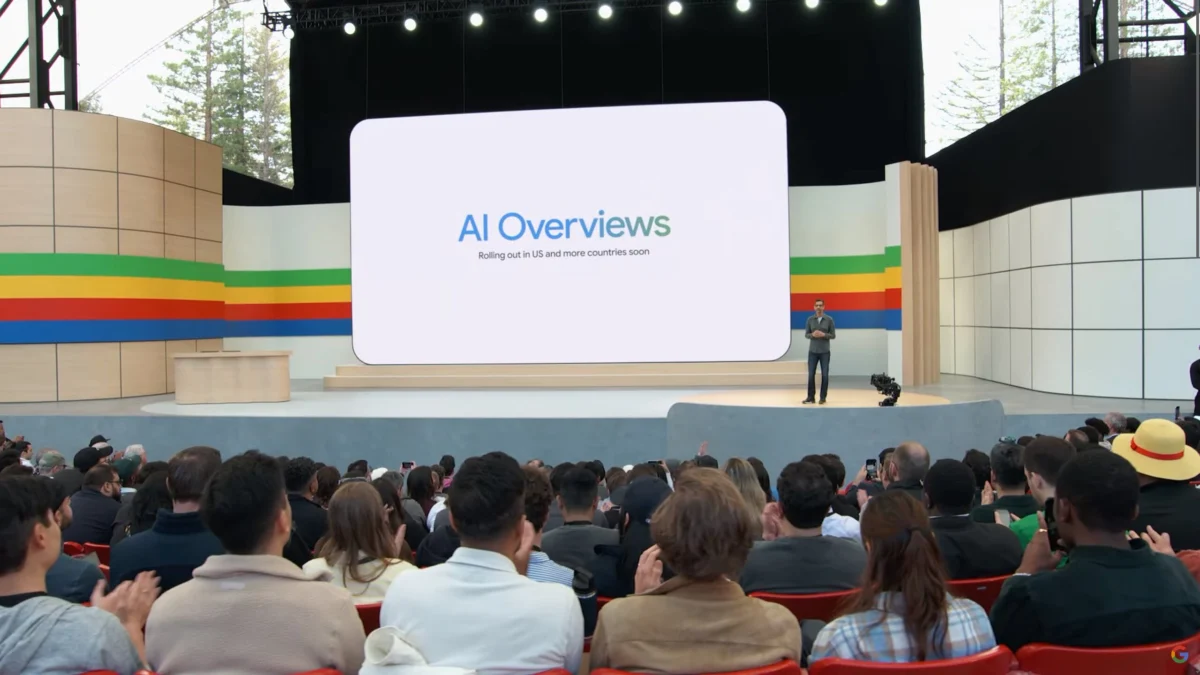
The relationship between search engines and the publishers who populate the web has reached a pivotal juncture. For decades, the implicit social contract was simple: publishers provided content, and Google provided traffic. However, the rise of generative AI—specifically Google’s "AI Overviews" and "AI Mode"—has disrupted this dynamic, as the search giant increasingly answers user queries directly on its results page, potentially siphoning traffic away from the original sources.
Responding to mounting pressure from regulators and the publishing industry, Google has announced a significant policy shift. The company is introducing new controls within Google Search Console that allow website owners to opt out of having their content used to power generative AI search results. While this move offers a newfound sense of agency to webmasters, it underscores the complex tug-of-war between technological innovation and the economic sustainability of the open web.
The Core Development: Opt-Out Controls and Transparency
Google’s latest update, unveiled via an official blog post, introduces a dedicated toggle within the Google Search Console. This control empowers site owners to prevent their pages from being utilized in Google’s generative AI features, which include AI Overviews and the newer AI Mode.
The mechanism is designed to be straightforward, yet the implications are profound. By toggling this switch, publishers can effectively "wall off" their content from the LLM-driven synthesis that characterizes modern Google search. Crucially, Google has provided assurances that this opt-out mechanism will not function as a negative ranking signal. In other words, a website that chooses to opt out of AI training or synthesis will not see its traditional, link-based search ranking penalized.
This separation of "generative usage" from "crawling and indexing" is an attempt to mitigate concerns that Google might prioritize sites that feed its AI engine while marginalizing those that do not. However, the trade-off is stark: if a site opts out of AI-generated results, it will no longer receive traffic or visibility from those specific AI-driven interfaces.
Chronology: From AI Revolution to Regulatory Scrutiny
The path to this announcement has been marked by rapid technological deployment followed by intense industry backlash.
- May 2024: Google unveiled its comprehensive AI Overviews integration at the Google I/O developer conference. CEO Sundar Pichai positioned the feature as a way to "do the searching for you," promising a more intuitive and conversational search experience.
- Summer 2024: As AI Overviews rolled out to a wider audience, complaints from publishers began to mount. Analytics firms reported drops in organic traffic for information-heavy websites, as users no longer needed to click through to a source to get an answer to basic questions.
- Late 2024: The UK’s Competition and Markets Authority (CMA) initiated an investigation into the impact of generative AI on digital markets. The regulator expressed concerns that the dominance of AI search tools could lead to a "fairness gap" for content creators.
- Early 2025: Following formal discussions and a regulatory nudge from the CMA, Google agreed to provide more granular control to publishers.
- Present Day: Google is now beginning a phased rollout of these controls, starting with a limited group of UK-based publishers, with global availability promised in the near future.
Supporting Data: The Scale of AI Integration
To understand why these controls matter, one must look at the sheer volume of traffic currently mediated by Google’s AI features. Google recently disclosed that its AI Overviews tool now serves over 2.5 billion monthly active users. Meanwhile, its dedicated AI Mode has surpassed one billion monthly users.
These figures represent a massive shift in how the global population consumes information. When billions of queries are filtered through a generative model, the "click-through rate" (CTR) for traditional websites becomes a critical economic metric. By providing new insights within Search Console—specifically data on impressions and views derived from AI search—Google is attempting to quantify the value it provides.
Industry analysts suggest this is a tactical move: by showing publishers how much exposure they receive via AI, Google hopes to convince them that the traffic, while different in nature, is still valuable enough to justify remaining in the ecosystem.
Official Responses and Regulatory Pressure
The move was not entirely voluntary. The UK’s CMA played a decisive role in forcing Google’s hand. In its official statement, the CMA highlighted the need for a "fairer deal for publishers," arguing that search engines must not abuse their market position to unilaterally consume content without providing a clear pathway for compensation or consent.
Google’s communication, however, focuses on the "partnership" aspect. The company has emphasized that it is simultaneously rolling out features meant to help publishers, such as increasing the density of inline links within AI responses. These links are intended to drive traffic back to the source, acting as a compromise between the speed of an AI summary and the necessity of traffic for publishers. Furthermore, the introduction of "Preferred Sources" labels in AI responses is another effort to reward authoritative content, theoretically incentivizing publishers to keep their content accessible to the AI.
The Implications: A New Era for Digital Publishing
The introduction of these controls carries significant long-term implications for the internet economy:
1. The "Quality vs. Visibility" Dilemma
Publishers now face a difficult decision. If they opt out, they protect their content from being "scraped" or synthesized, potentially preserving the value of their unique brand voice and long-form journalism. However, they also lose potential visibility in the fastest-growing segment of the search market. For smaller sites, this could result in a catastrophic drop in traffic. For larger, brand-heavy sites, opting out might be a statement of principle that protects their long-term content strategy.
2. The Fragmentation of the Search Experience
If a significant percentage of the web opts out of AI synthesis, the quality of Google’s AI Overviews will inevitably decline. If the AI cannot access the best, most proprietary, or most up-to-date information because those sites have gated themselves, the "answers" provided will become increasingly generic or outdated. This creates a potential "race to the bottom" for AI search quality, which might force Google to reconsider how it compensates publishers for their contributions.
3. A Precedent for Regulatory Intervention
This case serves as a landmark for future AI regulation. By establishing that publishers have the right to opt out of generative training/synthesis, the CMA and Google have set a legal precedent. Other regulators in the European Union and the United States will likely look to this framework as a template for future legislation regarding Large Language Models (LLMs) and intellectual property.
4. Evolution of Search Engine Optimization (SEO)
The role of the SEO professional is undergoing a transformation. Traditionally, SEO was about ranking for keywords. In the age of AI, it is becoming about "AI Optimization"—ensuring that a site is not only indexable but also favored by the model as a reliable source for synthesis. The ability to toggle off AI access adds a new layer of strategy to this discipline, forcing businesses to decide which parts of their content should be public, which should be behind a paywall, and which should be shielded from AI synthesis.
Conclusion: A Delicate Balance
Google’s decision to allow website owners to opt out of AI-generated results is a victory for publisher agency, but it is unlikely to solve the fundamental tension between search engines and content creators. The internet has grown on the back of free, accessible information, and the current transition to an AI-first web is testing the viability of that model.
As Google continues to test these controls, the industry will be watching closely. Will publishers choose to opt out in droves, or will the allure of AI-driven impressions prove too great to resist? The answer to that question will define the next decade of web traffic, digital advertising, and the survival of independent journalism in an era where the machine, not the human, often gets the final word.
For now, the tool remains in its infancy, available to a select few. When it goes global, the web will face a reckoning. Whether the outcome is a more equitable digital ecosystem or a fractured, gated web remains to be seen. One thing is certain: the era of "blindly contributing to the search engine" is officially over.












No comments yet. Be the first to join the conversation!