

By Ayush Pande
Published May 24, 2026
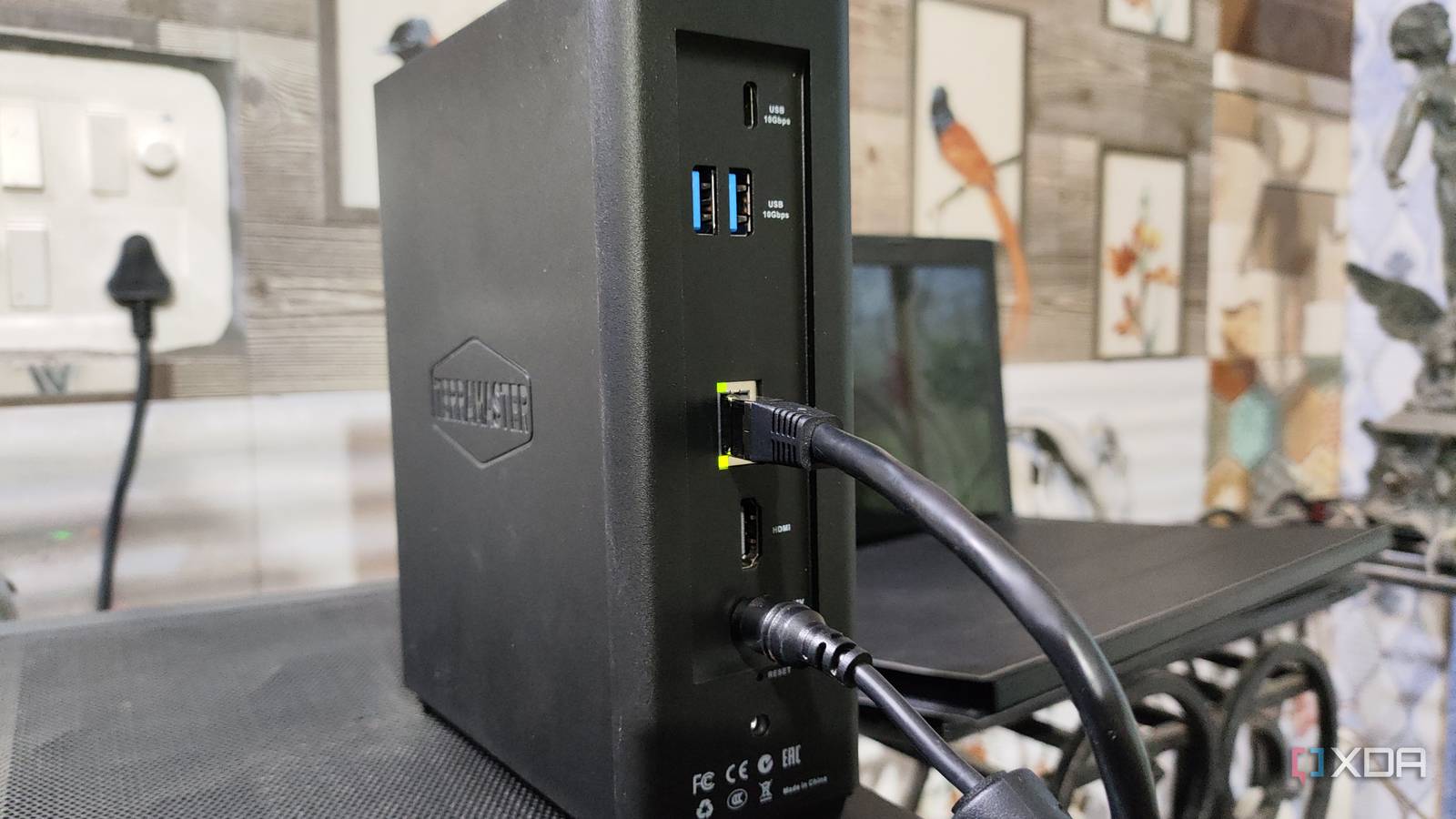
Modern Network-Attached Storage (NAS) units have evolved far beyond their humble origins as simple file repositories. Today’s high-end enclosures from brands like Synology, QNAP, and TerraMaster arrive equipped with a staggering array of connectivity options, ranging from high-speed 10GbE networking to multi-gigabit USB 3.2 Gen 2×2 and even 40Gbps Type-C ports. For the uninitiated, these ports appear to be a goldmine for expansion—an effortless way to bolt on extra capacity when your internal SATA bays inevitably fill up.
However, relying on USB-connected drives for your primary storage pools is a fundamental architectural error. While technically possible, it is a practice that invites data corruption, performance bottlenecks, and catastrophic hardware failure. In this deep dive, we examine why the "USB-expansion" route is a path to disaster and explore the legitimate, niche ways those ports can actually serve your server environment.
The Illusion of Expansion: Main Facts and Technical Realities
The core appeal of a NAS is data integrity and persistent availability. We use RAID arrays, ZFS pools, and Btrfs snapshots to ensure that if a drive fails, our data remains accessible. When you introduce USB-powered hard drives or SSDs into this ecosystem, you introduce a volatile variable that is inherently incompatible with the rigorous demands of a 24/7 server environment.
The Protocol Mismatch
Internal drives connect via SATA or NVMe/PCIe interfaces, which offer direct, low-latency communication with the system’s bus. USB, by contrast, is a protocol designed for external peripherals. It relies on a bridge controller—a small chip that translates SATA/NVMe commands into USB protocols. This translation layer is a significant point of failure. It often masks crucial drive health information, rendering S.M.A.R.T. (Self-Monitoring, Analysis, and Reporting Technology) metrics inconsistent or entirely invisible to your NAS operating system. If your NAS cannot see the internal health of a drive, it cannot warn you of impending failure, leaving your data vulnerable to silent bit rot or sudden mechanical death.
The Reliability Paradox
The most dangerous aspect of USB-based storage is the physical connection. USB connectors are not designed for structural permanence; they are friction-fit interfaces. Over time, the subtle vibrations of a server rack or even a slight bump can cause a micro-disconnection. In a standard PC, this might result in a "Device Disconnected" chime. In a NAS, a momentary power or data blip during a write operation can lead to corrupted file systems, incomplete parity calculations, and the total collapse of a storage pool.

Chronology of a Failure: A Systemic Breakdown
To understand the implications, consider the lifecycle of a typical "USB-expanded" storage array:
- Deployment (Month 1): The user purchases a high-capacity external drive, plugs it into a USB 3.0 port, and mounts it to their NAS. Everything functions perfectly; the NAS recognizes the drive, and file transfers are snappy.
- The "Slow Creep" (Month 3): As the volume fills, the user notices increased latency. Because USB bandwidth is shared across the controller, simultaneous access to multiple external drives creates a bottleneck.
- The Silent Error (Month 6): A minor power fluctuation occurs. The USB bridge controller resets for a fraction of a second. The NAS OS, expecting a continuous mount, flags the drive as "Degraded" or "Offline."
- The Recovery Nightmare (Month 7): The user attempts to force-remount the drive. Because the write process was interrupted during a metadata update, the file system is now inconsistent. A manual file system check (fsck) is required, which may take days and potentially result in permanent data loss.
Supporting Data: Why USB Fails Where SATA Prevails
The engineering trade-offs between internal and external connections are stark. When you rely on USB, you bypass the error-correction and power-management features inherent in enterprise storage backplanes.
- Bandwidth Contention: A single USB 3.0 controller often manages multiple ports. When multiple drives are connected, they must fight for the same bandwidth, leading to performance dips that would never occur on a dedicated SATA lane.
- Power Delivery: USB ports are rarely designed to provide the sustained, stable voltage required by high-capacity mechanical HDDs. While a powered USB hub can mitigate this, it adds yet another point of failure—a cheap power brick that, if it fluctuates, can kill the connected drive instantly.
- Data Integrity: Modern file systems like ZFS rely on the ability to communicate directly with the drive hardware to verify checksums. USB bridges often "cache" writes or lie to the OS about completion status to improve benchmark scores, directly contradicting the safety protocols required for reliable data storage.
Official Perspectives and Industry Standards
Major NAS manufacturers, including Synology and QNAP, often include disclaimers in their documentation regarding the use of external drives. While they support USB drives for backup purposes (specifically for scheduled exports), they rarely, if ever, recommend or support using USB drives as part of a RAID volume or a primary storage pool.
Industry experts emphasize that "Backup" and "Storage" are distinct concepts. A backup is a secondary copy, intended to be offline or isolated. Storage is the active, live, and frequently accessed environment. When you use USB drives for live storage, you are essentially treating a temporary, volatile bridge as a permanent part of your production infrastructure.
The Only Acceptable Use-Case: Cold Backups
If USB drives have no place in a live storage pool, what are they good for? The answer is Cold Storage.
Using a USB drive as an offline, encrypted, and air-gapped backup target is the gold standard for home users who cannot afford a secondary, remote NAS unit. In this scenario, the drive is only connected during the backup window. Once the data is synced, it is disconnected and stored in a secure location. This methodology adheres to the 3-2-1 backup rule without risking the constant wear-and-tear of a permanent USB connection.
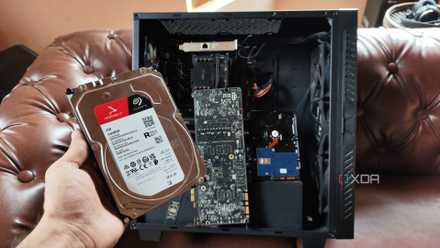
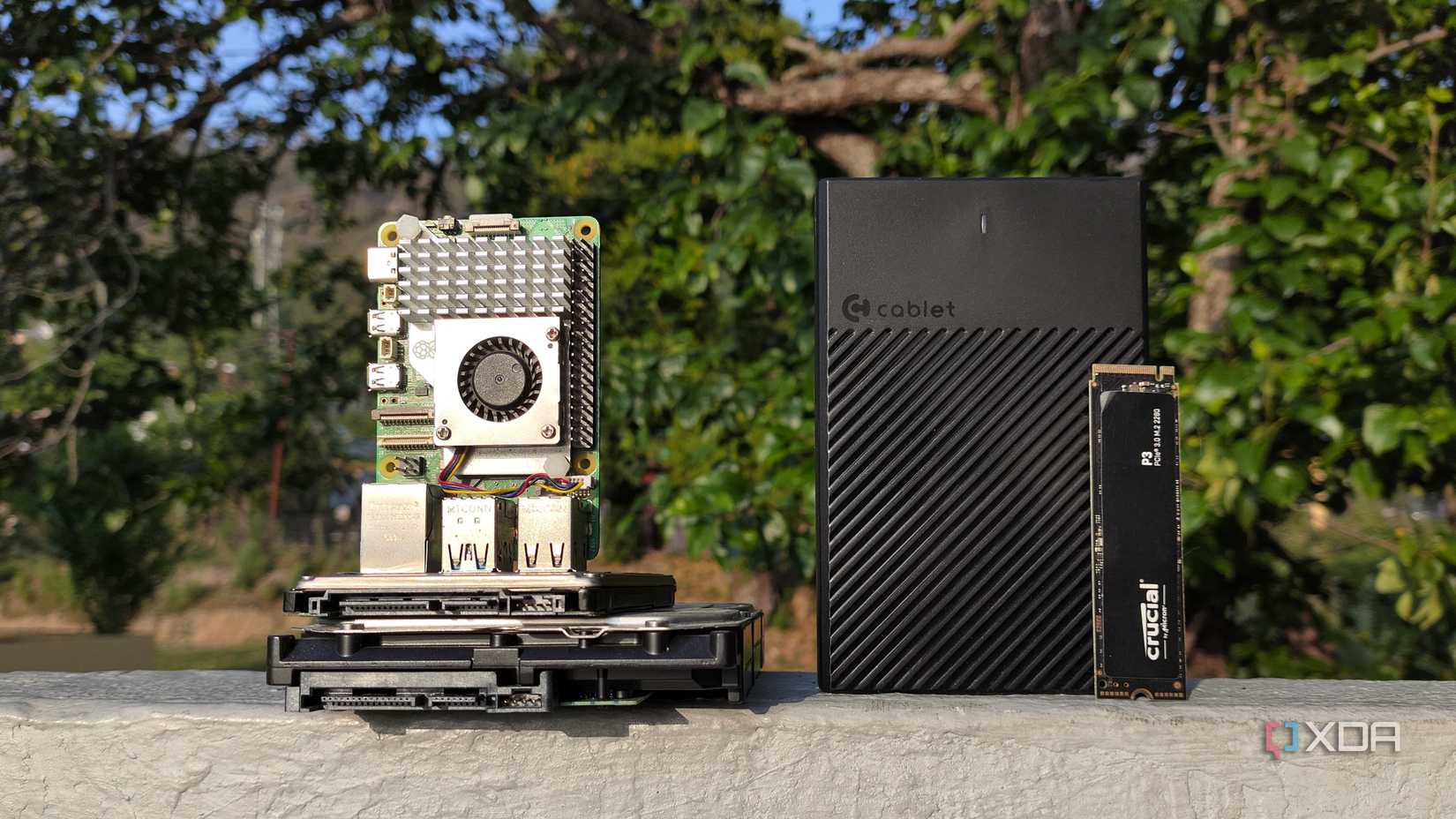
I have personally used this approach, employing a Raspberry Pi paired with two external HDDs as a tertiary backup server. Because this unit was an expendable "snapshot" of my primary data, a random disconnection during a sync was an annoyance, not a disaster. My production data remained safe on the primary server.
Niche Utility: Expanding Beyond Storage
While your NAS’s USB ports are ill-suited for heavy lifting in storage, they are remarkably powerful for specialized tasks that add functionality to your FOSS (Free and Open Source Software) arsenal.
1. The Coral Edge TPU
If you are running home surveillance via Frigate, you know the heavy computational load required for real-time object detection. While a dedicated GPU is ideal, not every NAS enclosure allows for internal PCIe expansion. Plugging a Google Coral Edge TPU into a USB port can drastically offload the CPU, enabling smooth detection for YOLOv9 and other complex models without requiring a motherboard upgrade.
2. Bluetooth for Home Assistant
Many home automation enthusiasts rely on Bluetooth Low Energy (BLE) for sensors, smart locks, and temperature monitors. If your NAS is running Home Assistant (via a container or virtual machine), a simple, low-cost Bluetooth dongle passed through to the VM can unlock a massive ecosystem of smart devices that would otherwise remain unreachable.
Implications for Future-Proofing
If you find yourself running out of storage bays, the correct professional approach is not to reach for a USB hub. Instead, look toward dedicated expansion units that connect via proprietary eSATA or SAS interfaces. These units mimic the behavior of internal drives, providing the necessary bus-level communication and S.M.R.T. transparency that USB lacks.
The temptation to save money by using external USB drives is high, but the cost of data recovery—or the permanent loss of precious digital memories—far outweighs the price of an extra internal drive or a proper SAS-based expansion enclosure. Your NAS is the cornerstone of your digital life; treat it with the hardware standards that its importance demands. Stick to SATA, NVMe, and SAS for your pools, and reserve those USB ports for the accessories that make your server smarter, not the drives that make it fragile.












No comments yet. Be the first to join the conversation!