


In a move that underscores the growing cultural capital of “cult” anime classics, independent distributor GKIDS has announced a landmark theatrical event for Kunihiko Ikuhara’s 1999 surrealist fantasy, Adolescence of Utena. For two nights only—June 21 and 22—the film will receive its first-ever wide North American theatrical release, marking a significant milestone for a title that has historically been relegated to the realm of import DVDs and niche streaming archives.
This initiative is the latest chapter in GKIDS’s ongoing strategy of curating event-style, limited theatrical runs for films that have long been underserved by mainstream distribution. By bringing Adolescence of Utena to the big screen, the distributor is not merely showing a movie; it is providing a communal space for fans to engage with one of the most intellectually dense and visually arresting works in the history of the medium.
The Core Facts: A Landmark Return
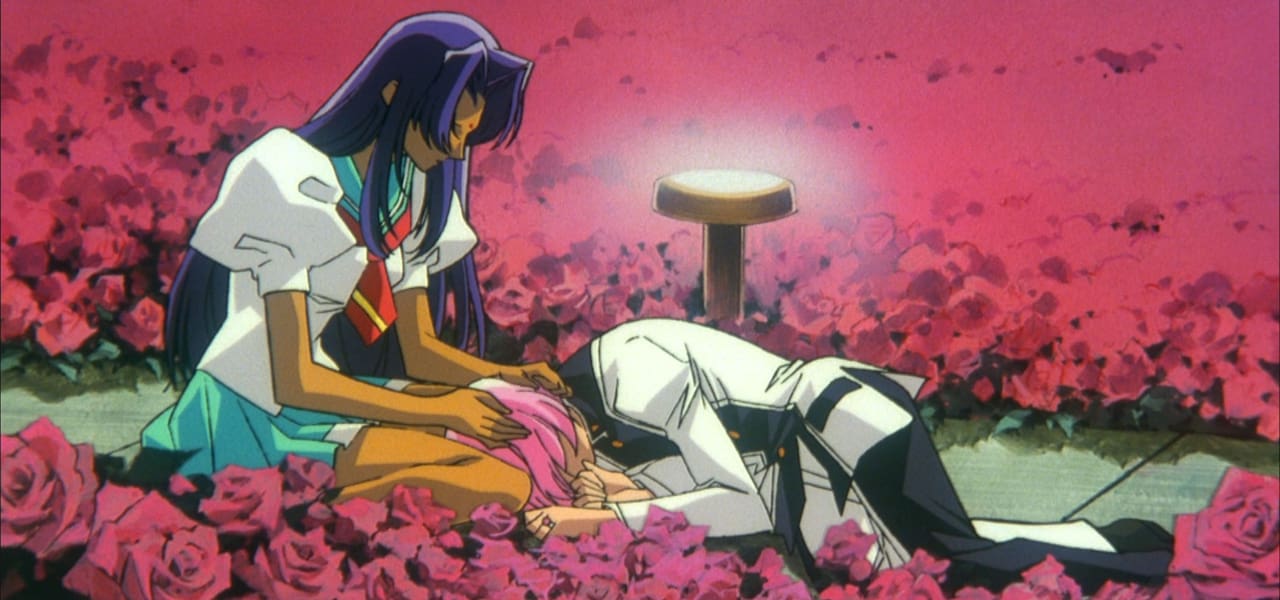
Adolescence of Utena acts as a companion piece and reimagining of the Revolutionary Girl Utena franchise, which was originally conceptualized by the Be-Papas creative collective. The film serves as a grand, operatic distillation of the themes explored in the 1997 television series, focusing on Utena Tenjou’s arrival at the enigmatic Ohtori Academy.
As Utena becomes embroiled in the dueling games for the hand of Anthy Himemiya—the "Rose Bride"—the narrative quickly abandons traditional fairy-tale tropes in favor of an abstract, deeply psychological exploration of identity, systemic trauma, and the quest for liberation. With tickets officially on sale, GKIDS has confirmed that the screenings will present the film in its original Japanese language with English subtitles, maintaining the integrity of the performance and the film’s distinctive, high-register dialogue.
A Chronology of Influence
To understand the significance of this theatrical release, one must look back at the production context of the late 1990s. Kunihiko Ikuhara was already a titan in the industry, having directed the Sailor Moon television series, where he became known for his penchant for breaking the “magical girl” genre conventions.
- 1997: The Revolutionary Girl Utena television series premieres, instantly becoming a touchstone for viewers interested in avant-garde storytelling and queer theory.
- 1999: Adolescence of Utena is released in Japanese theaters. Unlike the series, which was constrained by television budgets and broadcast standards, the film allowed Ikuhara to push his visual language to the breaking point.
- 2000s–2010s: The film becomes a "holy grail" for anime enthusiasts in the West, often circulating via fan-subtitled tapes and later through boutique DVD releases that rarely reached the general public.
- 2026: GKIDS elevates the film to a status typically reserved for modern blockbuster anime, providing a high-definition restoration that honors the original cel-based animation.
The film’s legacy is inextricably linked to its creative team. Screenwriter Yoji Enokido, who would later contribute his singular voice to FLCL and the Rebuild of Evangelion films, provided the sharp, literary script. Perhaps most notably, the late art director Shichiro Kobayashi—a legend whose work on Angel’s Egg defined the “painterly” aesthetic of 80s and 90s anime—crafted the surrealist backgrounds of Ohtori Academy, turning the setting into a character in its own right.
Supporting Data: Why ‘Utena’ Matters Now
The decision to release Adolescence of Utena at this scale is supported by a growing demand for “legacy content” within the anime market. Recent box office data suggests that North American audiences are increasingly hungry for repertory cinema.
- Genre Evolution: Utena is widely cited as the primary inspiration for the modern “deconstructionist” anime movement. Shows such as Puella Magi Madoka Magica and Sarazanmai owe a debt to the structural audacity of Ikuhara’s vision.
- Aesthetic Preservation: The film represents the peak of traditional cel animation techniques combined with experimental compositing. In an era dominated by digital polish, the grit, texture, and bold color palettes of the 1999 production offer a tactile viewing experience that is rare in modern animation.
- Thematic Resonance: As discourse regarding gender performance and non-normative relationships has moved to the forefront of global culture, Adolescence of Utena has found a new, younger audience. Its exploration of breaking free from the “prince” archetype is arguably more relevant today than it was at the turn of the millennium.
Official Responses and Industry Outlook
While GKIDS has kept their specific licensing agreements under wraps, the industry sentiment surrounding this release is overwhelmingly positive. By partnering with Toho to bring these titles to the U.S., GKIDS is essentially legitimizing anime as a high-art form, distinct from the mass-market merchandise-driven releases that dominate the current theatrical landscape.
"This is about preservation and celebration," notes industry analyst Sarah Jenkins. "When a distributor like GKIDS takes a risk on a 1999 surrealist film, they are betting that the audience is sophisticated enough to handle the abstraction. The history of animation is not just what came out last week; it is the deep, challenging work of auteurs like Ikuhara."
The film’s score, composed by J.A. Seazer, is expected to be a focal point of the theatrical experience. Seazer’s music, characterized by its dramatic, choral, and often jarring avant-garde arrangements, serves as the pulse of the film. In a theater, the sonic impact of the soundtrack is expected to be profound, further immersing the audience in the film’s dreamlike logic.
Implications: A Shift in Distribution Strategy
The implications of the Adolescence of Utena release are threefold for the future of the animation industry:
1. The Rise of the "Event" Model
By positioning the film as a limited, two-night engagement, GKIDS is utilizing the “eventization” of cinema to drive attendance. This scarcity model creates a sense of urgency, ensuring that theaters are packed with engaged fans rather than casual viewers. It proves that there is a sustainable, if specialized, market for high-concept animation.
.png)
2. Validating the "Cult" Canon
For years, the anime "canon" was defined by what was easily accessible on streaming platforms. By licensing and promoting obscure or older titles, distributors are expanding the horizon of what is considered "essential viewing." This encourages streaming services to acquire deeper back-catalogs, ultimately benefiting the preservation of animation history.
3. Bridging Generations
The theatrical release creates a unique demographic blend. Original fans of the 1997 series will sit alongside a new generation of viewers who discovered the franchise through digital archives or modern discussions on social media. This cross-generational engagement is vital for the long-term health of the anime industry, as it ensures that foundational works remain culturally relevant.
Conclusion: The Revolution Continues
As the June 21 release date approaches, the excitement surrounding Adolescence of Utena serves as a testament to the enduring power of bold, uncompromising storytelling. Kunihiko Ikuhara once noted that his films were intended to challenge the viewer’s perception of reality—a goal that is only amplified when the film is projected on a theater screen, surrounded by an audience witnessing the duels, the roses, and the transformation of Utena Tenjou in real-time.
For those who have waited decades to see this surrealist masterpiece on the big screen, the wait is nearly over. For everyone else, it is an invitation to step into an academy where the rules of the world are rewritten, and the revolution is just beginning. Through this strategic release, GKIDS is not only bringing a classic back to life—they are ensuring that its influence continues to shape the next generation of animation history.










No comments yet. Be the first to join the conversation!