Lina Hope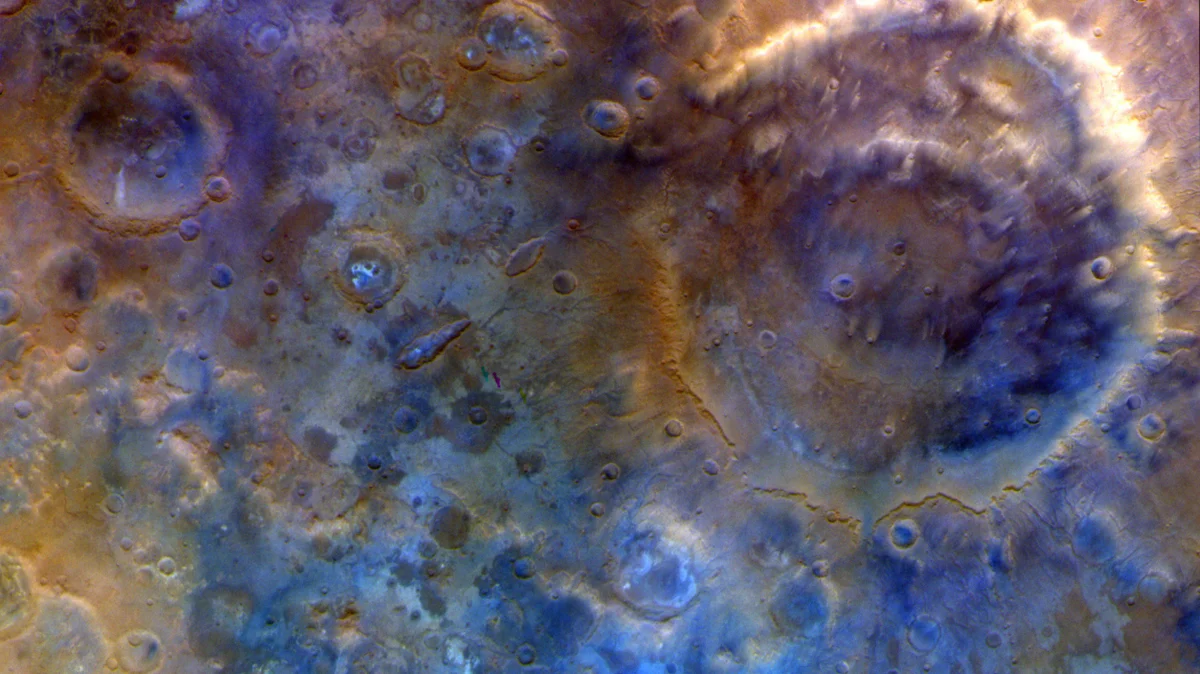
As the NASA Psyche spacecraft continues its ambitious multi-year journey through the inner solar system, it has provided humanity with a rare and breathtaking perspective of our neighbor, Mars. During a critical gravity-assist maneuver—a celestial "slingshot" designed to propel the craft toward its final destination—the probe utilized its onboard imaging instruments to capture a series of high-resolution photographs. These images, recently released by NASA, offer more than just a stunning visual; they provide a vital test of the spacecraft’s systems while shedding new light on the complex geology and atmospheric conditions of the Red Planet.
Main Facts: A Precise Celestial Slingshot
The Psyche mission, which launched in October 2023, is currently navigating the vacuum of space on a six-year odyssey to 16 Psyche, a unique metallic asteroid located in the main asteroid belt between Mars and Jupiter. To reach this distant target, the spacecraft required a significant boost in velocity. By performing a close flyby of Mars, the probe successfully harnessed the planet’s gravitational pull to alter its trajectory and increase its speed without consuming precious onboard propellant.
During its closest approach, the spacecraft passed within just 2,800 miles of the Martian surface—a distance closer than the orbits of Mars’ own natural moons, Phobos and Deimos. This proximity provided the perfect opportunity to calibrate the spacecraft’s imager and gather scientific data. The resulting images reveal intricate details of the Martian landscape, from the vast, cratered terrain to the reflective ice caps at the southern pole.
Chronology: The Arc of the Mission
The journey to the asteroid 16 Psyche is a testament to the precision of modern orbital mechanics. To understand the significance of this recent flyby, one must look at the timeline of the mission:
- October 2023: The Psyche spacecraft successfully launches from Kennedy Space Center, beginning its long-distance transit through the solar system.
- The Transit Phase: For months, the craft has relied on its advanced solar-electric propulsion system—a method that uses ionized xenon gas to provide a steady, efficient push.
- The Mars Flyby: The maneuver occurred as the spacecraft intersected the orbital path of Mars. The flyby served two purposes: adjusting the craft’s velocity for the remainder of the trip and acting as a functional test for the onboard camera systems.
- Post-Flyby Operations: Immediately following the encounter, the spacecraft resumed its standard cruise phase, re-engaging its thrusters to maintain its trajectory toward the asteroid belt.
- 2029 Arrival: The spacecraft is scheduled to reach its namesake asteroid in 2029, where it will begin a two-year mission orbiting and analyzing the celestial body.
Supporting Data: Decoding the Martian Images
The images captured by Psyche are more than mere souvenirs; they are dense with scientific information. NASA has highlighted several key findings from the visual data returned by the probe:
The Huygens Crater
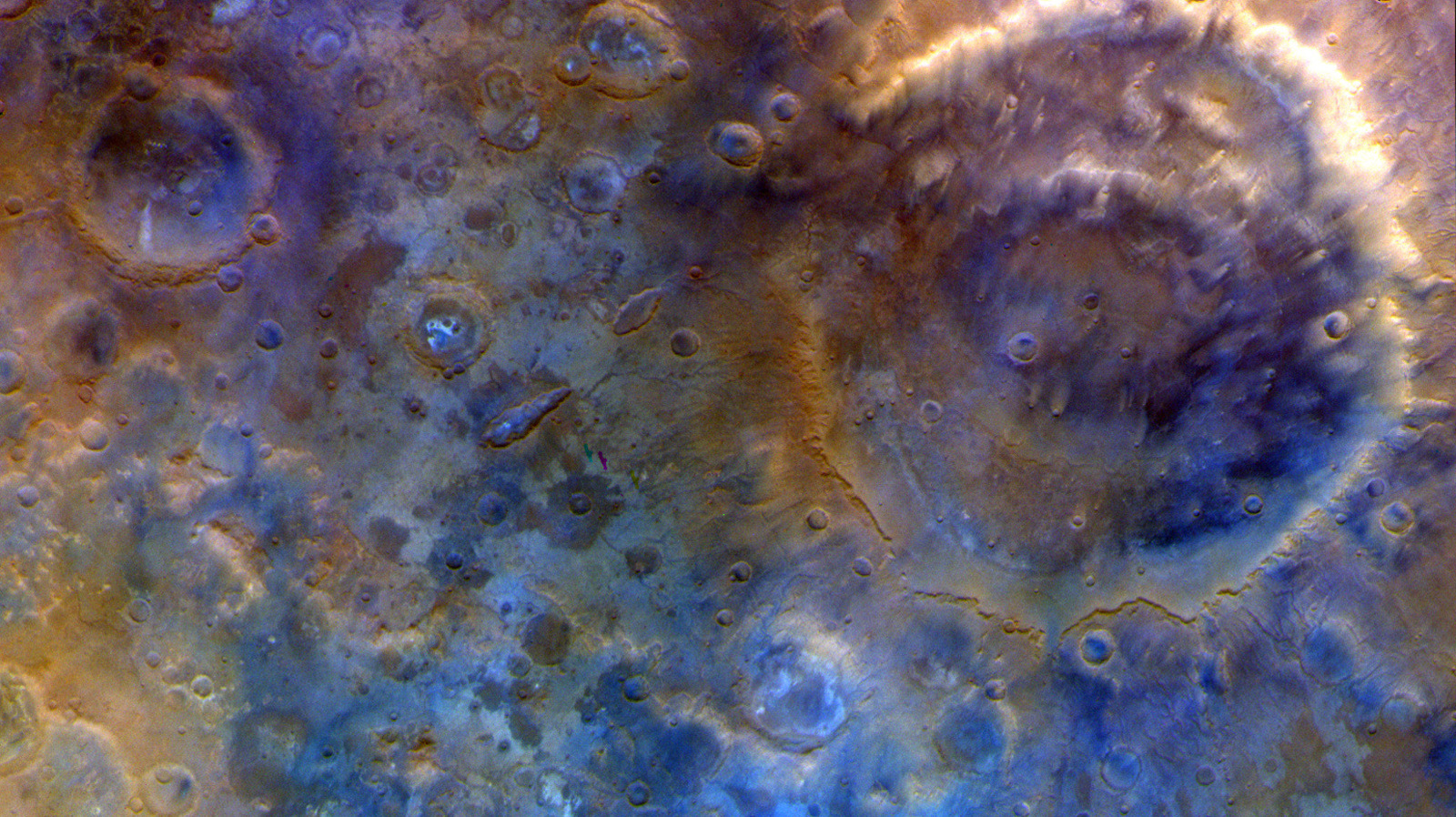
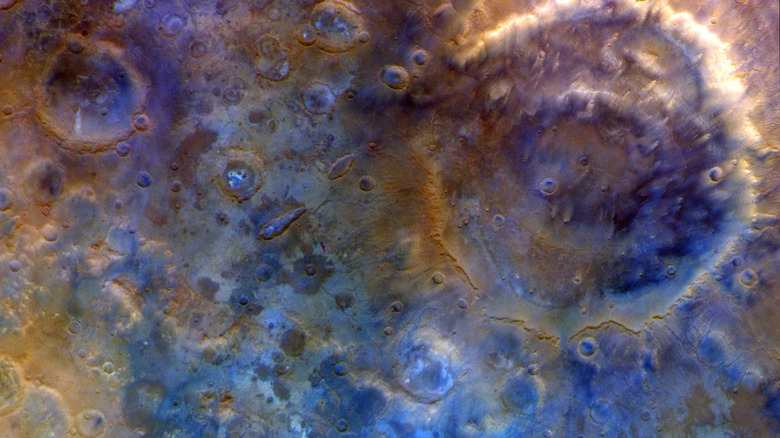
One of the most striking images captures the Huygens double-ring crater, an impact site spanning approximately 290 miles in diameter. The imagery displays a spectrum of colors, which, while enhanced by NASA’s processing team to make them more visually distinct, reflect genuine differences in the chemical composition of the surface. These variations help geologists map the distribution of dust, sand, and bedrock across the region.
The Southern Polar Ice Caps
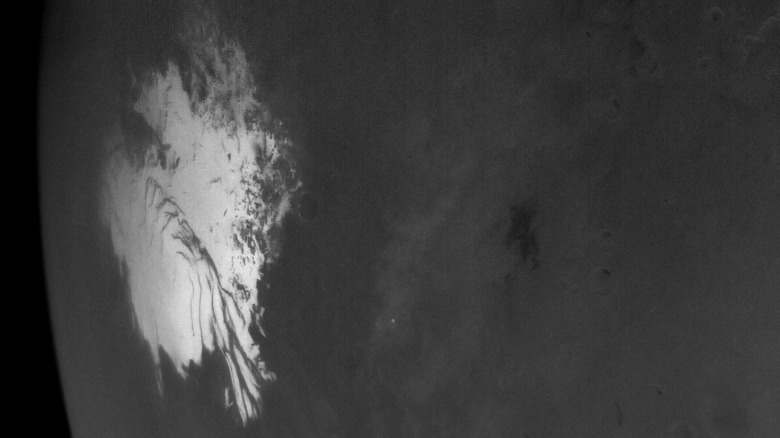
Psyche also turned its lens toward the Martian south pole. The images show a brilliant, high-contrast region representing the vast fields of water ice that persist throughout the Martian year. By capturing these at high resolution, scientists can better study the stability of these frozen reservoirs, which are essential to understanding the history of water on Mars.
The Crescent Mars
Perhaps the most evocative image is that of a "crescent Mars." Captured as the spacecraft approached the planet from a high vantage point, this shot reveals how the planet’s thin, dusty atmosphere interacts with sunlight. The crescent appears brighter and more diffuse than the solid surface because the atmospheric particles scatter light, an effect that NASA scientists have used to refine their models of the Martian atmosphere.
Official Perspectives: The Value of the Mission
NASA’s Jet Propulsion Laboratory (JPL) and Arizona State University (ASU), which lead the Psyche mission, have emphasized the importance of this maneuver. For the engineering team, the flyby was a "stress test." Ensuring that the camera systems could focus and transmit data while moving at high speeds relative to a planetary body is essential for the future arrival at 16 Psyche.
"The success of this flyby gives us high confidence in the craft’s capabilities," noted a mission spokesperson. "Not only did we gain the necessary kinetic energy for the cruise, but we also proved that our remote sensing instruments are perfectly tuned for the work ahead."
The mission team views the data from these photos as a precursor to the main event. By observing the distinct textures and compositions of Mars, researchers are effectively "warming up" for the complex task of characterizing the metallic surface of 16 Psyche.
Scientific Implications: Unlocking the Core of a World
The ultimate goal of the Psyche mission is to study 16 Psyche, the largest known metallic asteroid in our solar system. Scientists hypothesize that this asteroid is the exposed core of a protoplanet—the embryonic building block of a rocky world that never fully formed.
By analyzing the asteroid, researchers hope to gain a "window" into the formation of planets like Earth. Because our own planet’s core is buried beneath thousands of miles of mantle and crust, it is physically inaccessible. 16 Psyche, however, offers a rare, externalized look at the iron-nickel composition of a planetary core.
Why This Matters for Planetary Science
- Core Formation: Studying the metallic composition of the asteroid will help scientists understand the cooling processes of molten metal in space, providing a framework for how Earth’s own core solidified.
- Solar System Evolution: The asteroid serves as a "fossil" from the early days of our solar system, holding clues about the violent collisions and gravitational interactions that occurred billions of years ago.
- Future Exploration: The techniques used to photograph Mars and navigate the gravity assist are foundational for future deep-space missions. As humanity looks toward mining asteroids or establishing outposts in the belt, the ability to perform high-speed, autonomous maneuvers will become a prerequisite for success.
Conclusion: A Milestone in the Void
As the Psyche spacecraft drifts further from the influence of Mars, it leaves behind a legacy of accomplishment. It has proved that it can effectively use the gravity of other worlds to chart its own course. The photographs released by NASA are more than just a highlight reel of the mission; they are a symbol of human curiosity reaching across the vacuum.
With the asteroid 16 Psyche still years away, the mission now enters a long period of quiet, disciplined travel. Yet, the data gathered during this flyby will keep scientists busy for months, if not years. As we await the arrival in 2029, the memory of these Martian images serves as a poignant reminder: we are not merely observing the solar system; we are learning to navigate its currents, one gravity assist at a time. The road to the metallic heart of 16 Psyche is long, but the journey has already proven to be as rich in discovery as the destination itself.


 Suro Senen
 Ammar Sabilarrohman