Reynand Wu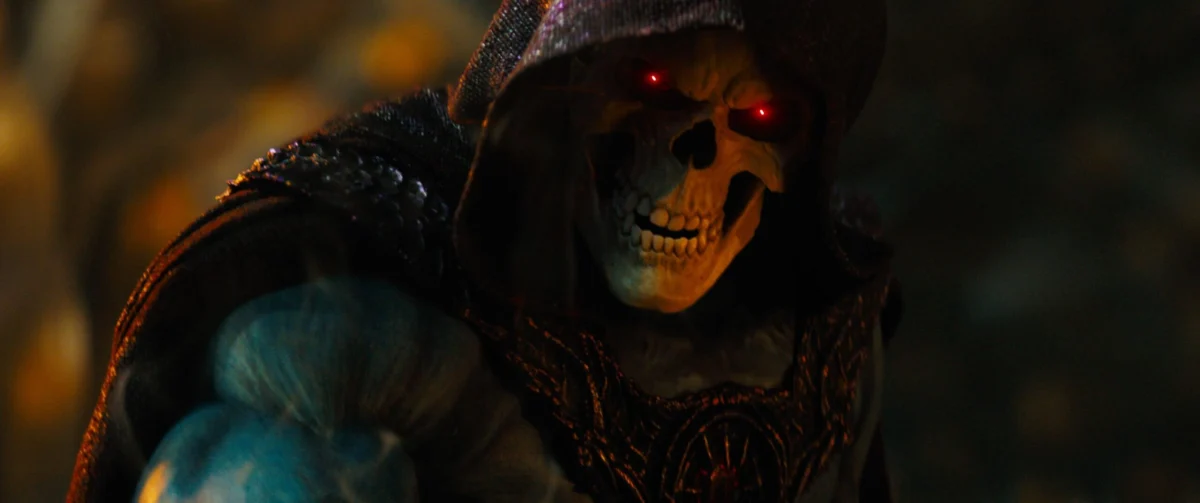
BY JACOB KLEINMAN
Published May 24, 2026, 2:30 PM EDT
In an era where the visual landscape of blockbuster cinema is frequently debated, with many discerning viewers lamenting a perceived decline into a "flatter, duller, and grayer" aesthetic, director Travis Knight is poised to deliver a vibrant counter-narrative with his highly anticipated Masters of the Universe adaptation. Slated for release on June 5, 2026, the film is already garnering significant buzz for its stunning visuals, promising a return to the rich, dynamic palettes that once defined epic storytelling on the big screen.
The sentiment that modern films, particularly those emerging from sprawling cinematic universes like Marvel’s, often lack the distinct visual flair and depth of their predecessors is a common refrain among cinephiles and industry veterans alike. A quick comparison, such as a recent Spider-Man: Brand New trailer against its comic book inspiration, often reveals a stark difference in color saturation, contrast, and overall visual punch. This perceived shift has led to a growing hunger for films that prioritize bold, intentional visual design.
Travis Knight, known for his masterful work in animation with Laika Studios (directing Kubo and the Two Strings) and his successful live-action debut with Bumblebee, appears to have answered this call. In an exclusive interview, Knight delved into the philosophy and painstaking craftsmanship behind Masters of the Universe‘s captivating aesthetic, offering a glimpse into how he aims to revitalize the visual splendor of contemporary blockbusters.
The Aesthetical Quandary: Why Modern Blockbusters Fall Flat
The discussion surrounding the "graying" of cinema is multifaceted, touching upon technological shifts, artistic choices, and economic pressures. Historically, filmmakers meticulously crafted every frame with a keen eye for color, light, and composition, often utilizing practical effects, elaborate sets, and carefully controlled lighting to achieve a desired mood and visual impact. The advent of digital filmmaking and pervasive green-screen technology, while offering unprecedented flexibility, has also inadvertently contributed to a certain visual homogeneity.
One theory posits that the sheer volume of CGI work in many modern tentpole films, coupled with often aggressive production schedules, can lead to a rushed post-production process where color grading becomes standardized rather than specialized. Digital intermediate processes, designed to unify diverse footage, can sometimes inadvertently flatten dynamic ranges and dilute vibrant colors in an effort to achieve a consistent "look" across an entire film, or even an entire cinematic universe. The result, many argue, is a visual experience that, while technically proficient, lacks the distinct artistic fingerprint and visceral impact of earlier films. The once-bright, saturated palettes are replaced by muted tones, and the interplay of light and shadow, crucial for visual depth, can feel less pronounced.
This backdrop makes Knight’s approach to Masters of the Universe particularly noteworthy. It’s a deliberate pivot, a conscious effort to swim against the current of perceived visual blandness and restore a sense of wonder and dynamism to the fantasy genre.
Knight’s North Star: An Animator’s Perspective on Live-Action Grandeur
When asked about the secret to Masters of the Universe‘s visually striking appearance—its dynamic, crisp, clean, and never-gray aesthetic—Knight immediately pointed to his animation roots. "Part of it is that I’m an animator, so I come at it with that perspective. I was an animator long before I was a director, so I see these worlds in a very visual way," he explained.
This foundation in animation provides a unique lens through which Knight approaches live-action filmmaking. In animation, every single element within a frame is intentionally placed and designed. There are no accidents of lighting or composition; every color choice, every movement, every focus point is meticulously planned to tell the story and guide the audience’s eye. "It comes down to how you’re looking at the world, the designs, the use of color and light, how you’re using the camera, and where the audience is focusing at any given time. I want to make sure that people are looking at the things that they need to look at," Knight elaborated.
He emphasized that this guiding principle is fundamental to his training: "You’re always trying to make sure people are looking at the right thing at the right time – how things are moving across the frame, how things are moving between each cut, where you want the audience to be looking, what things are important that they need to focus on. That’s just part of how I was trained, but it’s very important." This meticulous attention to visual storytelling, honed over years of crafting intricate animated worlds, translates directly into a live-action film that feels deliberately composed and vibrantly alive.
Eternia: A "Riot of Color" Uncompromised
The fantastical realm of Eternia, the primary setting for Masters of the Universe, is inherently a world of vibrant contrasts and extravagant designs. For Knight, capturing this essence was non-negotiable. "Eternia is a very rich, colorful world. I mean, it’s a riot of color. It’s polychromatic. It’s insane. It’s like retina burning in terms of its color," he passionately described.
Maintaining this intense visual fidelity throughout the arduous filmmaking process was a constant challenge. Knight acknowledged the industry tendency for initial artistic visions to become "watered down" as production progresses, due to practicalities, compromises, or simply a loss of focus. His strategy was to establish a clear "North Star"—an unwavering vision for Eternia’s aesthetic—and continuously rally his team to adhere to it. "So it was never a question of whether Eternia was going to be colorful, but as you move along in the process, things tend to get watered down. So it’s important that you always keep your North Star and you keep the team pushing and go, ‘OK, no, it needs to look like this.’ Because over time, things can start to just become kind of muddied."
This commitment to the original vision required an extraordinary collaborative effort. Knight credits his "incredible group of artists," particularly highlighting the crucial role of his visual effects supervisors, Tim Burke and David Vickery. Their expertise was essential in ensuring that the visual effects seamlessly "blended with the practical and the special effects," making these disparate elements feel "entwined." This integration of practical and digital elements is often cited as a key factor in creating believable and visually rich cinematic worlds, preventing the uncanny valley effect or the sterile appearance of purely CGI environments. Burke and Vickery, celebrated for their work on films like Harry Potter and Jurassic World respectively, brought invaluable experience to this delicate balance, ensuring that Eternia’s vibrancy felt tangible.
Skeletor’s Resurgence: The Art of a Living Skull
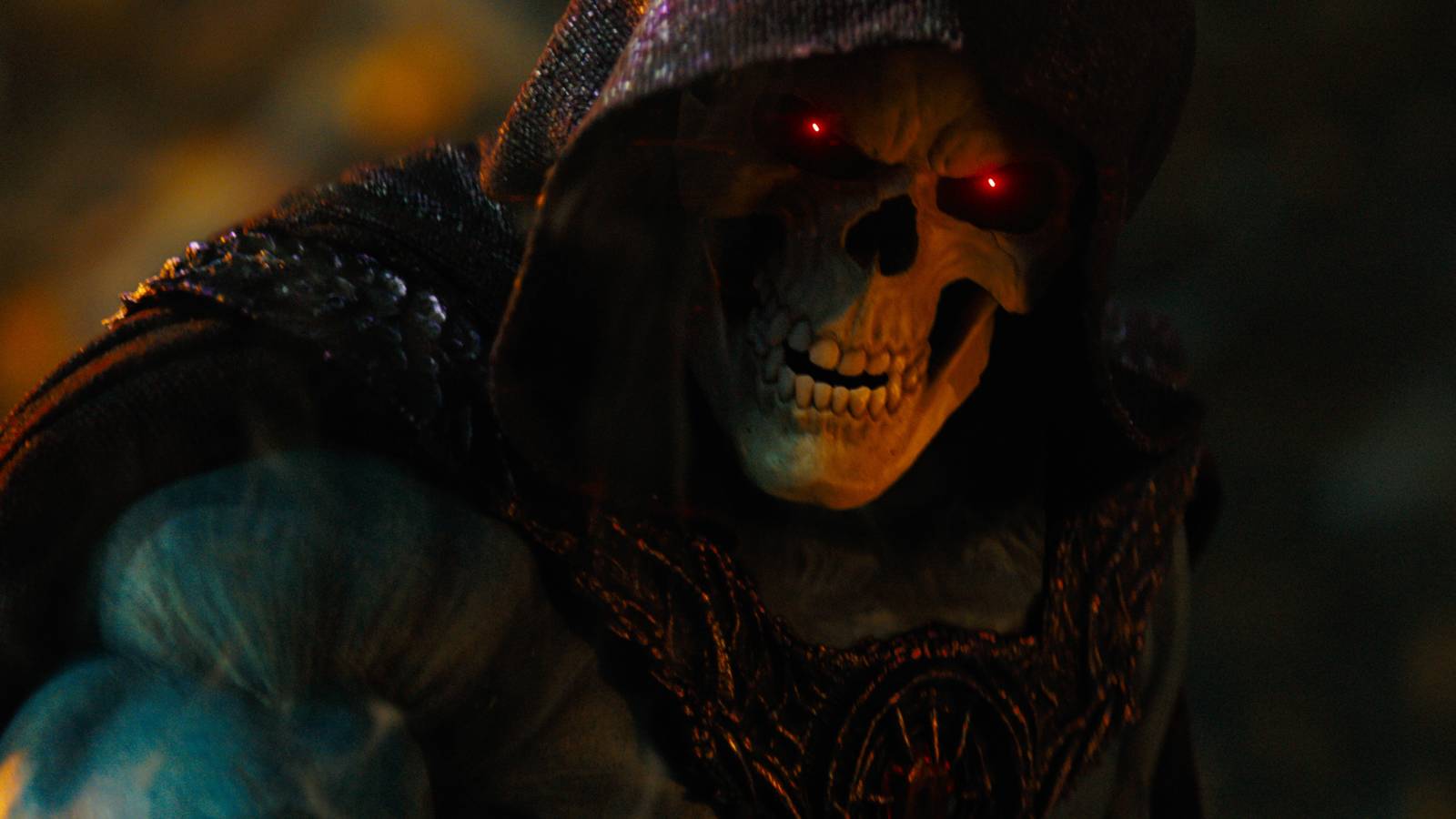
One of the most anticipated aspects of any Masters of the Universe adaptation is the portrayal of its iconic villain, Skeletor. Knight’s uncompromising vision for the character’s appearance stands as a testament to his commitment to authenticity and visual impact.
"It was always very clear to me what methodology we needed to do to bring Skeletor to life," Knight stated. He recounted a previous iteration of the project where Skeletor was conceived with a gold mask, a concept that provoked a strong reaction from the director. "When I heard that I was outraged because he doesn’t wear a mask. He’s got a skull for a face! He’s a talking emoting skull!" This insistence on Skeletor’s true, terrifying form—a living, expressive skull—was a foundational decision.

The challenge, then, was how to achieve this without resorting to purely animated facial features that might detach from a live-action performance. Knight recognized the inherent technical hurdle: "That also meant it was going to be CG because you can’t flay an actor to play Skeletor." However, the solution was not a simple motion-capture performance. Knight sought something more nuanced, a way to anchor the digital skull to a tangible human presence. "But we wanted an onscreen performance, not motion capture. We wanted a real person to embody that character."
The final methodology was a sophisticated hybrid approach, combining cutting-edge CG with incredible practical craftsmanship. Jared Leto, cast as the formidable antagonist, delivered his performance in full costume and an "extraordinary muscle suit." This suit, a crucial piece of the puzzle, was meticulously crafted by prosthetics master Barrie Gower. Gower, renowned for his transformative creature and character work on projects like Game of Thrones (creating the Night King) and The Batman (for Penguin’s prosthetics), brought an unparalleled level of detail and realism to Skeletor’s physical form. "He was just absolutely astonishing. He did so many incredible prosthetic effects on the film," Knight praised.
After Leto’s full-bodied performance was captured, the visual effects team, under Burke and Vickery, took over. "After the fact, we’d go through in visual effects and replace Jared’s face with this CG skull." This innovative technique allowed Leto’s physical performance—his posture, movements, and the subtle nuances of his body language within the muscle suit—to provide the foundation for Skeletor, while the CG skull provided the grotesque, emotive facial expressions. The result is a Skeletor that promises to be both visually stunning and deeply unsettling, merging the best of practical and digital effects to create a truly iconic villain.
Implications for the Future of Blockbuster Aesthetics
The visual success of Masters of the Universe, if it lives up to its early promise, could have significant implications for the wider film industry. In a landscape often criticized for prioritizing efficiency and mass appeal over unique artistic vision, Knight’s commitment to vibrant, dynamic visuals and sophisticated hybrid effects offers a refreshing alternative.
Masters of the Universe could serve as a powerful case study, demonstrating that it is indeed possible to create visually breathtaking blockbusters without succumbing to the "graying" aesthetic. Its success might encourage other studios and filmmakers to re-evaluate their approaches to color, lighting, and the integration of practical and digital effects. It reinforces the idea that an animator’s disciplined eye for composition and storytelling can profoundly elevate live-action cinema, pushing boundaries beyond mere technical wizardry.
Furthermore, the film’s reliance on a strong foundation of practical effects—from Barrie Gower’s muscle suit to the overall production design—even for characters with heavy CGI elements like Skeletor, highlights a growing trend of filmmakers seeking to ground fantastical elements in tangible reality. This hybrid approach often resonates more deeply with audiences, providing a sense of weight and presence that purely digital creations sometimes lack.
As audiences continue to demand higher quality and more distinctive visual experiences, Masters of the Universe stands as a potential harbinger of a new wave of visually adventurous blockbusters. Travis Knight’s insistence on his "North Star" and his meticulous blending of old-school animation principles with modern technological prowess may very well define a new benchmark for how fantasy worlds are brought to life.
With its vibrant world, captivating characters, and a director committed to unparalleled visual fidelity, Masters of the Universe is not just another summer blockbuster; it’s a bold statement on the power of visual storytelling and a hopeful vision for the future of cinema. Fans eagerly await the film’s release in theaters on June 5, 2026, to witness Eternia’s "retina burning" reality for themselves.

 Lina Irawan
 Sagoh
Sagoh