Ali Ikhwan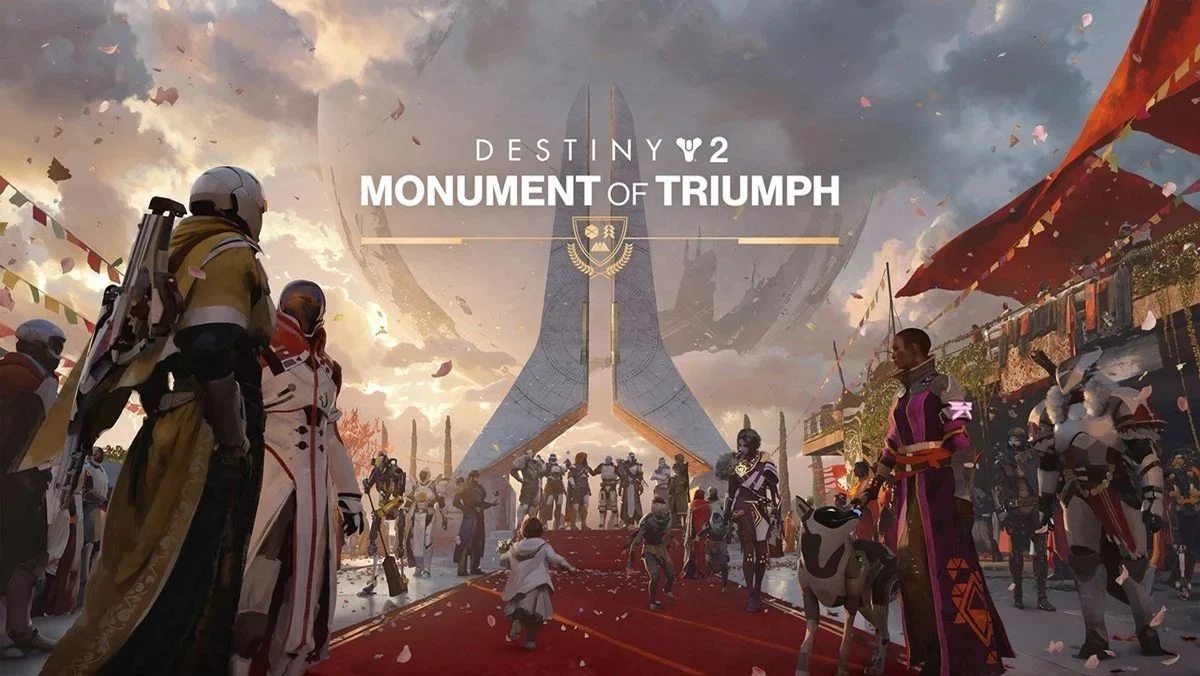
In the volatile landscape of modern gaming, where "live-service" has become both a golden goose and a graveyard for high-budget projects, the longevity of a title remains the industry’s most elusive metric. While corporate strategies often attempt to manufacture engagement through aggressive monetization and roadmap projections, the true success of a long-term game remains an organic phenomenon—a symbiotic relationship between developers and the community. Few titles have embodied this dynamic as profoundly as Bungie’s Destiny 2.
After nearly a decade of constant evolution, expansion, and community-driven storytelling, the era of active development for Destiny 2 is drawing to a close. On May 21, 2026, Bungie officially announced that the game’s final live-service content update will arrive on June 9, 2026, signaling a major strategic pivot for the studio as it moves toward the next chapter of its creative history.
The End of an Era: The Final Update
The announcement, delivered via an official studio blog post and bolstered by a heartfelt message on social media, marks the conclusion of what has been one of the most significant sustained development cycles in gaming history. For nearly ten years, Destiny 2 has served as a digital home for millions of players, evolving from a standard sci-fi shooter into a complex, sprawling universe of lore, cooperative raids, and competitive play.
Bungie confirmed that while the June 9 update will serve as the final injection of new, live-service content, the game is not being shuttered. Much like the original Destiny, which remains accessible today, Destiny 2 will transition into a "maintenance mode" state. The servers will remain live, and the game will continue to be playable, ensuring that the legacy of the Guardians—the protectors of Earth’s last safe city—is preserved for those who wish to revisit the battlefield.
A Chronology of the Destiny Journey
To understand the gravity of this decision, one must look back at the trajectory of the Destiny franchise.
- 2014: The original Destiny launches. Despite a polarized reception regarding its narrative, its gunplay sets a new industry standard.
- 2017: Destiny 2 debuts, refining the formula and introducing a more robust cinematic campaign.
- 2018-2023: Through a series of massive expansions—including Forsaken, The Witch Queen, and Lightfall—Bungie pivots the game toward a deeper, season-based model that rewards long-term investment.
- 2024-2025: Bungie navigates internal restructuring and shifting industry tides, balancing the maintenance of Destiny 2 with the incubation of new, unannounced intellectual properties.
- May 2026: The studio officially sets the date for the final content update, effectively closing the book on the Destiny 2 saga while keeping the game playable for its remaining community.
Throughout this period, the game has boasted an impressive average monthly active user count of 1 to 1.5 million players. These players have spent years wielding the "Light," battling alien threats ranging from the Hive to the Vex, and forging a community that has become a cornerstone of the looter-shooter genre.
The Economics of Engagement: Why Live-Service Often Fails
The story of Destiny 2 is a rare outlier in an industry littered with cautionary tales. For every Destiny or Fortnite, there are a dozen projects—such as Suicide Squad: Kill the Justice League or Concord—that failed to translate high-production values into sustainable player retention.
The "Live-Service" model is frequently misunderstood by stakeholders who believe that recurring revenue is a matter of simple implementation. However, as Bungie has demonstrated, it requires a delicate, often exhausting, balance of iteration and innovation. When studios attempt to force engagement through repetitive loops rather than genuine player value, the community often rebels. The failures of recent titles underscore that a game cannot simply be a service; it must be a community.
Bungie succeeded because they allowed Destiny 2 to breathe. They responded to player feedback, adapted the game’s economy, and leaned into the mystery of their world-building. However, even the most successful live-service titles have a shelf life. As technical debt grows and the studio’s creative vision shifts toward newer horizons, the "live" component eventually becomes a barrier to the next innovation.
Official Statements and the Path Forward
In their official communication, the leadership at Bungie framed this transition not as an abandonment, but as a necessary evolution. The studio’s statement reads:
"As our focus turns towards a new beginning for Bungie, we will begin work incubating our next games. To that end, on June 9, 2026, we will release the final live-service content update for Destiny 2 to begin that new journey as a studio."
The message is clear: Bungie is looking to the future. By moving resources away from the active, continuous development of Destiny 2, the studio aims to free up its creative teams to experiment with fresh concepts. This is a common, yet difficult, transition for legacy studios. They acknowledge that the "joy and honor" of exploring the Destiny universe has been a privilege, but they emphasize that the studio’s "calling in life" is to continually reach for the next milestone in interactive media.
Implications for the Industry and the Community
The decision to sunset Destiny 2’s active development has profound implications for both the industry and the player base.
For the Players: The Preservation Dilemma
For the 1.5 million monthly users, the news is bittersweet. On one hand, the promise that the game will remain playable is a significant victory for digital preservation. Many games of this era simply disappear when the servers go offline. By keeping the game accessible, Bungie is allowing the community to curate their own experience in a static, finished world. On the other hand, the absence of new content means the "looter" aspect of the game—the constant chase for new gear and power levels—will effectively reach a terminal state.
For the Industry: A Shift in Strategy
Bungie’s move signals a broader shift in the AAA gaming space. For years, the industry was obsessed with "infinite" games—titles designed to occupy every hour of a player’s free time forever. The market is now showing signs of fatigue. Gamers are becoming more selective, and developers are realizing that perpetual maintenance is not always the best path to profitability or creative fulfillment. We are likely to see more studios move toward a "finite lifecycle" model, where games are supported with vigor for 5 to 10 years before the team pivots to a clean slate.
For Bungie: The Burden of Success
Bungie now faces the challenge of "what comes next." When a studio spends a decade defining itself by a single franchise, the expectations for their next project become stratospheric. Whether the studio can replicate the success of Destiny with a new, unannounced IP remains to be seen. However, they have proven that they possess the rare ability to build and sustain a digital ecosystem that players truly care about.
Conclusion: A Legacy Secured
The story of Destiny 2 is one of the most successful experiments in the history of interactive entertainment. It challenged the industry to rethink how games are delivered, monetized, and maintained. It fostered a community that grew alongside the developers, weathering the "ups and downs" mentioned in the studio’s farewell message.
As June 9, 2026, approaches, the gaming community will surely watch as the final patch notes are released. For many, this marks the end of a digital home—a place where they made friends, conquered insurmountable odds in Raids, and experienced a decade of evolving lore. But for Bungie, it is the shedding of a skin. The studio is betting that their future lies not in the constant, grinding maintenance of the past, but in the creative potential of the unknown.
The Destiny universe will remain, a monument to a specific time and place in gaming history. But the Guardians are finally preparing for a new journey, and for the industry at large, the sunset of Destiny 2 marks the end of a pivotal, experimental chapter in the evolution of modern gaming.


 Siti Muinah
 Azzam Bilal Chamdy