Laily UPN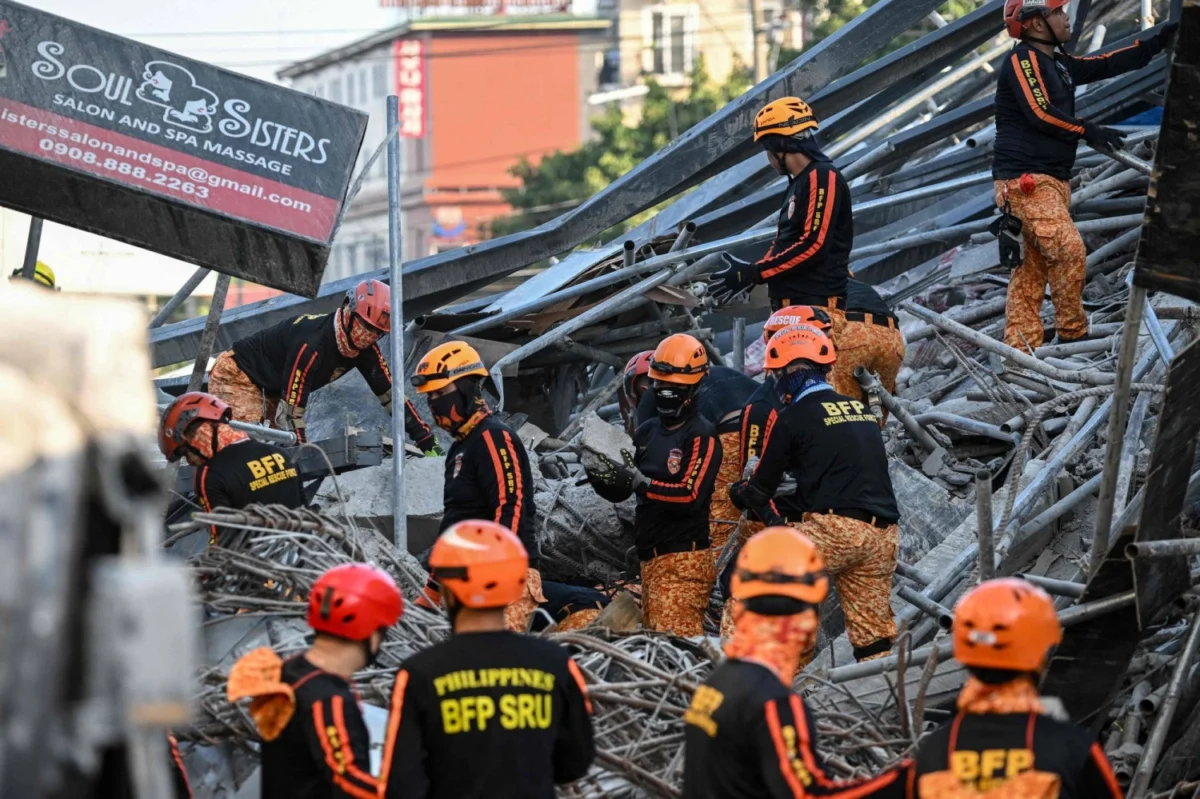
ANGELES CITY, Philippines — Rescue teams are engaged in a desperate, high-stakes battle against the clock as they sift through the mangled remains of a nine-story construction project that collapsed early Sunday morning. The disaster, which has left at least one person dead and over two dozen individuals potentially buried beneath tons of reinforced concrete and twisted steel, has sent shockwaves through the local community and prompted an urgent investigation into safety standards within the Philippine construction sector.
As the sun beats down on the debris field in Angeles City, located north of the capital, Manila, the plight of those still trapped has become the focal point of a frantic multi-agency rescue effort. Fire officials have confirmed that they remain in vocal contact with at least two survivors buried deep within the rubble, though the window for their extraction is rapidly closing.
Main Facts: The Anatomy of a Disaster
The incident occurred during the early hours of Sunday, catching workers off guard as the structure—a hybrid condominium and hotel complex—suffered a catastrophic structural failure. According to initial reports from the Bureau of Fire Protection (BFP), the collapse involved a building that was in the midst of an ambitious vertical expansion.
The site, which had been buzzing with construction activity, was effectively leveled in the pre-dawn hours. While 24 workers were successfully pulled from the site by first responders in the immediate aftermath of the collapse, 10 of those survivors required urgent hospitalization for injuries ranging from crush trauma to respiratory distress.
Current estimates from the BFP and local government units indicate that approximately 23 people remain unaccounted for. This figure is derived from the master list of laborers scheduled for the Sunday shift. Tragically, the recovery effort has already transitioned from a purely rescue-oriented mission to a recovery operation in some sectors, after rescue teams retrieved the body of a Malaysian national. The victim had been staying in an adjacent hotel that was severely damaged when the primary construction site buckled and crashed into the neighboring structure.
Chronology: A Morning of Chaos
The sequence of events unfolded rapidly, leaving local authorities struggling to manage the sheer scale of the destruction.
- Pre-dawn, Sunday: Construction work was underway at the nine-story site. Plans for the project included the addition of a 10th floor, which was slated to feature a luxury swimming pool.
- Early Morning (Time Unspecified): The building suffered a catastrophic structural failure, causing a massive, multi-story collapse that impacted not only the construction site but also an adjacent hotel building.
- 06:00 AM – 09:00 AM: Emergency services, including the Bureau of Fire Protection and local disaster risk reduction teams, arrived on the scene. Initial rescue efforts focused on pulling out accessible survivors. Twenty-four workers were extracted during this period.
- 10:00 AM – 12:00 PM: The situation on the ground deteriorated as temperatures soared. Fire Superintendent Maria Leah Sajili officially confirmed that rescuers were in communication with at least two trapped workers. However, the lack of heavy lifting equipment and specialized shoring gear slowed the pace of the rescue.
- Afternoon, Sunday: Authorities confirmed the death of a Malaysian hotel guest. The focus shifted to the delicate process of moving unstable concrete slabs to reach those still trapped beneath the wreckage.
Supporting Data and Technical Context
The Angeles City project, which held a valid building permit issued in 2023, was considered a significant development for the region. Construction had only begun in 2024, raising immediate questions regarding the structural integrity of the design and the pace of the build.
The Complexity of the Collapse
Engineering experts suggest that "hybrid" construction projects—where a building is designed for multiple uses such as residential units and commercial hotel space—require rigorous adherence to load-bearing specifications. The decision to add a 10th floor, specifically one meant to hold the significant dead load of a swimming pool, adds immense pressure to the foundation and vertical supports. If the structural integrity of the lower floors was compromised during this expansion, a "pancake collapse" becomes a high-probability outcome.
Previous Precedents
This is not the first time the Philippines has grappled with the fallout of a major construction disaster. In 2015, a similar tragedy occurred in Taguig City, within the Manila metropolitan area. During that incident, a portion of a residential tower under construction gave way, resulting in two deaths and 11 injuries. The recurrence of such events has intensified calls for stricter enforcement of the National Building Code of the Philippines and more frequent, unannounced site inspections by local government units.
Official Responses and Bureaucratic Hurdles
The response to the disaster has been characterized by a mix of urgent action and sobering warnings from officials. Fire Superintendent Maria Leah Sajili, who has been at the center of the incident command, did not mince words regarding the technical difficulties facing her team.
"We need special equipment to extricate and save them," Sajili told a press briefing. "The conditions are incredibly challenging. The heat, the instability of the debris, and the sheer weight of the concrete make every movement dangerous for both the rescuers and those trapped inside."
Jay Pelayo, the head of the Angeles City information office, has acted as the primary liaison between the rescue teams and the public. In early statements to local radio station DZBB, Pelayo expressed a broader concern, noting that initial reports suggested as many as 30 to 40 people might have been on-site at the time of the collapse. While later assessments scaled the number of missing to 23, the discrepancy highlights the difficulty of tracking personnel in the chaotic aftermath of such a collapse.
"Let’s continue to pray for all of them," Pelayo said in a public appeal, emphasizing the humanitarian dimension of the tragedy while the city government works to provide support for the families of the victims and the displaced hotel guests.
Implications: A Call for Accountability
The collapse has ignited a firestorm of debate regarding the oversight of rapid urbanization in the Philippines. As cities like Angeles City expand to accommodate growing tourism and residential demands, the speed of construction often threatens to outpace the speed of regulation.
Regulatory Oversight
The fact that the project was permitted in 2023 and construction commenced in 2024 suggests that the project moved from design to implementation with significant velocity. Investigators are now tasked with determining whether the structural plans were fully realized as approved, or if "value engineering"—a common practice where materials are swapped for cheaper alternatives—played a role in the failure.
Legal and Ethical Consequences
The construction firm behind the project now faces a barrage of legal hurdles. If investigators find evidence of negligence, substandard materials, or unauthorized deviations from the original blueprints, the project managers and engineers could face criminal charges, including reckless imprudence resulting in homicide.
Furthermore, the death of a foreign national has added an international dimension to the incident, potentially drawing in diplomatic scrutiny regarding the safety of international travelers in Philippine hospitality facilities. The hotel operator may also be liable for failing to ensure that their facility was not in a high-risk zone adjacent to a major construction project.
The Path Forward
In the coming days, the focus will transition from the rescue phase to a forensic investigation. Experts from the Department of Public Works and Highways (DPWH) are expected to lead the inquiry into the collapse. This will involve:
- Material Testing: Examining samples of the steel and concrete used in the building to ensure they met the required grade.
- Plan Review: Comparing the "as-built" structure with the original engineering designs to identify any unauthorized structural modifications.
- Safety Protocol Audit: Assessing whether the site complied with Occupational Safety and Health (OSH) standards, including the presence of required safety officers and emergency evacuation plans.
As the community waits for news from the rescue site, the shadow of this tragedy serves as a grim reminder of the human cost when professional standards are compromised. The resilience of the rescue teams, who continue to labor in the sweltering heat, remains the only source of hope for the families waiting anxiously behind the police cordons. Whether this incident leads to meaningful reform in the construction industry or becomes another forgotten chapter in the history of urban development in the Philippines remains to be seen. For now, the mission is singular and absolute: locate and recover the missing.


 Neng Nana
 Asro
Asro