

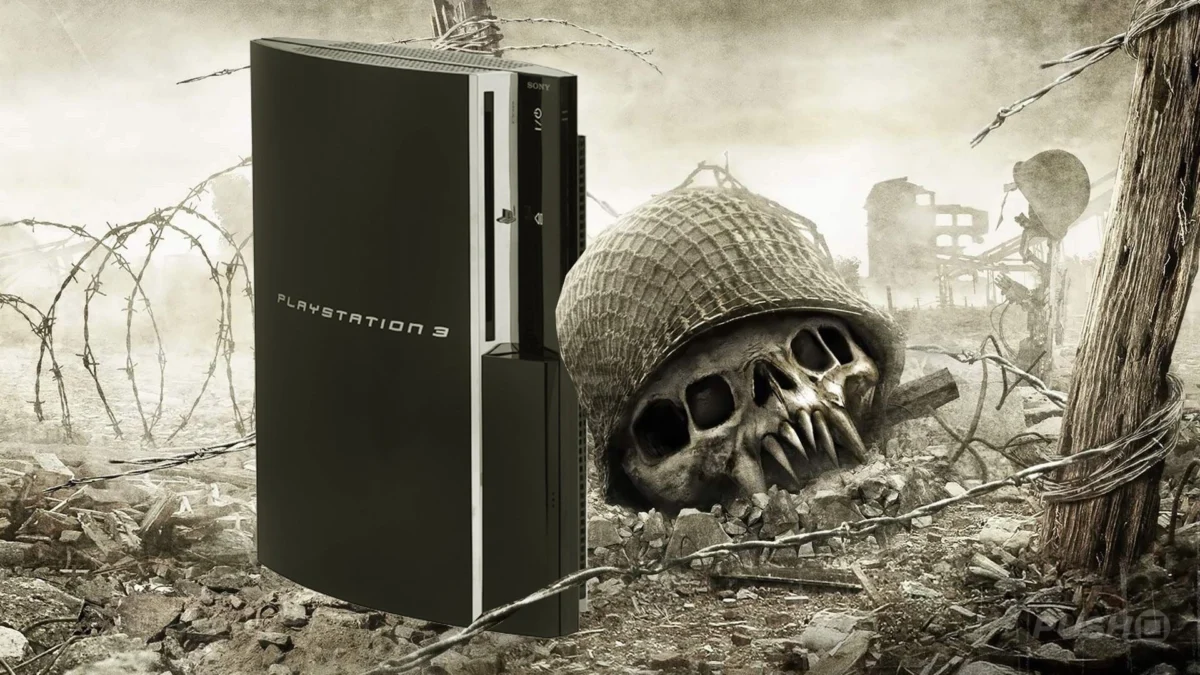
The pursuit of seamless backward compatibility has long been a holy grail for console manufacturers. For PlayStation fans, the dream of revisiting the rich library of the PlayStation 3 on newer hardware remains a tantalizing prospect. Recently, a groundbreaking experiment conducted by the renowned technical analysis group, Digital Foundry, has offered an unprecedented look into the feasibility of PlayStation 3 emulation on the current-generation PlayStation 5. Utilizing a sophisticated Linux hack that allows for the installation of the RPCS3 emulator, this investigation has yielded fascinating, albeit complex, results that shed light on the inherent challenges of emulating the PS3’s unique architecture and hint at future possibilities.
The Genesis of the Experiment: Unlocking the PS5’s Potential
The recent emergence of a Linux hack for the PlayStation 5 has opened up a Pandora’s Box of possibilities for the console’s hardware. This exploit, which allows users to install a Linux operating system on the PS5, has paved the way for the installation and testing of third-party software that Sony did not officially endorse. Among the most ambitious applications of this hack is the implementation of RPCS3, a highly regarded open-source PlayStation 3 emulator.
Digital Foundry, a collective of tech journalists and analysts known for their in-depth hardware examinations and performance benchmarks, seized this opportunity to put the PS5’s raw power to the test. Their objective was clear: to assess how effectively the current-generation console could replicate the performance of its predecessor, the PlayStation 3, through software emulation. This experiment is not merely a technical curiosity; it delves into the fundamental question of whether the PS5, with its advanced architecture, can overcome the notorious complexities of the PS3’s Cell Broadband Engine.
The initial findings from Digital Foundry’s rigorous testing are nothing short of remarkable, showcasing moments of impressive performance. However, these successes are tempered by a deeper understanding of why PlayStation has historically shied away from offering official PS3 emulation, a decision rooted in the console’s highly specialized and demanding hardware.
Decoding the PS3’s Architectural Enigma: The SPU Challenge
At the heart of the PlayStation 3’s unique identity and its considerable development challenges lay its groundbreaking processor, the Cell Broadband Engine. This complex chip featured a main PowerPC-based Power Processing Element (PPE) and seven Synergistic Processing Elements (SPEs), which were designed to handle specific, parallelizable tasks. This heterogeneous architecture was revolutionary, offering immense computational power but demanding a significant paradigm shift in game development.
The success of PS3 emulation hinges on accurately replicating the behavior of these SPEs. In the context of RPCS3 running on the PS5, the emulator relies on the PS5’s more conventional, albeit powerful, CPU to act as a stand-in for the PS3’s SPEs. This is where the crux of the performance limitations lies.
Digital Foundry’s findings reveal a clear pattern: emulation performs best in scenarios where PS3 games did not heavily offload tasks to the SPEs. When a game’s engine was designed to leverage the SPEs extensively for graphics rendering, physics calculations, or AI processing, the PS5’s CPU, acting as a software substitute, struggles to keep pace. The overhead involved in simulating the SPEs’ specialized functions on a more general-purpose processor introduces significant bottlenecks.
This distinction is crucial in understanding the varied performance observed across different titles. While the PS5 boasts superior raw processing power compared to the PS3, the emulation layer introduces a layer of abstraction that can negate these advantages when dealing with highly SPE-dependent workloads.

Performance Benchmarks: A Tale of Two Eras
The results of Digital Foundry’s testing paint a compelling picture, highlighting a clear performance disparity between early-generation PS3 titles and those released later in the console’s lifecycle.
Early-Generation Triumphs:
The early years of the PlayStation 3’s lifespan saw developers still grappling with the intricacies of the Cell processor. Consequently, many launch-era games did not fully exploit the power of the SPEs. This has proven to be a significant advantage for RPCS3 running on the PS5.
- Ridge Racer 7: This iconic title from the PS3’s launch era demonstrated exceptional performance. In emulation, Ridge Racer 7 consistently ran at a smooth 60 frames per second (fps) and was rendered at a stunning 2160p (4K resolution). This result showcases the PS5’s ability to effortlessly upscale and maintain high frame rates for less SPE-intensive games.
- Resistance: Fall of Man: Another early flagship title, Resistance: Fall of Man, also exhibited strong performance. The game achieved a 4K resolution with a largely stable 30fps. While minor frame pacing issues were noted, the overall experience was significantly enhanced compared to its native PS3 presentation.
- Heavenly Sword: This visually impressive action-adventure game from Ninja Theory also fared remarkably well. Heavenly Sword was pushed to an astonishing 2880p resolution, maintaining a fairly consistent 30fps. This further emphasizes the PS5’s capabilities when presented with games that didn’t push the SPEs to their absolute limits.
These early-generation titles serve as compelling evidence that the PS5 possesses the foundational power to run many PS3 games at resolutions and frame rates far exceeding their original capabilities, provided the underlying architectural demands are met.
Later-Generation Struggles:
The narrative shifts dramatically when examining games that were released later in the PS3’s lifecycle and were meticulously optimized to leverage the full potential of the SPEs.
- Grand Theft Auto: Episodes from Liberty City: This critically acclaimed open-world title proved to be a significant challenge for the emulator. GTA: Episodes from Liberty City heavily relies on the PS3’s SPEs for its complex world simulation and AI. In emulation, this game places an immense strain on the PS5’s CPU, resulting in performance that is demonstrably worse than the native PS3 experience, even when attempting to render at native 4K. This serves as a prime example of how SPE-dependent titles can falter under software emulation.
Selective Successes and Workarounds:
Despite the general trend, some later titles still managed to achieve respectable results, often with the aid of specific optimization techniques.

- Killzone 3 and MotorStorm Apocalypse: These graphically demanding titles from the latter half of the PS3’s life cycle both utilized the SPEs for advanced anti-aliasing techniques, specifically Multi-Sampled Anti-Aliasing (MLAA). By disabling this computationally intensive feature within the RPCS3 emulator, Digital Foundry was able to achieve decent performance on the PS5. This highlights the importance of fine-tuning emulator settings and understanding the specific optimizations employed by individual games.
These results collectively underscore the inherent difficulty in emulating the PS3’s architecture. While the PS5’s CPU is a powerhouse, it’s not a direct replacement for the specialized nature of the SPEs. The emulator acts as a sophisticated translator, but some languages are simply more complex to translate than others.
The Chronology of Emulation Efforts: A Long and Winding Road
The quest to emulate the PlayStation 3 has been a long and arduous journey for developers. The Cell processor’s unique design presented a formidable hurdle from the very beginning. Unlike previous PlayStation consoles, where software emulation on PCs became a viable option for enthusiasts, the PS3’s architecture proved exceptionally challenging to replicate accurately.
Early attempts at PS3 emulation were rudimentary, often plagued by poor performance, graphical glitches, and outright instability. The RPCS3 project, which began development in 2012, has been the most persistent and successful endeavor in this space. Over the years, a dedicated community of developers has meticulously reverse-engineered the PS3’s hardware and software, gradually improving the emulator’s compatibility and performance.
The recent breakthrough in installing RPCS3 on the PS5 represents a significant milestone. It signifies that the underlying architecture of the PS5, while different, is capable of running the complex code required by the emulator. However, as Digital Foundry’s tests have shown, the journey from simply running an emulator to achieving a consistently playable and enjoyable experience for a broad range of titles is still ongoing.
The timeline of RPCS3’s development can be seen as a microcosm of the challenges faced by PlayStation itself. While Sony introduced backward compatibility for the PS4 through streaming services and some physical disc emulation for PS2 and PS1 titles, official PS3 emulation has remained conspicuously absent. This absence is a testament to the significant technical and financial investment required to achieve a level of quality that would satisfy a mainstream audience.
Supporting Data: The Numbers Behind the Performance
To quantify the findings, Digital Foundry’s report includes detailed performance metrics for various games. These metrics serve as concrete evidence of the emulator’s capabilities and limitations. While the full suite of data is extensive, key takeaways include:
- Resolution Upscaling: The PS5 consistently demonstrated the ability to upscale PS3 games to significantly higher resolutions, often reaching 1080p, 1440p, and even 4K (2160p). This is a direct benefit of the PS5’s superior graphical processing capabilities.
- Frame Rate Fluctuations: While some games achieved stable frame rates, others experienced significant fluctuations, particularly those that heavily relied on the PS3’s SPEs. Frame rates could drop considerably during intense gameplay sequences, impacting the overall fluidity of the experience.
- CPU Load: The testing revealed that games heavily utilizing the SPEs placed an immense load on the PS5’s CPU. In some instances, the CPU utilization reached near-maximum levels, indicating that the processor was working at its absolute limit to simulate the PS3’s unique processing architecture.
- Graphical Artifacts: While RPCS3 has made strides in reducing graphical glitches, some minor artifacts, such as texture pop-in or occasional rendering errors, were still present in certain titles. These are common in emulation and often require further refinement of the emulator or specific game patches.
The supporting data paints a nuanced picture. It highlights the PS5’s immense potential for running PS3 games at resolutions far beyond their original intent. However, it also confirms that the architectural differences between the PS3 and PS5 present a significant hurdle for achieving consistent, high-performance emulation across the entire PS3 library.
Official Responses and Industry Perspectives
Sony has remained largely silent on the topic of official PlayStation 3 emulation. While they have invested heavily in backward compatibility for previous generations through services like PlayStation Plus Premium, which offers a library of PS1, PS2, and PSP titles, PS3 games have been conspicuously absent from this offering. This absence is widely attributed to the technical complexities of emulating the PS3’s Cell processor.

The high cost of development and the potential for a subpar user experience have likely deterred Sony from pursuing an official PS3 emulation solution. Furthermore, the availability of the RPCS3 emulator on PC, albeit with its own set of challenges, means that dedicated enthusiasts can already experience a significant portion of the PS3’s library on powerful gaming computers.
However, the recent advancements with the PS5 hack and Digital Foundry’s findings have reignited discussions within the industry and among the gaming community. Companies like Implicit Conversions have been vocal about their work on developing PS3 emulation solutions for modern consoles. This suggests a continued interest in finding a viable path to bringing PS3 classics to a wider audience.
The current situation implies that if official PS3 emulation were to become a reality on PlayStation consoles, it would likely be through a meticulously developed and highly optimized solution, possibly tailored for future hardware.
Implications for the Future of PlayStation Gaming
The Digital Foundry experiment, while demonstrating that PS3 emulation is technically feasible on PS5 hardware, also suggests that the current generation may not be the ultimate platform for a fully realized PS3 emulation experience. The results indicate that the PS5’s CPU, while powerful, might not possess the specific architectural advantages needed to consistently overcome the challenges posed by the PS3’s SPEs.
This leads to an intriguing implication: the PlayStation 6 could be the console that finally offers robust and widespread PS3 emulation. Future hardware iterations, with potentially more advanced CPU architectures and further optimizations in emulation technology, could provide the necessary horsepower to tackle the PS3’s complex processing demands.
The prospect of PS3 Classics being integrated into services like PS Plus Premium remains a tantalizing possibility. Imagine a future where players can seamlessly access beloved titles like The Last of Us, Metal Gear Solid 4: Guns of the Patriots, or Uncharted 2: Among Thieves directly on their latest PlayStation console, with enhanced visuals and performance.
For now, the experiment provides a fascinating glimpse into what might be possible. While the current results may not be consistent enough for a commercial product, they offer a beacon of hope for fans yearning to revisit the golden age of the PlayStation 3. The journey of PS3 emulation is a testament to human ingenuity and perseverance, and the ongoing research and development in this area promise exciting possibilities for the future of PlayStation gaming. The seeds of a comprehensive PS3 emulation solution have been sown, and it will be fascinating to see how they blossom on future hardware.












No comments yet. Be the first to join the conversation!