

While the current landscape of anime is dominated by high-concept fantasy juggernauts like Witch Hat Atelier, Frieren: Beyond Journey’s End, and Delicious in Dungeon, a quiet revolution is taking place in the historical genre. Studios are moving away from the well-trodden paths of samurai epics and Sengoku-era dramas to explore the rich, complex tapestries of medieval global history. Following the 2025 success of Netflix’s Orb: On the Movements of the Earth—a daring exploration of heliocentrism in medieval Poland—the industry is pivoting toward narratives that balance rigorous academic research with the medium’s signature visual flair.
The latest addition to this burgeoning trend is Jaadugar: A Witch in Mongolia, an ambitious adaptation of the manga A Witch’s Life in Mongol by the acclaimed artist Tomato Soup. Premiering July 4 on TV Asahi, the series promises to be a landmark achievement in cultural representation and narrative depth.
The Core Narrative: A Tale of Displacement and Discovery
Set against the backdrop of the early 13th-century Mongol Empire, Jaadugar is a fictionalized account of the life of Fatima, a historical figure who served as a trusted advisor and favorite of Töregene, the Great Khatun of the Mongol Empire.
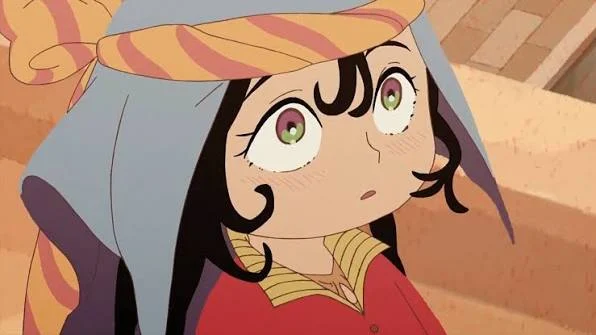
The story centers on Sitara, a young girl born into a family of scholars in the Persian city of Tus. Her life is upended when the Mongol forces invade her home, an event that serves as the inciting incident for her journey from a displaced youth to a figure of profound political influence. Sold into slavery following the occupation, Sitara’s initial motivation is raw, singular vengeance. However, as the narrative progresses, it evolves into a sophisticated character study about the transformative power of knowledge, the burden of history, and the complexity of empathy in times of war.
Chronology of Production and Development
The journey of Jaadugar from manga panels to the screen has been a meticulous, years-long endeavor.
- Source Material: The manga A Witch’s Life in Mongol by Tomato Soup was lauded upon release for its historical grounding and character-driven storytelling.
- Pre-Production: Recognizing the sensitivity of the material, the production team at Science Saru initiated a rigorous research phase, consulting with historians specializing in both Persian and Mongol history.
- Annecy Presentation: The project gained international recognition at the 2026 Annecy International Animation Film Festival, where it was featured in the prestigious TV competition, drawing praise for its visual design and cultural ambition.
- The Premiere: The series is scheduled for a July 4, 2026, debut in Japan. While international audiences await a North American streaming announcement, the buzz generated at festivals suggests a strong demand for global distribution.
Balancing Authenticity and Narrative Liberty
One of the most significant challenges in producing Jaadugar was the linguistic and cultural barrier. To achieve an authentic soundscape, the production team employed native speakers and consultants, even casting Mongolian sumo wrestlers based in Japan to voice specific characters.

"We had some Mongol actors, but we mostly had Japanese actors who had to perform their lines in a different language," explained director Abel Góngora during the Annecy festival. "We want the audience to understand the dialogue, but because Sitara doesn’t understand what the Mongol characters are saying, we want the viewer to identify with her confusion and subsequent discovery. It was a massive hurdle, but the cast’s dedication was exemplary."
The "Anachronism" Dilemma
Chief director Naoko Yamada, known for her delicate touch in works like The Colors Within, emphasized that historical accuracy is not always synonymous with effective storytelling. The team frequently grappled with consultants who provided strict historical mandates—such as the prohibition of smoking in 13th-century Persia.
"We wanted to include a character smoking to evoke the atmosphere of a bazaar, which in modern Iran is heavily associated with shisha culture," Yamada noted. "We ultimately chose to omit the scene to remain faithful to the period, but it highlights a constant tension: we are constantly choosing between historical rigidity and the need to pay homage to the cultures as they exist in the modern collective consciousness."
Bridging the Gap: The Disney Renaissance Influence
Beyond its commitment to history, Jaadugar stands out for its bold, expressive character animation. Abel Góngora, whose background includes work on Scott Pilgrim Takes Off!, leaned into the manga’s roots, which are heavily inspired by the works of Osamu Tezuka.
"Tezuka-sensei was famously influenced by Disney, and I wanted to push that legacy even further," Góngora explained. "We used a style that feels reminiscent of 1990s Disney Renaissance films. You see it in the fluid, rubbery movement of limbs and the wild, exaggerated facial expressions of the comedic characters. By adding this ‘Western’ influence to an Eastern historical setting, we’ve created a unique visual language that feels both grounded and incredibly lively."
This stylistic choice is also a byproduct of the studio’s internal culture. Science Saru is known for its diverse staff, and Góngora noted that having a high concentration of non-Japanese animators allowed the team to experiment with techniques that aren’t typically seen in traditional Japanese historical dramas.

Thematic Implications: Knowledge as a Sacred Duty
At its heart, Jaadugar is a celebration of intellectual curiosity. The show posits that the pursuit of knowledge is not merely a hobby, but a moral imperative. Within the narrative, characters repeatedly assert that seeking wisdom is a sacred duty, a belief that provides Sitara with a sense of self-respect and agency in a world that has stripped her of her autonomy.
Yamada describes this arc as one of the most critical aspects of the series: "Sitara starts with a deep-seated resentment toward the Mongols because they destroyed her home. But as she acquires knowledge and spends time in their empire, her perspective shifts. She begins to respect them. This is the core of the show: how learning and experiencing new cultures changes your internal landscape. It’s about the complexity of growing up."
The Future of Historical Anime
The emergence of Jaadugar signals a broader shift in the anime industry. It suggests that audiences are hungry for stories that don’t just use history as a backdrop for action, but as a lens to examine the human condition. By combining the meticulous research of historical drama with the imaginative, fluid animation of a Disney-inspired aesthetic, Science Saru is setting a new benchmark.
As the industry looks toward 2026 and beyond—with high-profile projects like the Historie adaptation looming on the horizon—Jaadugar stands as a testament to the fact that the most compelling stories are often found in the margins of history, waiting to be brought to life through a fresh, global perspective. While fans in North America remain in the dark regarding a local release date, the critical reception and the sheer ambition behind the project ensure that Jaadugar: A Witch in Mongolia will be a subject of conversation for years to come.










