Rifan Muazin
In a monumental development that bridges the ancient traditions of the Catholic Church with the cutting edge of Silicon Valley, Pope Leo XIV has released a landmark encyclical, Magnifica Humanitas. The 42,300-word document represents one of the most comprehensive moral frameworks ever proposed for artificial intelligence. By explicitly defining the boundaries between human consciousness and algorithmic processing, the Pontiff has signaled that the Church intends to play a pivotal, non-negotiable role in the global governance of emerging technologies.
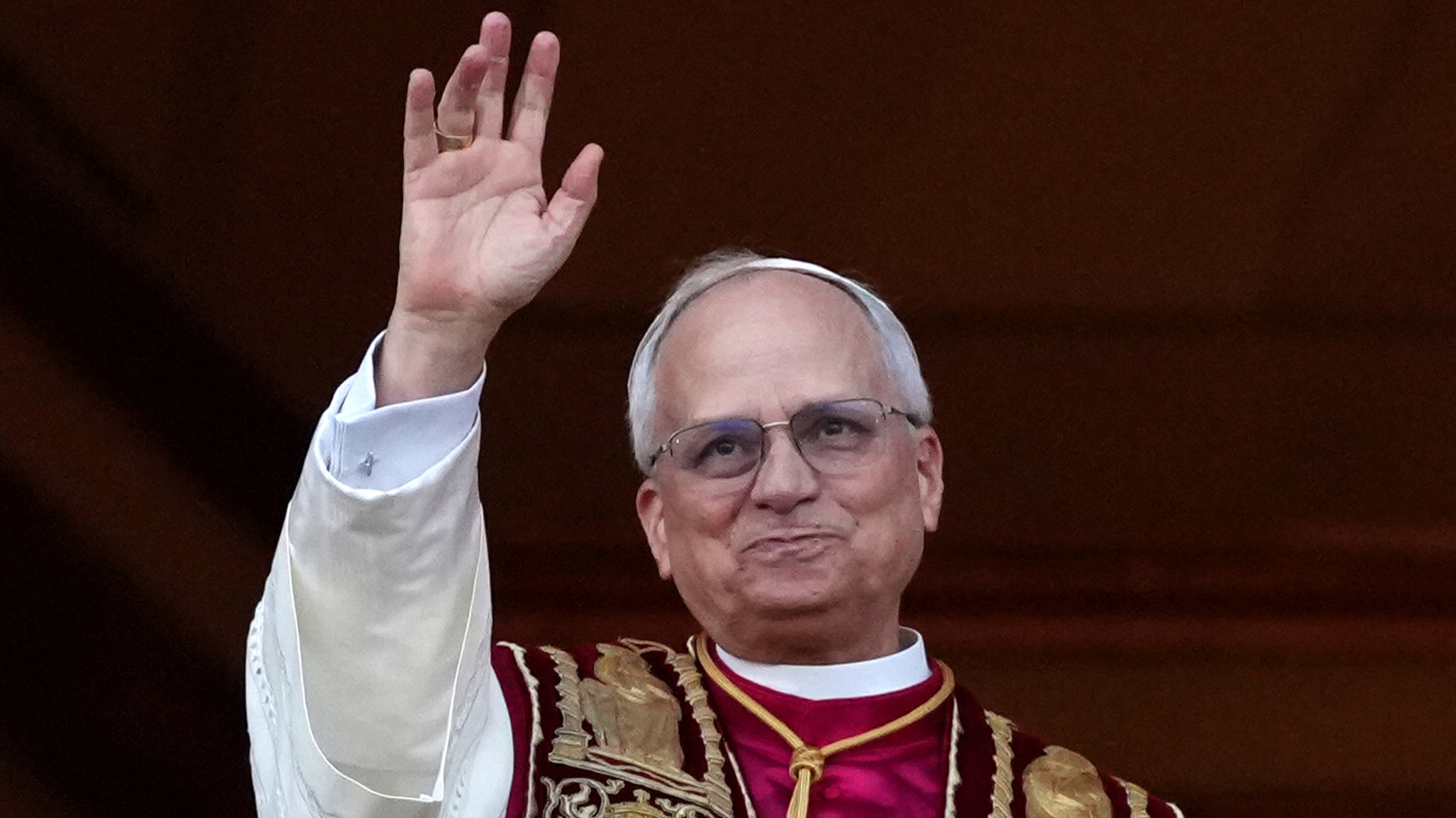
Released on Monday, the encyclical is not a rejection of progress, but a call for a "human-centric" digital evolution. Accompanied by Anthropic co-founder Christopher Olah at the Vatican, the Pope’s message is clear: AI must be treated as a tool to serve the common good, rather than a mechanism for power consolidation or the erosion of human dignity.
The Core Thesis: Human Wisdom vs. Computational Speed
At the heart of Magnifica Humanitas is a profound philosophical distinction. Pope Leo XIV acknowledges the utility of AI while cautioning against the "misconception of equating this type of ‘intelligence’ with that of human beings."
The Pope’s argument rests on the premise of embodied experience. "These systems merely imitate certain functions of human intelligence," the encyclical notes. While acknowledging that AI often eclipses human capacity in raw computational speed and data processing, the Pontiff argues that these metrics are distinct from true wisdom.
"So-called artificial intelligences do not undergo experiences, do not possess a body, do not feel joy or pain, do not mature through relationships and do not know from within what love, work, friendship or responsibility mean," the text reads. By highlighting the absence of moral conscience, the Pope emphasizes that AI lacks the ability to judge good from evil. Because these systems lack a "spiritual perspective," they cannot be held accountable for the consequences of their outputs, regardless of how convincingly they simulate empathy or understanding.
A Chronology of the Vatican’s Technological Engagement
The release of Magnifica Humanitas is the culmination of years of quiet, steady engagement by the Vatican with the tech sector.
- Pre-2023: The Holy See begins internal discussions regarding the intersection of theology and technology, establishing working groups focused on digital ethics.
- February 2026: The Vatican announces a partnership with language service provider Translated. The initiative introduces AI-powered, real-time translation services for Holy Mass, marking a significant step in integrating AI into the Church’s global outreach.
- May 15, 2026: Pope Leo XIV officially publishes Magnifica Humanitas. The document follows a 400-year-old tradition of encyclicals, now applied to the most pressing issue of the 21st century.
- Present: The Vatican calls for a global "educational alliance," signaling a new phase of diplomatic advocacy focused on tech regulation and labor protections.
Supporting Data and Ethical Imperatives
The encyclical is not merely philosophical; it is a policy manifesto. The Pope highlights several critical areas where, in the Church’s view, current AI trajectories threaten the stability of the global social order.
1. The Concentration of Power
The Pope raised alarm over the monopolistic tendencies of the AI sector. Noting that wealth is already dangerously concentrated, he argued that governments must establish "adequate regulatory tools" to prevent technology from becoming a tool for further stratification. The Vatican advocates for a decentralized approach to innovation that benefits the global community rather than a handful of corporate entities.
2. The Autonomy of Lethal Systems
One of the most pressing sections of the encyclical addresses the "weaponization of intelligence." Pope Leo XIV explicitly stated that human oversight is a non-negotiable requirement for military decision-making. He warned that delegating lethal decisions to algorithms—even those perceived as "accurate"—strips warfare of human moral accountability and risks unpredictable escalations.
3. Protecting the Next Generation
The encyclical calls for an "educational alliance for the digital age." The goal is to cultivate critical thinking in youth, shielding them from "apathy for seeking the truth." Furthermore, the Pope demanded stringent regulations to protect minors from AI-generated exploitation, including grooming, sexualized content, and violent simulations.
Official Responses and Stakeholder Perspectives
The presence of Anthropic co-founder Christopher Olah at the announcement underscores the unusual but burgeoning relationship between the Vatican and the AI industry. Observers note that while the tech industry often prioritizes "speed of deployment," the Vatican is repositioning itself as the world’s leading "moral auditor."
Industry leaders have generally welcomed the encyclical, recognizing that a global consensus on AI safety is necessary for long-term integration. However, labor advocacy groups have been the most vocal in their praise. By addressing the "systematic job loss" associated with automation, the Pope has provided a moral mandate for governments to implement robust retraining programs and employment protections.
"The Church is not an antagonist to humanity," the Pope clarified in his remarks. "If carefully managed, [AI] could open up a horizon extending in all directions." This pragmatic optimism suggests that the Vatican is prepared to support technological growth provided that it adheres to a framework that prioritizes human well-being over shareholder dividends.
Implications: The Moral Governance of AI
The implications of Magnifica Humanitas are profound and far-reaching. By framing the AI debate through the lens of human dignity, the Vatican is influencing the global regulatory discourse in several key ways:
A New Framework for Labor
The Pope’s insistence that AI should not be used to justify mass unemployment shifts the burden of proof onto corporations. It suggests that if an organization intends to replace human workers with automation, it has a moral obligation to ensure those workers are retrained or financially supported. This creates a moral pressure point that could influence labor union negotiations and future government policies on "automation taxes."
The Call for Global Regulation
The Vatican’s call for "adequate regulatory tools" is expected to resonate in international bodies like the United Nations and the European Union. By articulating these concerns as universal moral imperatives, the Pope is providing a common language for politicians of all stripes to discuss AI regulation.
The Theological Pivot
Perhaps most significantly, the encyclical challenges the "Silicon Valley Religion"—the belief that technological progress is inherently good and inevitable. By asserting that AI is a tool that requires moral guidance, the Pope has effectively "re-enchanted" the debate. He argues that even in a world of super-intelligent machines, the most important decisions—those involving ethics, love, and justice—must remain within the human domain.
Looking Ahead
As nations grapple with the risks of deepfakes, algorithmic bias, and autonomous weaponry, the Church’s contribution provides a necessary, if unconventional, roadmap. Whether the world’s technological giants will heed these calls for restraint remains to be seen. However, by positioning itself as a defender of the human spirit in the face of machine logic, the Vatican has ensured that the debate over AI will no longer be restricted to engineering departments and boardrooms. It is now, firmly and officially, a matter of human conscience.
In his concluding remarks, Pope Leo XIV noted that the goal of technology should not be to create a machine that thinks like a human, but to create a world where human beings can live with greater wisdom, dignity, and purpose. As Magnifica Humanitas begins to circulate through global corridors of power, it is clear that the Vatican has set a standard that the digital age cannot afford to ignore.

 Asep Darmawan
 Asro
Asro