

The Star Wars galaxy has long been defined by the eternal struggle between the light and the dark, but rarely has it explored the gray, jagged edges of the underworld with as much intensity as in the latest animated series, Star Wars: Maul — Shadow Lord. Now streaming in its entirety on Disney+, the series offers a deep, psychological dive into the mind of one of the saga’s most enigmatic figures: the former Sith Lord, Maul.
Under the creative vision of Lucasfilm President and Chief Creative Officer Dave Filoni, the series serves as a critical bridge between the chaos of the Clone Wars and the encroaching tyranny of the Imperial era. It is not merely a tale of lightsabers and revenge; it is a character study of a man grappling with his own irrelevance in a galaxy that has moved on, leaving him to carve out his own destiny in the shadows of Janix.
The Narrative Landscape: A Galaxy in Transition
Star Wars: Maul — Shadow Lord picks up in the immediate aftermath of the Imperial transition. Darth Sidious has successfully dismantled the Republic, and the Jedi Order lies in ruins. For Maul, this presents a unique, volatile opportunity. No longer a servant of the Sith, he finds himself adrift, haunted by the loss of his brother, Savage Opress, and the matriarch of the Nightsisters, Mother Talzin.
The series finds Maul on the planet Janix, a world defined by its seedy underbelly and its distance from the core reach of the Empire. Here, he begins to assemble a motley crew of outcasts and criminals, not to conquer the galaxy, but to establish a power base that can survive the shifting tides of the new Imperial regime. As the show unfolds, viewers are treated to a gritty, pulpy adventure that blends the high-stakes drama of Star Wars with the intimate, often tragic, struggles of its protagonist.
A Legacy Reimagined: The Evolution of Maul
Maul has been a cornerstone of Star Wars animation for over a decade, with actor Sam Witwer providing the voice and the soul of the character since his return in The Clone Wars. Witwer’s performance in Shadow Lord is arguably his most nuanced, portraying a character who is at once terrifying and profoundly relatable.
"With Maul, we’ve seen his beginnings and we have the ending," Witwer explains. "What happened to him in between? We wanted to answer the questions of how he changed so drastically into the Rebels version of the character."
Witwer draws a poignant comparison between Maul and Gollum from J.R.R. Tolkien’s The Lord of the Rings. Like the tragic creature of Middle-earth, Maul is defined by his intense emotions and his inability to process them. He feels the same pain, loneliness, and ambition as any other sentient being, but he lacks the moral framework or the emotional tools to navigate them. He is a man armed with the power of a dark-side user but the psychological scars of a broken victim.
The Ensemble: New Faces and Familiar Threats
The brilliance of Shadow Lord lies not just in its protagonist, but in the vibrant, complex cast that orbits him. The showrunners, Head Writer Matthew Michnovetz and Supervising Director Brad Rau, have curated a cast that brings both gravitas and humanity to the screen.
Devon Izara: The Reluctant Jedi
Perhaps the most intriguing addition to the cast is Devon Izara, voiced by Gideon Adlon. A former Jedi Padawan surviving in a post-Order 66 world, Devon represents the moral heartbeat of the series. Her relationship with Maul is the central pillar of the narrative, evolving in ways that defy traditional hero-villain archetypes. Adlon describes the character as "filled with angst," a young woman trying to reconcile her past as a Jedi with the harsh reality of her present.
Brander Lawson and the Law of Janix
Adding a layer of grounded realism is Wagner Moura, who makes his Star Wars debut as the police captain Brander Lawson. A man of duty, Lawson is a single parent fighting to protect his son, Rylee, while keeping his city from falling into the hands of criminal syndicates. Moura’s performance brings a weary, detective-noir quality to the show. The character has proven so compelling that the writers expanded his role significantly during production, allowing for a deeper exploration of a man caught between his responsibilities as a father and his duties as an officer of the law.
Supporting Players and Droids
The series is rounded out by an eclectic mix of talent:
- Richard Ayoade as Two-Boots: A fastidious, by-the-book police droid who serves as a perfect foil to Lawson’s cynicism.
- Dennis Haysbert as Master Eeko-Dio Daki: The embodiment of the lost Jedi Order, Haysbert portrays a man who believes it is his "destiny" to remain a guardian of peace, even when the galaxy has abandoned the Jedi.
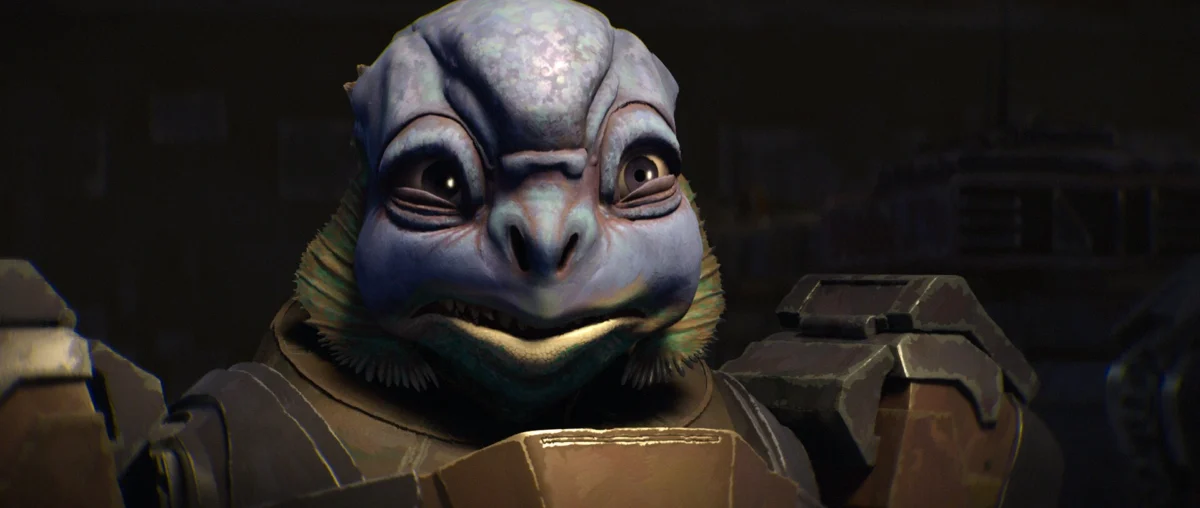
- Chris Diamantopoulos as Looti Vario: A diminutive, scheming Aleena crime boss who provides both humor and legitimate danger.
- Scott Whyte as Dryden Vos: Bringing a sinister charisma to the role, Whyte channels the mercurial nature of the Crimson Dawn leader, providing a direct link to the events of Solo: A Star Wars Story.
Chronology and Development
The series is a masterclass in narrative structure, balancing the immediate plot of the Janix underworld with the broader, looming threat of the Empire. The development team—led by executive producers Dave Filoni, Athena Yvette Portillo, and others—sought to create a show that felt essential to the Star Wars canon while standing on its own as a self-contained story.
Production was characterized by a high degree of collaboration. For example, voice actor David W. Collins, who plays the robotic pet "Spybot," contributed significantly to the character’s evolution through improvisation. His fusion of classic Star Wars droid aesthetics with the noir-inspired personality of Peter Lorre resulted in one of the series’ most unique contributions to the franchise’s lore.
Official Responses: The Philosophy of the Dark Side
The creative team behind Shadow Lord emphasizes that the show’s power comes from its willingness to explore the "low moments" of its characters. Dave Filoni notes that Maul’s relatability is the key to the audience’s investment.
"He makes mistakes. He’s not perfect," Filoni tells StarWars.com. "He desires power, and then he gets toppled. That’s relatable… He just doesn’t deal with it well. He can’t ever really let go of his hatred and his anger."
This philosophy informs every frame of the series. It is a show about the consequences of holding onto trauma, and the impossibility of moving forward when one is constantly looking backward at a lost empire or a lost sibling.
Implications for the Star Wars Canon
Star Wars: Maul — Shadow Lord serves as more than just a character piece; it fills in the missing history of the criminal underworld during the early Imperial period. By focusing on the "seedy underbelly," the series shows how the galaxy’s average citizens, like Brander Lawson, attempted to maintain order when the Jedi were gone and the Empire had yet to fully tighten its grip.
Furthermore, the inclusion of characters like Rook Kast and the return of inquisitorial threats like Marrok ties the show directly to the established threads of The Clone Wars, Rebels, and Ahsoka. It reaffirms that the Star Wars universe is a tapestry of interconnected lives, where every action in the shadows has profound repercussions for the galaxy at large.
Conclusion: A Must-Watch Addition to the Saga
The release of Star Wars: Maul — Shadow Lord represents a significant milestone in modern Star Wars animation. With its high-caliber voice cast, mature themes, and the distinct, artistic vision of the Filoni-led production team, it is a series that invites both long-time fans and newcomers to look at the dark side from a different perspective.
As the final credits roll on the series, it is clear that Maul’s journey is far from over—but for this chapter, the audience is left with a profound understanding of the man behind the horns. Star Wars: Maul — Shadow Lord is currently available in full on Disney+, offering a gripping, emotional, and essential experience for any fan of the galaxy far, far away. The age of the Shadow has begun, and it is a dark, complex, and deeply human story that demands to be seen.











No comments yet. Be the first to join the conversation!