


The latest entry in the DC Universe, Supergirl, has arrived in theaters—and it has landed with a thud. In what is being characterized as one of the most significant box office miscalculations of the modern superhero era, the film has dramatically underperformed, falling well short of even the most conservative pre-release projections. As the industry grapples with the shifting landscape of comic book adaptations, Supergirl serves as a stark case study in the perils of high-budget bets on secondary characters in an increasingly skeptical marketplace.
The Raw Numbers: A Disastrous Debut
The opening weekend for Supergirl was, by any industry metric, catastrophic. Directed by Craig Gillespie—a filmmaker known for the grounded, character-driven success of Dumb Money—the film managed a paltry $38 million domestically. The international rollout proved equally tepid, adding only $30 million for a combined global launch of just $68 million.

To contextualize these figures, one must look at the pre-release expectations. Analysts had been cautious, yet even the most bearish forecasts predicted a domestic opening between $47 million and $60 million. The actual result fell nearly 20% below the low end of those estimates. When compared to recent historical benchmarks, the parallels are grim: the film performed in the same tier as Shazam! Fury of the Gods, a production widely considered a "box office bomb" that struggled to recoup its $125 million budget, ultimately limping to a $134 million global finish. Perhaps most damning is that Supergirl opened below The Marvels, a film that previously set the record for the lowest-grossing entry in the Marvel Cinematic Universe, finishing its run at $206 million worldwide.
A Chronology of the Decline
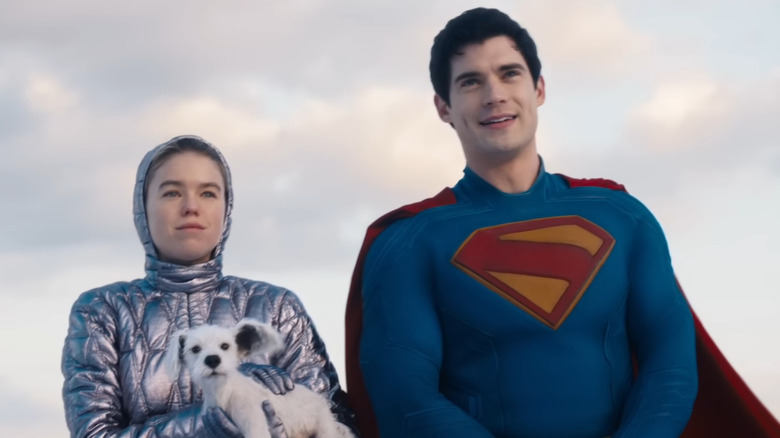
The road to this opening was paved with warning signs. Since the announcement of the project, the film’s trajectory was closely watched by industry insiders who were eager to see if the new DC Studios leadership, headed by James Gunn and Peter Safran, could replicate the success of the previous year’s Superman film.

- Development and Hype: Following the critical and commercial success of the 2025 Superman project, there was a tentative optimism that a shared cinematic universe could find its footing.
- Marketing Hurdles: Despite a robust marketing campaign, tracking numbers remained sluggish throughout the lead-up to the release.
- Opening Weekend Reality: As the weekend progressed, it became clear that the film was failing to generate the "water cooler" buzz necessary to sustain a blockbuster.
- The Drop-Off: By Sunday, exit polls and CinemaScore metrics—the latter landing at a dismal "B-"—signaled that the film lacked the "legs" required to overcome its slow start.
Analyzing the Failure: Why the Cape Didn’t Fly
Industry analysts have identified five primary drivers behind the film’s failure, ranging from fiscal mismanagement to a fundamental shift in audience appetite.
1. The Critical and Audience Chasm
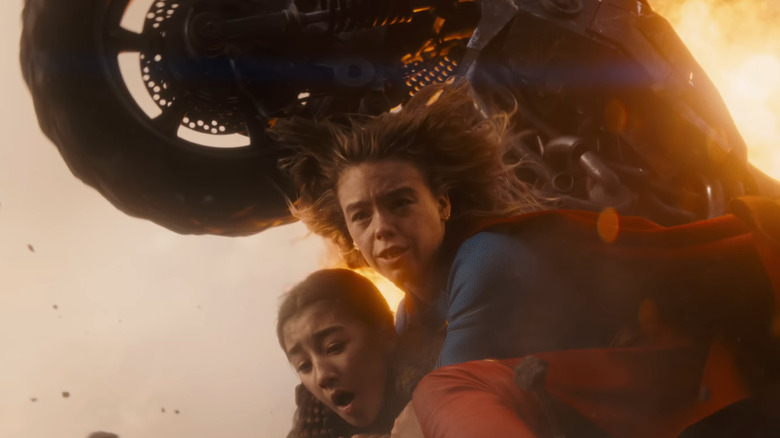
Perhaps the most immediate factor was the lukewarm reception. While individual performances—specifically Milly Alcock’s portrayal of the titular hero and Jason Momoa’s turn as Lobo—received praise from segments of the critical community, the consensus was that the film lacked the cohesive vision required to elevate it above the genre’s tropes. A 55% approval rating on Rotten Tomatoes is, for a film of this scale, an anchor. When audiences are presented with a "B-" CinemaScore, the message is clear: the film failed to connect on an emotional level. In a crowded marketplace, where Toy Story 5 continued to dominate with a $70 million second weekend, Supergirl simply could not justify its place as a priority for casual viewers.

2. The Budgetary "Glass Ceiling"
The $170 million production budget is arguably the most significant tactical error. In the current economic climate, a film of this size needs to clear $425 million globally to approach break-even territory—a target that, given current trends, is now mathematically impossible. The issue is not the quality of the production, but the business logic of allocating "tentpole" capital to a character that lacks the deep-seated brand recognition of Batman or Superman. Had the film been produced with a more modest budget—closer to the $80 million range—the financial narrative might have been one of a "disappointment" rather than a "disaster."
3. The Brand Power Deficit
DC has historically relied on its "Big Three"—Batman, Superman, and Wonder Woman—to carry the weight of its cinematic universe. While Supergirl is a legacy character, she does not possess the same inherent, multi-generational draw as the Justice League’s core. The "new version" fatigue also played a role; with multiple iterations of DC characters appearing across different media, audiences are increasingly confused by the lack of continuity. When a film relies on the promise of a "shared universe," it is only as strong as the audience’s investment in that universe’s stability.
4. The Erosion of Institutional Trust
DC Studios has struggled for years to maintain a consistent tone or narrative trajectory. From the fragmented success of the DCEU to the polarizing reception of various reboots, the studio has failed to earn the "automatic" trust that Disney-Marvel enjoyed throughout the 2010s. This "wait-and-see" approach by fans meant that Supergirl had to prove its worth from day one. Without the momentum of a string of successes, it lacked the benefit of the doubt.
5. The "Superhero Fatigue" Reality Check
Finally, the industry must acknowledge that the era of the "automatic hit" is over. The days when any film featuring a caped crusader could generate $800 million on autopilot are gone. Audiences are now more selective, favoring spectacle and novelty over standardized franchise entries. Supergirl opened to smaller numbers than Morbius, a film that only achieved profitability due to a significantly smaller budget. The bar for "must-see" entertainment has been raised, and for many viewers, the traditional superhero origin story no longer clears it.
Official Responses and Industry Sentiment
While Warner Bros. and DC Studios have remained relatively tight-lipped regarding the specific financial projections following the opening, the internal sentiment is reportedly one of re-evaluation. Sources suggest that the studio is now reconsidering its strategy regarding the pacing of upcoming projects, potentially pivoting toward smaller, more distinct, and less costly entries in the DC canon. The focus is shifting from "universe-building at all costs" to "quality-first" storytelling.
Long-term Implications: A Turning Point?
The failure of Supergirl serves as a sobering reminder to all major studios that brand association is no longer a substitute for compelling, original storytelling. The financial reality of the "Supergirl" collapse may lead to a permanent reduction in the scale of superhero productions across the board.

Moving forward, the industry will likely see a move away from the massive, $200 million+ budget models that dominated the last decade. Instead, we may see a rise in "mid-budget" genre films that prioritize character development over world-building. For DC, the challenge is clear: if they are to recover, they must stop relying on the momentum of the past and start building a future that earns the audience’s trust, one ticket at a time. The cape may still be in the closet, but for now, the Girl of Steel has reminded the world that even the most powerful icons are not immune to the harsh gravity of the box office.










