

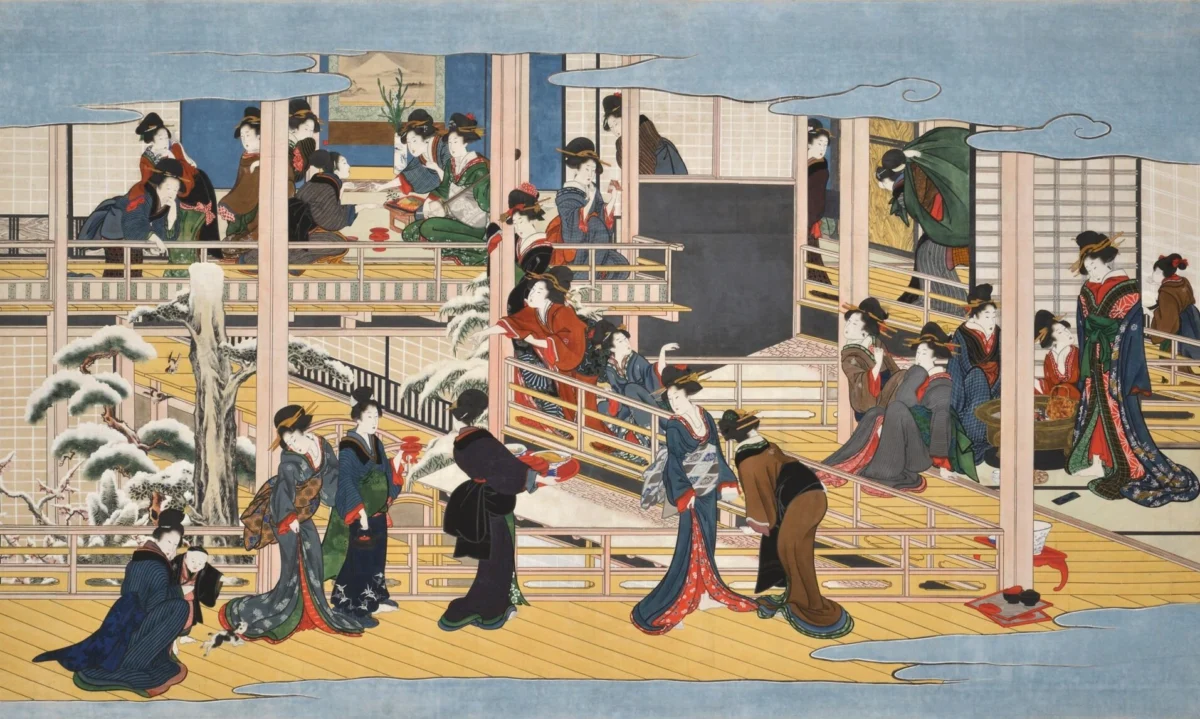
The neighborhood of Kiyosumi-Shirakawa, now renowned for its artisanal coffee shops and tranquil garden aesthetics, hides a past far more vibrant and complex than its modern, hushed atmosphere suggests. Long before it was a destination for urbanites seeking respite, the Fukagawa region—of which Kiyosumi-Shirakawa is the heart—was the epicenter of a cultural revolution. It was here that the Tatsumi Geisha (辰巳芸者) emerged, redefining the role of women in Japanese entertainment and establishing an archetype of "chic" that challenged the rigid social stratifications of the Edo period.
The Origins of a Shitamachi Powerhouse
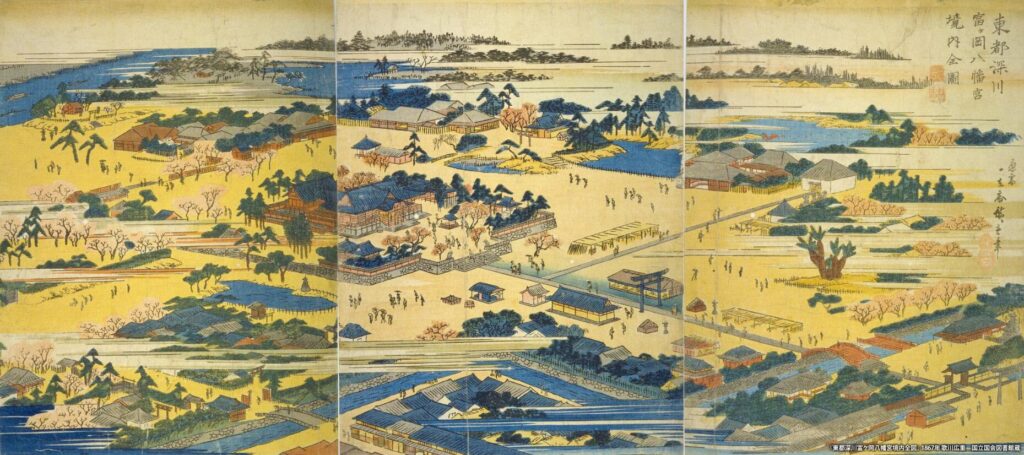
Fukagawa was not always the bustling commercial hub of Edo. Until 1590, the region was primarily marshland, an uninviting expanse of silt and reeds. The transformation of this geography began under the direction of Tokugawa Ieyasu. Recognizing the strategic value of the area, the future Shogun ordered the construction of the five-kilometer Onagi Canal, a vital artery designed to facilitate the transport of salt and military supplies.
As Edo grew, so did the need for labor. A developer from Osaka named Fukagawa Hachirōzaemon spearheaded the reclamation of the wetlands, eventually lending his name to the district. Following the Great Meireki Fire of 1657, which decimated the center of the capital, the Shogunate encouraged development in the eastern, canal-laced districts. Fukagawa quickly became the city’s most energetic shitamachi (downtown)—a realm of warehouses, fish markets, and, most crucially, timber yards.
The influx of laborers and merchants created a lucrative economy, and where there is surplus capital, there is invariably a demand for entertainment. By the 1700s, Fukagawa had blossomed into a hub for "off-books" pleasure, a stark contrast to the state-sanctioned, walled-off enclave of the Yoshiwara district in Asakusa.
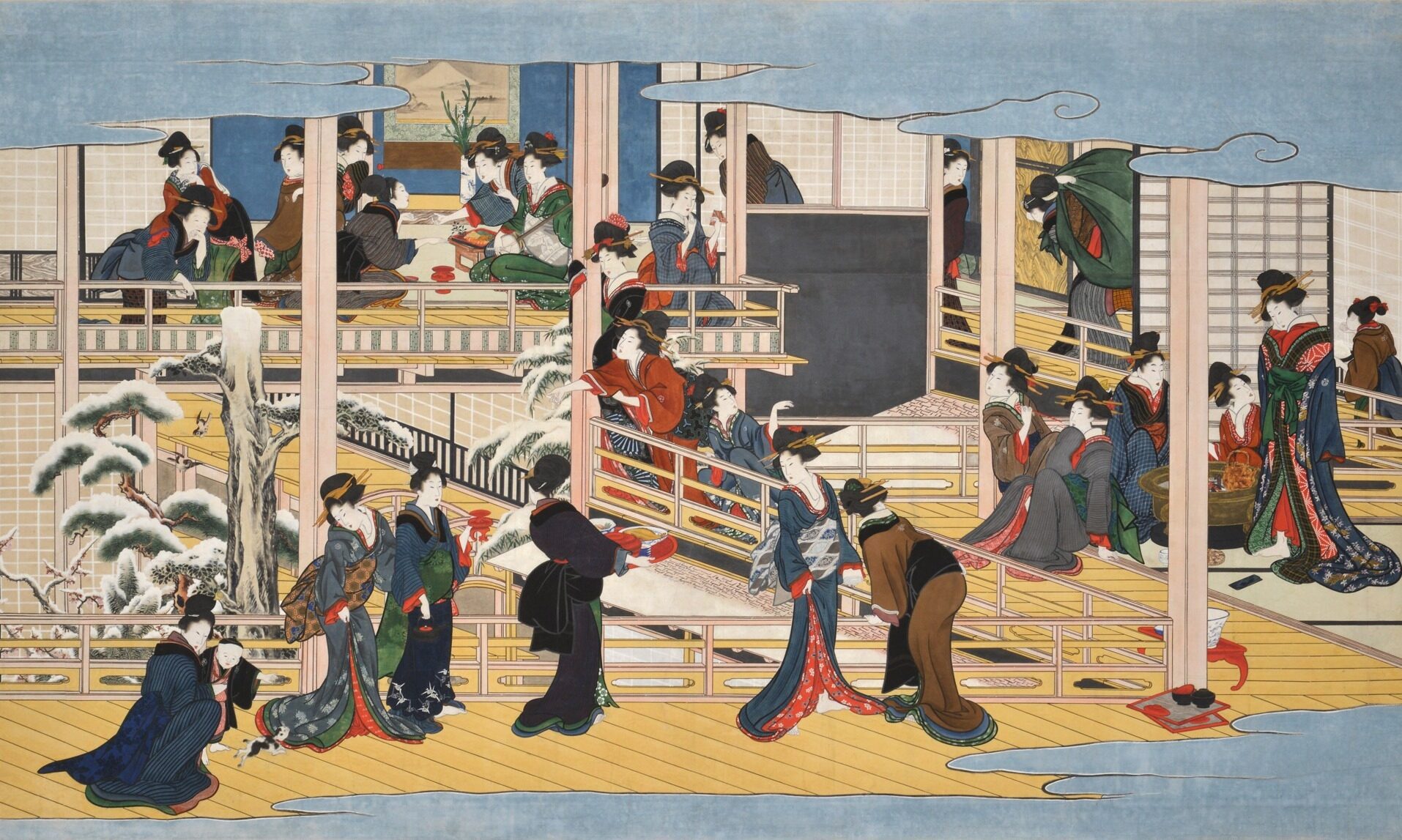
Kikuya and the Birth of the "Art-First" Geisha
The history of the Tatsumi Geisha is inextricably linked to one visionary woman: Kikuya. Historical records regarding her arrival are hazy, with accounts placing her appearance in Fukagawa anywhere between 1700 and 1730. However, the impetus for her move is consistent across lore: she was a victim of professional jealousy.
Kikuya had previously worked in the Yoshichō district of Nihonbashi, an area dominated by kagema (male geisha) who catered to the kabuki theater world. As a skilled dancer (odoriko), Kikuya’s talent was so formidable that it invited the ire of her male counterparts, who successfully orchestrated her expulsion. Undeterred, she relocated to the booming docks of Fukagawa.
It was in this new, frontier-like environment that Kikuya formulated a revolutionary approach. She began training women in the arts of hospitality, traditional dance, and the shamisen, adopting the defiant motto: "We sell art, not lust."
This was a masterful stroke of social engineering. By framing their services as high-minded performance rather than transactional intimacy, Kikuya and her protégées created a legal shield against the Shogunate’s purges of unlicensed pleasure quarters. While contemporary records suggest that these geisha were not entirely divorced from the sex trade, their emphasis on the arts allowed them to cultivate a distinct brand identity that prioritized charisma, wit, and performance.
Chronology of the Tatsumi Geisha
- 1590–1600: Tokugawa Ieyasu initiates the reclamation of the Fukagawa wetlands, digging the Onagi Canal.
- 1657: Following the Great Meireki Fire, the Shogunate mandates the expansion of residential and commercial zones into the eastern districts.
- Early 18th Century: The arrival of Kikuya in Fukagawa marks the beginning of the transition from unlicensed prostitution to the "art-first" model.
- 1751–1764 (Hōreki Era): The term onna-geisha (female geisha) gains common usage.
- 1787–1793 (Kansei Reforms): The Shogunate, led by Matsudaira Sadanobu, attempts to suppress unlicensed prostitution. The Tatsumi Geisha survive by emphasizing their status as performers.
- 1837–1843 (Tenpō Reforms): Mizuno Tadakuni launches a massive crackdown on the okabasho (unlicensed quarters). Fukagawa faces intense scrutiny; many geisha are forced to flee to other districts.
- 1860s–1920s: Post-restoration, the district enjoys a second boom fueled by the Fudō-dō temple and a vibrant rice market.
- 1958: Enactment of the Anti-Prostitution Law marks the definitive end of the traditional pleasure-quarter model.
- 1970: Timber yards are relocated to Shin-Kiba, effectively gutting the local economy.
- 1982: The Fukagawa Three-Trade Guild, which managed the remaining geisha houses, officially dissolves.
The Aesthetic of Iki: The "Masculine" Chic
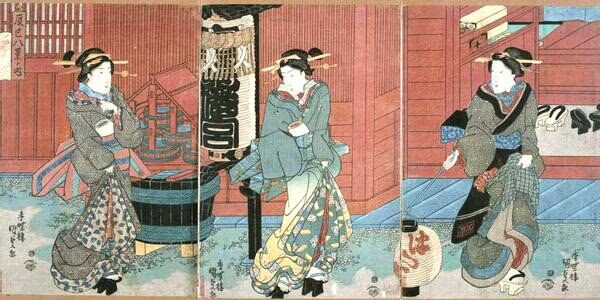
The Tatsumi Geisha were not merely performers; they were style icons. In contrast to the elaborate, flashy ornamentation of the Yoshiwara courtesans, the Tatsumi Geisha adopted a philosophy of iki—a form of "chic" defined by restraint, understated elegance, and a hint of defiance.
Their signature look involved grey haori (formal coats) rather than the flamboyant, heavy silk kimono seen in other districts. They were known for walking barefoot, even in the biting cold of winter, and for their light, natural-looking makeup.
Perhaps most striking was their adoption of masculine professional names and speech patterns. By taking on names like Otokichi or Tsutakichi, they further blurred the lines between the performer and the patron, effectively neutralizing the patriarchal gaze of the authorities. This "masculine" aesthetic was not just a fashion choice; it was a survival mechanism that allowed them to operate with a degree of agency and autonomy rare for women of the era.
Implications: A Lasting Cultural Shift
The success of the Tatsumi Geisha had profound implications for the trajectory of Japanese culture. By the Meiji era, the word "geisha" had become synonymous with women, successfully usurping the male-dominated tradition of the Edo period.
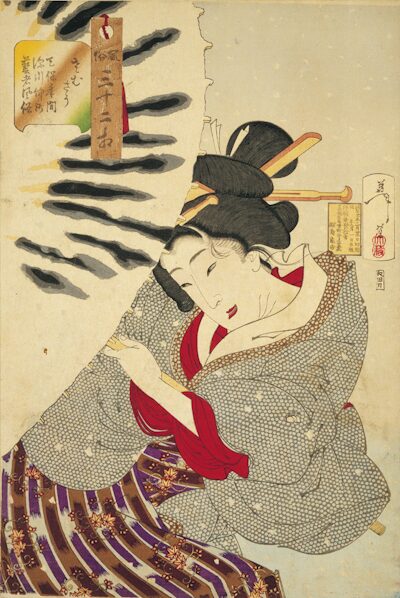
The legacy of the Tatsumi Geisha represents a democratization of beauty and performance. While Kyoto geisha are often viewed as the guardians of high-culture elegance, the Tatsumi Geisha were the champions of the shitamachi spirit—warm, big-hearted, and grounded in the realities of a working-class timber town. They proved that sophistication was not the sole province of the elite, but could be forged in the canals and warehouses of a growing city.
Modern Challenges and the Ghost of Tradition
The late 20th century saw the gradual erosion of the Fukagawa district. As the economy shifted toward modern industry, the traditional guild structures that supported the geisha fell away. The 1956 Anti-Prostitution Law effectively criminalized the historical business model, and the 1970 relocation of the timber yards removed the district’s primary economic engine.
In recent years, there have been attempts to preserve this heritage. The late Australian anthropologist Fiona Graham, known as Sayuki, famously worked to revive the traditions of the Fukagawa geisha, residing in the area with apprentices. Her efforts, while controversial among some traditionalists, highlighted the enduring international fascination with the geisha as a symbol of Japanese identity.
Today, while the physical districts of the Tatsumi Geisha have largely faded into the fabric of urban Tokyo, their influence remains palpable. They serve as a testament to a group of women who, faced with social exclusion and legal suppression, utilized art as a medium for liberation. The Tatsumi Geisha did not merely perform for the men of Edo; they defined the aesthetic and social character of the city, leaving behind a legacy that continues to intrigue and inspire generations of cultural historians and travelers alike.
Sources:
- Kotobank: Encyclopedia entries on Tatsumi Geisha and the Fukagawa pleasure districts.
- Japaaan: Historical analysis of the Hōreki-era female geisha evolution.
- Wikipedia (JP): Comprehensive records on the Kansei and Tenpō Reforms and their impact on Edo-era social structures.
- Josai University Museum: Collection database regarding 19th-century geisha culture.
- Note.com: Detailed discourse on the aesthetic history of the Tatsumi Geisha’s grey haori.












No comments yet. Be the first to join the conversation!