

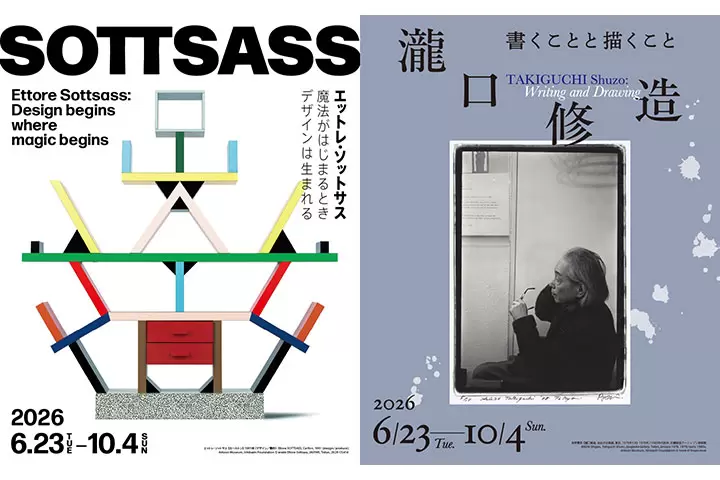
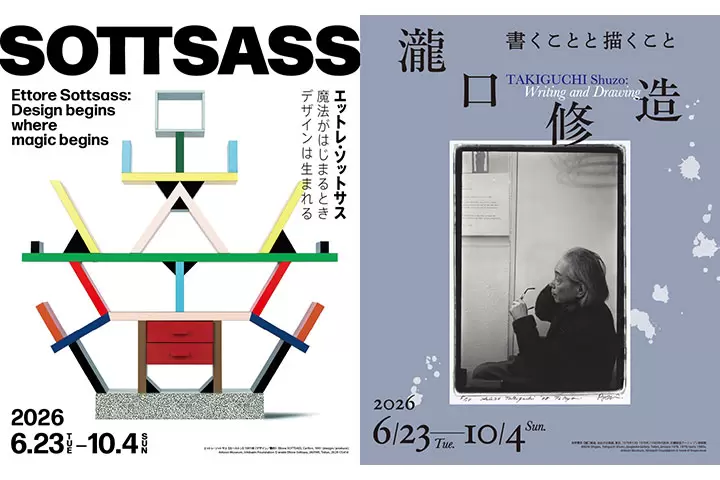
This summer, Tokyo’s cultural landscape will be transformed by a rare, ambitious dual exhibition at the Artizon Museum in Kyobashi. From June 23 to October 4, 2026, the museum will present "Ettore Sottsass: Design begins where magic begins" and "Shuzo Takiguchi: Writing and Drawing." These exhibitions, running concurrently, promise a profound dialogue between two titans of the 20th century: the Italian design revolutionary Ettore Sottsass and the Japanese surrealist visionary Shuzo Takiguchi.
By juxtaposing the vibrant, postmodern industrialism of Sottsass with the experimental, poetic visuality of Takiguchi, the Artizon Museum offers visitors a unique opportunity to explore the intersection of design, literature, and the avant-garde.
Main Facts: A Landmark Exhibition Event
The Artizon Museum has curated these two retrospectives to highlight the transformative power of art and design in the post-war era.
"Ettore Sottsass: Design begins where magic begins" serves as the first major retrospective of the Italian designer’s work in Japan. Boasting a collection of over 100 pieces held by the Ishibashi Foundation, the exhibition tracks Sottsass’s evolution from his foundational years in the 1950s to his final creative period. It emphasizes his rejection of the "cold" rationalism of industrial design in favor of a human-centric, magical, and humorous approach to the objects we live with.
"Shuzo Takiguchi: Writing and Drawing" offers a comprehensive survey of the life of one of Japan’s most influential cultural critics. Featuring approximately 140 items, the exhibition deconstructs the boundary between the written word and the visual image. It explores Takiguchi’s transition from a poet influenced by European Surrealism to an artist who experimented with radical techniques, including collaborations with icons like Marcel Duchamp and Joan Miró.
Both exhibitions represent a significant commitment by the Artizon Museum to contextualize the historical weight of international modernism within the contemporary Japanese consciousness.
Chronology: The Evolution of Two Visionaries
The Life and Legacy of Ettore Sottsass (1917–2007)
- 1950s: Sottsass begins his career, rising to prominence as a designer for the iconic Italian firms Olivetti and Poltronova. His early work balances industrial necessity with an avant-garde flair.
- 1981: The pivotal moment in his career occurs with the formation of the Memphis Group. This international collective of designers challenged the status quo, producing postmodern furniture and objects defined by bold patterns, unexpected colors, and kitsch sensibilities.
- Late 20th Century: Sottsass transitions into a philosopher of design. He begins to view design as a tool to improve the "fate" and "life" of the user, moving away from purely functionalist approaches toward a style that prioritized the emotional experience of the inhabitant.
The Trajectory of Shuzo Takiguchi (1903–1979)
- 1920s: Takiguchi begins his career as a poet, deeply immersed in the burgeoning Surrealist movement. He acts as a primary conduit between European avant-garde ideas and the Japanese intellectual scene.
- 1930s–1950s: He solidifies his reputation as a formidable art critic, writing extensively on the intersection of politics, philosophy, and aesthetics in a rapidly modernizing Japan.
- 1960: Marking a major shift in his creative practice, Takiguchi begins the serious production of his dessins (drawings). He begins to ask the fundamental question: "If I am a man of words, what does it mean to create a visual mark on a page?"
- 1970s: His final years are spent synthesizing his roles as critic, planner, and visual artist, leaving behind a legacy that bridges the gap between the literary and the plastic arts.
Supporting Data: Why These Works Matter
The scale of these exhibitions is substantial, reflecting the depth of the Ishibashi Foundation’s archival efforts.
- The Sottsass Collection: With over 100 pieces, the exhibition provides a rare chronological overview of the Memphis era and beyond. It is not merely a display of furniture, but a study in cultural anthropology. By analyzing the "freshness" and "humor" in his designs, visitors can observe how Sottsass sought to restore the vibrancy of human living.
- The Takiguchi Survey: The 140-item collection at the Artizon includes not only his own experimental visual works but also crucial documents and artworks from his network of peers, including Paul Klee, Marcel Duchamp, and Joan Miró. This context provides a vital "map" of the intellectual climate of 20th-century art.
The data suggests that while the two men worked in different media and different continents, they shared a common goal: the desire to break the rigid structures of their time—Sottsass through the medium of the "object," and Takiguchi through the medium of the "word" and the "line."
Official Perspectives and Curatorial Intent
The Artizon Museum, by hosting these exhibitions simultaneously, is making an implicit statement about the fluidity of creative identity.
The curatorial team suggests that the common thread between these two disparate figures is the rebellion against convention. Sottsass rebelled against the "rationalism" of industrial manufacturing, which he felt dehumanized the home environment. Takiguchi rebelled against the limitations of language, seeking a visual vocabulary that could express the surreal, the subconscious, and the poetic in ways that prose could not.
For international visitors and local art enthusiasts alike, the museum emphasizes that these exhibitions are not just retrospectives; they are invitations to rethink the objects we own and the words we use.
Implications: A New Way of Seeing the Museum Experience
The choice to host these exhibitions until October 2026 places the Artizon Museum at the heart of Tokyo’s cultural summer. The implications for the local art market and the broader design community are significant.
- Educational Impact: By providing free admission to students (with reservations), the museum is positioning itself as a hub for the next generation of Japanese designers and critics to engage with the history of the avant-garde.
- Technological Integration: The reliance on the Lawson Ticket system (Loppi) and the emphasis on digital reservation platforms reflect the modern, streamlined approach to museum-going in Tokyo. It underscores how major cultural institutions are merging traditional curation with 21st-century ticketing efficiency.
- Cultural Synthesis: The exhibition forces a cross-disciplinary dialogue. It challenges the museum-goer to consider: "Is a chair a piece of art?" and "Is a drawing a piece of poetry?" This blurring of lines is precisely the kind of intellectual provocation that defines contemporary museum curation.
Visitor Information and Practical Logistics
For those planning to attend this monumental event, please note the following operational details:
- Venue: Artizon Museum (1-7-2 Kyobashi, Chuo-ku, Tokyo).
- Dates: June 23, 2026, to October 4, 2026.
- Hours: 10:00 AM – 6:00 PM (Fridays open until 8:00 PM). Last entry 30 minutes before closing.
- Closures: Mondays, July 21st, and September 24th. (Note: The museum remains open on public holidays July 20th and September 21st).
- Admission:
- Online Advance Ticket: ¥1,200
- At the Door: ¥1,500
- Students (High school and above): Free (Reservation required).
- Junior High School students and below, and persons with a disability certificate (plus one companion): Free.
Accessing the Museum
The Artizon Museum is highly accessible via Tokyo’s extensive rail network:
- JR Tokyo Station: 5-minute walk from the Yaesu Central Exit.
- Kyobashi Station (Ginza Line): 5-minute walk from Exits 6 and 7.
- Nihonbashi Station: 5-minute walk from Exit B1.
Ticketing Guidance
Tickets are available via the Lawson Ticket website. Once reserved, tickets can be printed at any Lawson or Ministop convenience store in Japan using the "Loppi" terminal. Given the anticipated popularity of these retrospectives, organizers strongly recommend booking online in advance to ensure entry and to benefit from the discounted rate.
Disclaimer: As of the time of writing, all event information is subject to change. Visitors are encouraged to verify details via the official Artizon Museum website or through the Lawson Ticket portal prior to their visit.












No comments yet. Be the first to join the conversation!