

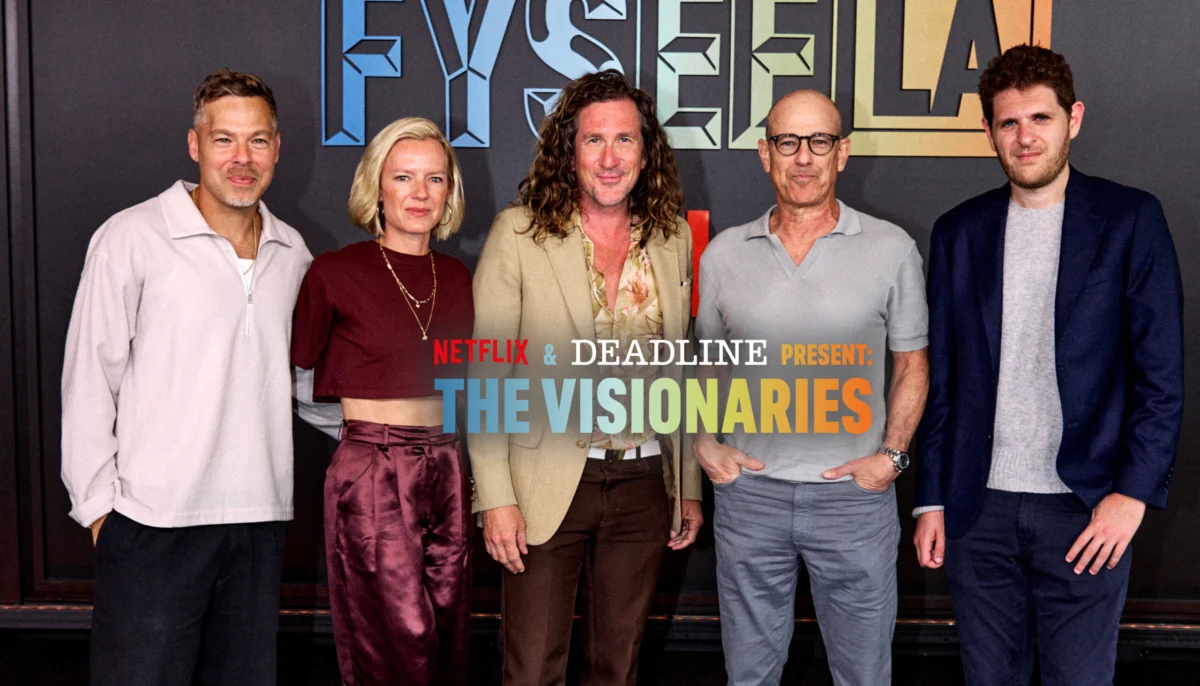
In the landscape of contemporary streaming, television creators are generally divided into two distinct camps: those who offer a digital sanctuary from the relentless barrage of global turmoil, and those who lean directly into the fracture. For the creative minds behind a powerhouse roster of upcoming Netflix series—including The Beast in Me, Death by Lightning, Monster: The Ed Gein Story, and Black Rabbit—the choice is clear. They are not interested in providing a sedative; they are interested in performing an autopsy on the modern psyche.
During the recent "Netflix & Deadline Present: The Visionaries" panel, the architects of these high-stakes dramas discussed the challenging, often uncomfortable, process of transmuting societal anxieties into compelling narrative television. Whether exploring the mechanics of a presidential assassination or the claustrophobia of New York’s criminal underworld, these creators are finding that the most effective way to address the stresses of the 21st century is to hold a mirror up to our collective fears.
Thematic Resonance: Why Dark Stories Persist
The thematic tapestry of these shows is undoubtedly grim, weaving together threads of murder, systemic deceit, profound grief, and the erosion of familial bonds. Yet, these projects have found a ravenous, captive audience. This success suggests a cultural appetite for stories that mirror the volatility of our times.
"Loss was absolutely on the Post-It on my computer," says Howard Gordon, the veteran showrunner behind The Beast in Me. "I think one of the great things about writing is getting to work through these very universal questions. It sort of collided with the societal kind of finger-pointing that we seem to be in this moment of not accepting squarely our own stories."

For Gordon and his peers, these shows are not merely exercises in shock value. They are investigations into why we are so divided, why we are so anxious, and how the human spirit holds up under the weight of such relentless external pressure.
Chronology of Trauma: Historical Mirrors in Modern TV
One of the most striking trends among these creators is the use of historical narratives to dissect current social ills. Mike Makowsky, the visionary behind Death by Lightning, serves as a prime example. The series, adapted from Candice Millard’s nonfiction work Destiny of the Republic: A Tale of Madness, Medicine, and the Murder of a President, focuses on the 1881 assassination of James Garfield.
Despite the 140-year gap, Makowsky views the story as hyper-relevant. "The book felt utterly contemporary to me," he noted. "It has so much to say about mental illness, political violence, and the perils of hero worship and chasing fame." Makowsky acknowledged the obscurity of the event, joking that many in the room likely didn’t realize Garfield had been assassinated until they encountered the project. By focusing on the parallel lives of the President and his assassin, Charles J. Guiteau, the series highlights the fragility of political stability—a theme that feels chillingly resonant in today’s polarized climate.
Similarly, Ian Brennan’s Monster: The Ed Gein Story utilizes the mid-century landscape to examine the birth of the "modern monster." Brennan argues that the post-World War II era fundamentally altered our definition of evil. "Before the horrors of the Holocaust came out, what we thought were monsters were literally like the Phantom of the Opera, Dracula, and the Wolfman," Brennan explained. "After Auschwitz, that all changed. The monster became us, and Ed Gein was stuck squarely in the middle of that." By framing Gein’s story within the context of isolation and the massive paradigm shift of the 20th century, Brennan aims to explore the intersection of untreated mental health crises and the inherent darkness within the human condition.

Supporting Data: The Delicate Balance of Engagement
While the creators are dedicated to exploring "harsh truths," they are also masters of the medium’s logistical constraints. The primary challenge in creating "anxiety-inducing" television is sustainability. If a viewer feels the intensity of a high-octane thriller for too long without respite, they eventually tune out—or, as the producers suggest, they become physically overwhelmed.
Kate Susman, producer of the upcoming Black Rabbit, offered a pragmatic perspective on this tonal tightrope. Referencing the relentless pacing of the film Uncut Gems, Susman noted, "You couldn’t watch Uncut Gems for eight hours, because you’d tear your hair out. That movie was very inspirational to us, but we knew in the beginning, everyone will throw up if you have to watch that for eight hours."
Black Rabbit, which stars Jude Law and Jason Bateman, centers on a restaurateur pulled into the New York criminal underworld due to his brother’s disastrous financial decisions. It is a story of mounting pressure, debt, and betrayal. The goal for Susman and her writing partner, Zach Baylin, was to simulate the visceral experience of living in a city that never stops, where the next crisis is always waiting around the corner.
"Our instinct was to try and capture a bit of that anxiety of what it feels like to be in New York," Baylin explained. "Just at any time—trying to run to make the subway, to get to work, to realize you’re in debt, and your secrets are starting to spill out. We just didn’t want there to be a moment where there was much breathing room."

Official Responses and Creative Philosophies
The "Visionaries" panel underscored a unified philosophy among these creators: the role of the storyteller is to challenge the audience’s comfort zone. By avoiding the "escapism" model of television, they are providing a form of catharsis.
Whether it is the clinical examination of schizophrenia in Monster, the political volatility in Death by Lightning, or the urban desperation of Black Rabbit, these shows function as a societal barometer. The creators emphasized that they are not trying to provide answers, but rather to provoke questions.
When asked about the potential for viewer fatigue, the panelists were optimistic. They argued that audiences are smarter and more resilient than they are often given credit for. The key is in the execution—balancing the relentless "gas-pedal" approach with moments of character-driven humanity that ground the narrative.
Implications for the Streaming Era
The shift toward "prestige anxiety" television carries significant implications for the future of streaming. As Netflix continues to dominate the cultural conversation, its investment in these high-concept, emotionally taxing dramas suggests a strategic move to secure long-term viewer engagement.

If audiences are seeking something more substantial than light entertainment, these creators are clearly positioning themselves to meet that demand. By tackling themes of mental health, political history, and the moral ambiguities of crime, they are elevating the medium of television from a passive distraction to an active participant in our cultural discourse.
As the industry moves forward, the work of Gordon, Makowsky, Brennan, and the team behind Black Rabbit serves as a testament to the power of the "unpleasant" story. In a world that is increasingly complex, there is a clear, demonstrated need for art that acknowledges that complexity, honors the reality of the struggle, and refuses to look away from the beast in the room.
Ultimately, these series represent a maturation of the streaming audience. We are no longer just looking for the next "comfort watch." We are looking for narratives that validate our own sense of unease, providing a structure for the chaos we see in the news and the struggles we face in our private lives. In that, these creators have found not just a formula for success, but a vital role in our collective processing of the modern experience.











No comments yet. Be the first to join the conversation!