

The aerospace industry is currently navigating a period of intense scrutiny and rapid technological maturation. From the quiet promise of NASA’s next-generation supersonic research to the regulatory hurdles facing private sector heavyweights like SpaceX and Blue Origin, the last seven days have served as a microcosm of the risks and rewards inherent in modern space and aviation exploration. As agencies and corporations push the boundaries of what is mechanically possible, the interplay between innovation and safety oversight has never been more prominent.
The Quest for Quiet: NASA’s X-59 Supersonic Campaign
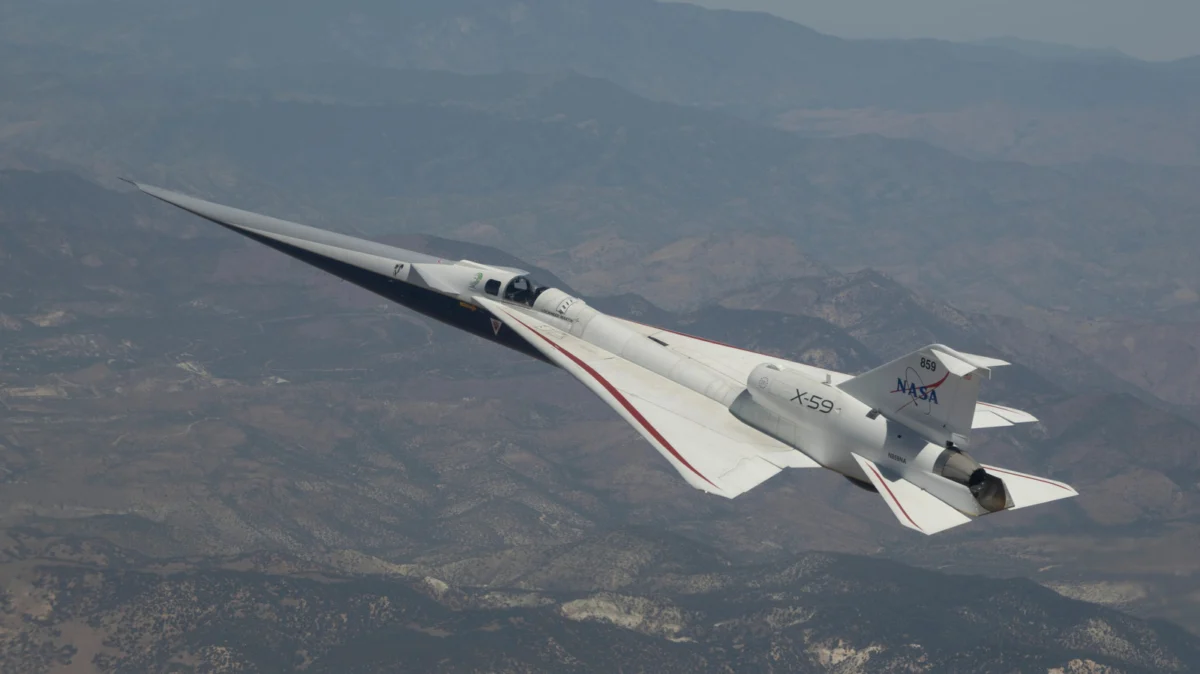
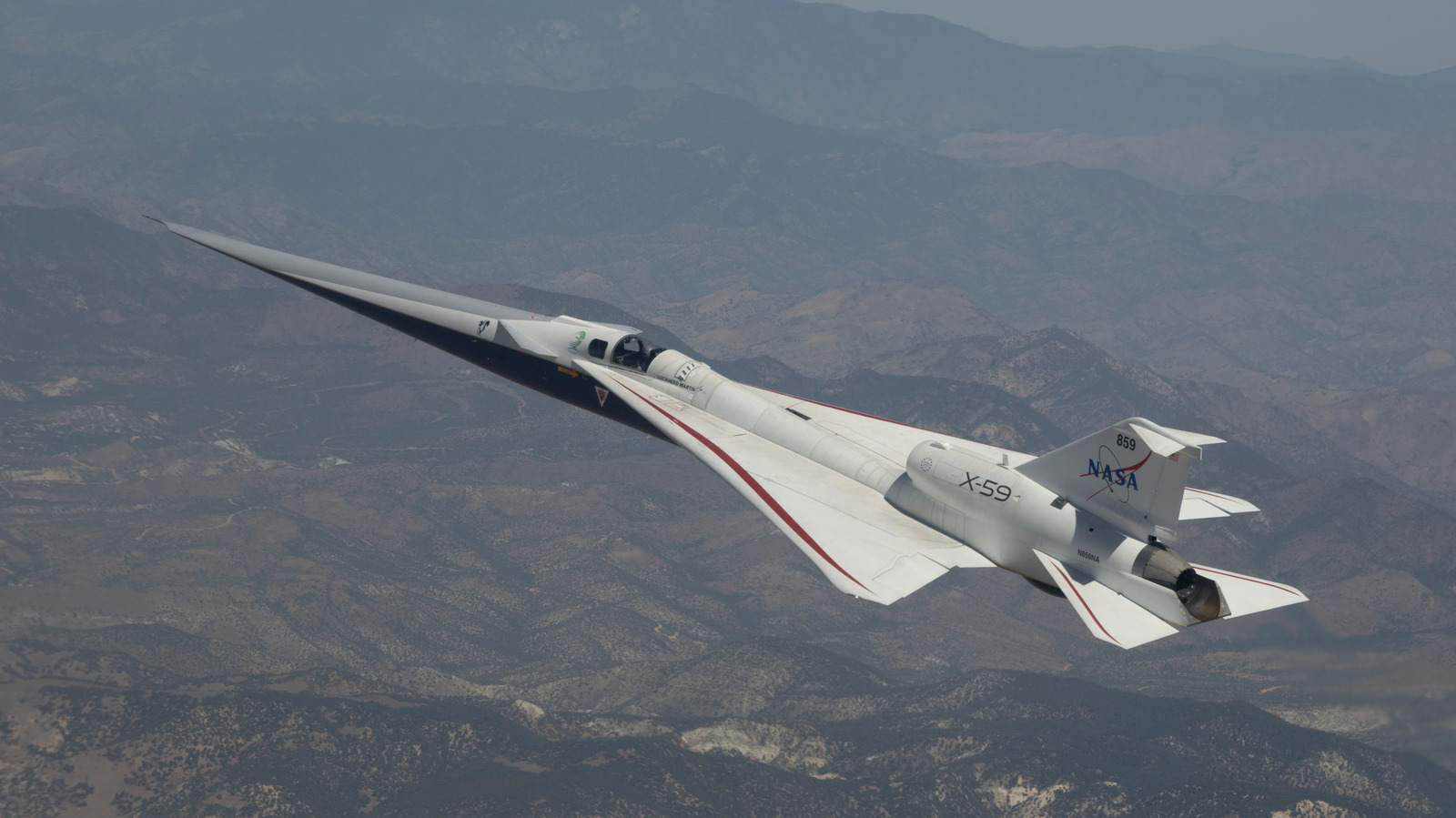
For over a decade, NASA has been methodically working to overcome the "sonic boom" hurdle—the primary barrier preventing the widespread commercial use of supersonic aircraft over land. The result of this research is the X-59, a "quiet" supersonic research aircraft designed to replace the thunderous crack of a traditional sonic boom with a soft, unobtrusive "thump."
Chronology and Technical Milestones
Since its inaugural flight in October of last year, the X-59 has completed a series of low-speed evaluation flights, providing engineers with the flight data necessary to validate the aircraft’s unconventional airframe design. NASA has officially announced that the program is now entering its most critical phase: supersonic testing.
In early June, the X-59 is scheduled to break the sound barrier, targeting speeds in excess of 630 mph at an altitude of approximately 43,000 feet. This will be the first of a tiered testing regimen. Following the initial supersonic milestone, the team will progress to "mission conditions" testing, pushing the aircraft to Mach 1.4 (roughly 925 mph) at 55,000 feet. The final phase of this current flight campaign aims for the aircraft’s design speed of Mach 1.6—approximately 1,218 mph—at an altitude of 60,000 feet.
The Role of the Chase Plane
Crucially, NASA is managing expectations regarding the "quiet" nature of the flight. For the immediate future, the X-59 will be accompanied by a traditional supersonic chase plane. Because the chase plane will be operating in a manner that creates a standard, high-decibel sonic boom, it will effectively mask the acoustic profile of the X-59. NASA officials have noted that the primary objective of this phase is structural and performance verification; the sonic signature analysis will come later, once the aircraft can be tested in isolation to ensure that the "thump" is as quiet as laboratory simulations have predicted.
SpaceX Starship: The FAA’s "Mishap" Investigation
While NASA’s aviation branch moves toward high-speed milestones, the private space sector is grappling with the realities of orbital launch development. SpaceX’s Starship V3, which launched last week, has been officially grounded by the Federal Aviation Administration (FAA) following a technical "mishap" involving the Super Heavy booster.
The Anatomy of the Failure
The mission achieved several of its primary objectives, including successful stage separation and the insertion of the Starship upper stage into its intended trajectory. However, the Super Heavy booster, which is intended to be a reusable asset, suffered a failure during its return to Earth.
According to SpaceX’s post-flight analysis, the booster initiated its directional flip maneuver and attempted a boostback burn to return to the launch site. During this critical sequence, the vehicle was unable to ignite all required engines. The resulting partial burn was insufficient to maintain the flight path, leading to a "hard splashdown" in the Gulf of America. While the upper-stage Starship successfully reached its target destination in the Indian Ocean, the loss of the booster constitutes a formal mishap under FAA regulations.
Official Response and Regulatory Implications
The FAA issued a prompt statement confirming that the May 22 launch of Flight 12 resulted in a mishap. "There are no reports of public injury or damage to public property," the agency clarified, emphasizing that public safety remains the primary mandate.
The FAA has mandated a formal, SpaceX-led investigation into the engine ignition failure and the subsequent booster loss. The agency will oversee every step of this inquiry, requiring the company to submit a final report that identifies the root cause and outlines necessary corrective actions. While such groundings are disruptive, they are a standard feature of the FAA’s oversight of the burgeoning commercial space industry. SpaceX has historically navigated these investigations with efficiency, often returning to the launchpad within a matter of months.
Blue Origin’s New Glenn and the Volatility of Launchpads
The aerospace industry’s week was further complicated by the situation at Blue Origin. Following the grounding of the New Glenn rocket last month due to an orbital insertion failure, the company had just received clearance from the FAA to resume flight operations.
However, the road to recovery was abruptly halted on Friday when a New Glenn vehicle suffered an explosion during a routine hotfire test at Cape Canaveral. While investigations into that incident are in their infancy, the event serves as a stark reminder of the immense energies involved in liquid-propellant rocketry. The proximity of these events—SpaceX’s landing failure and Blue Origin’s launchpad explosion—highlights the high-stakes environment in which these companies operate as they race to establish the next generation of heavy-lift capabilities.
Synthesis: What This Means for the Future of Flight
The convergence of these events illustrates a significant inflection point in aerospace history. We are seeing a transition where the "impossible" is becoming the "operational."
1. The Normalization of Failure
The industry is currently in a phase of rapid prototyping. For SpaceX, the "fail-fast" philosophy is baked into their development cycle. The FAA’s involvement, while perceived by some as a hurdle, acts as a necessary buffer to ensure that the drive for speed does not compromise the long-term safety of the commercial launch market.
2. The Return of Supersonic Travel
NASA’s X-59 represents a potential shift in the commercial aviation landscape. If the "quiet thump" technology is validated, the regulatory bans on supersonic flight over land—which have existed since the era of the Concorde—could be revisited. This would open the door to a new generation of high-speed commercial travel, effectively shrinking the globe.
3. The Infrastructure of Space
The recent issues with both Starship and New Glenn point to the immense difficulty of vertical landing and rapid reusability. Both companies are not merely trying to reach orbit; they are trying to revolutionize the economics of space access by making the vehicle as reusable as a commercial airliner. The current string of mishaps is, in many ways, the "growing pains" of an industry transitioning from government-funded exploration to a sustainable, commercial ecosystem.
Conclusion
As we look toward the remainder of the year, the aerospace sector faces a dual mandate: maintain the rigorous safety standards demanded by the public and regulators while accelerating the pace of innovation. The X-59’s upcoming supersonic tests will be watched by aviation enthusiasts and industry regulators alike, as it holds the key to the next evolution of air travel. Simultaneously, the resolutions of the Starship and New Glenn investigations will be instrumental in defining the reliability and safety protocols for the next era of orbital logistics.
While this week has provided its share of drama and technical setbacks, it is ultimately a reflection of a field that refuses to stand still. Whether it is breaking the sound barrier without the boom or perfecting the landing of massive orbital boosters, the current crop of engineers and scientists are effectively drafting the blueprint for the next century of human flight. The path is rarely linear, but the destination—a world of faster, cheaper, and quieter aerospace capability—remains clearly in sight.












No comments yet. Be the first to join the conversation!