Reynand Wu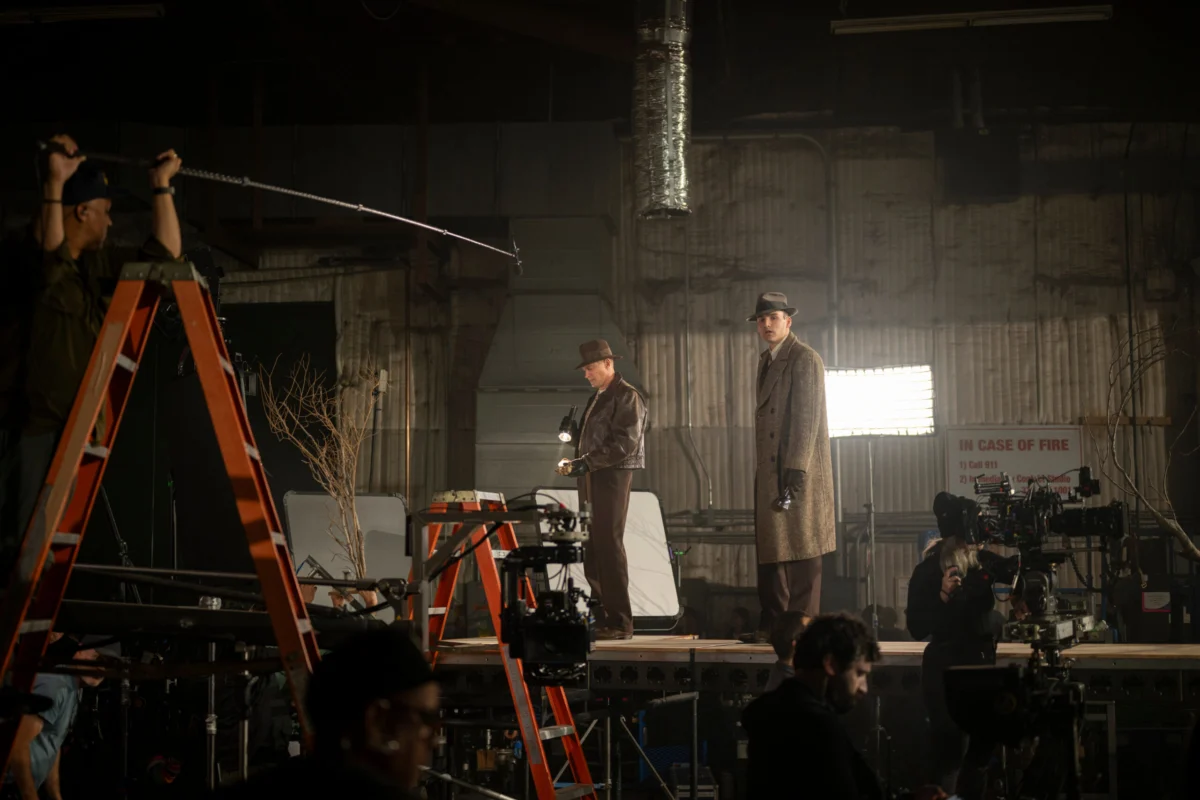
The chilling legacy of Ed Gein—a man whose crimes in the 1950s defined the archetype of the American serial killer—has returned to the cultural consciousness. Netflix’s latest installment in its Monster anthology, Monster: The Ed Gein Story, seeks to peel back the layers of the man behind the macabre myth. Starring Charlie Hunnam as the infamous Wisconsin ghoul, the eight-part series moves beyond the sensationalism of the tabloids to explore the claustrophobic, fractured psyche of a man whose horrific acts inspired cinematic touchstones like Psycho, The Texas Chainsaw Massacre, and The Silence of the Lambs.
At the heart of the series’ visual language is cinematographer Michael Bauman, who approached the project not merely as a production, but as an excavation of local history. By blending historical research with a sophisticated, light-starved aesthetic, Bauman and showrunner Max Winkler have crafted a visual descent into madness that redefines the true-crime genre.
The Roots of Horror: A Personal Connection
For Michael Bauman, the Ed Gein Story was more than a professional assignment; it was a homecoming. Having grown up in Wisconsin, Bauman possessed a unique, inherited cultural memory of the Plainfield Butcher. While many directors and cinematographers rely solely on archival transcripts and police reports, Bauman tapped into a living repository of local lore.
“I grew up in the area,” Bauman explains. “I was able to talk to family and friends who had vivid memories of that time—people who could describe the way Ed walked through town, the specific cadence of his movements, and the aura of dread he cast over the community.”
This localized perspective allowed the production to move away from the caricature of the "crazy hermit" and toward a grounded, haunting portrayal of a man living in the shadow of an overbearing, evangelical mother. By humanizing the environment of 1950s Wisconsin, Bauman and the production team were able to contrast the mundane, snow-covered beauty of the Midwest with the rotting, visceral reality hidden behind the walls of Gein’s farmhouse.
Crafting the Aesthetic: The Architecture of Dread
The collaboration between Bauman and showrunner Max Winkler—who previously partnered on the acclaimed Monsters: The Lyle and Erik Menendez Story—was rooted in an exhaustive visual audit. The pair reviewed over 300 films and historical visual references to determine how to translate Gein’s internal decay into external set design.
The Philosophy of Light and Shadow
The central tension of the series is established through a juxtaposition of exterior and interior environments. “It was really about revealing parts of the story through light,” says Bauman. “Max and I talked endlessly about how, outside, you have this gorgeous, bright Wisconsin winter day with snow reflecting the sun. But inside that house, it’s pitch black, claustrophobic, and suffocating.”
This intentional lighting strategy was executed in partnership with chief lighting technician and gaffer Manny Tapia. The goal was to maintain a sense of mystery that allowed the audience to see only what was necessary, forcing the viewer to project their own fears onto the darkness. “It wasn’t about pushing a lot of light into the room,” Bauman notes. “It was about creating enough contrast to catch the reflective nature of the characters’ faces as they realize the horrors surrounding them.”
Chronology of Discovery: The "Buxom Bird" Sequence
The pinnacle of this visual storytelling occurs in the sixth episode, titled "Buxom Bird." This episode serves as the narrative and psychological fulcrum of the series, documenting the moment police finally breached Gein’s home.
The scene is a masterclass in tension-building. As two officers enter the farmhouse, they are greeted by a sensory overload of decay: swarming flies, piles of refuse, and the remnants of human life desecrated for morbid utility. The camera work, orchestrated by Steadicam operator P. Scott Sakamoto—known for his work on Killers of the Flower Moon—uses a slow, deliberate tightening of the frame.
“Sakamoto brought some incredible ideas to the party,” Bauman recalls. “He suggested we start with wide shots, establishing the scale of the house. As the officers begin to realize the reality of what they are seeing, the camera gets closer and closer, mirroring their growing panic.”
When the officers discover a human heart boiling on the stove and the remains of victims, the score by composer Mac Quayle shifts to a deep, guttural cello, emphasizing a sense of primal dread. Editor Adam Penn enhances this by cutting sharply to the officers’ reactions, forcing the audience to process the horror through the characters’ eyes. The wide shot that eventually reveals the entire scene serves as an externalization of Gein’s fractured mind—a house that is quite literally a monument to his pathology.
Technical Specifications: Capturing the Texture of Decay
To achieve the specific, unsettling look of the series, Bauman opted for a modern yet texturally rich camera setup. He utilized the Alexa 35, paired with custom PV Kowa lenses.
“When the officers pan their flashlights around, the Kowa lenses give the light this very interesting flare quality,” Bauman says. “I also integrated vintage lenses and a 50mm lens for the wider shots to create an unusual shallow depth of field. That lack of focus in the peripheral areas of the frame adds to the sense of disorientation. You’re constantly asking yourself, ‘What is that in the background? Is that what I think it is?’”
This technical approach ensures that the audience is never quite comfortable. By keeping the frame shallow, Bauman restricts the viewer’s field of vision, mimicking the tunnel vision experienced during a moment of profound shock.
The Cultural Legacy and Ethical Implications
The production of Monster: The Ed Gein Story arrives at a time of intense public debate regarding the ethics of the true-crime genre. Netflix, having achieved significant success with previous iterations of the Monster franchise, faces the ongoing challenge of portraying real-world tragedies without veering into exploitation.
Balancing Historical Truth and Narrative Drama
The series attempts to address the "why" behind Gein’s crimes by focusing on his upbringing and the psychological trauma inflicted by his mother. By framing the story through the architectural and environmental lens of the 1950s, the production team argues that Gein was a product of a specific, repressed, and isolated environment.
However, the show also acknowledges the lasting trauma Gein inflicted on his community. The inclusion of the officers’ perspective in the sixth episode serves to ground the horror in the human experience of the investigators, rather than simply focusing on the killer himself.
A Cinematic Archetype
Gein’s influence on pop culture cannot be overstated. By exhuming bodies and crafting "skin suits," he provided the blueprint for fictional monsters like Leatherface, Norman Bates, and Buffalo Bill. The series acts as a historical corrective, showing that while the films inspired by Gein were works of fiction, the reality was far more mundane, sad, and terrifyingly lonely.
Conclusion
Monster: The Ed Gein Story is a testament to the power of cinematography in shaping the tone of a biographical drama. Through the meticulous planning of Michael Bauman and Max Winkler, the series transcends the typical tropes of the genre. By focusing on the interplay between the blinding, innocent light of the Wisconsin winter and the suffocating darkness of Gein’s home, the production creates a visceral experience that lingers long after the screen goes black.
As the series continues to draw audiences, it serves as a stark reminder that the most terrifying stories are those rooted in the reality of the human condition—and that sometimes, the darkest corners are found not in the shadows of the imagination, but in the ordinary houses of our own backyards.

 Azzam Bilal Chamdy
 Basiran