Azzam Bilal Chamdy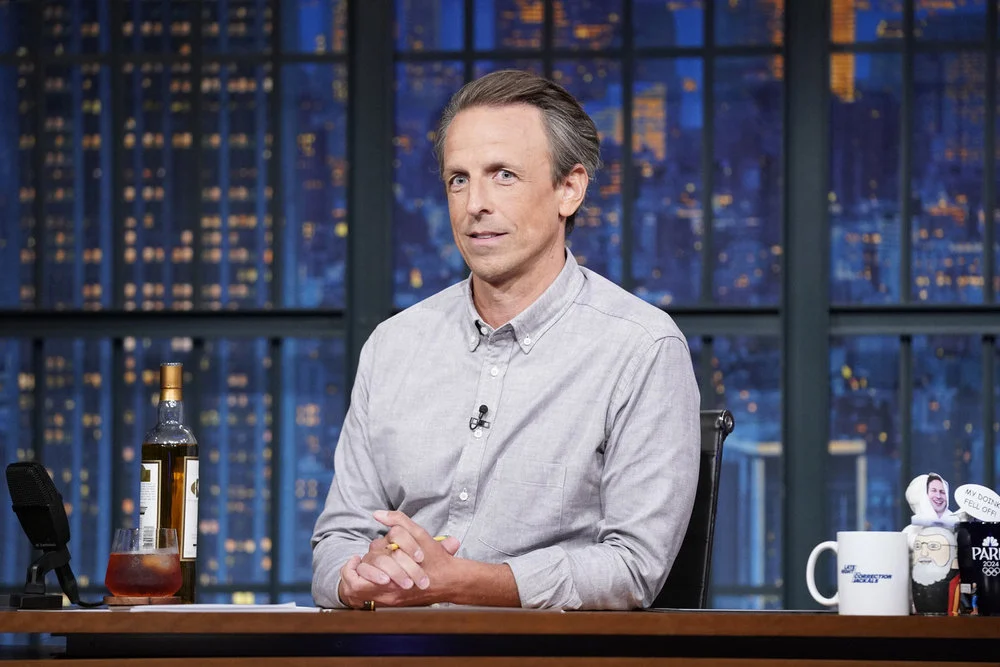
For any new late-night host, the primary challenge is existential: how to define a unique voice and then effectively "bottle" that personality into the rigid, century-old scaffolding of the television talk show. The genre is governed by a strict set of tropes—the monologue, the celebrity interview, the musical performance—that have remained largely unchanged since the era of Johnny Carson. Yet, it is in the subtle subversions and the specific execution of these tropes that a career is either made or lost.
No program currently exemplifies this evolution better than Late Night with Seth Meyers. Since its debut, the show has methodically stripped away the excess, channeling Meyers’ specific strengths as a writer and anchor into a clever, modern, and highly intellectualized take on the format. By pivoting away from the traditional desk-bound banter, Meyers has turned his stage into a laboratory for satire that feels both essential and undeniably singular.
The Evolution of the Late-Night Monologue
When Seth Meyers transitioned from his celebrated tenure as the head writer and "Weekend Update" anchor of Saturday Night Live to the Late Night desk, observers were quick to draw parallels between the two. The cadence, the quick-witted delivery, and the reliance on topical punchlines felt like a natural extension of his SNL roots. However, to label Late Night merely a continuation of Weekend Update would be a fundamental misunderstanding of the show’s creative trajectory.
While the "desk piece" remains a staple, Meyers and his team have successfully transitioned from the rapid-fire, joke-per-second style of sketch comedy into a more narrative-driven form of political analysis. This shift is best exemplified by the show’s signature segment, "A Closer Look."
Chronology: The Accidental Birth of "A Closer Look"
The origin story of the show’s defining segment is surprisingly humble. During a recent USG University panel moderated by IndieWire, Meyers, alongside head writer and producer Sal Gentile and director Alex Vietmeier, pulled back the curtain on how the segment came to be.
"I wanted to write a longer-form piece about the Greek debt crisis," Meyers recalled during the panel. "At the time, we didn’t even call it ‘A Closer Look.’ It was only once we started doing it more often that we gave it a name."
This accidental genesis marks a pivotal moment in the show’s history. It represents the transition from a standard variety show to a program that provides a cohesive, intellectual thread for the evening. Meyers noted the shift in how fans interact with him on the street: "There’s a moment that happens when you’re making a new show, where all of a sudden that’s the thing people say they saw. For a long time, people would say, ‘Hey, I loved you on SNL.’ Then, eventually, they started saying, ‘Hey, I loved that Closer Look thing.’"

The Mechanics of Satire: Creative Alchemy
The success of "A Closer Look" is not merely about political commentary; it is about the "creative alchemy" required to synthesize the absurdity of the daily news cycle into a ten-minute segment. Sal Gentile, the primary architect of the segment, explained that the core strategy is to narrow the scope to broaden the impact.
"I think of it as, what is one thing that we can chew off of the news today?" Gentile explained. "It’s providing a little more context about the news that day rather than just rattling through a bunch of things [a politician] said."
This method offers a reprieve from the constant, exhausting stream of headlines. By focusing on a single, often bizarre, narrative thread, the team is able to lean into the inherent comedy of the situation. It is this unique blend of cerebral political critique and unabashed whimsy—where, as Meyers joked, one wouldn’t be surprised to see a baseball mascot like Mr. Met appear to explain a complex immigration policy—that defines the show’s identity.
Supporting Data: Why Context Matters in 2026
In the current media landscape, where audiences are inundated with information, the value proposition of a late-night show has changed. Data from the 2025–2026 television season suggests that viewers are increasingly turning toward hosts who provide synthesis rather than just summaries.
The "A Closer Look" segment serves this function by acting as an interpretative lens. By applying a consistent editorial voice, the show helps viewers process the "increasingly absurd" nature of the modern news cycle. This approach has proven highly successful in cultivating a dedicated audience that values substance alongside the spectacle.
The Team Behind the Desk: Collaboration as a Creative Engine
The collaborative dynamic between Meyers, Gentile, and director Alex Vietmeier is a testament to the importance of institutional stability. In the late-night world, where staff turnover is common, the longevity of the Late Night creative team has allowed them to refine their "voice" to an extreme degree.
Director Alex Vietmeier plays a crucial role in this process, ensuring that the visual language of the show supports the segment’s fast-paced, multi-layered delivery. The visual rhythm—the quick cuts to graphics, the reactions of the band members, and the interplay with the audience—creates an immersive experience that keeps the segment from becoming a dry lecture. It is a highly choreographed dance that, when executed correctly, feels entirely effortless.

Implications for the Future of Late Night
The success of Late Night with Seth Meyers carries significant implications for the future of the genre. As traditional broadcast television competes with digital-first content, the "talk show" format must continue to adapt. Meyers’ success suggests that the path forward isn’t by chasing trends, but by doubling down on a specific, recognizable point of view.
By transforming the desk from a barrier into a platform for deep-dive analysis, Late Night has proven that late-night television can be both a comedy variety show and a source of meaningful cultural synthesis. As networks look to the future, they would do well to study the "closer look" approach: focusing on the nuance, trusting the audience’s intelligence, and allowing for the occasional appearance of a mascot in the middle of a political rant.
Official Context and Production Background
Late Night with Seth Meyers is produced by Universal Television, a division of Universal Studio Group. The show remains a flagship for NBC, airing nightly and streaming exclusively on Peacock the following day.
The recent panel discussion was part of USG University, a program presented by Universal Studio Group in partnership with the Motion Picture & Television Fund. This initiative celebrates the artistry behind the 2025–2026 television season, highlighting the writers, directors, and creators who define the current landscape of NBCUniversal’s portfolio.
Through these discussions, it becomes clear that while the format of late-night television is set in stone, the talent within it remains the primary driver of its survival. As Seth Meyers continues to find the "unique voice" of his show, he is not just securing his own legacy—he is providing a blueprint for the next generation of hosts who will eventually step behind that desk.
The alchemy of the show—the combination of high-minded political satire and low-brow, absurd humor—is not something that can be easily replicated. It is the result of years of collaborative effort, a shared vision, and a constant, unwavering focus on what makes the news cycle not just digestible, but genuinely funny. As the world becomes more complex, Late Night remains a reliable guide, proving that even in the most chaotic times, there is always room for a closer look.

 Jia Lissa
 Iffa Jayyana