Rifan Muazin
Every single day, over 100 million posts are published on X. For the average user or creator, the burning question remains: why do some posts go viral while others disappear into the digital void? The answer is no longer a simple set of hardcoded rules; it is a sophisticated, AI-driven recommendation engine that never sleeps. In 2026, the X algorithm has evolved into a dynamic system powered by xAI’s Grok, prioritizing deep personalization and high-quality engagement over mere chronological updates.
If your posts are receiving silence, it is not a sign of neglect; it is a reflection of a system that has ranked someone else’s content as more relevant to your audience’s current interests. To thrive on X today, one must move past "gaming the system" and instead align with the logic of the platform’s underlying intelligence.
What is the X Algorithm in 2026?
At its core, the X algorithm is a massive recommendation engine designed to curate a personalized feed from a pool of over 500 million accounts. Every time a user opens the application, the system works in milliseconds to curate the 20 to 30 posts most likely to capture that individual’s attention.
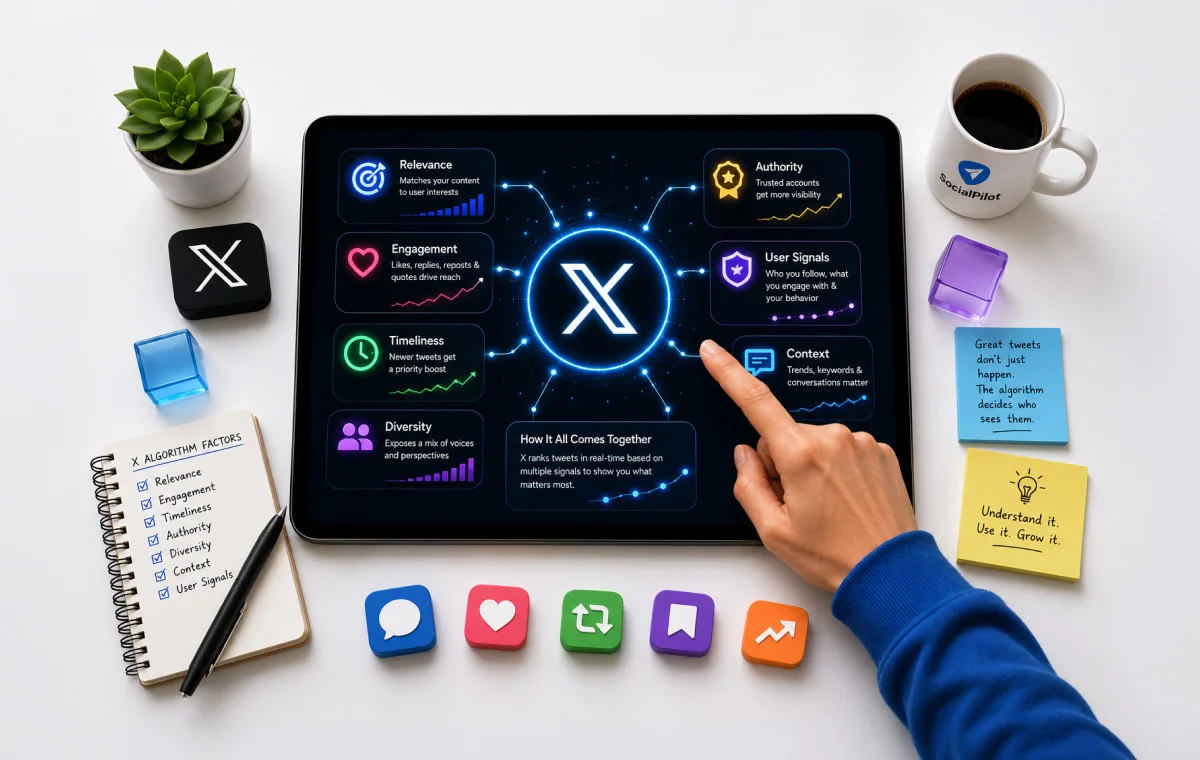
The platform has shifted significantly from a traditional social network to an interest-based discovery engine. Roughly 50% of the content in a user’s "For You" feed now comes from accounts they do not follow. This shift is powered entirely by Grok, which analyzes every post, video, and image in real-time. By moving away from static, rules-based programming, X has empowered an AI that understands the semantic meaning of content rather than relying on simple keyword matching.
Chronology of Evolution: How We Got Here
The transformation of X’s infrastructure has been rapid, particularly since the integration of xAI’s technology.
November 2025: The Death of the Chronological Feed
In a move that caught many power users off guard, X effectively ended the "Following" feed’s status as a purely chronological timeline. Both the "For You" and "Following" tabs are now ranked by Grok. While a chronological view remains technically accessible via settings, it is no longer the default experience, signaling that the company is fully committed to algorithmic curation as the primary way users consume information.
January 2026: Transparency through Open Source
On January 20, 2026, X took a historic step by publishing its full feed algorithm on GitHub. For the first time, researchers and developers could inspect the mechanics of the "Thunder" (in-network) and "Phoenix" (out-of-network) components. This confirmed that the platform prioritizes engagement depth—specifically replies and dwell time—over passive interactions like likes.
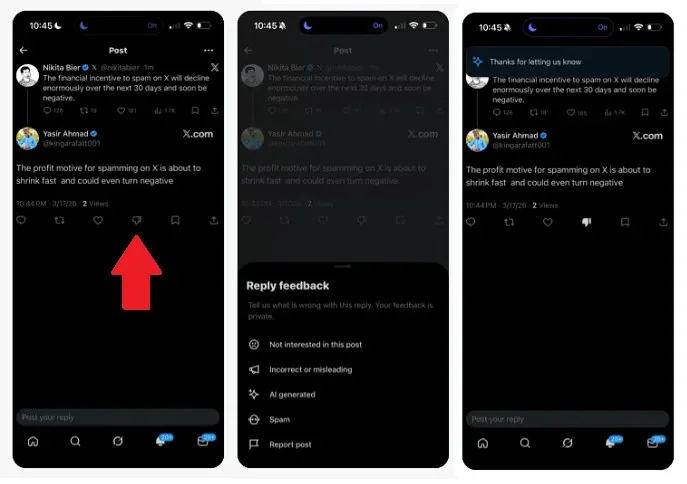
March 2026: The Rise of Reply Downvoting
Recognizing the degradation of conversation quality, X introduced a "thumbs-down" feature for replies, currently exclusive to Premium subscribers. This mechanism allows users to categorize problematic content as spam, misleading, or AI-generated. These signals serve as a training ground for the algorithm, allowing it to suppress "garbage" content and boost high-value, authentic discourse.
The Three-Stage Architecture of Reach
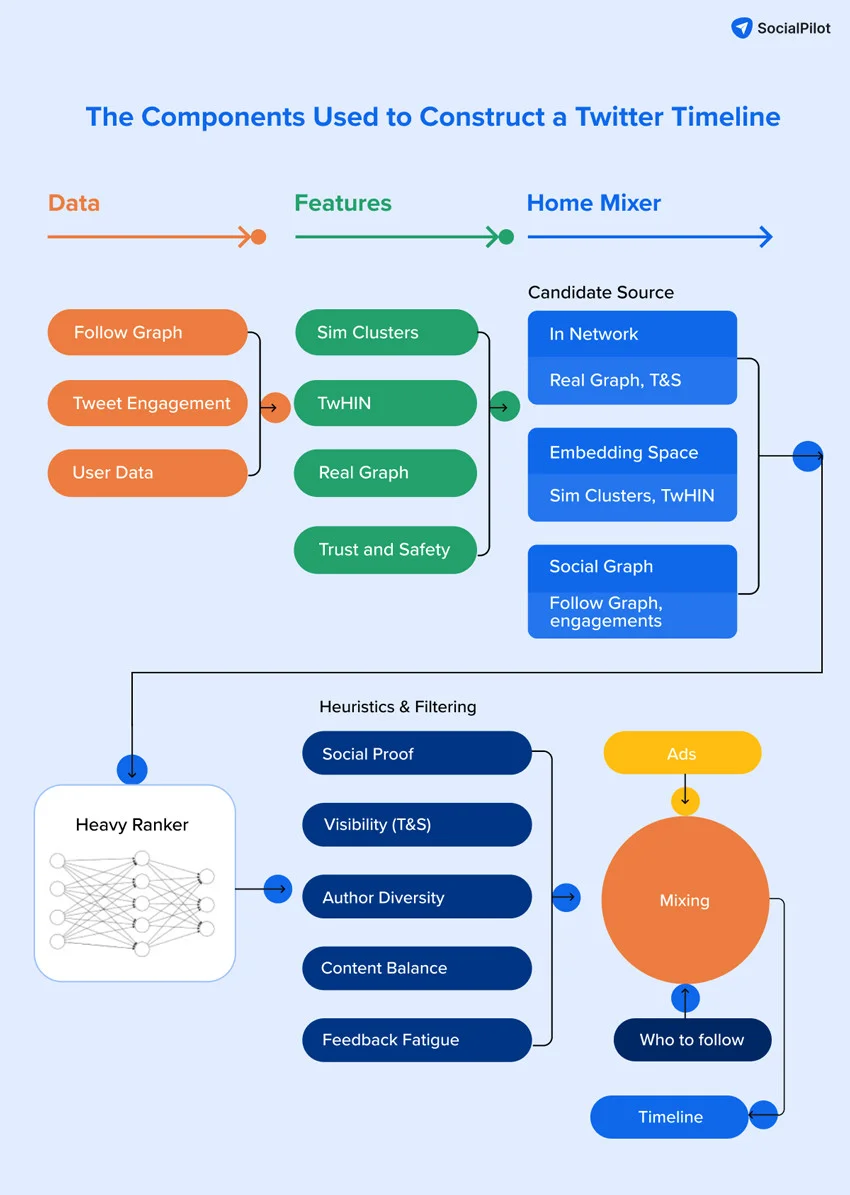
To understand how a post travels, one must look at the three distinct stages of the X algorithm’s lifecycle:
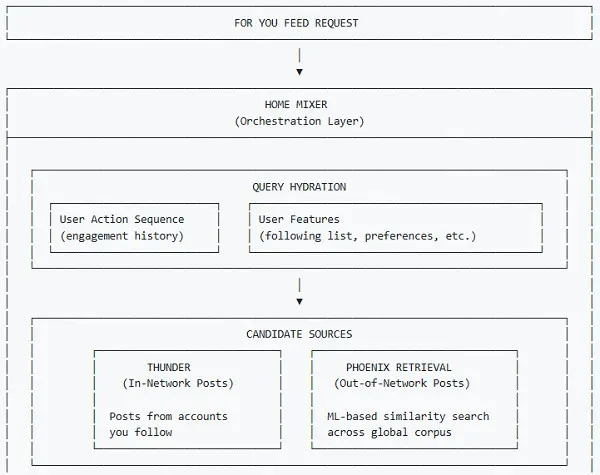
Stage 1: Candidate Sourcing
The system compiles a shortlist of roughly 1,500 posts. "In-network" candidates are sourced from accounts a user follows, while "out-of-network" candidates are selected based on semantic similarities to the user’s recent activity. Grok analyzes the context of your post, meaning that even a small creator with zero followers can be discovered if their content matches the specific interests of a potential reader.
Stage 2: The Heavy Ranker (Phoenix)
Once the candidates are pulled, the "Phoenix" neural network evaluates them. It looks at the user’s last 128 engagements to build a real-time behavioral profile. The algorithm is incredibly sensitive to current interests, meaning if a user engages with finance content for two days, their feed will pivot aggressively toward that topic.
Stage 3: Filtering and Mixing
Before a post reaches the screen, it passes through safety filters and a "creator diversity cap." This cap is crucial: it prevents any single account from dominating a user’s feed, regardless of how often they post. This ensures that users see a variety of voices, rewarding consistency over volume.
Key Signals: What Actually Moves the Needle?
The algorithm weighs engagement types based on the "cost" of the user’s effort. Not all interactions are created equal.
- Replies (Highest Weight): A reply signifies that a post was stimulating enough to warrant a response. It is the gold standard of engagement.
- Reposts: These indicate high-value content that a user feels comfortable associating with their own identity.
- Dwell Time: This measures how long a user pauses on a post. It is the best metric for genuine interest, as it bypasses the "accidental like."
- Video Completion: Native videos under 2 minutes and 20 seconds receive a significant algorithmic boost, provided they are hosted on X rather than linked from external sites.
- Likes/Bookmarks: These are considered "passive" signals and hold significantly less weight than active engagement.
Official Responses and Strategic Implications
X’s leadership, including figures like Nikita Bier, have been clear: the platform is prioritizing "signal" over "garbage." By implementing downvotes for replies and suppressing external links, X is aggressively trying to keep users within its ecosystem.
The "Link Penalty": The algorithm’s code confirms that posts containing external links (to YouTube, news sites, or other social media) can be suppressed by up to 80%. The platform views these as "exit points" that degrade the user experience.
The Credibility Factor (TweepCred): Your account’s reputation matters. TweepCred evaluates posting diversity, account age, and consistency. Accounts that exhibit "bot-like" behavior—such as repetitive posting or mass-following—are systematically de-prioritized. Conversely, Premium subscribers receive a modest, built-in ranking advantage, acting as a "trust signal" for the algorithm.
How to Optimize Your Presence Without Gaming the System
If you want to maximize your reach in 2026, follow these proven strategies:
- Prioritize Native Video: The algorithm favors video content. Keep clips short (under 2:20) and upload them directly to X.
- Stop Posting Links in the Body: Place your main insight in the post and drop the link in the first reply. This prevents the algorithmic penalty.
- Space Your Posts: Because of the creator diversity cap, posting ten times in one hour is counterproductive. Aim for 3–5 high-quality, well-spaced posts per day.
- Ask Better Questions: Because replies are the strongest ranking signal, structure your posts to invite conversation. If you aren’t asking for a take, you are missing out on the primary way to trigger reach.
- Stay in Your Niche: The Phoenix component builds a profile of your audience. If you oscillate between wildly different topics, the algorithm will struggle to categorize you, resulting in lower distribution.
- Use Polls: Polls are excellent for increasing dwell time. Users must read, consider, and act, all of which are tracked as positive signals by the neural network.
- Focus on "The Reply Game": Don’t just reply to get attention. Add value. Since March 2026, the algorithm has been training to filter out generic "great post" comments. Specific, insightful replies are now more likely to be surfaced by the algorithm.
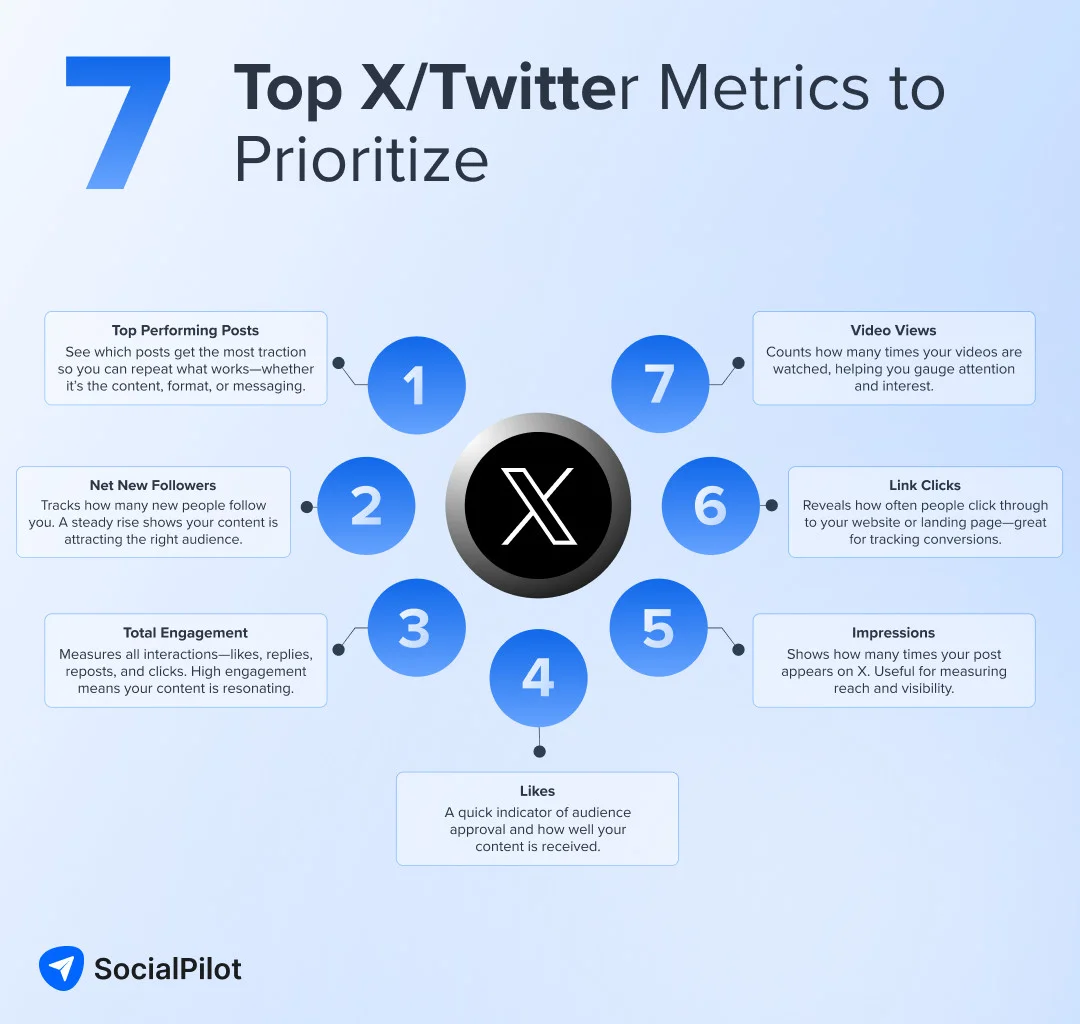
- Leverage Analytics: Use professional tools to identify when your specific audience is most active. Posting when your followers are offline is a wasted opportunity, especially given the "recency" signal that prioritizes fresh content.
- Maintain Authenticity: The new quality filters are adept at catching AI-generated, repetitive, or "template-driven" content. If your posts feel robotic, they will be downranked.
- Build for Quality, Not Quantity: A small, highly engaged audience is now more powerful than a massive, passive one. Focus on cultivating a community that actually interacts with your content.
Conclusion
The X algorithm of 2026 is an evolving organism. It has moved past the era of "hacks" and "growth scripts," favoring instead a system that rewards genuine human interaction, topical focus, and platform-native content. By understanding the shift toward AI-driven semantic understanding and the primacy of active engagement, creators can stop chasing fleeting trends and start building sustainable influence.

The goal for any serious user should be simple: create content that the algorithm is proud to show. When you align your strategy with the platform’s intent—fostering real-time, meaningful conversation—you stop fighting the algorithm and start working with it.


 Laily UPN
 Ammar Sabilarrohman