

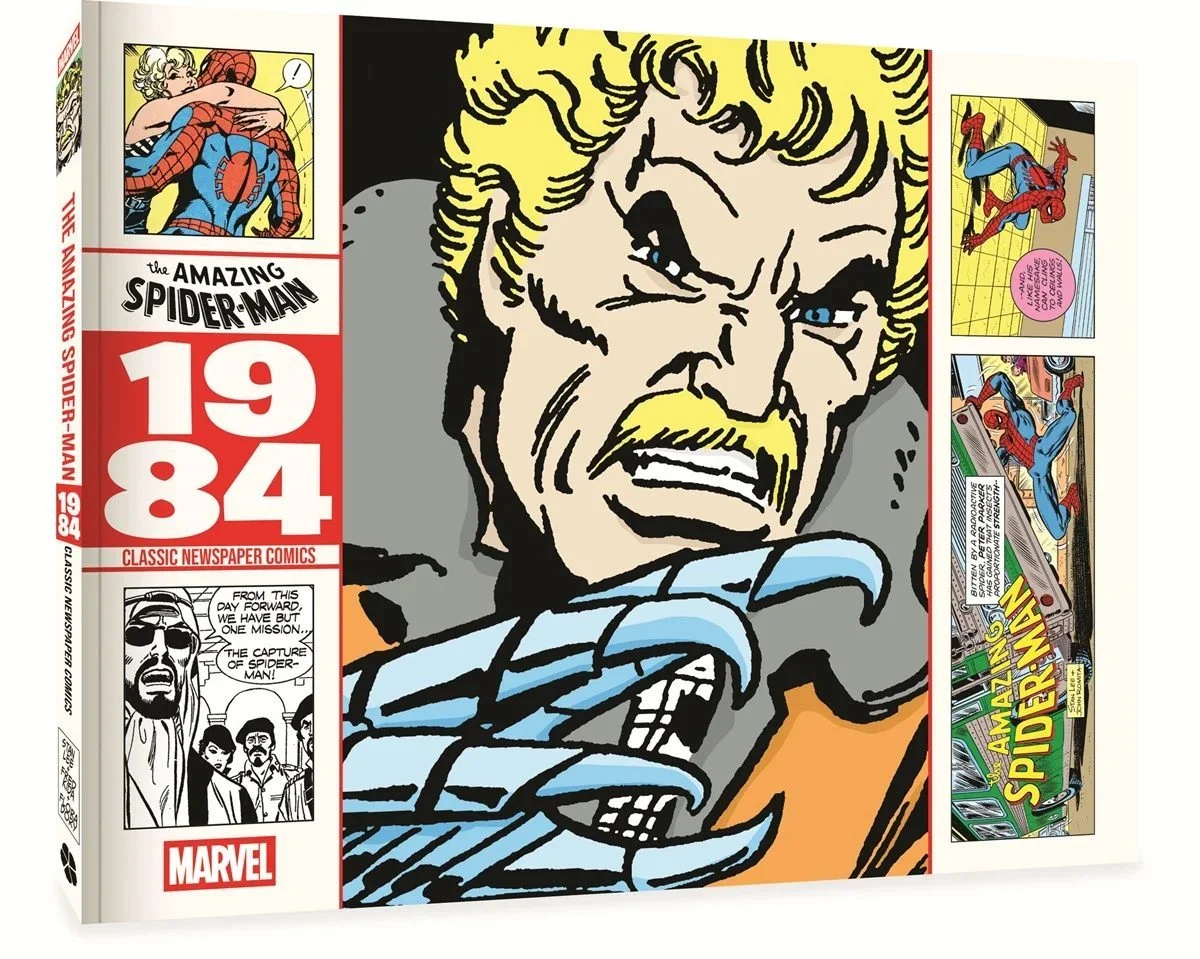
While the mainstream consciousness often associates Spider-Man primarily with his iconic monthly comic books or his blockbuster cinematic appearances, the wall-crawler enjoyed a remarkably long and storied tenure in the world of syndicated newspaper strips. Spanning from 1977 to 2019, the Amazing Spider-Man newspaper strip was a daily staple for millions of readers, offering a unique, often quirkier, and occasionally surreal take on the Peter Parker mythos. Now, publisher Clover Press is breathing new life into this historical treasure trove, launching a Kickstarter campaign to collect the strips from 1981 through 1984 in a deluxe, four-volume softcover set.
The Main Facts: A Time Capsule of 1980s Pop Culture
For years, the newspaper strip served as a unique parallel universe for Spider-Man fans. Unlike the sprawling continuity of the mainline Marvel comic books, the newspaper strips were designed to be accessible to the casual reader, often featuring standalone daily gags or shorter, punchy story arcs. Crucially, these strips were penned for a significant period by none other than Spider-Man’s co-creator, Stan Lee.
The new collection from Clover Press aims to preserve this legacy, focusing on the 1981–1984 period. This follows the publisher’s successful previous campaign, which covered the strip’s debut years from 1977 to 1980. The upcoming release features four distinct softcover volumes, each measuring 11" x 8.5" in a horizontal format. To ensure these collector’s items remain in pristine condition, the volumes come housed in a high-quality vertical slipcase, designed for aesthetic appeal and long-term shelf storage.
The campaign offers more than just the books themselves; backers can expect an array of exclusive memorabilia, including thematic puzzles, collector stickers, lithographs, and a second pocket-book facsimile. Most importantly, the reprints maintain the integrity of the original experience, integrating the full-color Sunday pages directly alongside the black-and-white daily strips, just as they appeared in newspapers across the country four decades ago.
Chronology: The Evolution of the Strip (1977–1984)
To understand the significance of the 1981–1984 collection, one must look at the trajectory of the strip. When the Amazing Spider-Man strip debuted in 1977, it had the heavy burden of introducing a complex superhero to a general audience that might have never picked up a comic book in their lives. Stan Lee’s writing in those early years leaned heavily into the "everyman" quality of Peter Parker, balancing the mundane struggles of his day job at the Daily Bugle with the sudden, high-stakes requirements of being a vigilante.
By 1981, the strip had hit its stride. The "new" stories found in the upcoming collection represent a more confident era. The artists involved—including Larry Lieber (co-creator of Iron Man), Airboy illustrator Fred Kida, and Transformers veteran Floro Dery—brought a distinct visual flair that diverged from the "house style" found in Marvel’s monthly issues.
The 1981–1984 period is noted by comic historians as being particularly "wild." During these years, Peter Parker faced threats that ranged from the menacing Doctor Doom and his flying saucers to bizarre, era-specific trends like the "Spidey Jeans" craze. This was a time when the newspaper strip was willing to experiment with concepts that might have been considered too outlandish for the core comic book canon, allowing Stan Lee to lean into the inherent absurdity of the medium.
Supporting Data: Behind the Pen and Pencil
The artistic pedigree behind this collection is substantial. Larry Lieber, whose contribution to the Marvel Universe is often cited alongside Stan Lee’s, brought a classic, clean aesthetic to the daily strip that helped ground the character during his transition into the 1980s. Fred Kida’s work added a sense of dynamic motion, essential for a character whose primary mode of transport is swinging through a concrete jungle.
The format of these books is specifically designed to honor the medium of the daily strip. The horizontal layout reflects the physical dimensions of the original newsprint panels, ensuring that the reader experiences the pacing exactly as the creators intended. By bundling the years 1981–1984, Clover Press is providing a "marathon" reading experience that highlights the narrative evolution of the strip—from the quick, episodic beats of the late 70s to the more serialized, intricate storytelling that characterized the mid-80s.

Official Responses: Clover Press on the Legacy
Hank Kanalz, Publisher at Clover Press, recently spoke to the importance of this archival project. According to Kanalz, the decision to continue the line was driven by both consumer demand and a genuine passion for the source material.
"By the early 1980s, Spider-Man was firmly established on the newspaper page," Kanalz stated. "Following the success of our campaign to collect the first four years of The Amazing Spider-Man Newspaper Comic, we are thrilled to continue the line. The strips from 1980 to 1984 feature a more seasoned wall-crawler navigating longer, more intricate storylines that balance action, emotional drama, and classic Peter Parker misfortune. This era paired Stan Lee with a rotating roster of artists, each bringing their own visual style to the daily strip."
Kanalz’s comments underscore a vital point: the "Parker Luck." Even in the newspaper strips, Peter was never afforded a peaceful existence. Whether it was his strained relationship with J. Jonah Jameson or the constant threat of supervillains interrupting his romantic life, the newspaper strip managed to capture the essence of what made Spider-Man an enduring cultural icon: his relatability in the face of impossible odds.
Implications: Why This Matters for Modern Readers
In the digital age, where content is consumed in seconds via social media, there is a growing appreciation for the "slow burn" of newspaper comics. The Amazing Spider-Man strip wasn’t just a comic; it was a daily appointment. It was a bridge between generations, where a grandfather and a grandchild could both read the same panel on a Sunday morning.
Collecting these strips is not merely an exercise in nostalgia; it is an act of historical preservation. The "kookiness" of the early 80s, which included the aforementioned "Spidey Jeans" and the bizarrely specific "Spider Brigade," offers a fascinating snapshot of the zeitgeist of the era. These stories act as a mirror, reflecting how pop culture perceived superheroes before the era of the $200 million cinematic budget.
Furthermore, for the "Spider-Man completist," this collection fills a critical gap in the bibliography. While the mainline comic books have been reprinted countless times in various formats (Omnibuses, Masterworks, etc.), the newspaper strips have historically been harder to track down. By standardizing these volumes and making them available through a comprehensive Kickstarter initiative, Clover Press is ensuring that a vital chapter of Marvel history doesn’t fade away with the newsprint it was originally printed on.
The Verdict: Should You Back the Project?
For fans of Spider-Man, the appeal is clear. You are not just buying a book; you are buying a piece of the history of the most famous comic book character in the world. The inclusion of extras like the pocket-book facsimile and the high-quality slipcase suggests that this is a product made by fans, for fans.
The 1981–1984 collection serves as a reminder that Peter Parker’s life has never been "normal." Whether it was the transition from the disco-infused 70s to the tech-obsessed 80s, the wall-crawler always found himself at the center of the storm. By supporting this campaign, collectors are helping to ensure that the work of Stan Lee, Larry Lieber, Fred Kida, and Floro Dery remains accessible to future generations of readers who want to experience the daily adventures of your friendly neighborhood Spider-Man.
Those interested in securing their set can visit the official Kickstarter page to view the full list of rewards and pledge options. As the campaign gains momentum, it is a testament to the fact that, even decades later, the world still can’t get enough of the webslinger.










No comments yet. Be the first to join the conversation!