

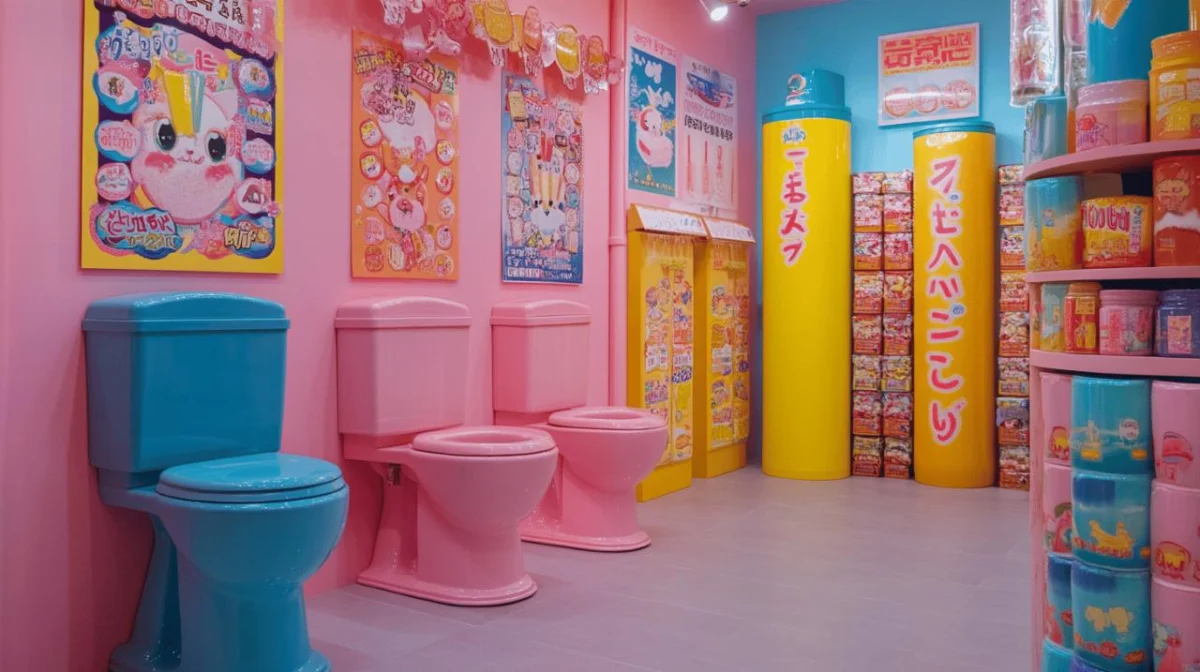
In the vast and kaleidoscopic landscape of Japanese candy, where innovation often borders on the surreal, few products have achieved the legendary status of the Moko Moko Mokoletto. More than just a sweet, this "DIY toilet candy" kit represents a masterclass in experiential marketing, blending engineering, chemistry, and a daring sense of humor. Since its debut, it has transitioned from a niche domestic novelty to an international cultural phenomenon, challenging Western perceptions of what a "snack" can be.
The Anatomy of an Innovation: Main Facts
At its core, the Moko Moko Mokoletto is an interactive confectionery kit that invites the consumer to become a participant rather than a passive eater. The product arrives in pieces, requiring the user to assemble a miniature, plastic, Western-style toilet. Once the structure is standing, the user adds water and a proprietary sachet of acidulated powder to the tank.
The resulting chemical reaction produces a thick, effervescent, and sweet-smelling foam that fills the toilet bowl. The consumer then drinks or licks the foam, usually with a tiny straw or spoon provided in the kit. This unconventional delivery system is the hallmark of dagashi—traditional Japanese snacks characterized by their low price, nostalgic appeal, and often, their interactive or "gimmicky" nature.
A Chronology of a Cultural Export
The rise of the Moko Moko Mokoletto is a story of rapid digital ascent.
- 2013: The Domestic Launch: The product hit the Japanese market with an immediate splash. Designed to capitalize on the "kawaii" (cute) and "wacky" trends prevalent in Tokyo’s youth culture, it was initially marketed as a novelty item for school-aged children.
- 2014: The Digital Explosion: As platforms like YouTube and early influencer blogs began to mature, the Moko Moko Mokoletto became a "must-try" challenge. Western viewers were introduced to the product through viral unboxing videos, where the sheer absurdity of drinking foam out of a miniature toilet generated millions of views.
- 2015–2018: Global Penetration: The product began appearing in specialty Asian import shops across the United States and Europe. It was no longer just a snack; it became a staple of "Japanese culture" starter kits for Western enthusiasts.
- 2019–Present: Legacy Status: Today, the product is widely recognized as a "WTF" classic of the confectionery world, cementing its place in pop culture history as a bridge between Japanese whimsy and global social media trends.
Supporting Data: The Power of the "Experience Economy"
The success of the Moko Moko Mokoletto cannot be measured by flavor profile alone. Data from early adopters and niche hobbyist blogs, such as La Banane qui Parle and Un Loulou et une Poupette, highlight that the primary value proposition was "the shareable moment."
Records from these platforms show that articles documenting the assembly process garnered thousands of visitors—far exceeding the traffic of traditional product reviews. The "social proof" generated by these blogs created a feedback loop: the more absurd the video or photo, the higher the engagement. This suggests that for Gen Z and Millennial consumers, the Moko Moko Mokoletto served as a tool for social currency, allowing users to participate in a global, internet-based subculture simply by engaging with a piece of plastic and sugar.
Official Perspectives and Industry Reception
While the product was initially met with a mixture of confusion and amusement by mainstream media outlets, Japanese confectionery manufacturers viewed it as a stroke of marketing genius.
Industry analysts point out that the Moko Moko Mokoletto solved a fundamental problem in the snack market: brand fatigue. By introducing the element of "play," the manufacturers effectively turned a low-cost item into an "activity." Official statements from distributors often highlight the "creative interaction" aspect, framing the product not as a toy, but as a "DIY food experience."
Even in Japan, where such products are less stigmatized, the brand has been careful to market the item as a "party piece." By offering different colors and limited-edition versions of the miniature toilets, the company tapped into the collector’s market, ensuring that customers didn’t just buy one—they bought the whole set to display on their shelves.
The Broader Implications: Redefining Snack Culture
The Moko Moko Mokoletto has left a lasting footprint on the global food industry, influencing how brands approach "experiential" snacks.
1. The "Instagrammability" Factor
The success of this product served as a blueprint for the "food-as-content" movement. Brands now recognize that if a product can be filmed, reacted to, and shared, it has a higher chance of going viral. The Moko Moko Mokoletto proved that the "unboxing" experience is just as valuable as the taste of the product itself.
2. Crossing Cultural Boundaries
There is a distinct tension between the product’s playful nature and the cultural norms of the countries to which it is exported. In the West, toilets are strictly functional and private. By bringing this object into the light, placing it on a desk, and drinking from it, the Moko Moko Mokoletto breaks a cultural taboo, replacing it with humor. This ability to "defuse" the mundane through play is a unique characteristic of the Japanese approach to design.
3. Sustainability vs. Novelty
While the product is a hit with consumers, it has also sparked discussions regarding sustainability. As an "assembled" toy made of plastic, the environmental impact of such products has come under scrutiny in recent years. This presents a challenge for the future of the brand: how to maintain its status as an interactive, fun experience while adapting to a market that is increasingly demanding eco-friendly alternatives to single-use plastics.
4. The Rise of "Fantaisyland" Marketing
The categorization of such items into "Fantaisyland" or "WTF" categories on retail sites has created a new segment of the market. Retailers now have dedicated sections for "bizarre" or "extreme" Japanese candy, proving that there is a sustainable, long-term audience for products that refuse to be categorized as "normal."
Conclusion: A Legacy of Laughter
The Moko Moko Mokoletto is more than a fleeting trend; it is a symbol of the modern era’s obsession with the unconventional. By transforming a mundane household object into a source of fizzy, sugary joy, it captured the imagination of a generation that values humor, creativity, and the power of a good story.
Whether it remains a staple of the confectionery aisle or eventually transitions into a pure collector’s item, the legacy of the "toilet candy" is secure. It proved that in an increasingly digitized world, the most successful products are those that invite us to stop, assemble, share, and—most importantly—laugh. The Moko Moko Mokoletto continues to stand as a testament to the fact that, in the world of Japanese snacks, the only limit is the imagination of the creator and the willingness of the consumer to join in the fun.











No comments yet. Be the first to join the conversation!