

In the modern landscape of high-performance computing, thermal management has become the primary bottleneck for system builders. As graphics cards reach power draws of 600W and CPUs continue to push higher TDPs, the traditional "hotbox" internal chassis design is struggling to keep pace. DeepCool, a veteran in the cooling and enclosure market, has unveiled an unconventional solution to this heat saturation problem: the DeepCool CL6600.
Featuring the brand’s proprietary "Hypersplit" technology, this chassis aims to decouple the CPU’s thermal footprint from the rest of the system. By isolating the cooling components in a dedicated, externalized chamber, DeepCool promises a new level of efficiency for power users. But does this radical architectural departure represent the future of PC case design, or is it merely an expensive gimmick?
Main Facts: Architecture and Design
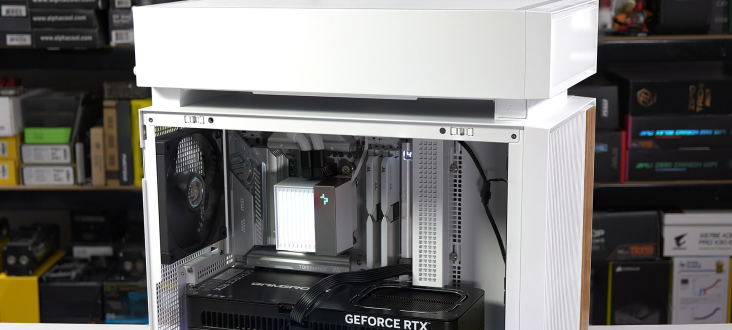
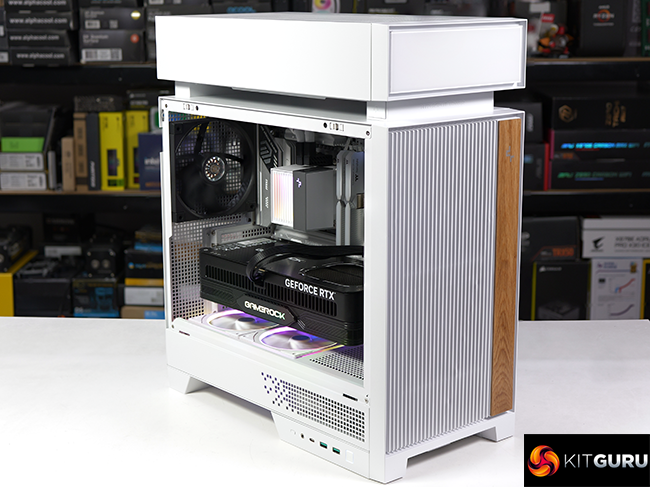
The DeepCool CL6600 is a mid-tower case that immediately strikes the eye as different. The core innovation is the "Hypersplit" chamber—a distinct, boxy enclosure perched atop the main chassis. This secondary compartment is engineered specifically to house a 360mm All-In-One (AIO) liquid cooler.
By relocating the AIO radiator and its associated fans to this externalized upper housing, DeepCool achieves two primary objectives:
- Thermal Separation: The heat generated by the CPU is exhausted directly into the ambient environment rather than being recirculated or soaked up by the main chassis’ internal air supply.
- Main Chamber Optimization: With the top of the case freed from radiator mounting, the main chamber offers increased space for airflow to pass through to the graphics card, which is often the most thermally sensitive component in a gaming rig.
Priced at £156, the unit includes the aforementioned 360mm AIO, making it a compelling value proposition for users looking for a high-end thermal solution without the need to purchase a premium cooler separately.
Chronology: The Evolution of Thermal Control
The history of PC cooling is a timeline of desperate attempts to manage increasing power density.
- Early 2000s: Air-cooled heatsinks dominated, with simple exhaust fans struggling to clear heat from 100W processors.
- 2010s: The rise of AIO liquid coolers allowed enthusiasts to mount radiators at the top or front of the case. While effective, this forced the chassis to "breathe" the radiator’s exhaust air, effectively warming up the motherboard and GPU components in the process.
- 2024-2025: The current era of 600W GPUs has rendered standard airflow paths insufficient. The Corsair Air 5400 pioneered the "multi-chamber" concept, which physically separated the PSU and drives from the main board.
- May 2026: DeepCool introduces the CL6600 with the Hypersplit chamber. This marks a pivot toward "Externalized Cooling Integration," where the cooling hardware is no longer just inside the case, but part of the chassis’ secondary infrastructure.
Supporting Data: Thermal Benchmarking
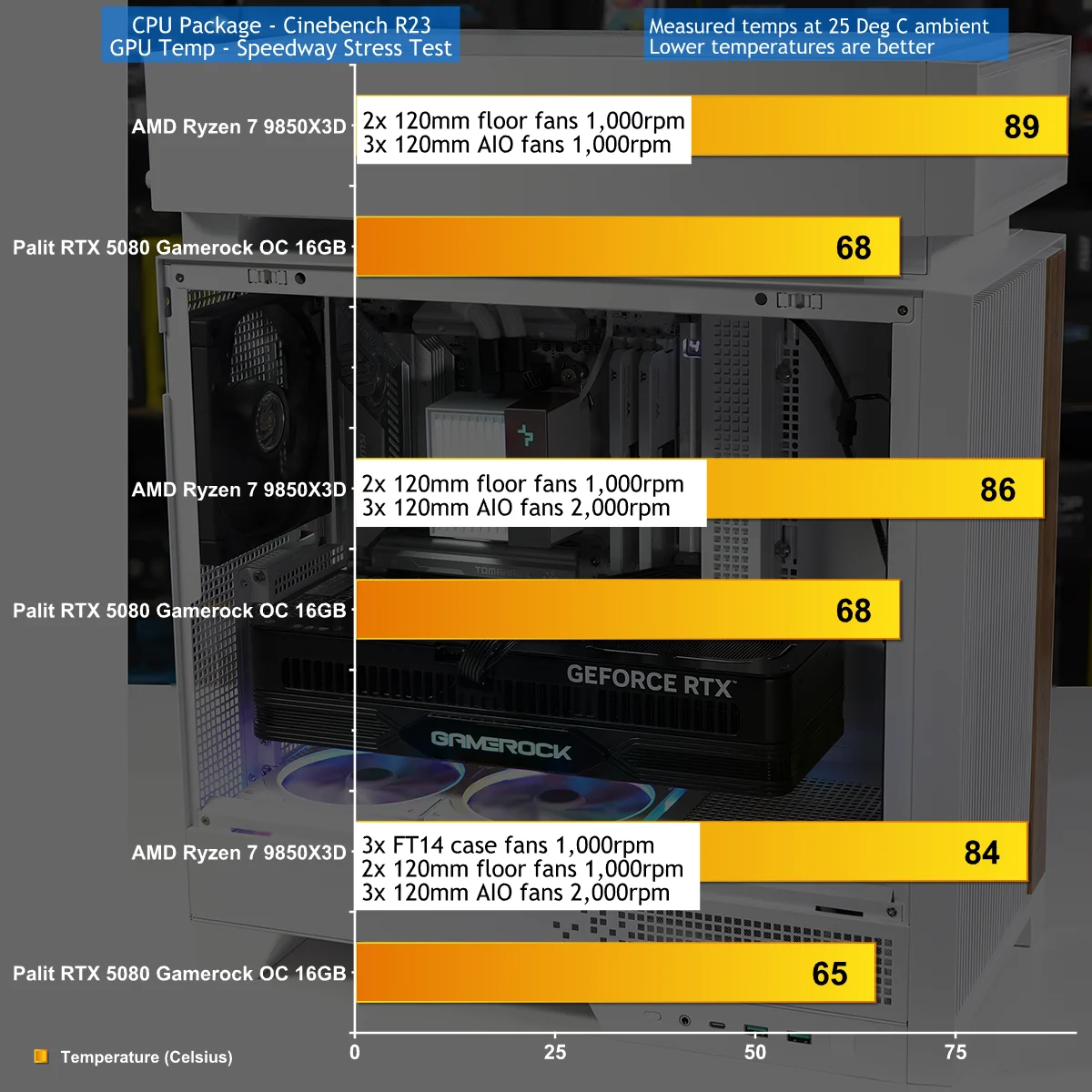
To assess the efficacy of the Hypersplit design, we subjected the CL6600 to a rigorous testing environment.
The Test Bench
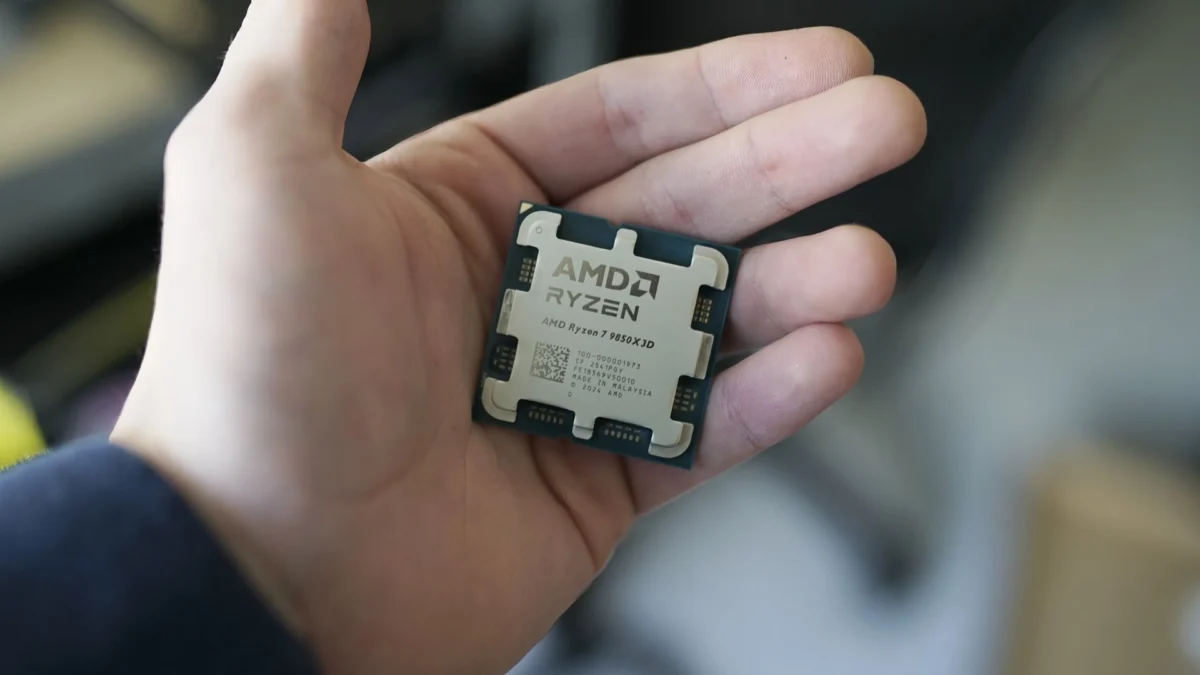
- CPU: AMD Ryzen 7 9850X3D
- GPU: Palit RTX 5080
- Storage: NVMe SSD
- Ambient Temperature: 22°C
Performance Observations
The results were compelling. In standard operation, the CPU remained consistently cooler than in a traditional chassis because the radiator fans were not pulling pre-warmed air from the graphics card. The RTX 5080, which often suffers from "thermal choking" in cramped mid-towers, saw an average temperature reduction of 5°C compared to conventional layouts.
However, there is a caveat. The "Hypersplit" chamber acts as a distinct acoustic chamber. To achieve these thermal targets, the AIO fans must run at higher RPMs. When under load, the separation does not dampen the noise; in fact, the exposed nature of the top chamber can lead to increased audible fan noise. Users seeking silence will need to invest time in custom fan curves to balance thermal delta against acoustic comfort.
Official Responses and Industry Context
DeepCool maintains that the CL6600 is a response to the "unavoidable reality" of modern hardware. A company representative noted: "We are moving away from the era where a single airflow path is sufficient. With the CL6600, we are treating the CPU and GPU as two distinct thermal zones that should not share the same airspace."
Critics in the DIY community have pointed out that while the thermal logic is sound, the aesthetic impact is polarizing. The "box-on-a-box" look is a departure from the sleek, tempered-glass aesthetic that has dominated the industry for the last decade. DeepCool acknowledges this, framing the CL6600 as a "function-first" product for enthusiasts who prioritize performance metrics over minimalist desk appeal.
Implications: The Future of PC Enclosures
The introduction of the CL6600 suggests a significant shift in how case manufacturers will approach design in the coming years.
1. Modularity as the New Standard
We are likely to see more manufacturers adopting "split-chamber" designs. By decoupling components, companies can optimize individual airflow paths, potentially allowing for even higher-wattage components in the future.
2. The End of the "One-Size-Fits-All" Case
The CL6600 is not a case for the general consumer who wants a small, unobtrusive PC. It is a specialized tool. This signals a market maturation where cases will increasingly be sold as "Thermal Solutions" rather than just "Component Enclosures."
3. Acoustic Challenges
The biggest hurdle for this design philosophy remains acoustics. As we move cooling hardware to external or secondary chambers, sound dampening becomes more difficult. Future iterations of the "Hypersplit" concept will likely need to focus on acoustic isolation materials to mitigate the fan noise generated by high-performance AIOs.
Final Verdict
The DeepCool CL6600 is a fascinating piece of engineering that successfully solves the thermal collision between high-end CPUs and massive GPUs. It is, by all metrics, a triumph of function. However, its aesthetic "quirkiness"—the perception that a secondary box has been awkwardly grafted onto the top of the system—will likely keep it as a niche product.

Pros:
- Superior Thermal Isolation: Effectively separates heat sources to prevent thermal saturation.
- Value: Includes a 360mm AIO, making the £156 price point highly competitive.
- Easy Access: The modular nature of the chambers simplifies maintenance and component installation.
Cons:
- Acoustic Profile: Higher fan speeds required for optimal cooling can be intrusive.
- Aesthetic Division: The design is highly unconventional and may not fit all workstation or gaming setups.
- Size: The added height from the Hypersplit chamber may not fit in all desk configurations.
In conclusion, the DeepCool CL6600 is a bold step forward. For the user who is tired of their GPU heating up their CPU—or vice versa—it offers a tangible, effective solution. While it may not win beauty pageants, it wins on the thermal charts, proving that sometimes, being a little "odd" is exactly what the industry needs to evolve.










No comments yet. Be the first to join the conversation!