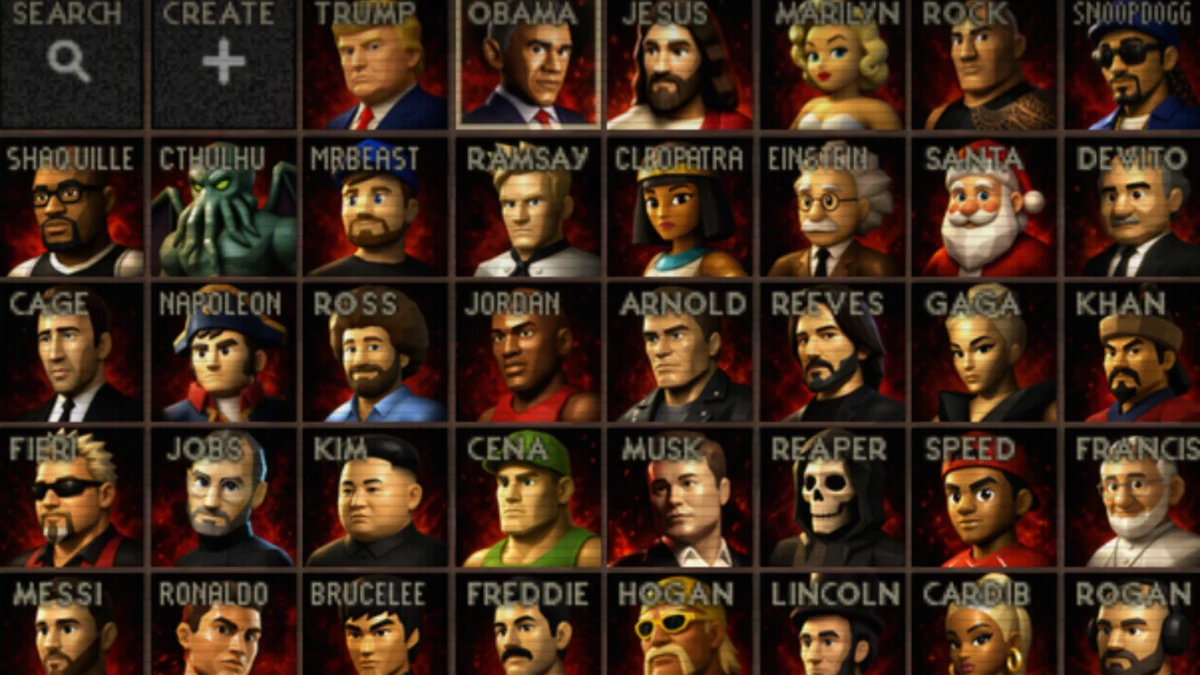
In the ever-evolving landscape of gaming preservation and modding culture, few projects have captured the internet’s collective imagination quite like Smash.fun. A daring, web-based adaptation of the seminal Super Smash Bros. for the Nintendo 64, this project allows players to break the boundaries of the classic platform fighter by inserting themselves—or any public figure—directly into the game’s roster.
With over 1,000 custom-generated fighters currently populating the platform, the project has transformed from a quirky personal experiment into a viral phenomenon, raising significant questions about the future of browser-based emulation, copyright, and the democratization of game development.
The Genesis of an Impossible Roster
The project was unveiled by developer Thomas Dimson, who took to the social media platform X to showcase his work. Dimson, fueled by a self-admitted desire to see himself brawling alongside Mario and Pikachu, achieved what many thought impossible: a functional, browser-based port of the 1999 classic that seamlessly integrates user-generated 3D assets.
"I love Smash 64 but I wish I was in it, so I hacked the original game to run in the browser and put myself plus 1,000 others in," Dimson wrote. This simple impetus sparked a digital gold rush, as users flocked to the site to upload photos of their favorite pop-culture icons.
The current roster is nothing short of surreal. Players can pit Taylor Swift against John Cena, or watch as Elon Musk trades blows with Jesus Christ. The list of celebrity fighters continues to expand, featuring heavy hitters like Lionel Messi, Donald Trump, Hideo Kojima, MrBeast, Snoop Dogg, and The Rock. These are not merely static overlays; they are fully realized, low-polygon combatants designed to mimic the aesthetic of the late 90s, complete with their own character select portraits and stock icons.
Technical Innovation: Bringing the N64 to the Modern Web
At its core, Smash.fun is a masterclass in reverse engineering. By leveraging modern web technologies, Dimson has enabled the original N64 title to run directly in a browser environment without the need for traditional emulator software installations.
How the Character Generation Pipeline Works
The magic of Smash.fun lies in its automated generation pipeline. When a user uploads a reference photo, the platform’s backend doesn’t just "paste" the image onto a character. Instead:
- Model Adaptation: The system utilizes one of the original 12 fighter "skeletons" from the 1999 game.
- Asset Synthesis: The site generates a matching character select portrait, a stock icon (the small life-counter icon), a series emblem, and even a custom announcer call.
- Model Injection: The finished, low-polygon model is injected directly into the game’s data structure, ensuring it retains the distinct, jagged visual style that defined the N64 era.
This rigorous attention to detail ensures that while the characters are contemporary, the "feel" of the game remains authentic to its 1999 roots. According to the project’s open-source repository on GitHub, the toolset is designed to maintain the integrity of the game’s original engine while expanding its capacity for user expression.
The Legal and Ethical Landscape: A Delicate Balance
The existence of Smash.fun sits at a precarious intersection of fandom, technological achievement, and intellectual property law. Nintendo is notoriously protective of its intellectual property, frequently issuing cease-and-desist orders against fan-made projects, rom-hacks, and community-driven modifications.
Navigating the "ROM" Requirement
To mitigate legal risk, Smash.fun does not distribute the game files. Users are required to provide their own, legally obtained ROM of Super Smash Bros. 64. By separating the modification software from the proprietary game data, Dimson aims to insulate the project from direct copyright infringement claims. The site explicitly states that no Nintendo assets are hosted on its servers and that all processing occurs locally on the user’s device.
The Modding Community’s Stance
This "user-supplied" model is a common tactic in the modern emulation scene, but it has not stopped Nintendo from being litigious in the past. In a display of defiant humor, some modders have even created a "Cease and Desist" letter as a playable character in other Smash mods, highlighting the absurdity of the cat-and-mouse game between creators and corporate legal departments.
The Future of Browser-Based Preservation
Smash.fun is not an isolated incident; it is part of a broader trend of "browser-fication" for classic titles. As web browsers grow in computational power, developers are finding ways to host complex 3D experiences that were previously confined to consoles or high-end PC hardware.
Notable Precedents:
- Super Monkey Ball: Fans have recently made the original Super Monkey Ball titles fully playable in the browser.
- Super Mario 64: Through various projects, including experimental YouTube-based integrations, the 3D platforming giant has become accessible without traditional emulator setups.
This shift suggests a future where game preservation is no longer tied to specific hardware. If a game can be effectively containerized and run in a browser, it becomes exponentially more accessible to a global audience, effectively bypassing the scarcity of retro hardware.
Implications for the Gaming Industry
The success of Smash.fun poses a challenge to the traditional "walled garden" approach favored by legacy gaming companies. By allowing players to become the architects of their own gaming experiences, projects like this redefine the relationship between the developer and the consumer.
The "Democratization" of Content
When a user can take a photo of themselves and have it transformed into a functional 3D fighter in seconds, the barrier to entry for game modification is effectively removed. This level of accessibility fosters a new generation of creators who view games as modular, customizable platforms rather than finished, immutable products.
The Preservation Question
While corporations may view these projects as a threat to their brand control, archivists and gaming historians argue that these fan projects are essential for preserving the "cultural memory" of the 90s. As physical consoles degrade and cartridges fail, browser-based ports ensure that the gameplay mechanics and the history of the medium remain alive for future generations.
Conclusion: A Playground for the Masses
Smash.fun is more than a novelty; it is a testament to the enduring power of Super Smash Bros. and the ingenuity of the modding community. Whether it remains online indefinitely or eventually falls victim to a legal challenge, its impact on the gaming discourse is undeniable.
For now, the project stands as a digital arena where the boundaries between reality and fiction—and between professional game development and hobbyist engineering—have been permanently blurred. In the world of Smash.fun, anyone can be a legend, anyone can be a fighter, and for a few minutes in a browser window, anyone can settle the score in the most ridiculous matchups imaginable.
As we look toward the future, the success of this project suggests that the next evolution of gaming will not just be about playing the games we love, but about how we transform them into something entirely our own. Whether Nintendo chooses to embrace this spirit of innovation or stifle it remains to be seen, but one thing is certain: the era of the "browser-ready" retro classic is here, and it is louder, weirder, and more chaotic than anyone could have predicted.