Sagoh
Sagoh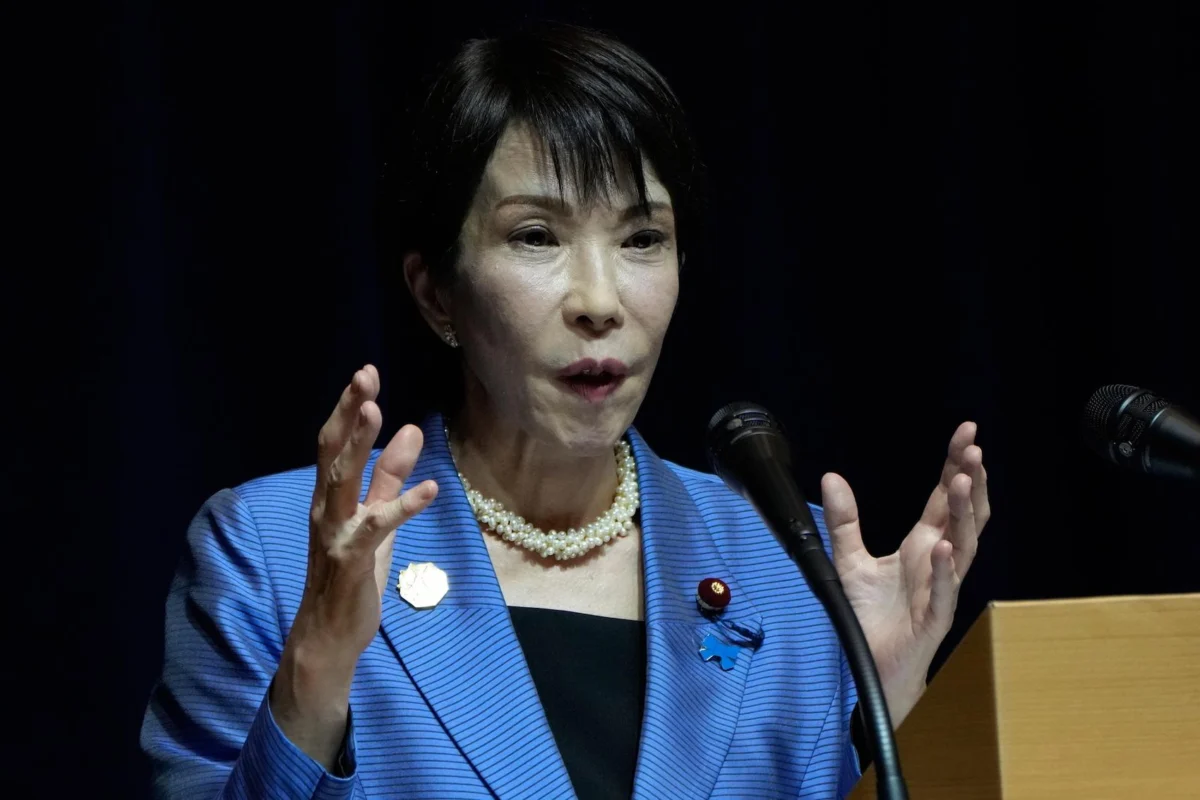
TOKYO – Prime Minister Sanae Takaichi, assuming the mantle of leadership in a nation long haunted by the specter of its missing citizens, issued a resolute commitment on Saturday to shatter the decades-old diplomatic stalemate regarding Japanese nationals abducted by North Korea. Addressing a high-stakes rally in Tokyo, the Prime Minister signaled a willingness to explore all available diplomatic avenues, including the possibility of a direct summit with North Korean leader Kim Jong Un, to finally bring closure to families who have spent nearly half a century in limbo.
The rally, organized by the Association of the Families of Victims Kidnapped by North Korea (AFVKN), served as a poignant reminder of the human cost of the geopolitical standoff. As Takaichi stood before the gathered families and their supporters, she framed the resolution of the abduction issue as the paramount moral and political imperative of her administration.
"Whatever it takes, I will resolve the abduction issue by making a breakthrough during my time in office," Takaichi declared, emphasizing that her administration is operating with a sense of urgency that transcends traditional diplomatic protocol. "We are tackling this issue seriously with a determination not to miss the slightest chance of making concrete progress as soon as possible, even by a day or an hour."
The Weight of History: A Chronology of the Abduction Crisis
The abduction of Japanese citizens by North Korean agents during the 1970s and 1980s remains the most significant obstacle to the normalization of relations between Tokyo and Pyongyang. For decades, the Japanese government has maintained that at least 17 citizens were abducted to train North Korean spies in Japanese language and customs.
1977: The Disappearance of Megumi Yokota
The abduction of 13-year-old Megumi Yokota on her way home from school in Niigata remains the emotional centerpiece of the crisis. Her case became a national symbol, illustrating the brazen nature of the abductions and the subsequent failure of international intelligence to prevent the violation of Japanese sovereignty.
2002: The Koizumi-Kim Breakthrough
After years of official denial, North Korea admitted in 2002 to the abductions during a historic summit in Pyongyang between then-Prime Minister Junichiro Koizumi and then-leader Kim Jong Il. This admission resulted in the emotional return of five abductees to Japan later that year. However, the diplomatic momentum stalled rapidly.
2004: The Last Diplomatic Dialogue
A second summit between Koizumi and Kim in 2004 failed to yield further concessions. Since then, the diplomatic channel has been largely frozen. North Korea has consistently claimed that the issue is "resolved," arguing that the remaining abductees are either deceased or never entered the country. Japan rejects these claims, pointing to glaring inconsistencies in the evidence provided by Pyongyang.
Voices from the Frontlines: The Families’ Plea
The rally was defined not by geopolitical theory, but by the raw, enduring grief of those left behind. Sakie Yokota, the 90-year-old mother of Megumi, delivered a speech that resonated through the hall, highlighting the excruciating nature of the wait.
"We have no information about the situation, and we can only pray that they are alive," Yokota said, her voice steady but laden with the weight of 47 years of uncertainty. "Had the Japanese government acted sooner, all of them could have returned. I ask the government to secure their return as soon as possible."
Her son, Takuya Yokota, 57, who now leads the families’ advocacy group, urged the Japanese public and the administration to maintain a posture of firm confrontation. "We must keep on confronting North Korea without letting go of anger," he stated, arguing that any perceived softening of Japan’s position would only embolden Pyongyang to continue its obstructionist tactics.
Hitomi Soga, one of the five individuals who returned to Japan in 2002, also took the stage. Her testimony was a harrowing reminder of the lives interrupted. Soga, who was abducted alongside her mother, Miyoshi, in 1978, remains a powerful advocate for those still trapped in North Korea. She appealed directly to her mother’s memory, holding out a fragile, decades-long hope for reunion. "Hold out hope of returning," she whispered, a sentiment that served as the rally’s unofficial motto.
Government Strategy: Intelligence and Diplomatic Maneuvering
Beyond the emotional appeals, the Japanese government is preparing a structural shift in how it approaches the intelligence aspects of the abduction issue. Chief Cabinet Secretary Minoru Kihara, the minister responsible for the abduction portfolio, announced that the government is pinning its hopes on the upcoming launch of the National Intelligence Bureau (NIB) this summer.
Strengthening Intelligence Coordination
The NIB is designed to streamline the gathering, analysis, and cross-referencing of intelligence across various government departments, including the Public Security Intelligence Agency and the National Police Agency. Kihara suggested that by centralizing intelligence, the government could "provide a significant impetus" toward breaking the current stalemate.
Analysts suggest this move signals a pivot from passive diplomatic requests to a more proactive intelligence-led strategy. By better understanding the internal dynamics of the North Korean regime, the government hopes to identify potential levers of pressure or negotiation that have previously remained hidden.
Implications: A New Diplomatic Paradigm?
Prime Minister Takaichi’s willingness to consider a summit marks a departure from the more cautious approaches of some of her predecessors. However, the move is fraught with geopolitical risk.
The "All Options" Approach
By stating that she is willing to "weigh all options," Takaichi is signaling to the international community—and specifically to Washington and Seoul—that Japan may be prepared to take independent diplomatic action. Critics argue that a summit without pre-conditions could be seen as a propaganda win for Kim Jong Un, potentially rewarding a regime that continues to pursue ballistic missile and nuclear weapons programs.
Conversely, supporters of the Prime Minister argue that the "maximum pressure" strategy has reached a point of diminishing returns. They contend that only a top-level summit can cut through the bureaucratic inertia of the North Korean regime and compel a decision-making shift from the top.
Regional Geopolitics
The abduction issue does not exist in a vacuum. It is inextricably linked to the broader security architecture of Northeast Asia. Japan’s insistence on the abduction issue often complicates trilateral cooperation with the United States and South Korea, particularly when those countries are prioritizing denuclearization or regional stability. Takaichi’s challenge will be to balance the domestic mandate to rescue the abductees with the complex demands of the regional security environment.
Conclusion: A Race Against Time
The average age of the victims—and their parents—is rising. For families like the Yokotas, the passage of time is the enemy. Every year that passes without a breakthrough diminishes the likelihood of reuniting families while the victims are still alive.
Prime Minister Takaichi’s rhetoric has set a high bar for her administration. By positioning the abduction issue as a core pillar of her premiership, she has invited intense scrutiny. If she is to succeed where others have failed, she must navigate the narrow corridor between the moral necessity of bringing the abductees home and the hard-nosed reality of engaging with a regime that has historically viewed diplomatic commitments as expendable.
As the rally concluded, the message from the families was clear: the time for rhetoric has passed; the time for decisive, concrete action has begun. Whether the Prime Minister’s "breakthrough" remains an aspirational goal or becomes a defining achievement of her tenure remains one of the most critical questions in contemporary Japanese politics. For the families, the struggle continues, fueled by the same prayer that has sustained them for nearly half a century: that one day, the borders will open, and their loved ones will finally walk home.


 Neng Nana
 Asro
Asro