

By Jamie Lang | Cartoon Brew
This past weekend, the global anime community turned its eyes toward Tokyo for the tenth edition of the Crunchyroll Anime Awards. As the industry’s most prominent annual celebration, the event serves as a barometer for the medium’s explosive international growth. With over 73 million fan votes cast from every corner of the globe, the ceremony once again underscored the immense cultural footprint of anime, featuring an eclectic mix of industry legends, visionary creators, and A-list celebrities.
However, as the awards reach their ten-year milestone, the event occupies a complex space within the animation industry. While it has undeniably become the definitive "Super Bowl" of anime, its organizational structure—managed by one of the industry’s largest distributors—continues to spark nuanced debates regarding transparency, artistic impartiality, and the evolution of global recognition for Japanese animation.
The 2026 Winners: A Reflection of Industry Trends
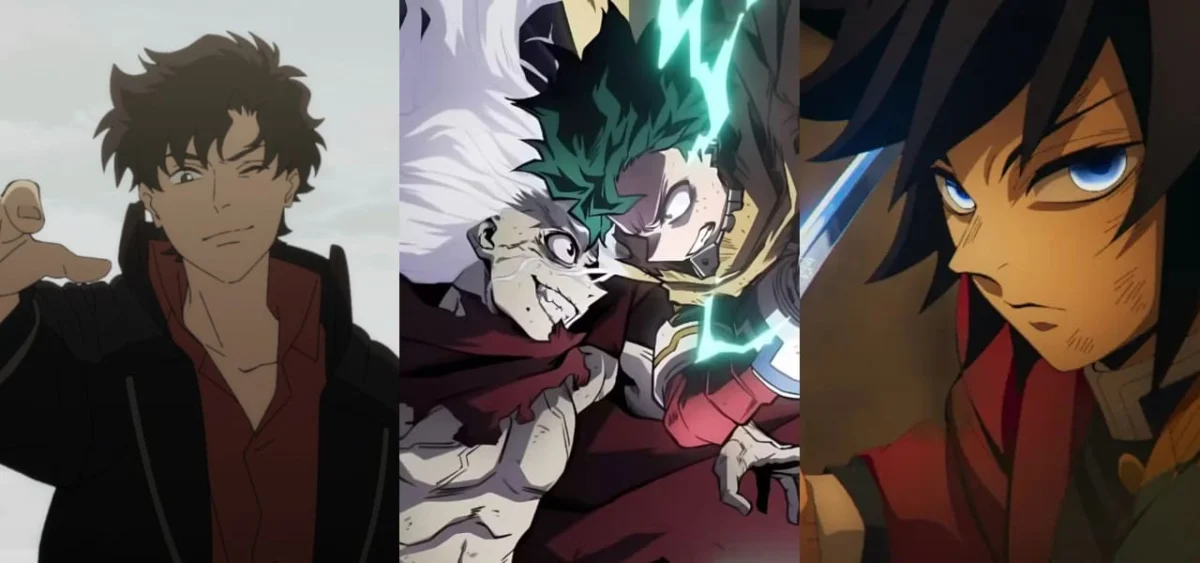
The 2026 ceremony proved to be a night of both legacy and transition. The most significant headline of the evening was the coronation of My Hero Academia: FINAL SEASON as the "Anime of the Year." For a series that has defined the mainstream shonen experience for nearly a decade, the win felt like a ceremonial victory lap. The decision resonated with fans who have grown up alongside Izuku Midoriya’s journey, marking the end of a cultural era.
Beyond the headline award, the list of winners provided a clear snapshot of current audience appetites:
- The Blockbuster Titans: Demon Slayer: Kimetsu no Yaiba – Infinity Castle continued its record-breaking momentum. Its dominance in the feature-film categories reinforced the reality that, in the post-pandemic era, high-budget, theatrical anime events have become the primary drivers of global box office revenue.
- The Rising Stars: The success of Solo Leveling—which secured major wins in action choreography and technical craft—signals the increasing influence of Korean webtoon adaptations on the Japanese animation landscape.
- Fresh Voices: Perhaps most encouraging for the long-term health of the medium were the breakthroughs for titles like Gachiakuta and the highly stylistic Lazarus. These wins highlight that even in a market dominated by massive, long-running franchises, there is still significant appetite for high-concept, auteur-driven storytelling.
The Evolution of the Awards: A New Editorial Stance
For years, Cartoon Brew has intentionally maintained a distance from the Crunchyroll Anime Awards. Our skepticism was rooted in a foundational journalistic concern: the inherent conflict of interest when the organization acting as the primary global distributor of anime also controls the awards platform that dictates the "best" of the medium.
Furthermore, the "black box" nature of the voting process has historically been a point of friction. While Crunchyroll published a set of judging guidelines in 2022, the lack of granularity regarding how jury input is weighted against the massive volume of fan votes has remained a frequent critique. Conversations with previous jury members have suggested that the process is fluid, changing slightly year-over-year without significant public disclosure.
However, the industry has changed, and so must our coverage. As of 2026, the Crunchyroll Anime Awards have effectively achieved a monopoly on cultural visibility. No independent alternative has emerged that can command 73 million votes or provide a global stage for creators to reach such a massive audience. To ignore these awards is to ignore the primary mechanism by which the mainstream public now consumes and evaluates animation. Therefore, we are adopting a more rigorous, analytical approach to the event—one that celebrates the artistry while acknowledging the systemic questions that remain.
Chronology: From Niche Gathering to Global Spectacle
To understand the magnitude of this year’s tenth-anniversary ceremony, one must look at the event’s rapid trajectory.
- 2017: The inaugural Crunchyroll Anime Awards were launched as a digital-first experiment. It was a modest affair, intended to bridge the gap between Crunchyroll’s growing subscriber base and the Japanese production committees.
- 2019–2021: As Crunchyroll expanded its licensing reach, the awards grew in production value. The inclusion of live musical performances and international hosts helped transition the event from a community poll into a legitimate industry production.
- 2023–2024: The awards moved to a live, in-person format in Tokyo. This signaled a pivot in strategy: the event was no longer just about rewarding shows; it was about positioning Crunchyroll as the essential gatekeeper and bridge between the Japanese studio system and the global market.
- 2026: The tenth anniversary marks the event’s maturity. With 73 million votes cast, the scale is now comparable to major Western entertainment awards, solidifying its place in the annual pop-culture calendar.
The Mechanics of Voting: Transparency vs. Popularity
The primary tension of the Crunchyroll Anime Awards lies in the friction between its "fan-voted" nature and its "jury-selected" nominations. Critics often argue that the fan-vote component turns the ceremony into a popularity contest, favoring long-running franchises with massive social media presences over smaller, more experimental works that might demonstrate greater artistic merit.
Crunchyroll’s "Ultimate Guide" for the 2026 awards offered a window into the process, yet it remains sparse on technical details. By blending a curated jury panel with a democratic fan vote, Crunchyroll attempts to strike a balance between critical consensus and audience engagement. However, the exact percentage of weight given to the jury versus the fans remains an opaque metric.
For the industry to fully embrace the awards as a "prestige" event, future iterations will likely need to provide more transparency. Detailing how jury members are selected, how conflicts of interest are mitigated, and how the final winners are calculated would go a long way toward cementing the event’s credibility among animation scholars and critics.
.png)
Implications for the Future of Anime
The 2026 results carry significant implications for the business of animation. When a show like Solo Leveling or Lazarus gains a major award, it doesn’t just receive a trophy; it receives a "Crunchyroll seal of approval" that drives millions of new viewers to the platform. This creates a feedback loop: the awards influence the audience, and the audience’s viewing habits influence which projects get greenlit for future production.
We are seeing a shift where the "awards season" is becoming a critical part of the production pipeline. Studios are increasingly mindful of what resonates with global voters, leading to a potential homogenization of content—or, conversely, providing the necessary visibility for bold, new ideas to thrive in a crowded market.
Official Responses and Industry Outlook
When asked about the concerns regarding transparency, a spokesperson for the event noted that the goal of the awards is to "celebrate the incredible work of creators in Japan and connect them with a global fanbase that is more passionate than ever." They highlighted that the 73 million votes cast this year represent a record-breaking level of engagement, asserting that the awards remain the most democratic reflection of the current anime zeitgeist.
While industry insiders remain divided—with some viewing the ceremony as a marketing tool and others as a vital recognition of an underserved medium—the consensus is that the awards are here to stay. As we look toward the next decade, the challenge for Crunchyroll will be to balance its role as a commercial powerhouse with the need for authentic, unbiased recognition of artistic excellence.
For now, the 2026 Crunchyroll Anime Awards stand as a testament to the fact that anime is no longer a niche subculture. It is a global language, and for better or worse, these awards are the primary dialect in which the world speaks about it. Whether or not the voting process achieves the transparency of a traditional academy award, the sheer volume of participation ensures that the winners of this ceremony will be the ones that define the history of the medium for years to come.










No comments yet. Be the first to join the conversation!