

In the sprawling, interconnected tapestry of the Star Wars galaxy, the auditory landscape is as vital as the visual. While audiences are often captivated by the glow of a lightsaber or the sweeping vistas of a new planet, it is the invisible work of sound design that breathes life into the vacuum of space. David W. Collins, a veteran of the Lucasfilm fold and an expert in the art of droid vocalization, is currently pushing these boundaries in the new Disney+ animated series, Star Wars: Maul — Shadow Lord. As both the sound supervisor and the voice of the enigmatic Spybot, Collins is demonstrating that even the most villainous figures in the galaxy require a unique—and often deeply personal—sonic footprint.
The Architect of Sound: A Legacy of Droids
David W. Collins is a name etched into the history of modern Star Wars audio. His expertise is not a recent development; rather, it is the culmination of nearly three decades of immersion in the franchise’s soundscapes. Fans will recognize his influence across various media: he provided the voice for the "Fondor Droid Mod" in the critically acclaimed Andor, voiced the bounty hunter 1-JAC in Obi-Wan Kenobi, and famously portrayed the complex, sometimes murderous PROXY in the The Force Unleashed video game series.
In Maul — Shadow Lord, Collins takes on the role of Spybot, a cat-like, hovering droid that serves as an unlikely companion to the titular dark protagonist. The character’s vocal identity was not a simple matter of synthesized beeps; it required a nuanced approach that balanced gibberish with emotional resonance. Drawing inspiration from the eccentric delivery of Peter Lorre, Collins crafted a voice that feels distinct from the established pantheon of astromechs and protocol droids, effectively turning Spybot into a "hidden fortress" of personality—a small, cynical observer in a dark, noir-inspired world.
Chronology of a Creative Partnership: Collins and Witwer
The synergy behind Maul — Shadow Lord is anchored by the long-standing, 25-year friendship between Collins and Sam Witwer, who voices the iconic Maul. Their professional history is a narrative of mutual growth, beginning in the early 2000s when Collins was working in voice direction at LucasArts.
The connection was instrumental in defining the tone of The Force Unleashed. Collins recalls the pivotal moment he slipped Witwer’s headshot into the pile during the search for the voice of Starkiller, noting that Witwer’s physical resemblance to the concept art was only matched by his unparalleled intensity in the recording booth. "He does not hold back," Collins explains. "He is 110 percent all the time. I have seen him continuously go in front of a microphone and blow people away on the other side of the glass."
Nearly two decades later, that same intensity defines their dynamic in Maul — Shadow Lord. By allowing their real-world camaraderie to bleed into their performances, the duo has created a tension that feels both ancient and immediate, grounding the supernatural stakes of a Sith Lord’s journey in the relatable friction of a strained partnership.
Supporting Data: The Science of the Sonic Experience
Collins’ role as sound supervisor afforded him the creative liberty to treat the series as a sonic laboratory. The design of Spybot, for instance, eschewed traditional synthesizer tropes in favor of organic, tactile sound. To create the droid’s distinct "hover" sound, Collins utilized a crystal wine glass filled with water, using the resonance of a finger tracing the rim to generate a frequency that was then processed and sampled. This commitment to tactile sound design is a hallmark of the "Ben Burtt" tradition—finding the extraordinary within the mundane to create something that feels grounded in reality.
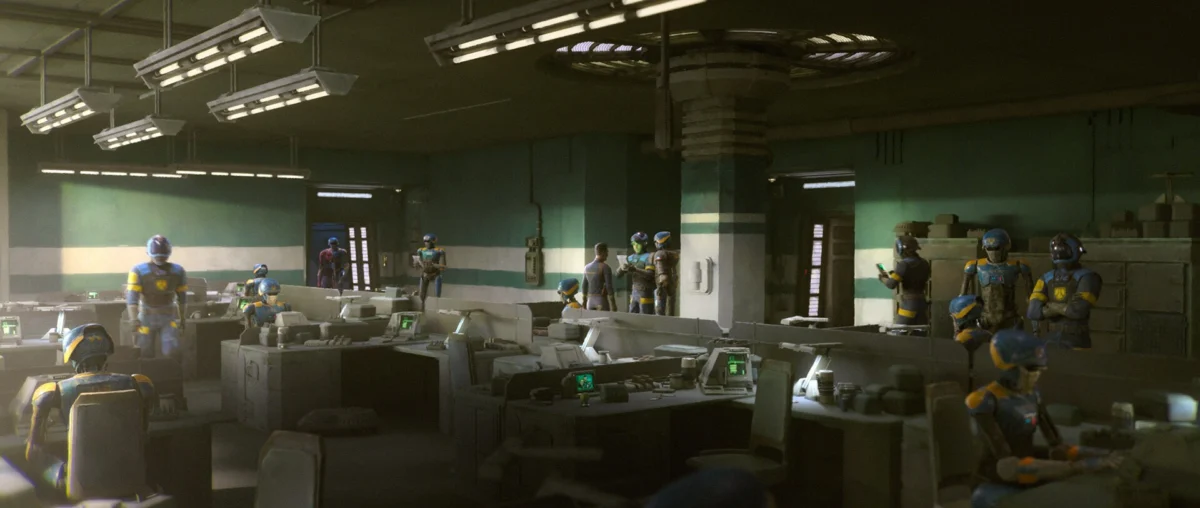
The sound design extends to the world-building of the new planet, Janix. To achieve the "frantic, busy" atmosphere of a police bullpen, Collins and his team recorded original radio chatter—improvised sequences covering mundane urban issues like spaceport traffic and water main breaks. These subtle layers serve as the foundation of the show’s noir aesthetic, providing a backdrop that makes the world feel lived-in and reactive.
Furthermore, the integration of sound and character is perhaps best seen in the treatment of Maul’s lightsaber. By taking Ben Burtt’s original Phantom Menace sounds and layering them with an "unsteady sizzle," Collins mirrored the show’s painterly visual style. Most striking, however, is the use of processed human vocalizations—specifically, Sam Witwer’s own screams—embedded within the audio frequency of the lightsaber swings. It is a haunting, technical choice that physically merges the character’s internal agony with his primary weapon of war.
Official Perspectives: The Philosophy of the Work
When discussing his approach to the series, Collins emphasizes the ethos established by George Lucas himself: the importance of bringing one’s own lived experience to the work. This philosophy was never more evident than in the sound design for the fifth episode, which depicts a character suffering from a panic attack.
Drawing from a personal medical scare in his youth, Collins constructed a soundscape that simulated the physiological symptoms of high-stress anxiety: the muffled, rhythmic thrum of blood pressure, the filtering of ambient noise, and the piercing intrusion of tinnitus. "If you’re an artist, any good art is personal," Collins notes. "And if I’m not putting myself into whatever art I’m asked to work on, then what’s the point?"
This sentiment is echoed by Matthew Wood, Collins’ supervisor at Skywalker Sound, who consistently encourages creatives to avoid "staying in their lane." For Collins, this mandate has been the catalyst for his 26-year career in the galaxy far, far away, pushing him to constantly reinvent what a Star Wars soundscape can convey.
Implications for the Future of Star Wars
The success of Maul — Shadow Lord suggests a shift in how Lucasfilm handles its auditory world-building. By granting sound supervisors the autonomy to inject personal history, experimental techniques, and non-traditional voice acting into the process, the studio is moving away from a formulaic approach to sound and toward a more auteur-driven model.
The implications for future series are clear: Star Wars is entering an era where the sonic identity of a show is as much a character as the protagonists themselves. Whether through the innovative use of wine-glass resonance for droids or the deep, psychological layering of ambient sound to depict trauma, Collins is setting a new standard for how the franchise can explore its darker, more mature themes.
As the series reaches its conclusion, the contribution of David W. Collins serves as a reminder that the Star Wars galaxy is not merely a product of visual spectacle. It is a dense, intricate soundscape shaped by those who dare to infuse their own humanity—and their own vulnerabilities—into the machinery of the story. For fans and aspiring sound designers alike, Maul — Shadow Lord stands as a masterclass in the power of the "hidden" elements of film, proving that the most memorable parts of a saga are often the ones you hear, but never expect.
The final episodes of Star Wars: Maul — Shadow Lord premiere this Monday, with the season finale arriving on Star Wars Day, May the 4th, exclusively on Disney+.











No comments yet. Be the first to join the conversation!