Neng Nana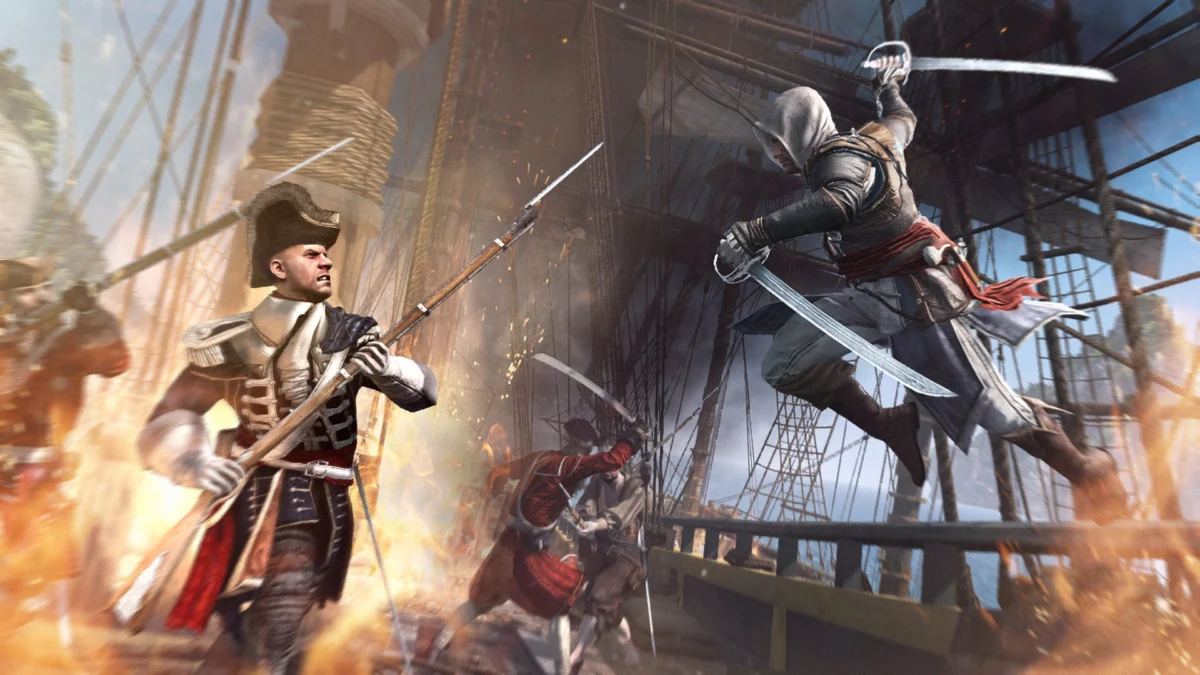
Ubisoft, one of the most recognizable names in the global gaming industry, has officially concluded its 2025-2026 fiscal year, revealing a landscape defined by significant financial contraction, aggressive internal restructuring, and a strategic pivot toward long-term sustainability. The publisher, known for powerhouse franchises like Assassin’s Creed and Tom Clancy’s Rainbow Six, reported a stark year-over-year decline in performance, citing a "softer" release schedule and the heavy costs associated with a fundamental change to its operating model.
As the company looks toward the horizon of 2027 and beyond, CEO Yves Guillemot has characterized this period as a "necessary reset." While shareholders grapple with widened operating losses, the company remains steadfast in its belief that these "difficult decisions" are the essential foundation for a more agile, high-performing organization.
The Core Facts: A Year of Contraction
The financial report for the fiscal year ending March 31, 2026, paints a sobering picture of Ubisoft’s current standing. Revenue saw a sharp decline of 21.8% compared to the previous year, while net bookings dropped by 17.4%. These figures underscore the challenges the publisher faced in maintaining its momentum during a transition phase that saw a reduction in the volume of new game releases.
Perhaps most alarming to market analysts is the widening of the company’s operating losses. The loss ballooned from €196.5 million in the prior year to a staggering €1.3 billion. This figure, however, is heavily influenced by the accounting realities of Ubisoft’s massive restructuring effort—a process that has included studio closures, staff reductions, and a systematic "rationalization" of its game portfolio.
Chronology of the Strategic Reset
To understand the current state of Ubisoft, one must look at the timeline of the "strategic reset" initiated over the last 12 months.
Phase 1: The Decision to Streamline (Early 2025)
At the start of the fiscal year, Ubisoft leadership acknowledged that the company had become bloated with too many projects in development simultaneously. The executive team moved to implement a new "Creative House" structure, designed to break down internal silos and prioritize quality over quantity. This phase involved the cancellation of seven projects that no longer aligned with the company’s vision of focused, high-impact titles.
Phase 2: Execution and Deleveraging (Mid-Fiscal Year)
Throughout the middle of the year, the company began the painful process of cost-cutting. By reducing its headcount and closing underperforming studios, Ubisoft aimed to drive €200 million in annual savings. During this period, the release schedule remained notably quiet, leading to the "softer" performance metrics noted in the end-of-year results.
Phase 3: The Present and the Path Forward (FY 2026-27)
Ubisoft has categorized the upcoming fiscal year as the final phase of this transformation. The company has explicitly warned stakeholders that the next twelve months will likely represent the "low point" in terms of free cash flow, as the costs of restructuring continue to be felt and the release slate remains conservative. However, the roadmap from 2027 onwards suggests a shift from survival to growth, with projected positive free cash flow by FY2027-28 and "robust" returns by FY2028-29.
Supporting Data: Where the Value Resides
Despite the macro-level financial struggles, the underlying health of Ubisoft’s core intellectual properties remains a bright spot in an otherwise gloomy report. The company’s "back-catalogue" strategy has proven resilient, acting as the primary driver of net bookings throughout the year.
- Rainbow Six Siege: The tactical shooter remains the crown jewel of the company’s live-service portfolio. In March alone, the title saw engagement peak with over 10 million Monthly Active Users (MAUs), proving that a decade-old game can still serve as a primary revenue engine.
- The Division 2: This title defied market expectations, with net bookings more than doubling over the full fiscal year.
- The Assassin’s Creed Franchise: Cementing its status as the company’s most vital brand, Assassin’s Creed closed the year with an active player base exceeding 30 million. The franchise continues to show year-on-year engagement growth, providing a stable foundation for the upcoming launch of Assassin’s Creed Black Flag Resynced on July 9.
- Growth in Recent Titles: Avatar: Frontiers of Pandora, The Crew Motorfest, and For Honor all contributed to the company’s performance, with The Crew Motorfest specifically hitting record-breaking quarterly user counts.
Collectively, these figures highlight a divergence: while the "new" Ubisoft is struggling to find its footing, the "established" Ubisoft is still commanding a massive, loyal audience.
Official Responses: The Leadership Perspective
Yves Guillemot, the co-founder and long-time CEO of Ubisoft, has been vocal about the necessity of these measures. In his address to shareholders, he balanced an apology for the short-term financial dip with a promise of long-term stability.
"This past fiscal year was one of decisive action," Guillemot stated. "We initiated one of the most ambitious transformations in the company’s history, building a more focused, agile and disciplined organization. To achieve this strategic reset, we began putting in place a new operating model, rationalized our portfolio of games, and executed with discipline on our cost reduction program."
Guillemot acknowledged the human and financial cost of these actions. "This two-year transformation comes with difficult decisions and a disappointing short-term financial performance, but I firmly believe that, together, these actions are better positioning Ubisoft to deliver sustainable free cash flow over time."
The leadership’s message is clear: the era of "everything for everyone" is over. The new Ubisoft is prioritizing its strongest brands and most profitable live-service models, even at the cost of immediate revenue growth.
Implications: What This Means for the Industry
The implications of Ubisoft’s restructuring extend far beyond the company’s own balance sheet. As a major player in the AAA space, Ubisoft’s move toward a more "disciplined" release cadence reflects a broader trend in the gaming industry.
The Death of Bloated Development
For years, large publishers were caught in a race to see who could manage the largest portfolio of simultaneous projects. The result was often ballooning budgets, burnout, and a "scattershot" release strategy. Ubisoft’s decision to cancel seven projects and delay six others signals a return to a more conservative, quality-focused development cycle.
The Live-Service Paradox
Ubisoft is doubling down on live-service titles like Rainbow Six Siege because they provide predictable, recurring revenue. However, the company is also balancing this with "targeted premium games." The upcoming release of Assassin’s Creed Black Flag Resynced suggests that the publisher is looking to leverage its deep bench of nostalgia-heavy, high-value IPs to bridge the gap between its massive live-service titles.
Market Confidence
The market is currently in a "wait and see" pattern. While investors have reacted negatively to the massive operating loss, the promise of a "strong rebound" in the 2026-27 financial year provides a specific target for management to hit. If Ubisoft can demonstrate that its new operating model leads to a more efficient development pipeline, confidence may return. If, however, the "softer" release slate results in another year of shrinking margins, the pressure on the current leadership team will likely reach a boiling point.
Conclusion: A High-Stakes Gamble
Ubisoft is currently navigating the "valley of death" common in corporate restructuring. By cutting costs, streamlining its workforce, and focusing its creative output, the company is attempting to shed the inefficiencies that hindered its growth during the post-pandemic era.
The strategy is high-risk. By limiting its release slate, the company is essentially betting the house on the enduring popularity of Rainbow Six and Assassin’s Creed. Whether this "decisive action" will lead to the promised rebound or further decline remains the central question for the next eighteen months. For now, the gaming giant is in the midst of a metamorphosis, shedding its old skin in the hopes of emerging as a leaner, more profitable, and more sustainable entity in an increasingly competitive global market.

 Lina Hope