Basiran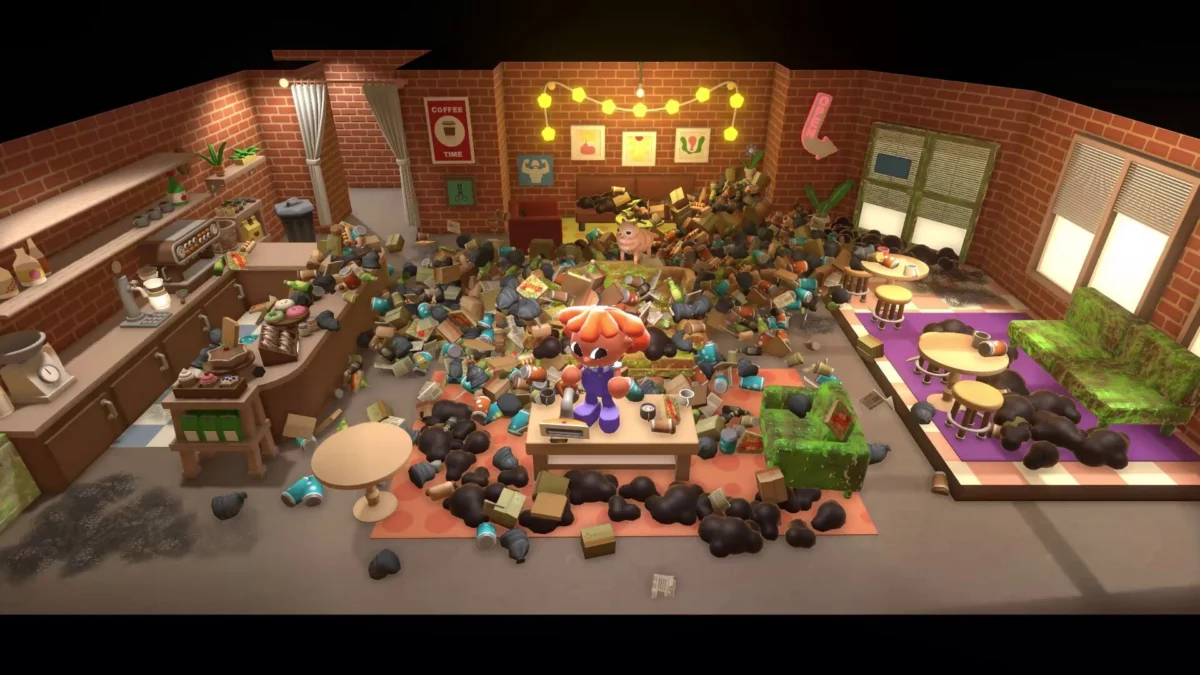
There is a distinct, almost primal satisfaction in watching a chaotic, debris-strewn environment transform into a pristine sanctuary. In the real world, the act of cleaning is often a tedious chore relegated to the "to-do" list. However, in the realm of video games, the mundane becomes the magical. Enter Cleaning Up!, a quirky, physics-based simulator that turns janitorial duty into a delightful, humorous, and oddly addictive puzzle experience.
Available now on Steam and the Nintendo Switch, Cleaning Up! challenges players to tackle some of the most hilariously filthy environments imaginable. While the premise is simple—clean until the bar is full—the execution offers a layer of depth and charm that elevates it well above a typical "chore simulator."
Main Facts: The Mechanics of Tidiness
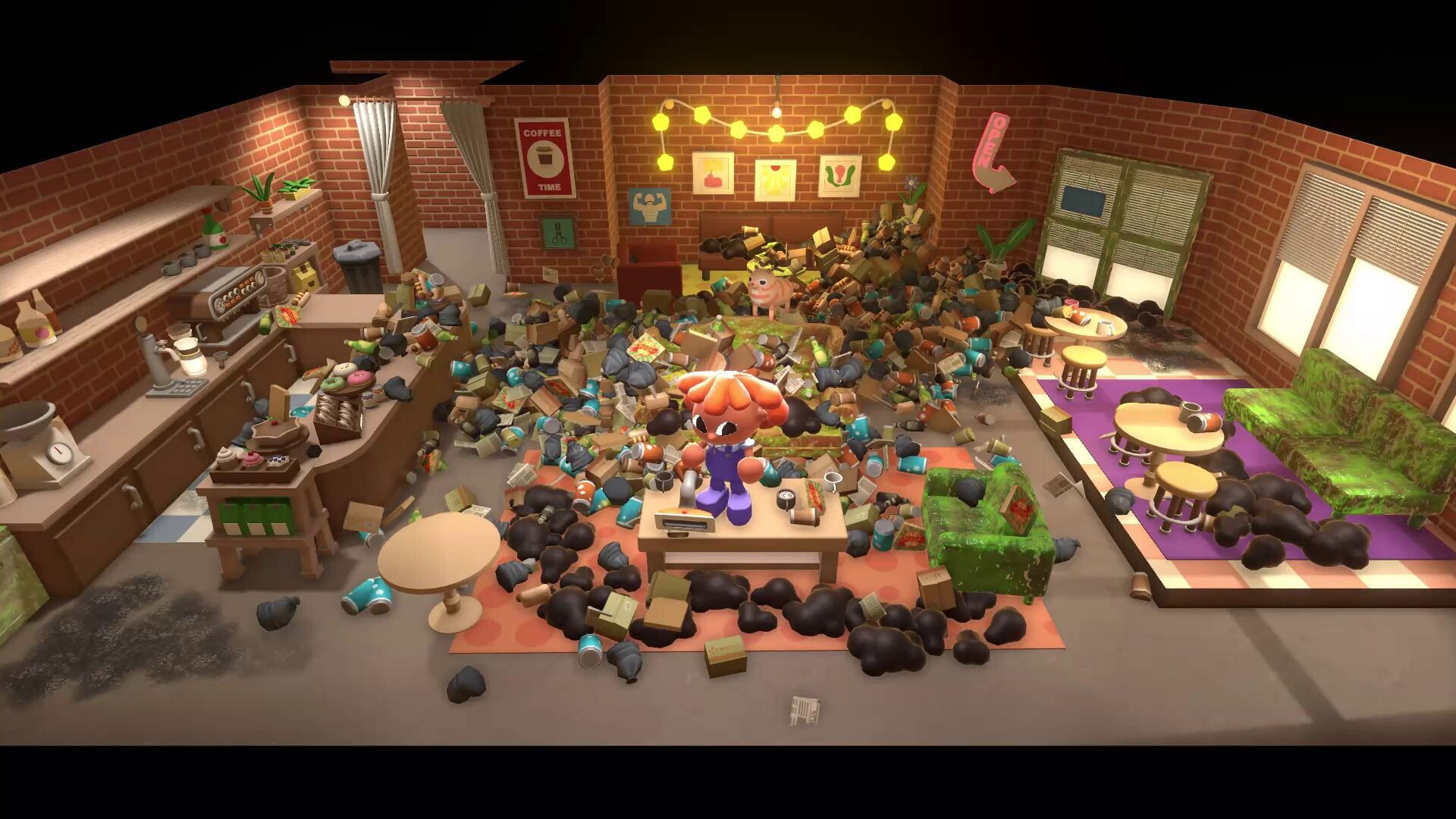
At its core, Cleaning Up! is a game about resource management and spatial navigation. You arrive at a location—ranging from messy cafes to cluttered classrooms—armed with a variety of janitorial tools. Your primary instrument is a vacuum, which serves as the "workhorse" of your operations. It gobbles up loose trash, but like any real-world appliance, it has a limited capacity. Players must balance their cleaning speed with the necessity of emptying their vacuum into a bin, adding a rhythmic, tactical element to the gameplay.
The beauty of the game lies in its lack of pressure. Unlike many modern titles that demand high-speed reflexes or strict time trials, Cleaning Up! operates on your terms. There are no ticking clocks or looming fail states; instead, you are presented with progress bars at the top of the screen that track your completion status for each tool. This zen-like approach allows players to get lost in the loop of clearing debris, which is precisely why it feels so rewarding.
A Growing Arsenal: From Mops to Mystery Sprays
As players progress, the complexity of the filth evolves, necessitating a diverse toolkit. The game introduces new equipment at a steady clip to keep the gameplay loop fresh:
- The Broom: Essential for aggregating stubborn piles of black sludge into manageable, vacuum-ready chunks.
- The Mop: Used to sanitize floors and remove lingering liquid messes.
- The Power Washer: Perhaps the most satisfying addition, this tool allows for the deep cleaning of grimy furniture. In a clever nod to environmental interaction, it can also be used to water plants, providing a bonus for the observant player.
- The Smell-Good Spray: The most enigmatic tool in the arsenal. While it arguably feels less like a traditional janitorial implement, it adds a unique layer of interaction, forcing players to think about the "ambiance" of the rooms they are restoring.
Each tool feels distinct, and learning the physics of how they interact with the game’s environment is a significant part of the challenge.
Chronology: The Evolution of the Play Experience
The progression in Cleaning Up! is designed to be episodic, with each level introducing a new setting and a new set of environmental constraints. Early levels serve as a tutorial, teaching the player the basics of vacuuming and trash disposal. However, as the game progresses, it shifts from a pure cleaning simulator into something akin to a puzzle-platformer.
The introduction of hazards creates a dynamic shift in gameplay. In one instance, you might be tasked with cleaning a room haunted by ghosts, requiring you to navigate around them rather than through them. In another, you might encounter cats—who take great offense to being power-washed—or zombies that must be physically pushed back into their tombs.
These narrative and gameplay shifts serve to break the monotony. One early level, for example, demands that you clean a space while avoiding "dangerous packages." This specific challenge adds a layer of tension that contrasts sharply with the otherwise relaxing nature of the game. It is a testament to the developers’ ambition that they constantly pivot the player’s focus from mere cleaning to active navigation and avoidance.
Supporting Data: Room for Improvement?
While Cleaning Up! is undeniably joyful, there are areas where its design choices raise questions. One of the more curious aspects of the game is its tendency to introduce a unique mechanic—such as a specific puzzle element or tool—only to discard it entirely after a single level.
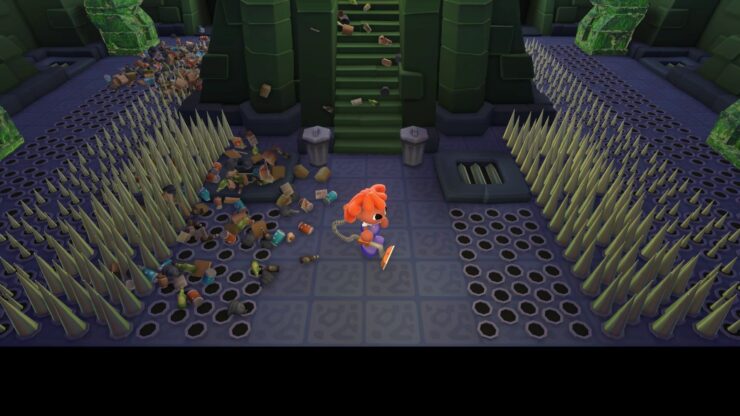
For many players, this might feel like a missed opportunity. One would expect the game to "stack" these mechanics, leading to increasingly complex, multi-layered challenges. Instead, the game seems to prioritize variety over escalation. While this keeps the experience from ever becoming repetitive, it does leave the player wondering if there was potential for a deeper, more demanding experience that utilizes all of the tools and hazards in tandem.
Furthermore, the game offers a meta-progression system that allows players to spend the money they earn on the job. You can choose to upgrade the efficiency of your tools or, in a move that leans heavily into the game’s whimsical nature, purchase eccentric cosmetic items like frog hats. This customization adds a sense of personal ownership to the character, reinforcing the "silly" tone the developers clearly aimed for.
Official Responses and The "Sponge" Factor
The tone of Cleaning Up! is perhaps its greatest asset. The game doesn’t take itself seriously, and it constantly reminds the player of this through its writing and world-building. A standout feature is your sidekick: an AI-chat-bot sponge. This character serves as both your guide and your primary source of comic relief, frequently making self-deprecating jokes that evoke the legacy of the infamous Microsoft Office "Clippy."
The NPCs you encounter in the game are equally humorous, often reacting to the environment with hyperbolic distress. Phrases like "This is a CAFE full of TRASH!" are delivered with a sense of urgency that makes the task at hand feel monumental, even if you are just picking up virtual wrappers. It is this lightheartedness that prevents the game from ever feeling like a chore. The humor bridges the gap between the repetitive task of cleaning and the rewarding sensation of completion.
Implications: The Rise of the "Cozy" Simulator
The success of Cleaning Up! speaks to a broader trend in the gaming industry: the rise of the "cozy" or "satisfying" simulator. Players are increasingly drawn to titles that offer a respite from the high-octane, competitive nature of modern multiplayer shooters and complex RPGs.
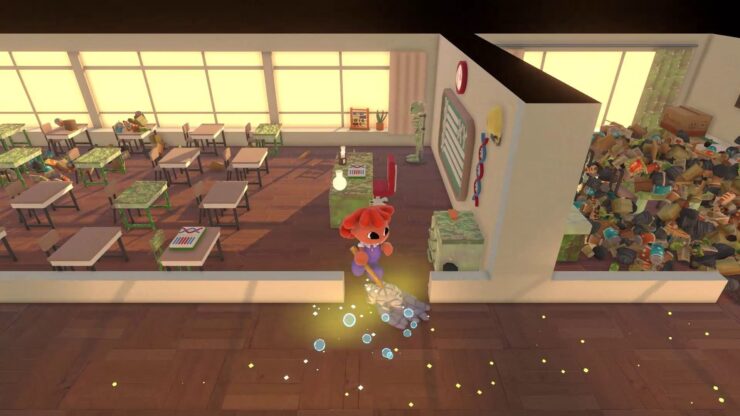
By stripping away the stress of failure and focusing on the tactile, visual, and audio feedback of cleaning, Cleaning Up! taps into a psychological desire for order and agency. The game implies that, even in a world—or a room—that has gone completely to seed, one person with the right tools can make a difference.
Whether it is the sound of the vacuum sucking up debris, the spray of the power washer, or the simple joy of clearing a cluttered corner, the game succeeds in its primary mission: to provide a space where the player can unwind.
Final Thoughts: Should You Pick Up the Mop?
Cleaning Up! is a charming, well-executed title that delivers exactly what it promises: a stress-free, humorous, and deeply satisfying experience. While it may lack a cohesive, escalating difficulty curve, its commitment to variety and its infectious sense of humor make it a standout indie title.
If you are a fan of games that allow you to dictate the pace, or if you simply find the act of cleaning to be a form of meditation, Cleaning Up! is well worth your time. It is a reminder that sometimes, the most fun you can have in a digital space is simply clearing away the mess and leaving a room better than you found it.
You can find Cleaning Up! on the Nintendo eShop and Steam store now. It is a modest, well-crafted title that proves you don’t need high-stakes drama to make a lasting impression—sometimes, all you need is a vacuum and a little bit of pride in your work.


 Dwi Wanna
 Iffa Jayyana