Muslim
The modern NBA game is a high-speed, high-stakes spectacle. With players of unprecedented athleticism sprinting across the hardwood and millions of dollars riding on the outcome of every possession, the margin for error has effectively vanished. Yet, the human element—the referee—remains the most scrutinized figure on the court. In an era where every missed foul is dissected by millions of fans via slow-motion, frame-by-frame social media replays, the NBA is facing a crisis of perception. To combat this, Commissioner Adam Silver has signaled a paradigm shift: the league is actively exploring the integration of Artificial Intelligence (AI) to assist officials, aiming to restore confidence in the integrity of the game.
The Core Challenge: A Crisis of Credibility
For decades, the “human element” of officiating was accepted as an inherent part of basketball. However, the rise of sports betting and the democratization of video analysis have changed the landscape. Today, a missed whistle in the second quarter of a regular-season game is no longer a footnote; it is a viral moment that fuels accusations of bias, incompetence, and corruption.
The pressure on referees is immense. An official is tasked with tracking ten world-class athletes moving at near-supersonic speeds, often with obscured sightlines, all while making split-second decisions that define the outcome of games. As the game has evolved, so too has the demand for precision. The NBA’s current reliance on replay centers and advanced tracking systems is a foundation, but it is no longer sufficient to satisfy a fan base that demands perfection.
A Chronology of Technological Evolution
The NBA’s journey toward AI-assisted officiating is not a sudden pivot, but rather the culmination of years of technological investment.
- The Early Tracking Era: The league first dipped its toes into data-driven officiating through the implementation of player-tracking cameras (such as Second Spectrum) in every arena. This allowed the league to monitor player speed, distance, and positioning with mathematical precision.
- The Replay Revolution: The establishment of the Replay Center in Secaucus, New Jersey, marked a pivotal moment. By centralizing review power, the NBA sought to standardize officiating across all venues.
- The Rise of Analytics: Over the last decade, the league has utilized massive datasets to grade referee performance, providing officials with post-game feedback to identify missed calls and improper mechanics.
- The AI Frontier (Present Day): Commissioner Adam Silver’s recent comments indicate that the league is moving beyond simple data collection. The current focus is on "real-time support," where AI algorithms could act as a silent partner to the crew on the floor, flagging potential infractions before a human has even processed the visual data.
The Technological Mechanism: How AI Would Function
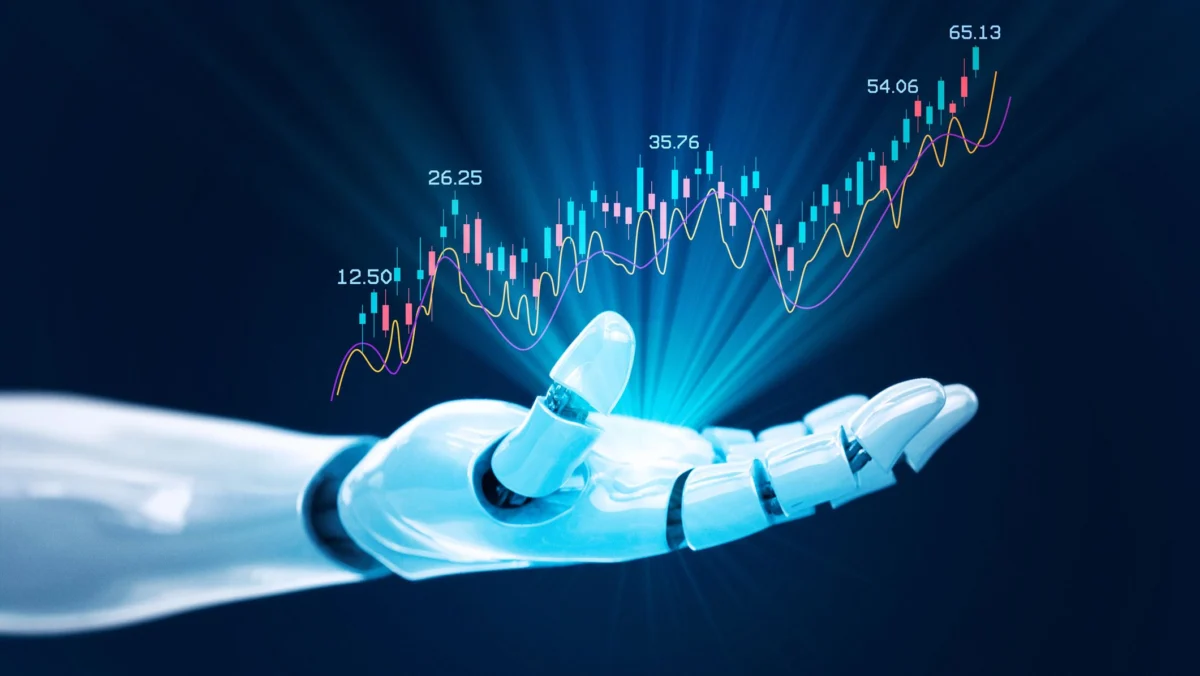
It is essential to clarify that the NBA is not planning to replace referees with robots. The league’s vision is centered on Augmented Officiating. The proposed system would leverage machine learning models trained on thousands of hours of gameplay.
1. Computer Vision and Pattern Recognition
Modern AI excels at object detection. By utilizing a high-density camera network, an AI system could map the skeletal movement of all ten players simultaneously. This would allow the system to detect illegal contact, traveling violations, or lane violations with a level of consistency that the human eye cannot replicate.

2. The "Intelligent Assistant" Model
Rather than a robotic voice calling fouls, the AI would likely serve as an "on-call consultant." If an official misses a subtle foul, the AI could send a discreet signal to the official’s earpiece or a tablet on the scorer’s table, suggesting a review or an adjustment. This keeps the referee as the final arbiter while providing them with the "superhuman" data required to make the right call.
3. Predictive Accuracy
AI can analyze thousands of similar scenarios to determine the likelihood of a foul. By comparing the current play against a historical database of thousands of successful officiating decisions, the system can provide a probabilistic assessment, helping referees decide when a whistle is warranted.
Supporting Data and the Global Sports Context
The NBA is not operating in a vacuum. Professional sports leagues worldwide are engaged in an "arms race" to adopt technology that minimizes officiating errors.
- Tennis: The transition to "Hawk-Eye" and fully automated line-calling has effectively eliminated the human error of line judges. The consensus among players is that the game is fairer and less prone to "bad vibes" from controversial calls.
- Soccer: The Video Assistant Referee (VAR) system has transformed global football. Despite initial resistance, the ability to review offsides and penalty decisions has become the gold standard for high-level competition.
- Baseball: Major League Baseball (MLB) is currently piloting the "Automated Ball-Strike System" (ABS) in the minor leagues. By replacing the subjective human strike zone with a radar-based system, the league has significantly reduced the variability of umpire calls.
The data from these sports suggests that while fans initially fear the loss of the "human touch," they quickly embrace the reduction of game-altering mistakes.
Official Responses and Stakeholder Perspectives
Commissioner Adam Silver has framed the adoption of AI as a necessary evolution to protect the game’s integrity. "The goal is to provide our officials with the best tools possible," Silver has noted, emphasizing that human judgment remains vital for interpreting the spirit of the rules, which AI sometimes struggles to quantify.
However, the response from the National Basketball Referees Association (NBRA) is one of cautious skepticism. Officials are concerned that over-reliance on technology could undermine their authority on the court. If an AI system flags a call that an official disagrees with, how is the conflict resolved? Furthermore, there is the concern of "over-officiating"—a scenario where the game becomes a stop-and-start affair as officials wait for digital confirmation on every minor collision.

Implications: The Future of the Fan Experience
The integration of AI into the NBA brings both promise and peril for the viewer.
The Benefits
- Consistency: The primary complaint of NBA fans is the inconsistency of officiating. AI would ensure that a foul in the first quarter is treated the same as a foul in the final seconds of a playoff game.
- Restoring Trust: By removing the suspicion of human bias, the league can potentially mitigate the toxic discourse that often surrounds referees on social media.
- Game Flow: If implemented correctly, AI could expedite reviews, making them more efficient and less intrusive.
The Risks
- The "Stop-and-Start" Trap: If AI flags every micro-foul, the game could lose its natural rhythm. The NBA’s "flow" is a major part of its appeal, and excessive review could jeopardize the excitement of the product.
- Technological Dependence: What happens when the system fails? A reliance on AI creates a new point of failure, where a power outage or software bug could derail a championship-deciding contest.
- Loss of Nuance: Basketball is a physical game. Officials use "game feel" to decide which fouls are impact-worthy and which are incidental. An AI might treat every touch-foul as a violation, potentially sanitizing the game to a point that fans find boring.
Conclusion: The Path Forward
The NBA stands at a technological crossroads. The pressure to embrace AI is driven by the undeniable reality that human officials are being outpaced by the speed of the modern game and the scrutiny of the digital age. While the league is moving with measured caution, the direction is clear: the future of NBA officiating will be a hybrid model.
As we look toward the next several seasons, expect the league to introduce AI-driven "assist" features in limited capacities, likely starting with replay reviews and out-of-bounds calls. The success of these experiments will determine whether we see the rise of the "digital whistle." For the NBA, the goal is not to eliminate the human element entirely, but to provide a safety net that ensures the best players in the world are decided by their skill on the court, rather than a controversial call that leaves millions of fans asking, "What if?"
The transition will be complex, expensive, and undoubtedly controversial. Yet, in a world where data is king, the NBA appears to have decided that the risk of technological adoption is far lower than the risk of being left behind by the very fans it seeks to entertain.

 Suro Senen
 Jia Lissa