Nana Wu
By Declan Ferris, Senior Editor
Updated: 24 June 2026
The 2026 FIFA World Cup has reached a fever pitch. As the group stages draw to a close, the spotlight turns to the iconic Arrowhead Stadium in Kansas City, where a dramatic "winner-takes-all" showdown awaits. On June 27, Algeria and Austria will lock horns in what is essentially a knockout match to determine who will join Argentina in the Round of 32 from Group J.
With Argentina firmly entrenched at the top of the table with six points, and Jordan mathematically eliminated after two heavy defeats, the narrative is singular: this is a binary choice between the North African flair of Algeria and the disciplined, tactical rigidity of Austria.
The Strategic Landscape: A Study in Contrasts
The Group J standings paint a precarious picture. Both Algeria and Austria sit level on three points, but the technicalities of the group stage favor the Europeans. Thanks to a superior goal difference—Austria currently sits at a neutral zero, while Algeria languishes at -2 following their heavy defeat to Argentina—Vladimir Petković’s side knows that only a victory will suffice to keep their tournament dreams alive.
Conversely, Austria, guided by the meticulous tactical oversight of coach S. Helm, enters the fray knowing that a draw is sufficient to secure passage to the next stage. This creates a fascinating tactical "asymmetry." Algeria, fueled by the attacking brilliance of Riyad Mahrez and the dynamic energy of Mohamed Amoura, must force the issue. They will be compelled to play on the front foot, inevitably leaving gaps at the back that the counter-attacking prowess of the Austrian side will be desperate to exploit.
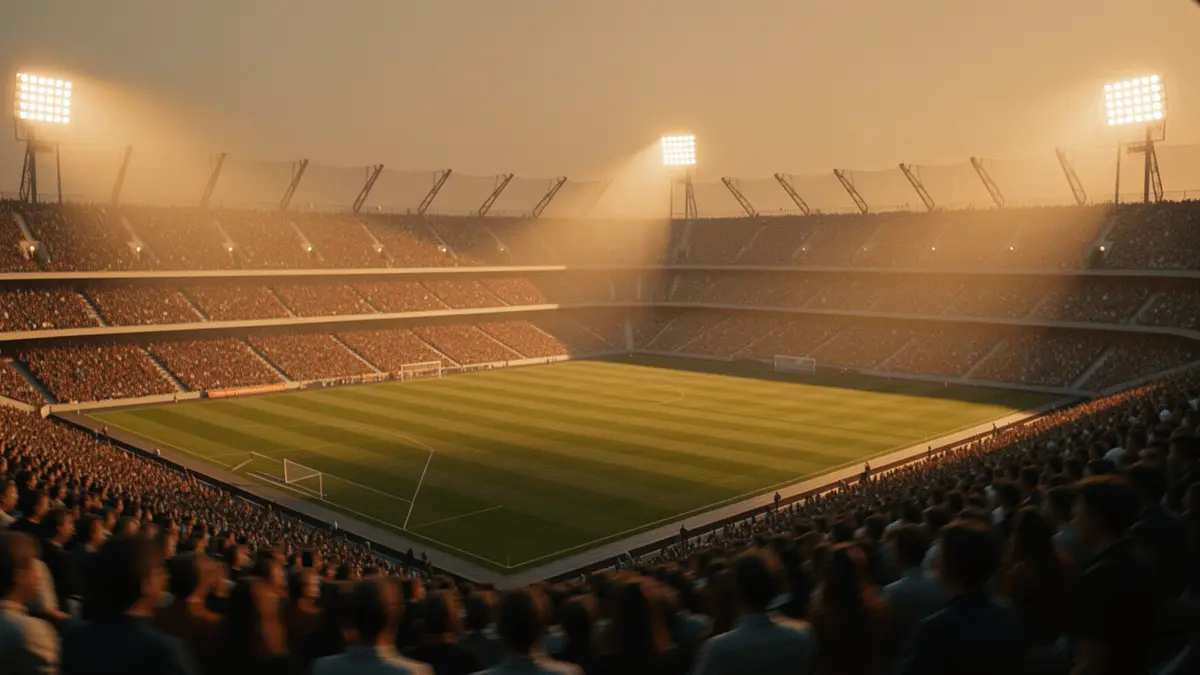
The Venue: Arrowhead Stadium
Kansas City’s Arrowhead Stadium, world-renowned for its electric atmosphere, provides a fitting stage for such a high-stakes encounter. The pitch conditions and the expected partisan support from traveling fans will be variables, but the primary factor remains the heat of the competition.
Chronology of the Campaign
To understand the current tension, one must look back at the journey of both nations over the last ten days.
Algeria’s Rollercoaster
Algeria’s tournament began with a hard-fought, morale-boosting 2-1 victory over Jordan. It was a performance characterized by resilience and the individual brilliance of their forward line. However, the optimism was punctured by a clinical 3-0 masterclass from Argentina, a match that exposed the defensive frailties that arise when the Fennecs are forced to chase a game against elite-tier opposition.
Austria’s Disciplined Path
Austria’s opening was equally emphatic, dispatching Jordan 3-1 with a display of efficiency that highlighted the goal-scoring instincts of 37-year-old veteran Marko Arnautović. Their subsequent 2-0 loss to Argentina was a conservative effort; they managed the game well for long stretches, proving that they are a side built on structural integrity rather than individual fireworks.
Supporting Data: Tactical Analysis
The statistical breakdown of this fixture reveals why oddsmakers have framed this as a marginal win for Austria, despite Algeria’s attacking momentum.
- Defensive Stability: Austria’s defensive unit, anchored by the legendary David Alaba and Tottenham’s Kevin Danso, conceded only three goals during the entire qualifying campaign. Their ability to minimize high-quality chances is their greatest asset.
- The Midfield Battle: The contest will be won or lost in the engine room. Austria’s pair of Nicolas Seiwald and Konrad Laimer are tasked with shielding the back four. Algeria’s creative hub, featuring Eintracht Frankfurt’s Farès Chaïbi and the experienced Hicham Boudaoui, will need to be at their most inventive to bypass this dual-pivot.
- Historical Context: The two nations share a storied but distant history. Their only previous World Cup encounter occurred in 1982, where Austria emerged 2-0 victors. While that result holds little bearing on the current squad compositions, it serves as a reminder of the historical pedigree Austria brings to the pitch.
Projected Lineups
Algeria (4-3-3):
GK: Luca Zidane | DEF: Rayan Ait-Nouri, Aissa Mandi, Ramy Bensebaini, Rafik Belghali | MID: Ramiz Zerruki, Hicham Boudaoui, Farès Chaïbi | FWD: Riyad Mahrez (c), Mohamed Amoura, Amine Gouiri
Austria (4-2-3-1):
GK: Patrick Pentz | DEF: Stefan Posch, Kevin Danso, David Alaba (c), Phillipp Mwene | MID: Nicolas Seiwald, Konrad Laimer | AM: Patrick Wimmer, Marcel Sabitzer, Romano Schmid | FWD: Marko Arnautovic
Official Perspectives and Team News
Both camps have remained largely tight-lipped regarding their final tactical adjustments, but the mood is one of focused determination.
Vladimir Petković has emphasized the need for "composure and clinical finishing," acknowledging that his side cannot afford the defensive lapses that allowed Argentina to dismantle them. Algeria’s squad is at full strength, with no reported injuries hindering their selection. The inclusion of Bayer Leverkusen’s Ibrahim Maza provides the North Africans with a potent "X-factor" off the bench should they find themselves struggling to break the deadlock in the final twenty minutes.
Austria, meanwhile, continues to rally around the leadership of David Alaba. Coach S. Helm has noted in press briefings that "the goal is not to play for a draw, but to play the game that gets us the result." While the draw is enough, the Austrian philosophy under Helm has consistently focused on maintaining a disciplined shape, suggesting that they will not abandon their defensive principles regardless of the scoreline.
Implications: The Road Ahead
The implications for the loser are devastating: a return flight home before the knockout stages even begin. For the winner, a spot in the Round of 32 awaits, where the intensity will only ratchet up further.
For Algeria, a win would validate the "Golden Generation" status of their current squad, proving they can overcome a disciplined European side in a high-pressure, neutral-venue environment. For Austria, success here would represent a crowning achievement for their current core, many of whom are approaching the twilight of their international careers.
The "Double Chance" Reality
The betting markets currently lean toward a defensive stalemate. With Austria priced at 8/11 to either win or draw (double chance), the consensus among analysts is that the structural discipline of the Austrian side will ultimately dictate the tempo of the match. Algeria is currently offered at 3/1 to win, a price that suggests the bookmakers view their task as monumental given the necessity of playing an open, risky style of football.
Final Thoughts: A Match for the Ages
As we approach the early hours of June 28 (BST), the atmosphere in Kansas City is set to be electric. This is more than just a match for points; it is a clash of philosophies. Algeria’s flair and need for goals versus Austria’s tactical discipline and desire for control.
Fans in the UK can catch every moment of the action live on BBC and the iPlayer streaming service. Whether the game ends in a high-octane victory for the North Africans or a professional, measured progression for the Austrians, one thing is certain: this Group J decider will be remembered as one of the defining moments of the 2026 World Cup.
Responsible Gambling Reminder:
As with all major sporting events, we encourage fans to enjoy the spectacle responsibly. Betting should be viewed as a form of entertainment. Please ensure you set limits and stick to your budget. If you or someone you know is struggling, resources like BeGambleAware (begambleaware.org) and GamCare are available to provide support, guidance, and confidential assistance.
Declan Ferris is a Senior Editor at Esports News UK, bringing a unique perspective on the intersection of tactical team sports and high-pressure competitive gaming. He is currently on-site in the USA covering the 2026 FIFA World Cup.


 Dwi Wanna
 Rifan Muazin