

Not long ago, I found myself in a dimly lit bar, locked in a spirited, alcohol-fueled debate with three Norwegians regarding the cultural necessity of Superman. My companions, hailing from a nation defined by its robust social trust and vast sovereign wealth, argued that the world would be an objectively better place if a being of such singular power and morality actually existed. I countered with a cynical, perhaps quintessentially American, perspective: no individual, regardless of their upbringing or moral compass, should wield that level of unchecked authority.
“But Superman is a good man!” they insisted.

“Perhaps,” I replied. “But what if he wasn’t?”
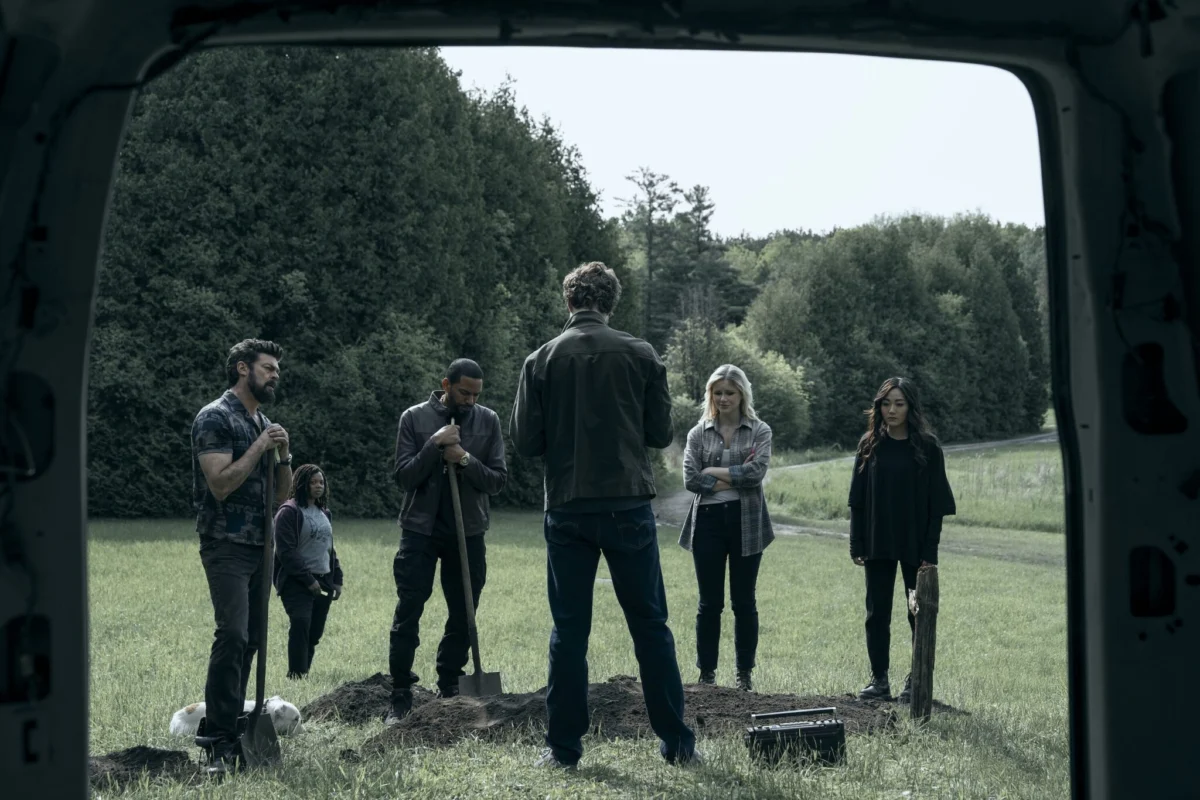
This hypothetical tension—the discrepancy between the potential for goodness and the inevitability of corruption—sits at the heart of Amazon’s The Boys. As the series concludes its fifth and final season, it stands not just as a piece of high-octane television, but as the most piercing, uncomfortable, and prescient critique of the modern billionaire class ever committed to screen.

The Evolution of a Premise: From Gritty Comic to Cultural Mirror
When Amazon first announced its intention to adapt Garth Ennis and Darick Robertson’s early-2000s comic book series, long-time fans were skeptical. The original source material was, to put it charitably, a product of its time—a collection of hyper-violent, Bush-era cynicism that often mistook gratuitous shock value for genuine subversion. While Ennis is a master of the craft (his Hellblazer work remains seminal), The Boys comic often felt like a blunt instrument.
However, under the stewardship of showrunner Erik Kripke, the television adaptation underwent a radical “narrative glow-up.” Kripke understood that the true power of the concept wasn’t in the blood and guts, but in the institutional rot. By moving the focus away from the source material’s more juvenile impulses and anchoring it in the political and social anxieties of the late 2010s and early 2020s, The Boys transformed from a “dumb and dirty” comic into a sophisticated dissection of power, corporate capture, and the cult of celebrity.

Chronology of a Corporate Coup
To understand the trajectory of The Boys, one must view the series as a slow-motion descent into institutional failure.
- The Establishment (Seasons 1-2): The show begins as a deconstruction of the superhero myth. The "Seven," led by the erratic and increasingly narcissistic Homelander, are marketed as altruistic icons by Vought International. However, the veneer of heroism is quickly stripped away, revealing a company that treats superheroes as product lines and moral liability insurance.
- The Infiltration (Seasons 3-4): The conflict shifts from the streets to the halls of power. We see the integration of the superhero industrial complex into the military-industrial complex. The narrative begins to mirror real-world political extremism, with superheroes becoming the face of radicalization, media manipulation, and the erosion of democratic norms.
- The Collapse (Season 5): The final season depicts the inevitable endgame of such a system: a total fascist takeover. With the "Supes" no longer tethered to corporate oversight, the mask slips entirely. The final season presents an America that has moved beyond the satire of "corporate greed" into the terrifying reality of "super-fascist authoritarianism," where the powerful are no longer restrained by law, public opinion, or basic human decency.
The Anatomy of the Monster: Homelander as the Ultimate Narcissist
At the center of this storm is Antony Starr’s tour-de-force performance as Homelander. In the original comics, the character was a somewhat one-dimensional bully. In the show, he is a terrifying manifestation of the "dark triad" of personality traits: narcissism, Machiavellianism, and psychopathy.

Homelander is the ultimate indictment of unchecked power. He is not a strategist or a true ideologue; he is a “howling vortex of need.” His evolution from a Vought mascot—a walking, blonde, blue-eyed lawsuit—to the supreme ruler of a collapsing nation is a masterclass in character development. The show makes the terrifying argument that the greatest threat to a democracy is not necessarily a villain with a grand plan, but a fragile, insecure individual who discovers they can do whatever they want without consequence.
Supporting Data: Why the Show Works
The success of The Boys lies in its refusal to be subtle. In an era where "prestige television" often hides behind layers of ambiguity, The Boys operates with the blunt force of a sledgehammer.

- The "Deep" Satire: The character of The Deep (Chace Crawford) serves as the perfect avatar for the modern, vapid, "influencer-adjacent" celebrity. His descent from a superhero to a disgraced, podcast-peddling, cult-following bottom-feeder is a hilarious, stinging critique of the ease with which powerful men can pivot their public brand after committing heinous acts.
- The Gen V Connection: The spin-off Gen V further expands this world, exploring the "college experience" of young supes. By showing how the next generation is trained to view their morality as a brand management exercise, the show accurately captures the anxiety of a generation that must perform perfection while the world burns.
- The Economic Lens: The show’s depiction of Vought is an eerily accurate reflection of modern big-tech conglomerates. From the focus on streaming metrics to the cynical manipulation of social movements for profit, The Boys treats the corporate board room as the true source of evil, often more dangerous than the supes themselves.
Official Responses and Public Discourse
The show’s refusal to pull punches has naturally invited real-world friction. The inclusion of an "Elon Musk-esque" figure in the final season—who begs Homelander to discuss "white fertility rates"—is a clear, unapologetic jab at the current intersection of tech-billionaire wealth and white supremacist ideology.
When figures like Musk take to social media to complain about their depiction in the show, they inadvertently validate the creators’ thesis. By reacting with public tantrums, these real-world elites prove that the show’s caricature of the "fragile billionaire" is not just a joke, but an accurate observation. The Boys understands that the powerful are often the most sensitive to ridicule, and it leverages that to devastating effect.

The Implications: Why It Matters
The Boys is, at its core, a show about the exhaustion of the "good citizen." The characters, particularly Hughie Campbell (Jack Quaid), start the series as relatively normal, well-meaning individuals who believe in playing by the rules. As the seasons progress, they are forced to shed their "niceness" in the face of an existential threat.
The show makes a compelling, if deeply cynical, case: when one side is playing by the rules of civility and the other is playing by the rules of raw power, "rising above" is not a virtue—it is a suicide note.

The most frightening aspect of The Boys is not the exploding heads or the grotesque displays of super-powered violence. It is the familiarity of it all. The show mirrors the political polarization, the media-driven misinformation, and the rapid erosion of institutional norms that have defined the last decade. It forces the viewer to ask a question that is increasingly difficult to ignore: What happens when the people who possess the most resources, the most influence, and the most power decide that they are no longer beholden to the rest of us?
Conclusion: A Necessary Depravity
The Boys is not a masterpiece in the traditional sense. It is too messy, too loud, and too gleefully unhinged for that. However, it is exactly the show we needed for this moment in time. It captures the specific, sharp, and necessary anger of a population that has grown tired of being asked to "wait and see."

In its final moments, The Boys remains what it has always been: a piece of trashy, outrageous, and deeply depraved television that manages to be more honest about our current political reality than most serious news outlets. It reminds us that even when the world feels like it is being run by a narcissistic, invincible, and unhinged "super-being," there is still a defiant, ugly, and necessary power in standing up and screaming, "What the fuck?"
As we say goodbye to the series, we are left with the lingering, haunting realization that the true horror of Homelander’s America is not that it is a fantasy, but that it feels like an inevitability. And in our own, slightly less super-powered, but equally flawed reality, perhaps a little more "nasty and weird" resistance is exactly what the doctor ordered.









No comments yet. Be the first to join the conversation!