

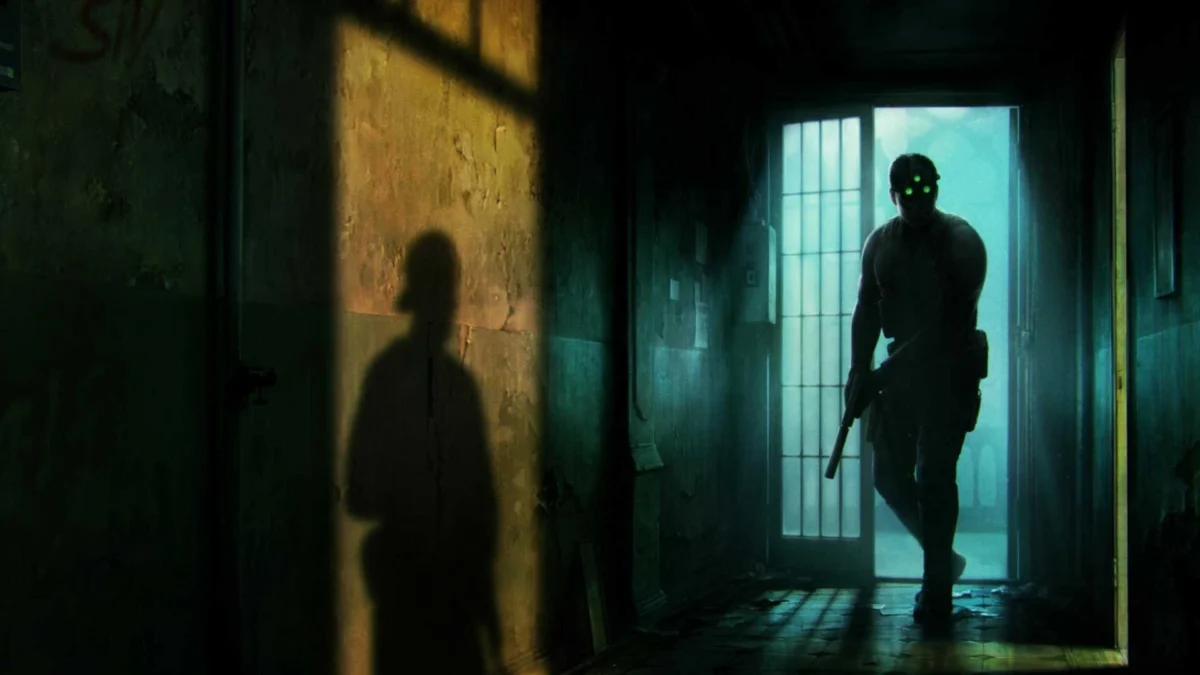
For decades, the stealth genre was defined by the binary dance between light and dark. Whether it was Garrett lurking in the rafters of Thief or Sam Fisher hanging from a pipe in the original Splinter Cell, the core loop was simple: if you were in the shadow, you were safe; if you were in the light, you were a target. But as graphical fidelity pushes toward photorealism, that simple, readable language is being eroded by the very technology designed to make games look better.
Clint Hocking, a legendary designer whose fingerprints are on iconic titles like Splinter Cell: Chaos Theory and Far Cry 2, has recently offered a provocative theory as to why the stealth genre has felt increasingly stagnant: modern rendering techniques have made it nearly impossible for players to understand their own concealment.
The Technological Paradox: When "Better" is Worse
In a candid conversation on an upcoming episode of the FRVR podcast, Hocking articulated a frustration shared by many veteran developers. The industry’s relentless pursuit of realistic lighting—specifically global illumination, diffusion, and ambient occlusion—has fundamentally broken the "gameplay readability" that stealth titles rely upon.
"I actually think one of the difficulties with modern stealth games is the sophistication in the rendering has made lighting so much more realistic," Hocking noted. "The simulation of diffusion—light scattering from different surfaces—makes stealth games so much harder to read."
In the era of "baked" lighting, developers had absolute control. They could paint a room with a clear, high-contrast palette where shadows were distinct, pitch-black zones. Today’s dynamic, ray-traced lighting simulates how light bounces off walls and floorboards, creating subtle gradients and soft shadows. While these scenes look stunning in a screenshot, they are a nightmare for a player trying to determine, in a split second, whether they are hidden from a guard’s patrol path.
A Brief History of Stealth: From "Light Gems" to Ray Tracing
To understand why this is a crisis, we must look at how the genre historically handled the problem of visibility. Stealth is, at its heart, an abstract puzzle. Developers have always needed to communicate "safety" to the player without breaking immersion.
- The Early Era (1998–2004): Games like Thief pioneered the "light gem," a UI element that provided an abstract readout of the player’s concealment. Splinter Cell famously used Sam Fisher’s back-mounted headlamps, which would glow green when he was hidden—a counterintuitive design that used a bright light to tell the player they were invisible.
- The Refinement Era (2005–2012): Developers began moving toward character-based indicators. In Mark of the Ninja, the player character literally desaturates and turns into a silhouette when hidden. This visual shorthand allowed for higher-fidelity environments without sacrificing the player’s ability to "read" the game.
- The Modern Era (2013–Present): With the advent of PBR (Physically Based Rendering) and ray-tracing, the industry has shifted away from the "gamey" indicators of the past. As Hocking points out, developers are now struggling to reconcile these aesthetic improvements with the mechanical necessity of stealth.
The "Stage Lighting" Dilemma
Hocking’s insight goes beyond just the technical limitations of shadows; it touches on the philosophy of level design. "When you go and see a play on a stage, the lighting is often super dramatic. So, you can do it with real lights," Hocking explained. "It’s just that these places are often lit to be very realistic and not lit to be aesthetic to purpose for stealth gameplay."
This highlights a growing rift between the "Graphics Department" and the "Gameplay Department" within major studios. Modern AAA development often prioritizes visual fidelity to secure marketing trailers and high-end tech demos. If a scene doesn’t look "photorealistic," it is often flagged for improvement. However, in a stealth game, "photorealistic" lighting is often the enemy of gameplay. If a light source behaves exactly like a real-world bulb, it will scatter light into corners that, for the sake of the player’s experience, should be dark.
The Rise of Social Stealth: A Response to the Crisis?
It is worth considering whether the decline of traditional "shadow-based" stealth is a direct result of these rendering hurdles. The industry pivot toward "social stealth"—exemplified by Hitman and Assassin’s Creed—might be more than just a trend; it may be an evolutionary survival mechanism.
By hiding in plain sight among crowds or using disguises, developers bypass the need for a complex, readable lighting system. If the player is safe because they are "one of the crowd," the developer no longer needs to worry if a ray-traced reflection on a wet floor is making the player look too visible to an AI guard. It is a brilliant, albeit different, solution to the problem of player feedback.
The Splinter Cell Remake: A High-Stakes Test
The conversation surrounding Hocking’s comments becomes particularly poignant when viewed through the lens of the long-awaited Splinter Cell remake. Sam Fisher is the mascot of shadow-based stealth. Rebuilding a classic game from 2002 using modern engines like Snowdrop or Unreal Engine 5 presents a monumental challenge: how do you keep the "feel" of the original while applying the latest in lighting tech?
We know little about the remake’s current state. Reports have surfaced that the development team at Ubisoft Toronto has faced layoffs as part of a broader corporate cost-cutting initiative, casting a shadow of doubt over the project’s timeline. If the team is indeed struggling to balance modern lighting with the core identity of Splinter Cell, Hocking’s warning serves as a cautionary tale for the entire industry.
Implications for the Future
What does this mean for the next generation of stealth games? Hocking suggests that a "deep thinking" phase is required before we can truly marry modern tech with the genre.
- Stylized Rendering: We may see a return to stylized or "non-photorealistic" rendering in stealth games, where lighting is manipulated to prioritize clarity over physics.
- Hybrid UI Systems: Games may need to lean harder on UI indicators (like the light gem) that explicitly tell the player their state of visibility, regardless of how dark or bright the environment looks.
- Dynamic Environmental Lighting: Rather than static light, developers might implement lighting that reacts to the player, "cheating" the light values in a way that remains invisible to the eye but clear to the game’s logic.
Conclusion: The Path Forward
Clint Hocking’s departure from the Assassin’s Creed Codename Hexe team and his founding of Build Machine Games marks a new chapter for one of the industry’s most thoughtful designers. His willingness to speak openly about the friction between "looking good" and "playing well" is a breath of fresh air in an industry often obsessed with the former.
If developers want to bring back the golden age of stealth, they must stop chasing the illusion of absolute realism and start prioritizing the player’s perception. As Hocking noted, "There would be some learning if we wanted to really use these modern lighting techniques to have a really pure stealth experience." Until that learning happens, we may find ourselves stumbling through the dark—literally and metaphorically—in our favorite stealth games.












No comments yet. Be the first to join the conversation!