Jia Lissa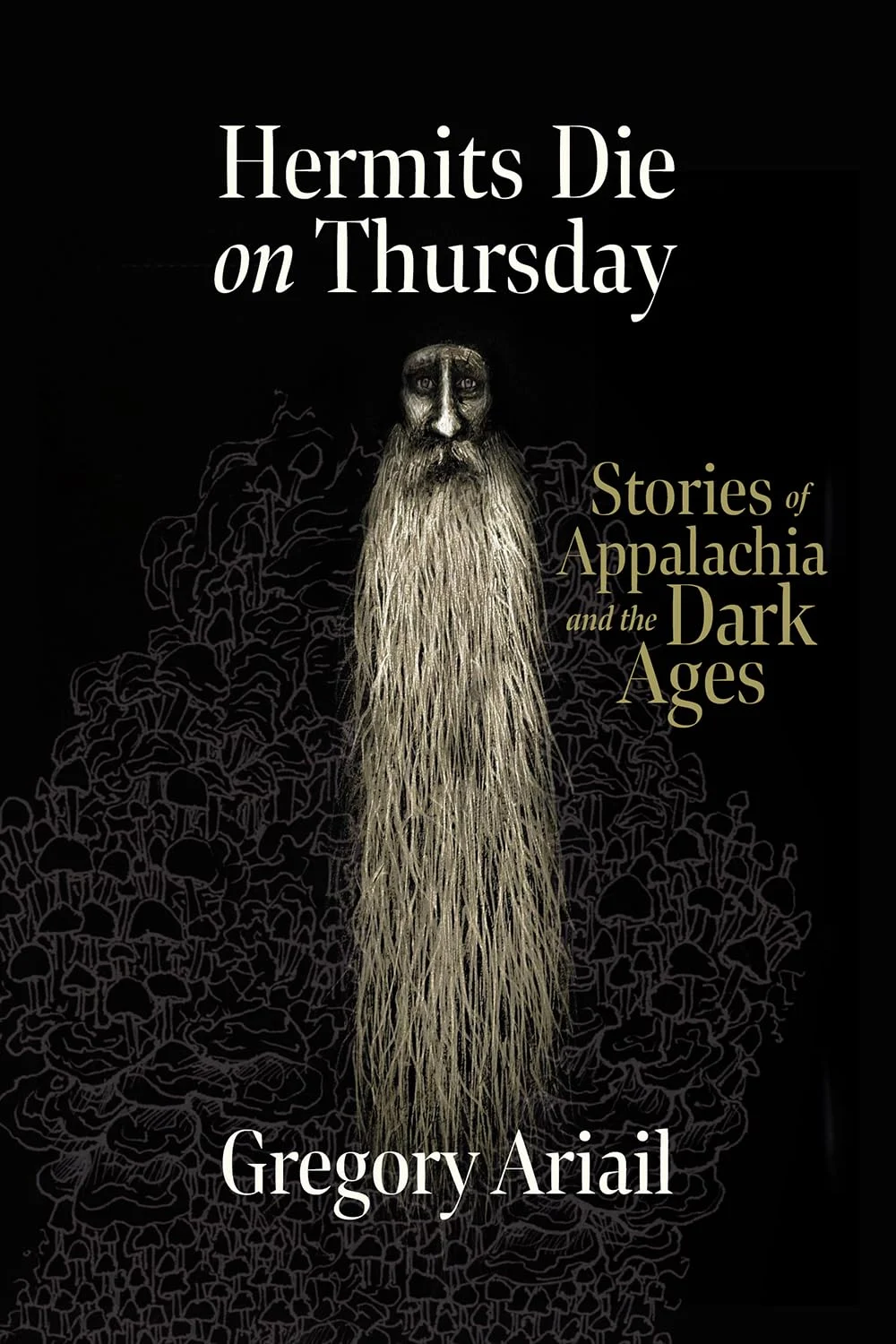
In the rugged, rolling foothills of the Appalachian range, history is often written by those who choose to vanish. For centuries, the region has been a sanctuary for the eccentric, the disillusioned, and the solitary—figures who exist on the periphery of societal norms, their lives defined by the silence of the woods rather than the clamor of the town square. In his latest collection, Hermits Die on Thursday: Stories of Appalachia and the Dark Ages, Alabama-based author Gregory Ariail ventures into this liminal space, peeling back the layers of reality to reveal the strange, magical, and profoundly human truths buried within the mountain mist.
The Architecture of Solitude: Historical Hermits
To understand the literary landscape of Ariail, one must first confront the historical figures who inhabited the real-world Appalachian wilderness. Among them stands Marx Edgeworth Lazarus, a man whose life reads like a fever dream of nineteenth-century intellectualism.
Born in 1822 in North Carolina, Lazarus was an anomaly of his era: an anarchist intellectual in the antebellum South who possessed a deep-seated belief in the perfectibility of human society. A doctor and philosopher by trade, he was a man of contradictions. He wrote extensively on the "evils" of nocturnal emissions and later penned polemics against the institution of marriage as a form of female enslavement—only to marry a nineteen-year-old woman in his thirties.
Lazarus was a proponent of the "phalanstery," a communal living experiment rooted in the sharing of property and the practice of free love. He sought to convert the rigid, slave-holding plantations of the South into multiracial communist utopias, a proposal that found no takers in the polarized climate of the mid-1800s. After serving as a surgeon for the Confederacy, a final act of societal participation, Lazarus retreated into the Appalachian foothills of Alabama. He became a true hermit, leaving behind a legacy that is as much about the failure of radical idealism as it is about the quiet, inevitable pull of the wilderness.
He was not an outlier. History is replete with such figures, including the legendary Ches McCartney, the "Alabama Goat Man." While Lazarus sought the shadows, McCartney sought the road, traveling the Southeast in a goat-drawn wagon while the rest of the world embraced the internal combustion engine and the comforts of air conditioning. McCartney’s life was a mosaic of the absurd and the poignant: a teenage runaway who married a circus knife-thrower, and a man who once embarked on a cross-country trek to Los Angeles with the earnest intention of courting the actress Morgan Fairchild.
These are not merely tall tales; they are the bedrock of a regional identity that celebrates the "irreducible" nature of the human spirit. When we strip away the noise of modern life, we are left with a mass of biographical wires and philosophical vines—a complexity that Ariail masterfully captures in his fiction.
Chronology: From Fantasy Fan to Regional Chronicler
Gregory Ariail’s evolution as a writer is inextricably linked to his own journey through the Appalachian landscape. Growing up in North Carolina, he was a self-described fantasy fan, consuming the tropes of epic high fantasy with the fervor of a devoted reader. However, his artistic awakening did not occur in the pages of a textbook or the screening of a blockbuster; it happened in the woods.
During his formative years, Ariail began producing amateur fan films, trekking into the natural world to find backdrops for his stories. This transition from "imported" fantasy to "native" exploration is a common narrative among Appalachian writers, yet Ariail distinguishes himself by refusing to focus on the standard tropes of mountain sociology or the region’s well-documented economic hardships. Instead, he focuses on the forest itself—the vast, untamed hills that the average resident glances at from the window of a speeding car.
By grounding his work in the physical reality of the mountains, Ariail forces the reader to confront the possibility that the spirit world is not a distant, conceptual realm, but something that exists within the mossy crevices and wooded hollows of the American South.
The Magical Realism of the Appalachian Fringe
At the heart of Hermits Die on Thursday is the titular short story, a collection of obituaries that serve as a shorthand for the complexities of the hermit life. Ariail’s prose is characterized by a "breathtaking inventiveness," where the boundaries of the natural and supernatural dissolve.
In these pages, we encounter hermits who possess astronomical knowledge far ahead of their time, corpses that levitate, and men who meet their end by choking on their own long, neglected beards. One particularly haunting suicide note reads: "I’ll ride the moon all the way down to hell to meet my mother and Mr. Price, my Latin teacher."
This line encapsulates the essence of Ariail’s world-building. Why shouldn’t a hermit have a Latin teacher? Why shouldn’t the landscape hold secrets that defy logic? Ariail’s work challenges the reader’s preconceptions: You thought you knew what this thing was, but you didn’t know anything, really.
The "Too-Short Blanket" of Rationality
Ariail’s writing operates under the assumption that the world is a place of insufficient explanations. Poverty, in the Appalachian context, is often viewed through the lens of economic scarcity, but in the hands of Ariail, it serves as a philosophical framework. There is not enough people to tame the landscape, not enough logic to explain the phenomena of the hills, and not enough institutionalized religion to offer justice.
This leads to a "too-short blanket of rationality" where the feet of the universe—the strange, the frightening, and the magical—always stick out. His characters do not encounter dragons or high-elves; they encounter the weirdness of their own environment. For someone who has spent decades in the southern Appalachians, the appearance of a moth the size of a pizza or a localized gathering of thousands of ladybugs is a reality that borders on the surreal. Ariail simply takes this "hill-country surprise" and extrapolates it: if a moth can be that large, why can’t a chicken have the face of a man?
The Dark Ages: A Seamless Transition
The latter half of the collection shifts its gaze toward Europe during the Dark Ages. While one might expect a jarring disconnect, the transition is seamless. Ariail maintains his thematic focus on the treacherousness of the natural world and the isolation of the human figure.
By juxtaposing Appalachian weirdness with the legends of kings, fjords, and glaciers, Ariail creates a bridge between regional folklore and epic fantasy. The "ragged magic" of the mountains serves as a perfect precursor to the more traditional genre elements found in the latter stories. Readers are invited to view both settings through the same lens: as places where the boundaries between the known and the unknown are dangerously thin.
Implications for Modern Literature
Gregory Ariail’s work serves as a reminder that the most compelling stories are often those that reside in the gaps of history. By focusing on the hermit, the outlier, and the wild, untamed landscape, he elevates regional literature into the realm of the universal.
His stories suggest that Appalachia is not merely a geographic location defined by poverty or history, but a state of mind where the mysteries of the universe are still accessible to those willing to look closely. As we navigate an increasingly digitized and quantified world, the "unseen" reality that Ariail explores offers a necessary respite—a reminder that there are still parts of the world, and parts of the human experience, that refuse to be categorized, explained, or conquered.
Hermits Die on Thursday is not just a collection of stories; it is an invitation to look at our own backyards and wonder what is waiting in the shadows. Whether you seek insight into the human condition or the thrill of being transported to a world where the moon is a chariot and the trees are witnesses, Ariail’s work stands as a testament to the enduring power of the imagination.


 Reynand Wu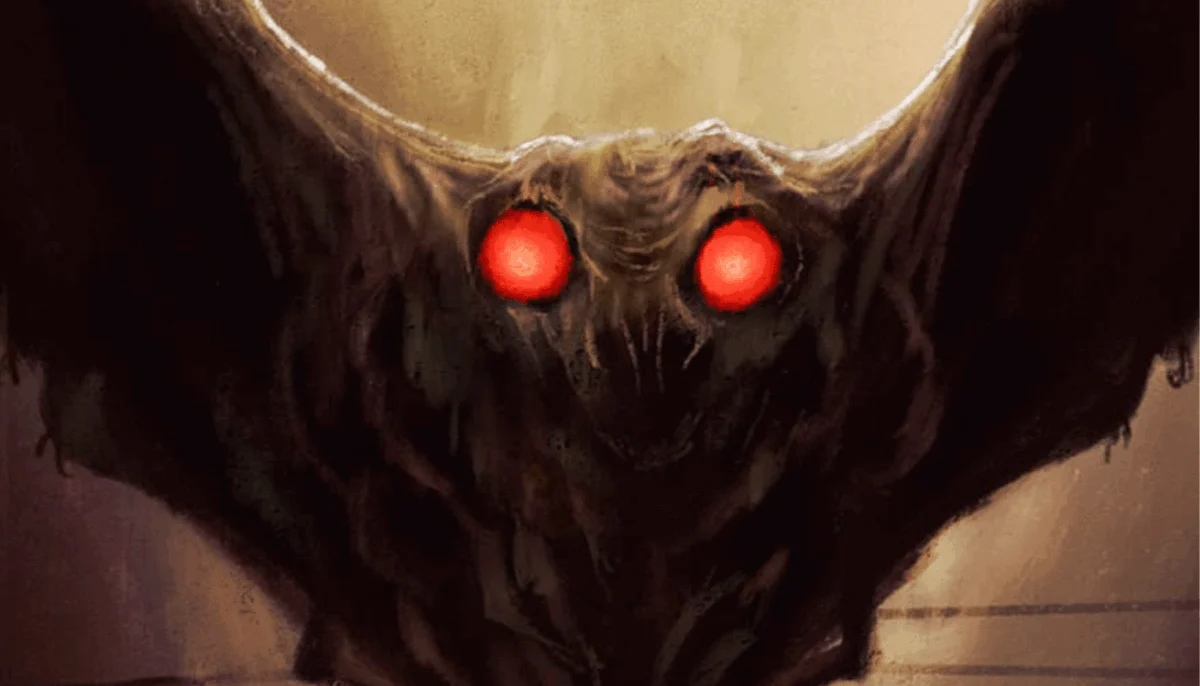
 Asep Darmawan