Nila Kartika Wati
In a surprising pivot that underscores its commitment to legacy hardware, AMD has announced a strategic partnership with cooling industry titan Noctua and nanotechnology innovator Carbice. The collaboration centers on integrating advanced carbon nanotube thermal interface material (TIM)—the Carbice Ice Pad—into the ecosystem for the Ryzen 7 5800X3D. This move, while seemingly niche, signals a broader shift in how high-performance computing components are maintained, cooled, and sustained over the long term.
While the tech world often fixates on the bleeding edge of AM5 and future socket architectures, this announcement specifically elevates the 10th-anniversary edition of the legendary AMD Ryzen 7 5800X3D. By pairing a decade-defining processor with space-age cooling materials, the tripartite partnership aims to bridge the gap between ease of use, extreme thermal efficiency, and the undeniable longevity of the AM4 platform.
The Core Facts: What is the Carbice Ice Pad?
Thermal Interface Material (TIM) has long been the unsung hero of the PC building world. Whether it is a budget-tier silicone paste or a high-end liquid metal compound, its primary function is simple: to fill the microscopic imperfections between a processor’s Integrated Heat Spreader (IHS) and the base of a cooling solution, facilitating efficient heat transfer.
The Carbice Ice Pad, however, represents a departure from the traditional "syringe-and-spreader" methodology. Utilizing vertically aligned carbon nanotube (VACNT) technology, the Ice Pad is a dry, solid-state thermal solution. Unlike liquid pastes that can pump out over time, dry out, or require messy reapplication, the Ice Pad acts as a high-conductivity bridge that maintains consistent performance for the entire lifespan of the device.
For the end-user, the benefits are twofold: performance consistency and installation simplicity. Because it is a "peel-and-stick" solution, the risk of human error—such as applying too little paste, too much, or uneven pressure—is virtually eliminated. This ensures that the Ryzen 7 5800X3D, a chip known for its thermal density due to its 3D V-Cache architecture, operates at peak efficiency without the fear of thermal throttling caused by degraded paste.
A Chronology of the AM4 Renaissance
The history of the AM4 platform is a masterclass in product longevity, a rarity in an industry defined by planned obsolescence.
- 2017: AMD introduces the AM4 socket with the first generation of Ryzen processors, promising long-term support.
- 2022: The Ryzen 7 5800X3D launches, utilizing 3D V-Cache technology. It becomes an instant cult classic, offering performance that rivals, and often beats, newer chips in gaming workloads.
- 2024: Despite the widespread adoption of the AM5 platform, the demand for 5800X3D remains high, prompting continued production and supply chain prioritization.
- 2025 (December): Industry rumors suggest a specialized, limited-run anniversary edition of the 5800X3D is in development.
- 2026 (May 31): AMD formally announces the partnership with Noctua and Carbice, bundling the Ice Pad with the anniversary edition 5800X3D to solidify the chip’s status as a "forever CPU."
By continuing to refine the support ecosystem for AM4, AMD is effectively signaling to its user base that they do not need to abandon their current motherboard investments to stay relevant.
Supporting Data: Why Carbon Nanotubes Matter
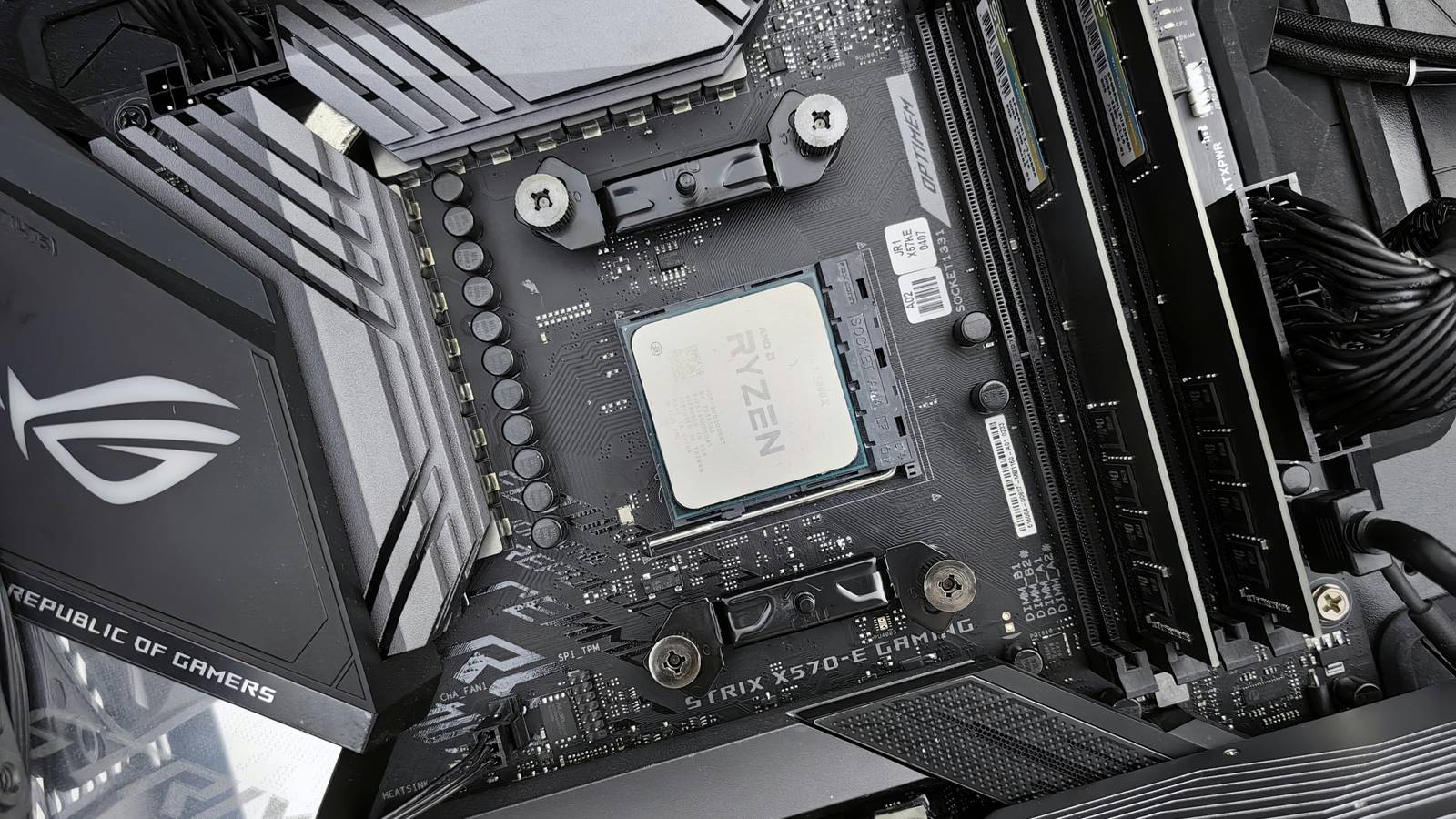
To understand the implications of this partnership, one must look at the physics of heat transfer in high-density CPUs. The Ryzen 7 5800X3D is particularly challenging to cool because the 3D V-Cache die sits atop the compute cores, creating a unique thermal stack.
Standard thermal pastes often have a "burn-in" period and a finite lifespan, typically lasting 3–5 years before requiring a clean-up and re-application. In contrast, data provided by Carbice indicates that their carbon nanotube technology is virtually immune to the degradation cycles that plague polymer-based pastes.
Furthermore, the "peel-and-stick" nature of the Ice Pad removes the cleanup phase entirely. For enthusiasts who have ever struggled to remove hardened, crusty thermal paste from a CPU’s surface—a process that often involves dangerous amounts of isopropyl alcohol and delicate scrubbing—the promise of a clean, residue-free removal is a significant quality-of-life improvement. In the context of the 5800X3D, which is frequently sought after by second-hand buyers and budget-conscious builders, this longevity ensures that the hardware remains in pristine condition for a second or third owner.
Official Responses and Strategic Vision
Representatives from the three companies have framed this partnership as a move toward sustainability and reliability.
"We want our users to have the best possible experience, not just on day one, but on day one thousand," an AMD spokesperson noted during the announcement. "By working with Noctua, the gold standard in air cooling, and Carbice, the leaders in nanotechnology, we are effectively ‘future-proofing’ the 5800X3D. It is no longer just a processor; it is a long-term investment in platform stability."
Noctua’s involvement is particularly telling. Known for their meticulous engineering, their decision to validate and promote the Carbice technology suggests that the industry is moving away from messy, traditional pastes toward standardized, solid-state cooling interfaces. While Noctua will continue to provide their world-class heatsinks, the integration of the Ice Pad provides a "no-fail" installation experience that aligns perfectly with their brand philosophy.
Implications for the DIY PC Market
The implications of this collaboration are far-reaching, extending well beyond a single processor launch.

1. The Cost of Adoption vs. Platform Longevity
As DDR5 memory costs remain high, many users are opting to remain on DDR4-based systems. By providing a high-performance cooling solution for the 5800X3D, AMD is keeping the AM4 platform viable for at least another few years. This saves the average consumer the massive overhead of a motherboard, RAM, and CPU swap, offering a cost-effective path to top-tier gaming performance.
2. A Shift in Retail Expectations
If this partnership proves successful, we may see a shift in retail packaging. Currently, most CPUs arrive with a small tube of generic paste. If the market reacts positively to the Ice Pad, consumers may begin to demand similar high-durability thermal solutions in every CPU box. This could lead to a standard "thermal pad" revolution, making the DIY building process significantly less intimidating for newcomers.
3. Sustainability and Waste Reduction
The environmental impact of repeatedly buying and discarding tubes of thermal paste is often overlooked. A single Ice Pad, designed for the lifetime of the chip, reduces chemical waste and the necessity for constant replenishment. This aligns with modern corporate ESG (Environmental, Social, and Governance) goals, positioning AMD and its partners as leaders in sustainable hardware design.
4. What’s Next at Computex 2026?
With the upcoming Computex event, all eyes are on whether this partnership will expand to other SKUs. Will the Ice Pad become a standard inclusion for future Ryzen chips? Will Intel follow suit, or will they stick to traditional pastes?
As we look toward the remainder of 2026, the collaboration between AMD, Noctua, and Carbice stands as a testament to the power of cross-industry innovation. By focusing on the "small" things—like how we bridge the gap between silicon and cooling—these companies are ensuring that the hardware we buy today remains relevant for years to come. For those still running an AM4 rig, the future has never looked cooler.

 Basiran
 Nana Muazin