Evan Lee Salim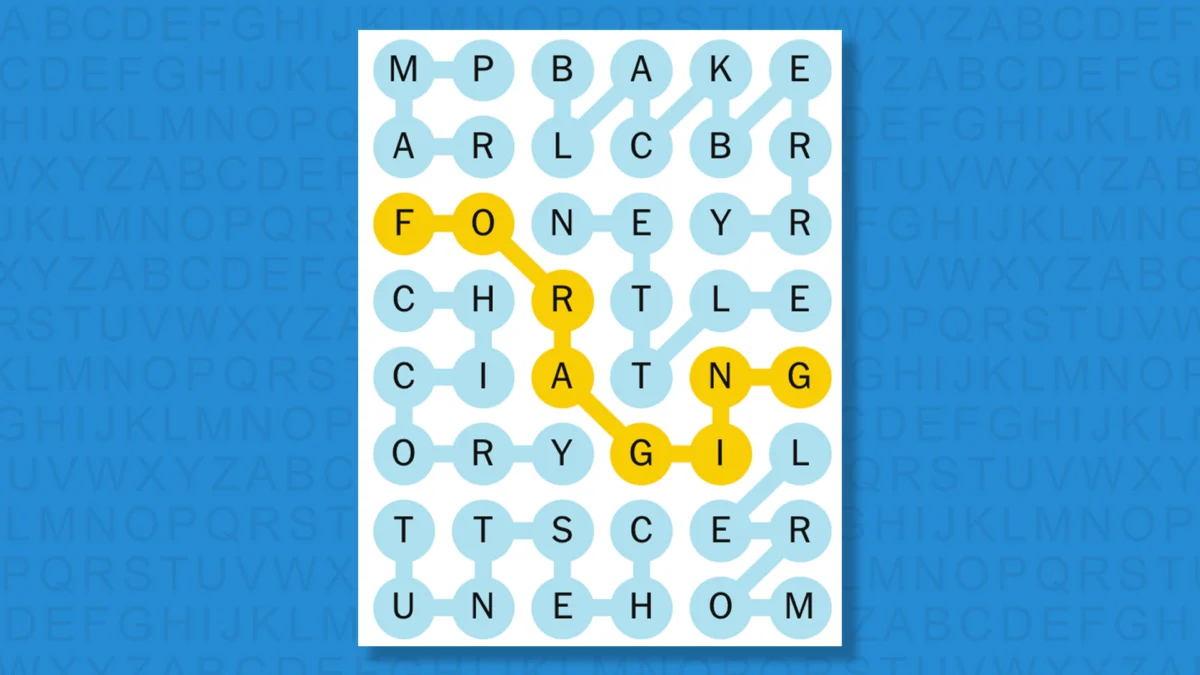
The New York Times has cemented its position as the undisputed titan of the daily digital puzzle landscape. Following the global phenomenon of Wordle and the strategic complexity of Connections, Strands has carved out its own dedicated audience, challenging players to think laterally about word associations and grid-based geometry. As of today, June 1, 2026, we are deep into the rhythm of the game, with today’s entry—Game #820—offering a uniquely terrestrial challenge for avid foragers and puzzle enthusiasts alike.
If you have found yourself staring at the grid in confusion, you are certainly not alone. Strands is intentionally designed to be cryptic, requiring a blend of vocabulary prowess and spatial awareness. Below, we provide a comprehensive breakdown of today’s puzzle, including the theme, strategic hints, and the final solution.
The Core Concept: How Strands Challenges Your Brain
Before diving into today’s specifics, it is worth noting why Strands has become a staple of the morning routine for millions. Unlike the linear structure of Wordle, Strands presents a jumbled grid of letters. The objective is to identify a series of hidden words that share a common thematic link.
However, there is a catch: the entire grid must be used. Every single letter on the board belongs to a word, and those words—when combined with the "Spangram"—must cover the board completely. The Spangram is the game’s linchpin; it is a word or phrase that touches both sides of the grid and essentially defines the theme of the day.
Today’s Theme: Shall We Gather for Lunch?
For game #820, the New York Times editorial team has chosen a theme that feels deceptively domestic: "Shall we gather for lunch?"
At first glance, this theme can be misleading. Many players—myself included—initially assume the answer relates to sandwich ingredients, picnic items, or perhaps a seating arrangement. When the game starts, the lack of immediate context can be daunting. I initially assumed the theme might be a pop-culture reference, perhaps a quote from The Golden Girls or a bit of dialogue from a sketch comedy, given how eclectic the NYT puzzles can be.
However, as the game progresses, the culinary focus shifts from the kitchen table to the great outdoors.
Strategic Hints for Game #820
If you are struggling to make progress, here is the necessary data to nudge you in the right direction without spoiling the board entirely.
Hint 1: The Spangram
The Spangram is the most critical element of any Strands game. For today’s puzzle, the Spangram consists of 8 letters.
In terms of placement, the Spangram is a structural anchor. It begins on the left side of the board in the 3rd row and terminates on the right side in the 5th row. If you can identify this word, the rest of the board will begin to reveal itself with significantly less effort.
Hint 2: Unlocking the System
If you find yourself stuck, remember that you can enter "clue words" to prompt the in-game hint system. While the game provides these for free after a certain amount of progress, finding the right path requires trial and error.
During my own playthrough, I entered the word "RAMP," which yielded no initial success. It was only after I stumbled upon the word "MOREL" that the underlying theme clicked into place. The revelation that the puzzle was about FORAGING was the "eureka" moment that allowed me to clear the grid.
The Philosophy of Foraging
The theme "Foraging" is a fascinating choice for a word game. Foraging is an activity that represents a paradox of the modern age: it is entirely natural, resourceful, and technically "free," yet it carries the inherent risk of human error.
For those who enjoy the New York Times games, the appeal often lies in this intersection of general knowledge and tactile engagement. Foraging requires one to distinguish between edible delicacies and toxic mimics. Much like Strands itself, where choosing the wrong letter path can lead to a dead end, foraging in the wild requires precision. Pick the wrong "CHESTNUT" or the wrong mushroom, and the consequences move from a lost game streak to a genuine health concern.
In many parts of the world, foraging is a seasonal ritual. Whether it is gathering wild blackberries in the late summer or hunting for morels in the damp spring soil, it is an activity that forces us to look at the ground beneath our feet with renewed intensity—not unlike the way we scan the letters on our phone screens during a game of Strands.
Implications: The Evolution of NYT Games
The success of Strands is a testament to the New York Times‘ strategy of diversifying its digital gaming portfolio. Since the acquisition of Wordle in 2022, the company has effectively captured the "morning coffee" demographic—individuals who require a brief, stimulating mental challenge before the workday begins.
The implications of this are significant. By integrating Strands, Connections, and Spelling Bee into a unified platform, the Times has created a subscription ecosystem that is difficult to replicate. For the user, these games provide a sense of consistency. Even on days when the news cycle is grim, there is a reliable, intellectual satisfaction to be found in solving a grid of letters.
The technical infrastructure—the way the puzzles are generated, the time-zone sensitivity, and the hint systems—all reflect a sophisticated approach to user retention. The ability to switch between Quordle, Wordle, and Strands suggests that the Times understands the modern attention span: players want variety, but they want it within a familiar, high-quality framework.
A Note on Yesterday’s Game (#819)
For those who are catching up or were unable to complete Sunday’s puzzle, it is helpful to look back at the progression. Game #819 was markedly different in tone and difficulty, highlighting the variety that the developers strive to maintain.
If you are still searching for the solution to #819, remember that the games rotate at midnight local time. The persistence of these puzzles—the fact that they exist in a "today" and "yesterday" state—is part of what keeps the community engaged on social media platforms like X (formerly Twitter) and Reddit, where players share their "strands" (the sequences of words) and their journey to the final solution.
Final Thoughts: Improving Your Game
If you find yourself consistently struggling with Strands, consider these three strategies:
- Scan for Common Suffixes: Many words in Strands end in common clusters like "-ING," "-ED," or "-ERS." If you spot a "G" on the edge of the board, it is often a good place to start building a word.
- Focus on the Spangram First: As mentioned, the Spangram defines the theme. If you can find the long word that stretches across the grid, the smaller words usually follow the theme set by that main word.
- Don’t Overthink the Obvious: Sometimes, the words are exactly what they seem. If the theme is "Lunch," don’t search for abstract metaphors; look for food, utensils, and dining environments.
As we move forward into the next set of daily challenges, the New York Times continues to prove that word games are not merely a distraction; they are a vital form of cognitive maintenance. Whether you are a seasoned expert or a newcomer, Strands remains one of the most rewarding ways to spend ten minutes of your day.
Stay tuned for tomorrow’s guide as we continue to break down the logic and vocabulary of the NYT’s latest offerings.


 Rifan Muazin
 Nila Kartika Wati