Iffa Jayyana
In the annals of television history, few shows have managed to strike the delicate balance between historical grandeur and intimate, character-driven storytelling as effectively as HBO’s Boardwalk Empire. Sitting at the intersection of the grit found in The Sopranos and the stylistic, period-specific intensity of Peaky Blinders, the series stands as a towering achievement in the golden age of television. Helmed by Sopranos veteran Terence Winter and set against the backdrop of the Roaring Twenties, the series serves as a masterclass in world-building, morality, and the corruptive nature of power.
The Genesis of an Empire: A $18 Million Gamble
When Boardwalk Empire premiered, it signaled a new era of ambition for HBO. With a pilot episode reportedly costing a staggering $18 million—directed by the legendary Martin Scorsese—the production values were immediately apparent. Scorsese’s involvement did more than just provide a cinematic sheen; it established a visual language that defined the series.
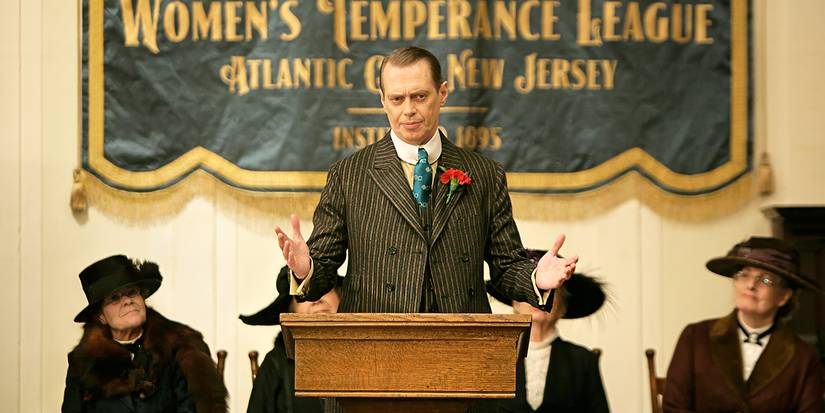
The show is anchored by the inimitable Steve Buscemi as Enoch "Nucky" Thompson, the Atlantic County Treasurer. Buscemi, who previously collaborated with the Sopranos creative team, brings a vulnerability and a chilling pragmatic intelligence to a role that could have easily devolved into a caricature. Through his eyes, we witness the birth of modern American organized crime, fueled by the desperation and excess of the Prohibition era.
Chronology of Corruption: The Prohibition Playbook
The narrative arc of Boardwalk Empire is intricately woven into the timeline of the 1920s, a decade defined by radical social and economic shifts.
- 1920: The Dawn of the Bootlegger: The pilot introduces viewers to the moment Prohibition becomes law. While the rest of the nation views the ban on alcohol as a moral or legislative crisis, Nucky Thompson identifies it as the ultimate business opportunity.
- The Rise of the Syndicates: As the series progresses, the narrative moves beyond Atlantic City. We witness the consolidation of the "Big Seven" and the emergence of the National Crime Syndicate, tracking the real-life ascent of figures like Arnold Rothstein, Lucky Luciano, and Al Capone.
- The Power Vacuum: Throughout the show’s five seasons, the power structure of the American underworld undergoes a violent metamorphosis. The transition from the old-world Italian Mafia "Mustache Petes" to the ruthless, corporate-minded gangsters of the 1930s is a central theme that mirrors the shifting tides of American history.
Supporting Data: The Cast and The Characters
Boardwalk Empire acted as a launchpad for a generation of talent that has since become the backbone of modern prestige television. The ensemble cast is arguably one of the most talented ever assembled for a series:
- Stephen Graham (Al Capone): Graham’s portrayal of the young, volatile Chicago gangster is a highlight of the series, showcasing the evolution of a man from a mid-level enforcer to a terrifying household name.
- Charlie Cox (Owen Sleater): Before he donned the mask of Daredevil, Cox provided a nuanced, dangerous energy as the Irish enforcer whose complicated loyalties define the middle seasons.
- Bobby Cannavale (Gyp Rosetti): In the third season, Cannavale delivered a performance of such unhinged, violent unpredictability that he shifted the entire tone of the show, proving that the greatest threats often come from outside the established political order.
- Michael Pitt (Jimmy Darmody): As Nucky’s protégé and eventually his greatest rival, Pitt’s arc serves as the emotional anchor for the show’s exploration of the "Lost Generation"—men who returned from the Great War to a world that no longer had a place for them.
The Duality of Nucky Thompson: The "Nice" Villain
A recurring discourse among critics and fans is the classification of Nucky Thompson. Is he a hero, a villain, or something far more complex? Unlike Tony Soprano, whose domestic life is a constant battleground of neurosis, or Tommy Shelby, who is perpetually haunted by the ghosts of the trenches, Nucky is an institutional operator.

Nucky’s power is derived not just from the gun, but from the ballot box. He is a politician first and a gangster second. He understands that in the American political machine, the illusion of public service is the perfect cover for illicit enterprise. His character is a reflection of the "machine politics" that defined early 20th-century urban centers. He is "nice" because he understands the value of social capital. He feeds the poor, supports his constituents, and maintains an air of civil decorum, even while ordering the liquidation of his rivals.
Implications: The Subtle Art of the Crime Drama
What sets Boardwalk Empire apart from its peers is its commitment to subtlety. While other crime dramas lean into the explosive, high-octane violence of the genre, Boardwalk Empire understands that in the high-stakes world of Prohibition, silence is often more lethal than a Tommy gun.
The show operates on a level of political intrigue that makes the violence feel like an unfortunate administrative necessity rather than an end in itself. This creates a specific tension: the audience is constantly waiting for the "polite" mask of Atlantic City to slip. When it does, the resulting chaos is devastating.

The Legacy of the Boardwalk
As we look back at the series, the implications for the genre are clear. Boardwalk Empire proved that historical accuracy, when paired with high-budget production and complex character studies, can create a viewing experience that feels as relevant today as it did in the 1920s. The show forces the viewer to confront the uncomfortable reality that the American Dream is often built on the foundations of moral compromise.
The series concluded after five seasons, leaving behind a legacy that continues to influence how we view the intersection of politics and crime on screen. It remains a definitive study of a man who thought he could control the tide, only to find that the forces of history, greed, and time are far more powerful than any politician—no matter how clever.
For those who have yet to traverse the boardwalks of Atlantic City, the series offers a deep, rewarding journey into the heart of the American character. It is not merely a show about gangsters; it is a show about the compromises we make to maintain our version of power, and the steep, inevitable price that comes due when those compromises are finally called in.
Quick Facts:
- Showrunner: Terence Winter
- Primary Genre: Historical Crime Drama
- Total Seasons: 5
- Key Themes: Prohibition, Political Corruption, Post-War Trauma, The Evolution of Organized Crime.
- Setting: Atlantic City, New Jersey (1920–1931)
In a crowded television landscape, Boardwalk Empire remains a beacon of quality. Whether you are a student of history or a fan of complex, morally gray protagonists, Nucky Thompson’s story is essential viewing—a testament to the fact that, in the game of power, the loudest man in the room is rarely the most dangerous.


 Sagoh
Sagoh
 Nana Wu