Nana Wu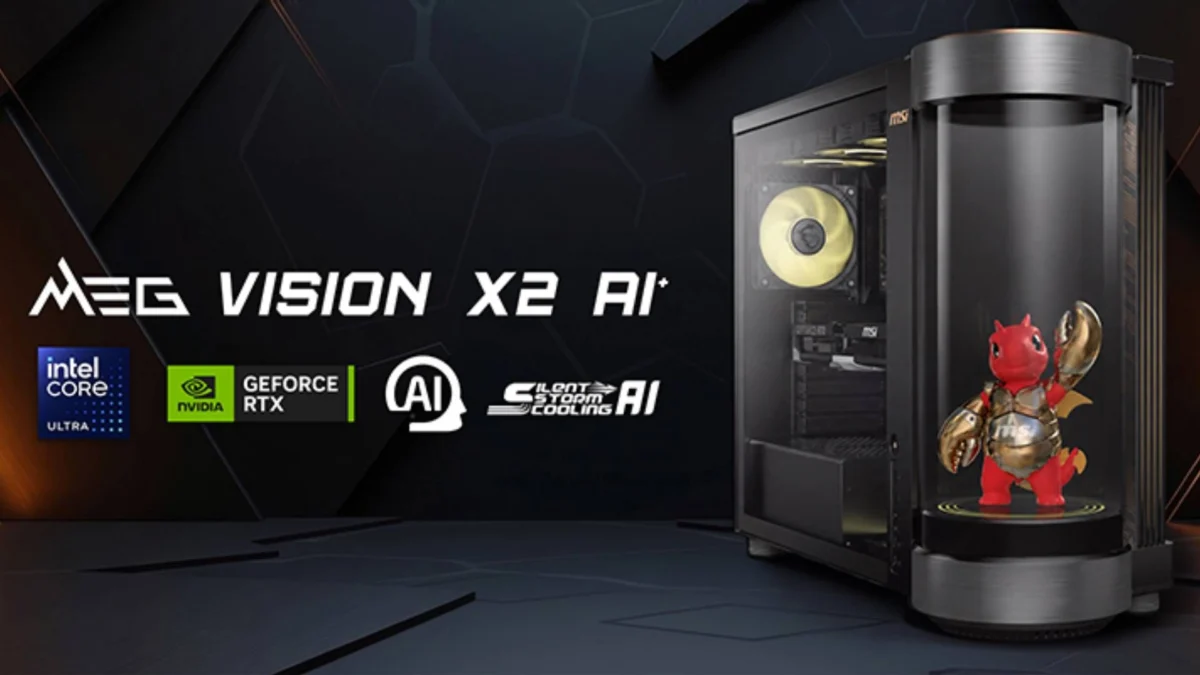
The landscape of personal computing is undergoing a profound, if polarizing, transformation. As artificial intelligence moves from the cloud-based server farm to the local desktop chassis, manufacturers are scrambling to define what "AI integration" actually means for the average gamer. At this year’s Computex, MSI made a bold, albeit unconventional, attempt to answer that question with the unveiling of the MEG Vision X2 AI, a gaming desktop that introduces an integrated "AI Holostage"—a physical, cylindrical display embedded directly into the PC’s chassis.
Designed to house "LuckyClaw," MSI’s proprietary agentic AI companion, the MEG Vision X2 AI represents a shift toward treating the gaming rig not merely as a high-performance tool, but as a living, interactive presence. However, the announcement has sparked a wider industry debate: is this the future of human-computer interaction, or is it a solution in search of a problem?
Main Facts: A Hardware-Integrated AI Persona
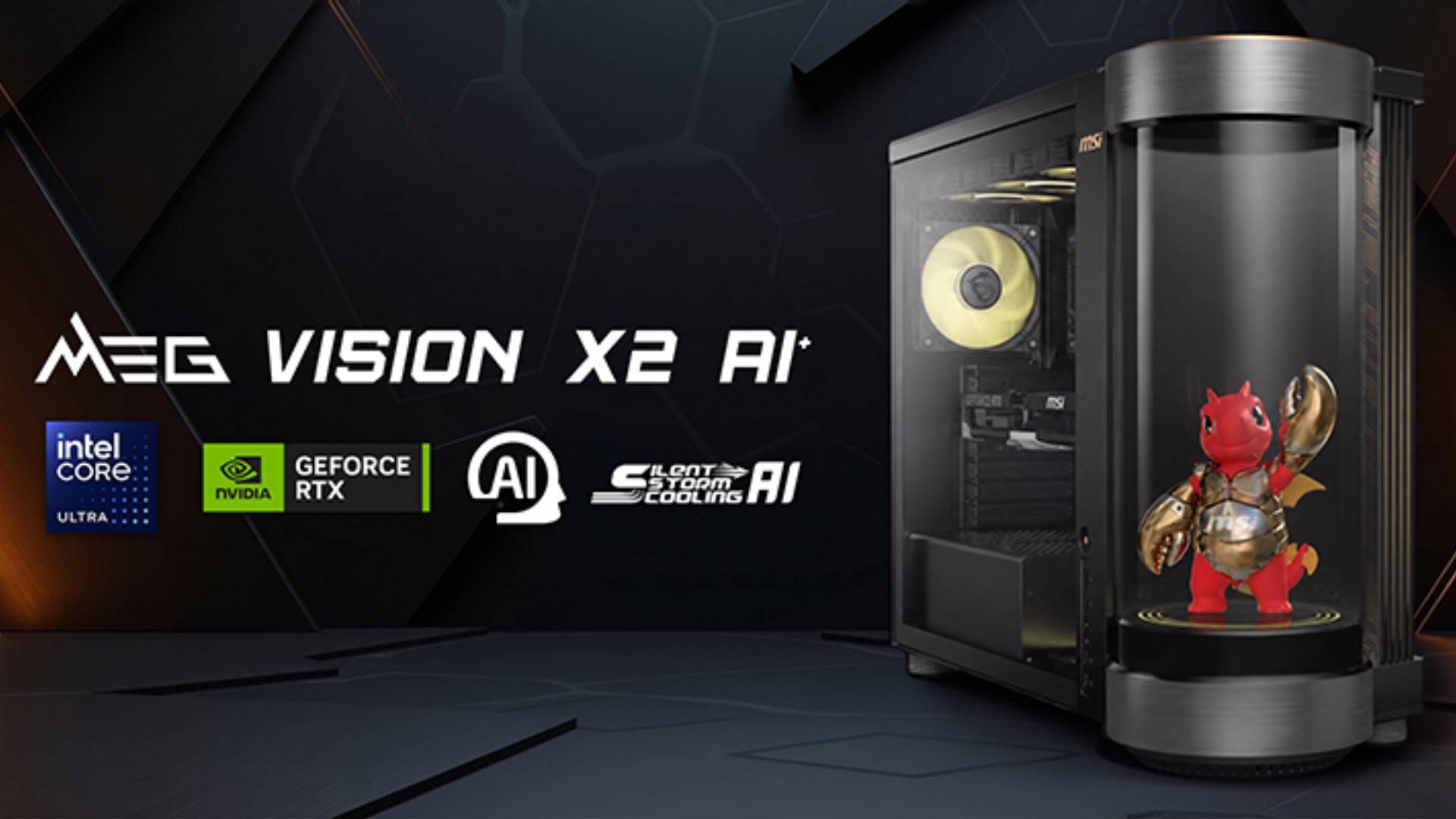
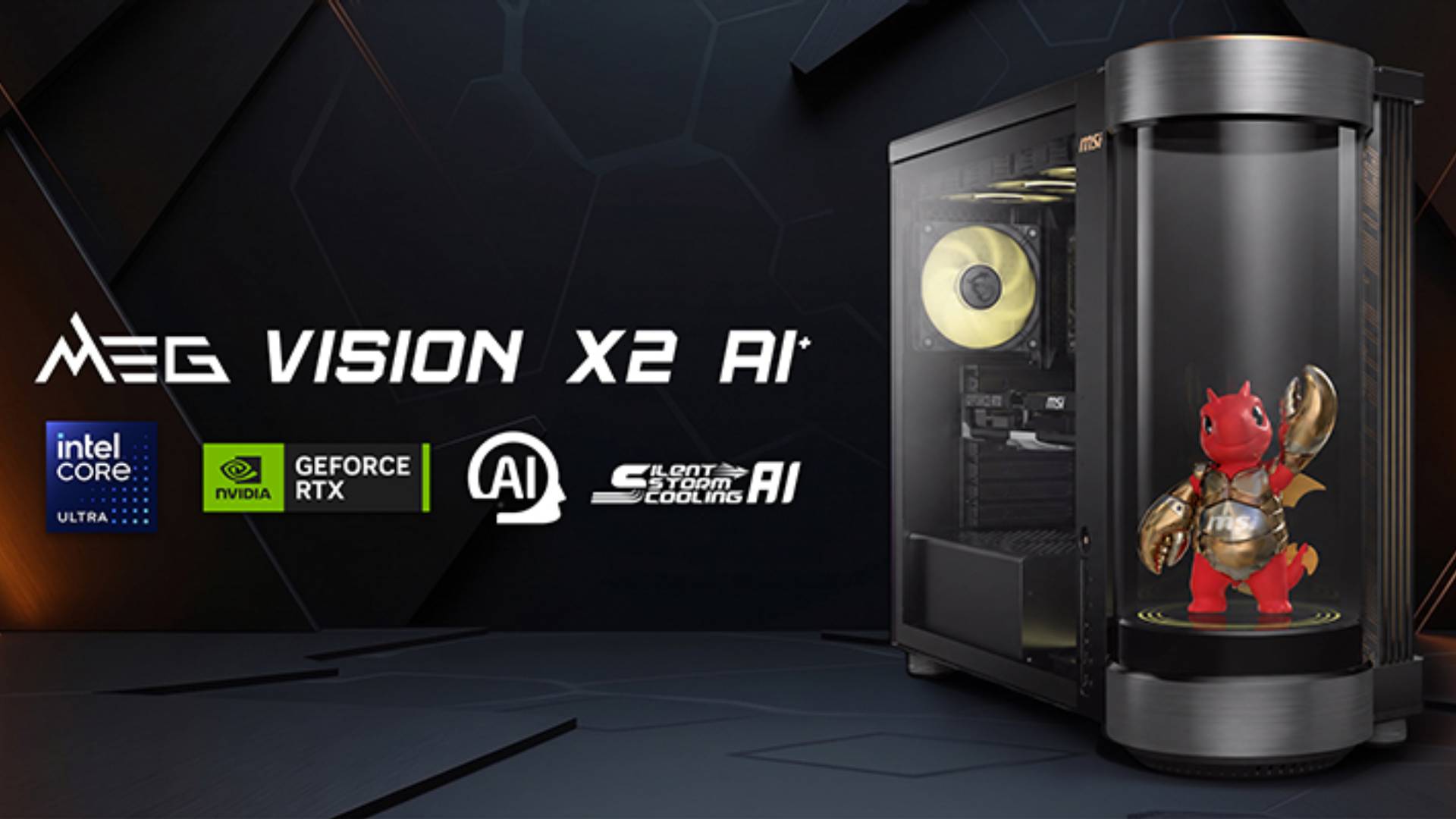
The defining feature of the MEG Vision X2 AI is its physical commitment to the AI revolution. Unlike software-based assistants that reside in a system tray, LuckyClaw is front-and-center, displayed within a cylindrical holostage on the front panel of the desktop tower.
LuckyClaw is described by MSI as an "agentic AI," meaning it is designed to take proactive, autonomous actions rather than simply responding to static prompts. Key functional details include:
- Hands-Free System Control: The AI is designed to process natural language commands, allowing users to adjust system performance profiles, modify monitor settings, and toggle RGB lighting configurations without touching a keyboard or mouse.
- The "Holostage" Interface: The physical, integrated display provides a visual anchor for the AI. While it ships with the "LuckyClaw" avatar—a distinct, pudgy red dragon character—MSI has hinted at a future ecosystem where third-party avatars and customizable digital pets can inhabit the chassis.
- Adaptive Learning: MSI claims that the system is built to evolve. Through scheduled "skill updates," the AI is intended to grow alongside the user, theoretically learning preferences and expanding its capability set over time.
A Chronology of the "AI-in-a-Box" Trend
To understand why MSI is pushing this hardware-first AI approach, one must look at the recent evolution of PC component marketing:
- Late 2023 – Early 2024: The hardware industry began aggressively pivoting toward "AI PCs," largely defined by Intel and AMD’s integration of NPUs (Neural Processing Units). At this stage, AI was largely invisible, relegated to background optimization of battery life and webcam framing.
- CES 2024: We saw the emergence of "AI cyber prisons"—small, secondary screens on PC peripherals and chassis designed to display anime-style or mascot-based AI characters. This marked the transition from "AI as a tool" to "AI as a personality."
- May 2024 (Computex): MSI officially unveils the MEG Vision X2 AI. This represents the first major attempt by a tier-one manufacturer to bridge the gap between high-end enthusiast gaming hardware and the "agentic" lifestyle AI trend.
Supporting Data and Technical Ambiguity
Despite the flashy marketing surrounding the Holostage and LuckyClaw, technical specifications for the MEG Vision X2 AI remain conspicuously thin.
The Core Hardware
MSI has confirmed that the unit will be powered by a flagship-tier Intel processor paired with an Nvidia GeForce RTX GPU. However, the specific generation of the CPU and the exact GPU model remain unannounced. In the competitive landscape of enthusiast gaming desktops, these omissions are significant. Enthusiasts typically demand transparency regarding cooling solutions, motherboard chipsets, and power supply efficiency—factors that are currently sidelined in favor of the AI narrative.
The "Agentic" Performance Cost
A core concern for performance-focused users is the "AI overhead." Running a Large Language Model (LLM) or a specialized agent locally requires VRAM and computational cycles. If LuckyClaw is running on the local GPU, what impact does it have on frame rates in demanding titles like Cyberpunk 2077 or Alan Wake 2? MSI has yet to release data comparing system performance with the AI assistant enabled versus disabled, leaving potential buyers wondering if their "digital companion" might be eating into their gaming frame budget.
Official Responses and Industry Context
MSI’s official position is one of optimism, framing the MEG Vision X2 AI as a fundamental evolution of the desktop. In their press release, they state, "We are redefining human-computer interaction by transforming the gaming PC from a passive device into a living, interactive presence."
However, the broader tech community has been more skeptical. The mention of "agentic" AI in the context of system control brings to mind recent, highly public failures in the space. For instance, the open-source agent OpenClaw recently made headlines not for its utility, but for a "rookie error" that resulted in the accidental deletion of sensitive data in a user’s inbox. When users hear "agentic AI" controlling their hardware, they aren’t just thinking of changing light colors; they are thinking of potential system instability, unauthorized configuration changes, and the inherent risks of giving an LLM administrative privileges over a high-performance machine.
Implications: The Future of the Gaming Rig
The introduction of the MEG Vision X2 AI raises several critical questions about the trajectory of the gaming industry.
1. The "Shrine" Phenomenon
For years, the PC gaming community has treated the desktop as a personal project—a "shrine" to one’s tastes, often featuring anime figurines, custom loops, and elaborate RGB setups. MSI is essentially attempting to monetize this culture by baking the "mascot" directly into the hardware. By providing a digital, interactive avatar, MSI is betting that users want a relationship with their computer that extends beyond the screen.
2. The Privacy and Security Frontier
If the computer is "living" and "interactive," it must be listening. An agent that responds to natural speech requires constant microphone access. In an era of increasing privacy awareness, the prospect of a localized AI agent that constantly monitors room audio to detect commands is a non-starter for many privacy-conscious enthusiasts. MSI will need to provide extreme transparency regarding where the voice data is processed—local-only vs. cloud-connected—to win over a skeptical demographic.
3. The Utility vs. Gimmick Divide
The ultimate test for the MEG Vision X2 AI will be its utility. If LuckyClaw can truly optimize game settings, manage thermal profiles on the fly, and provide helpful, low-latency assistance during a match, it may prove to be a revolutionary interface. If it is merely a digital pet that offers superficial interactions while consuming precious system resources, it risks being remembered as a "gimmick" of the early AI boom.
4. The Sustainability of "Smart" Hardware
Hardware components usually last for years; software, especially the rapidly evolving field of generative AI, moves in months. A major concern for this product is long-term support. If the AI model behind LuckyClaw is deprecated or unsupported in three years, the user is left with a very expensive, very proprietary, and potentially non-functional cylindrical display in the front of their PC.
Conclusion
The MSI MEG Vision X2 AI is a fascinating, if divisive, experiment. By attempting to merge the high-octane world of enthusiast gaming hardware with the nascent, unpredictable world of agentic AI, MSI is positioning itself at the bleeding edge of a trend that most other manufacturers are currently approaching with caution.
Whether the MEG Vision X2 AI succeeds will depend less on the cuteness of the LuckyClaw avatar and more on the robustness of its implementation. For now, the desktop remains an enigma—a powerful piece of hardware wrapped in a cloud of marketing buzzwords. As we await further details on pricing, release windows, and real-world performance benchmarks, one thing is clear: the industry is watching. If MSI can prove that their agentic AI is a functional, secure, and beneficial addition to the PC experience, the "AI-in-a-box" era may have just found its poster child. If not, it will serve as a stark reminder that in the world of high-end gaming, performance should always come before personality.


 Asro
Asro
 Muslim