Ammar Sabilarrohman
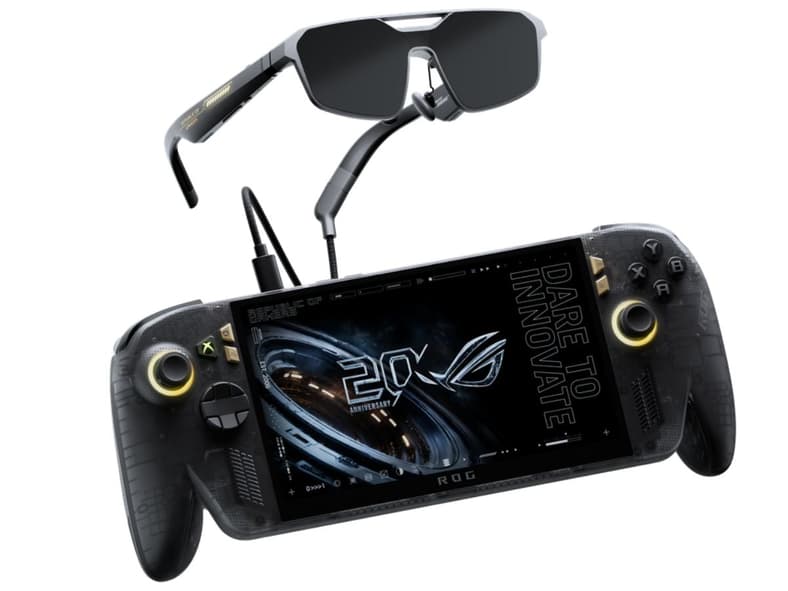
In a landmark announcement at this year’s Computex, ASUS has officially pulled the curtain back on its most ambitious handheld project to date: the ROG Xbox Ally X20. Launched to commemorate the 20th anniversary of the Republic of Gamers (ROG) brand, this device represents a convergence of high-end portable computing, cutting-edge AR integration, and a nostalgic aesthetic that pays homage to two decades of gaming evolution.
Positioned as the "ultimate on-the-go gaming setup," the X20 is not merely an incremental update to the existing ROG Ally line. Instead, it is a statement piece, blending a sophisticated design language with internals that push the boundaries of what is currently possible in a handheld form factor.
The Core Specifications: Power Meets Portability
At the heart of the ROG Xbox Ally X20 lies the formidable AMD Ryzen AI Z2 Extreme processor. This silicon powerhouse is designed to handle the most demanding AAA titles while maintaining the thermal efficiency required for a portable device. ASUS has paired this processor with a substantial 24GB of LPDDR5X RAM, ensuring that multitasking and heavy resource management—common in modern gaming—are handled with ease.
The visual experience is anchored by a stunning 7.4-inch OLED display. With a 120Hz refresh rate, 1,400 nits of peak brightness, and a VESA DisplayHDR 1000 rating, the screen is designed to compete with high-end desktop monitors. The inclusion of Dolby Vision support further cements the device as a media consumption powerhouse, offering deep blacks and vibrant contrast that elevate both gameplay and cinematic content.
Storage concerns are mitigated by the inclusion of a 1TB PCIe 4.0 NVMe SSD, providing ample room for a massive library of games. The chassis itself is a departure from the standard aesthetic, featuring a translucent black body accented with gold internal structures—a clear nod to the celebratory nature of the ROG 20th anniversary.
A Chronology of Innovation: The Path to the X20
The journey toward the ROG Xbox Ally X20 is a narrative of rapid iteration. Since the launch of the original ROG Ally, ASUS has been aggressive in its pursuit of the handheld market, a sector previously dominated by the Steam Deck.
- The Foundation: The original ROG Ally set the stage by introducing Windows-based handheld gaming to a mass audience, proving that users wanted the flexibility of a PC in a console-like form factor.
- The Iterative Phase: Following the original launch, ASUS faced criticism regarding battery life and hardware durability, leading to the development of the ROG Ally X. This model served as a refined response to consumer feedback, focusing on ergonomics and power management.
- The Anniversary Milestone: With 2026 marking two decades of ROG, ASUS pivoted toward a "vision of the future." The X20 development cycle shifted from mere hardware improvement to an ecosystem approach, integrating Augmented Reality (AR) to break the limitations of a handheld screen.
The AR Revolution: XREAL R1 Integration
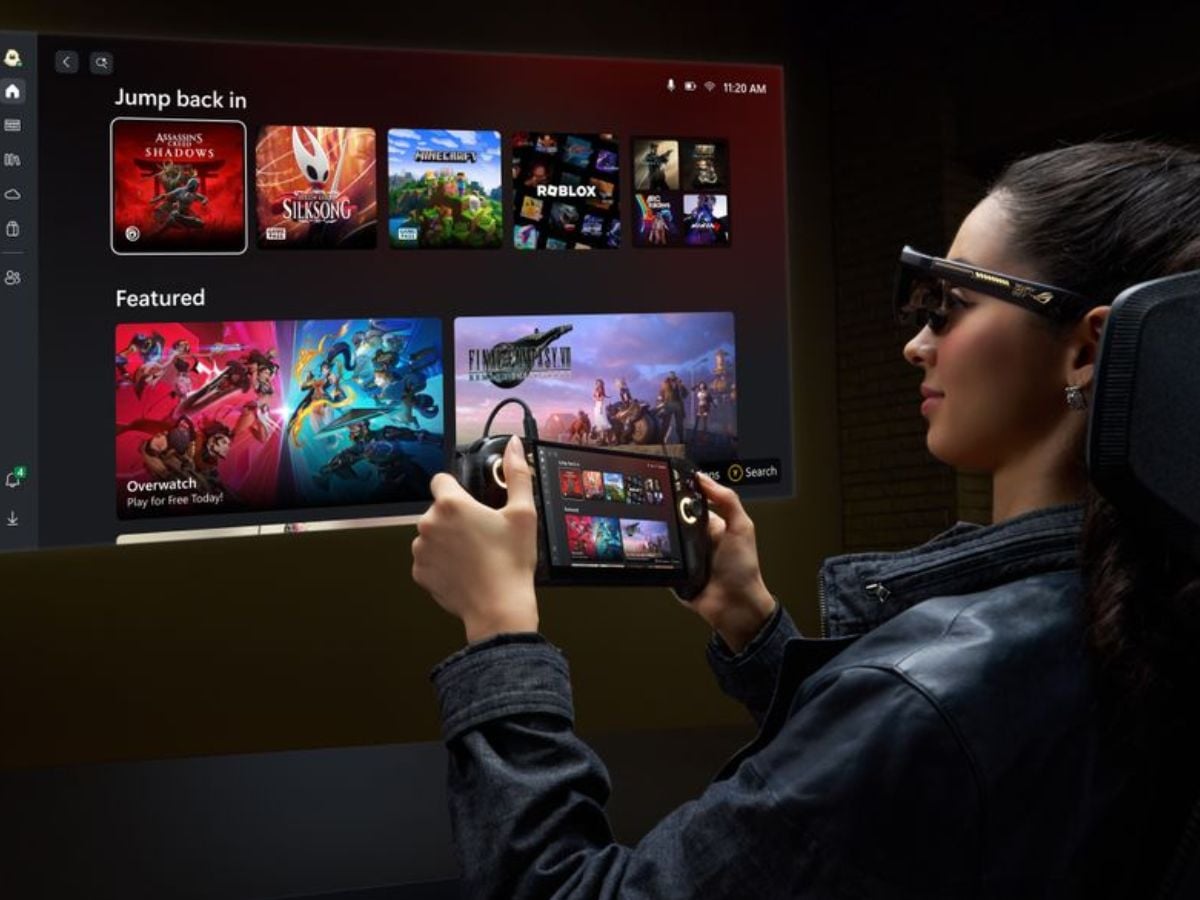
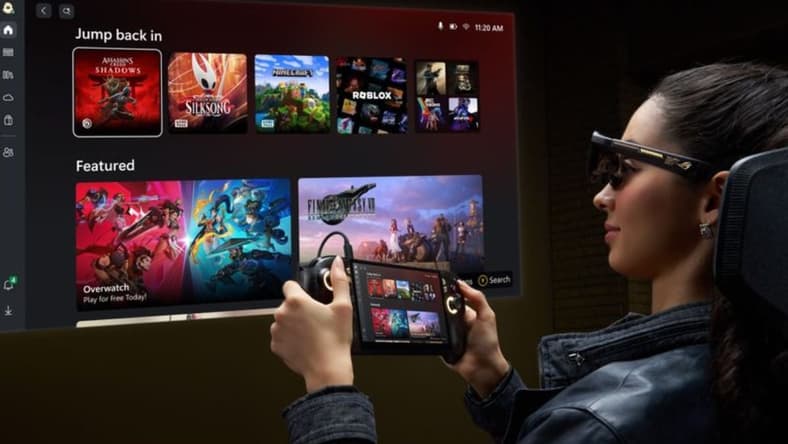
Perhaps the most significant differentiator for the X20 bundle is the inclusion of the XREAL R1 AR glasses. In an era where handhelds are often limited by the physical size of their screens, the R1 glasses aim to redefine immersion.
According to official documentation, the R1 glasses create a virtual screen equivalent to 171 inches when viewed from a distance of 4 meters. With a 240Hz refresh rate and a micro-OLED panel that covers 95% of the user’s focused field of view, the glasses effectively turn a portable console into a home theater system. The technical specifications are equally impressive, boasting a near-instantaneous 0.01ms response time and native 3DoF (three degrees of freedom) tracking.
This tracking allows the virtual display to follow the user’s head movements, while "Anchor Mode" provides the ability to lock the screen in a fixed position in 3D space. For gamers, this means the ability to play high-fidelity games while maintaining environmental awareness or, conversely, losing themselves in a massive virtual display while on a plane or train.
Implications for the Handheld Market
The release of the X20 creates significant ripples throughout the gaming industry. First, it signals that the "handheld PC" market is no longer a niche hobbyist category; it is becoming a premium tier of hardware.
Pricing and Accessibility
While ASUS has yet to confirm the official MSRP for the bundle, market analysts are already speculating on a high price point. With the standalone XREAL R1 glasses retailing at approximately $849 and the current ROG Ally X priced at $1,000, the total value proposition suggests a premium luxury tier. This raises questions about the long-term sustainability of the handheld market. As prices climb, these devices move away from being accessible "entry-level" alternatives to consoles and instead become luxury gadgets for enthusiasts with significant disposable income.
Competition and Hardware Shortages
The industry is currently grappling with persistent hardware and semiconductor shortages. As noted in recent reports, these supply chain constraints have led to price hikes across the board for mobile hardware. The X20 enters a market where consumers are increasingly wary of "feature creep" that leads to astronomical costs. ASUS will need to balance the high-end appeal of the X20 with the reality that many consumers are looking for value-oriented solutions.
The Ecosystem Play
By bundling the console with AR glasses, ASUS is betting on an ecosystem-based strategy. Rather than competing solely on the raw performance of the handheld, they are offering an "experience." This mirrors the strategy of companies like Apple or Samsung, who bundle hardware to create a closed, highly optimized loop. If this approach succeeds, it could set a new standard for how handheld manufacturers package their products, moving away from standalone devices toward comprehensive "on-the-go" entertainment suites.
Official Responses and Strategic Vision
In their official press announcement, ASUS emphasized that the X20 is designed to bridge the gap between legacy and innovation. "The X20 is a throwback to gaming two decades ago, and a vision of the future," the company stated. This dual-focus messaging is intended to appeal to long-time ROG fans who have grown up with the brand, while simultaneously attracting tech-forward early adopters interested in the integration of spatial computing.
While the technical specs are impressive, the industry is waiting to see how software integration handles the transition between the physical display and the AR interface. ASUS has promised that the device will utilize specialized drivers to ensure that the transition to the R1 glasses is seamless, minimizing latency and ensuring that the Windows interface is legible and navigable in a virtual space.
Conclusion: A New Era or a Niche Experiment?
The ROG Xbox Ally X20 is undoubtedly a milestone in mobile gaming hardware. By prioritizing high-refresh-rate OLED technology, sophisticated processing power, and the integration of advanced AR, ASUS is signaling that the future of the handheld is not limited by the chassis size.
However, the road ahead is complex. Success will depend on the final pricing strategy and the practical application of the AR glasses in daily use. If the software experience can match the high-end hardware, the X20 could define the next generation of portable gaming. If not, it risks becoming a brilliant but isolated experiment in high-end luxury hardware.
For now, the gaming community remains in a state of high anticipation. As ASUS continues its 20th-anniversary celebration, the X20 stands as a testament to the company’s willingness to experiment, innovate, and challenge the status quo of what a "handheld" can actually be. Whether this will lead to a broader industry shift or remain a specialized luxury item, one thing is clear: the bar for portable performance has been raised.


 Nila Kartika Wati
 Dwi Wanna