

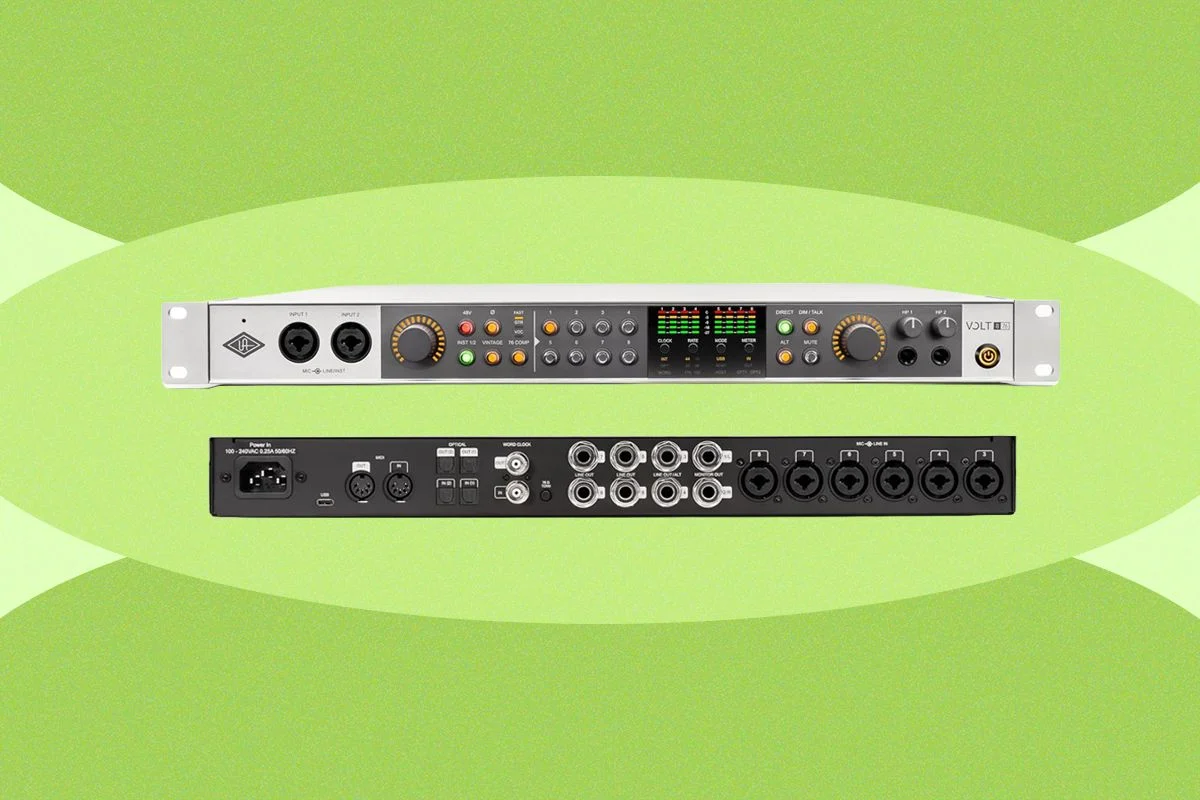
In the landscape of modern music production, the gap between "bedroom hobbyist" and "professional studio engineer" has never been narrower. Yet, for decades, that divide was maintained by a formidable gatekeeper: the audio interface. For many musicians, the journey into computer-based recording began with hours of driver troubleshooting, latency headaches, and proprietary software ecosystems that felt more like digital prisons than creative tools.
With the release of the Universal Audio Volt 876, the industry has reached a watershed moment. By blending the legendary sonic heritage of a company that defined the studio sound of the 1960s and 70s with the modern necessity of seamless, class-compliant connectivity, Universal Audio has created an interface that promises to change the way we approach home recording.
Main Facts: The Evolution of the Volt Series
The Volt 876 is the latest, most robust addition to Universal Audio’s Volt series. Designed to serve as the heart of a home studio, it offers eight analog inputs in a sleek, rack-mountable form factor. At its core, the device is defined by two key philosophies: pristine, high-fidelity conversion and "instant-on" accessibility.

Key features include:
- High-Resolution Audio: 32-bit/192-kHz A-D and D-A conversion, ensuring that every nuance of a performance is captured with clarity.
- Vintage Preamp Emulation: A selectable "Vintage" mode that channels the warm, saturated character of the classic UA 610 tube preamp.
- 1176 Compression: Onboard compression circuitry modeled after the iconic 1176 compressor, with specific presets for vocals (VOC), guitars (GTR), and general fast-transient control.
- Universal Compatibility: True class-compliance, allowing the unit to function flawlessly with macOS, Windows, iOS, and Android without the need for proprietary driver installation.
- Expansion Ready: ADAT and word clock connectivity, providing a path for future studio growth.
A Chronological Perspective: From "Driver Hell" to Digital Liberation
To understand the significance of the Volt 876, one must look back at the state of home recording in the mid-2000s. In 2006, aspiring producers were often forced to navigate the "driver configuration hell" associated with early USB interfaces. A common experience involved spending more time adjusting buffer settings than actually making music.
For much of the 2010s, Universal Audio (UA) was known primarily for its high-end Apollo series. While these interfaces were industry-standard for their preamps and the powerful UAD-2 plug-in ecosystem, they relied on a "walled garden" model. Users were locked into the proprietary hardware-software handshake, which, while powerful, was prohibitive for those on a budget or those using non-standard mobile workflows.

The tide began to turn in 2021 with the launch of the Volt 276. By embracing class compliance, UA signaled a shift in strategy: they finally trusted the modern user to bring their own software to the party. The 876 is the maturation of this vision. It is the realization that a user shouldn’t have to choose between professional-grade preamps and the ability to plug their interface into an iPhone 16 Pro Max and start recording instantly.
Supporting Data and Technical Capability
The 876 stands out not just for its features, but for its execution. During testing, the unit proved that it is more than just a marketing exercise in "pro-sumer" gear. The preamps are remarkably transparent, avoiding the common pitfalls of budget interfaces—namely, the "fake sizzle" often added to high-end frequencies to compensate for poor circuit design.
The Power of "Magic Buttons"
The inclusion of the 1176 compressor and 610 tube emulation directly on the hardware is the 876’s secret weapon. In a typical session, these effects might require multiple plug-in instances in a DAW, which can tax a computer’s CPU. By offloading these processes to the hardware level, the 876 allows the producer to "print" a more polished, ready-to-mix sound directly into the input chain.

- Vintage Mode: By passing signals through an emulation of the 610 tube preamp, users can add a subtle, pleasant harmonic richness to digital sources. It acts as a sonic "glue," particularly effective for smoothing out the harshness of untreated room recordings or bright, direct-injected guitar signals.
- 76 Comp: The compressor presets provide a "set-it-and-forget-it" convenience. The ‘VOC’ setting, in particular, is designed to be transparent, effectively controlling vocal peaks without destroying the natural dynamics of a performance.
Connectivity and Expansion
The back panel is a testament to the device’s versatility. With eight quarter-inch line-level outputs and ADAT/word clock support, the 876 is designed to integrate into complex setups. Whether you are syncing external digital synths via 5-pin MIDI or expanding your input count for multi-mic drum sessions, the unit handles the routing with a level of stability that was previously reserved for interfaces costing twice as much.
Official Stance and Market Positioning
Universal Audio has positioned the Volt 876 at the $999 price point—a "middle-ground" that sits above entry-level hobbyist gear but below professional-grade studio consoles. Company literature emphasizes that this unit is intended for the "modern creator" who demands studio-quality results without the administrative overhead of complex studio routing.
While the accompanying Console software for macOS offers deeper granular routing and control, the fact that the unit remains fully functional without it is a major victory for portability. For the musician on the go, or the producer who frequently moves between different workstations, the ability to rely on class compliance is a massive advantage over competitors that require cumbersome control panels and driver updates.

Implications for the Future of Music Production
The success of the Volt 876 suggests a paradigm shift in the audio industry. We are seeing a move away from the "proprietary lock-in" era toward a more flexible, user-centric future.
1. The Death of the "Walled Garden"
For years, manufacturers believed that the best way to ensure quality was to restrict the environment. The Volt 876 proves that hardware can be high-end without being restrictive. By allowing the interface to act as a universal bridge, UA is catering to a new generation of musicians who value the speed of their workflow as much as the quality of their audio.
2. The Professionalism of Mobile Recording
The ability to plug the 876 into an iPad or iPhone and achieve professional, multi-track audio recording changes the game for field recording and mobile production. As mobile DAWs like Loopy Pro and Logic for iPad become more capable, the hardware that feeds them must evolve. The 876 is currently the best-in-class for this specific transition.

3. Sustainability and Longevity
At $999, the unit is an investment. However, the move toward standard IEC power cables and robust, metal-cased construction suggests that UA is designing for longevity. In an age of disposable technology, the 876 is built to be the centerpiece of a studio for years, rather than a temporary solution that will be obsolete with the next operating system update.
Final Thoughts: Should You Invest?
For the budding bedroom producer or the established studio owner looking for a reliable, expandable unit, the Universal Audio Volt 876 is a compelling candidate. It successfully bridges the gap between the complex needs of multi-track recording and the simplicity required for rapid, creative output.
While it lacks S/PDIF I/O—a minor grievance for those with specific legacy digital gear—the trade-off is a streamlined, user-friendly experience that avoids the "Gear Acquisition Syndrome" traps of more complicated hardware. If you are looking for a "buy nice or buy twice" solution that delivers top-tier, classic studio sound with the flexibility of modern, plug-and-play architecture, the Volt 876 is likely the last interface you will need to buy for a long time. It is a masterclass in how to bring professional performance to the masses without sacrificing the soul of the signal.












No comments yet. Be the first to join the conversation!