Dwi Wanna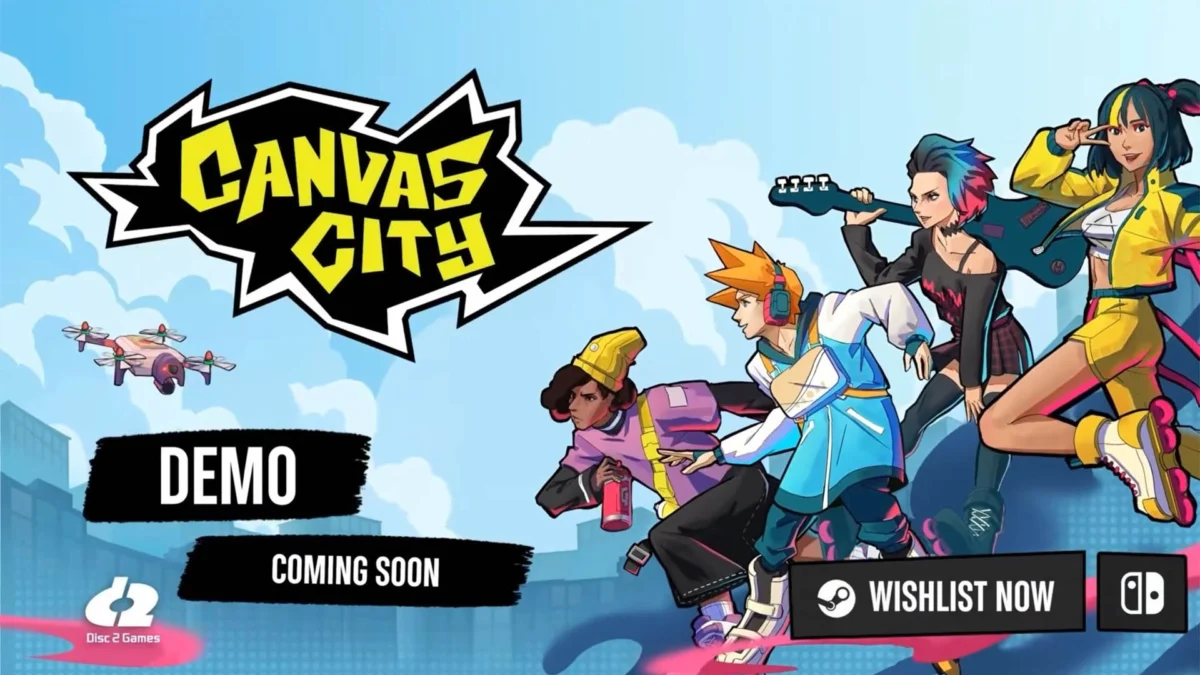
The recent MIX Summer Games Showcase served as the launchpad for one of the most intriguing indie concepts in recent memory. Canvas City, the latest project from developer Disc 2 Games, has captured the attention of the gaming community by daring to fuse the frenetic, stylized energy of arcade skating games with the cerebral, grid-based mechanics of tactical RPGs.
In a gaming landscape often dominated by high-fantasy epics or gritty military shooters, Canvas City offers a vibrant, neon-soaked alternative: a world where the primary weapon against oppression is not a firearm, but a spray can, a skateboard, and a rhythmic sense of style.
Main Facts: What is Canvas City?
At its core, Canvas City is a turn-based tactical RPG set within a stifling, dystopian metropolis where the government has systematically eradicated all forms of artistic expression. The narrative places players in the role of the "Fire Starters," a diverse collective of rebels—skaters, street artists, musicians, and dancers—who aim to liberate the city’s soul by reclaiming its public spaces through high-stakes performance and urban traversal.
Unlike traditional tactical games that focus on lethality, Canvas City emphasizes the "art of the fight." Combat encounters take place on stylized urban maps, where players must navigate complex terrain, grind on rails, and tag walls to build momentum. The gameplay loop is built around a "Style-as-Resource" system: the more flair a player exhibits through tricks and environmental interaction, the more powerful their abilities become. This creates a strategic feedback loop where movement and combat are inextricably linked.
Key features currently confirmed include:
- A Roster of Dynamic Characters: Players can recruit a wide variety of rebels, each bringing unique traversal skills and artistic specializations to the crew.
- Expansive Ability Tree: With over 80 unique abilities to unlock, players can customize their tactical approach, ranging from area-of-effect "mural attacks" to high-speed movement buffs.
- Crew Customization: Beyond individual character stats, players can manage their collective, tailoring the group’s aesthetic and tactical focus to match their preferred playstyle.
- Platform Availability: The game is currently slated for a release on Nintendo Switch and PC (via Steam).
Chronology: The Road to the Showcase
The development of Canvas City has been a journey of blending two distinct genres into a cohesive experience. Disc 2 Games first teased the concept in internal design documents early last year, focusing on the mechanical challenge of mapping "trick systems" onto a turn-based grid.
The studio’s primary technical hurdle was ensuring that movement felt fluid, despite the turn-based nature of the game. By allowing characters to use their movement allowance to perform tricks or tag surfaces during the turn, the developers bridged the gap between the speed of an arcade title and the deliberate decision-making of a strategy game.
The official unveiling at The MIX Summer Games Showcase was the culmination of months of polishing these systems. The reveal trailer, which showcased a seamless transition from a skateboard grind to a tactical turn-based attack, was met with immediate acclaim. It tapped into a nostalgic hunger for the aesthetic of titles like Jet Set Radio, while promising the deep, crunching mechanics that fans of modern tactical RPGs crave.
Supporting Data: Mechanics and Strategic Depth
For those who find the tactical genre intimidating, Disc 2 Games has indicated that Canvas City focuses on "rhythmic positioning" rather than pure mathematical optimization. The grid-based maps are not merely static backdrops; they are playgrounds.
The Geometry of Rebellion
In Canvas City, the environment is a primary actor. Players gain "Style Points" by interacting with the environment—grinding over police barricades, wall-riding to reach high-ground advantage, or tagging high-visibility surfaces. These actions function as "build-up" mechanics. For instance, tagging a central hub on the map might provide a team-wide buff, while a perfect landing on a rail could provide an immediate action point refund, allowing for a second, more powerful "performance-based" attack.

The 80-Ability Ecosystem
The inclusion of over 80 abilities suggests a high degree of replayability. These abilities are categorized by the character’s archetypal role. A "Dancer" might focus on area-of-effect debuffs that disrupt enemy formations, while a "Street Artist" might focus on long-range tagging that alters the terrain, creating "no-go zones" for enemy units. This depth ensures that no two playthroughs or crew compositions will feel the same.
Official Responses and Developer Philosophy
In discussions surrounding the showcase, the team at Disc 2 Games emphasized their desire to capture the feeling of "reclaiming a lost identity."
"We wanted to make a game where the victory condition felt rewarding not just because you won, but because you made the city look better while doing it," a representative stated during a post-showcase interview. "In most tactical games, the environment is something you destroy. In Canvas City, the environment is something you transform. The city starts grey, muted, and cold. As you progress, your influence paints the town, literally and figuratively."
The developers have also been vocal about their commitment to the Nintendo Switch and PC platforms, noting that the artistic style of the game is designed to be readable and vibrant even on smaller screens. The team is currently finalizing the build for a public demo, which they believe will be the "litmus test" for whether the mechanics of skating and strategy truly harmonize.
Implications: A New Sub-Genre?
The success of Canvas City could signal a shift in how developers approach the tactical RPG genre. For too long, the genre has been tethered to historical war themes or high-fantasy combat scenarios. By injecting the "street culture" aesthetic—one defined by music, movement, and anti-authoritarian themes—Disc 2 Games is widening the demographic for turn-based strategy.
Expanding the "Urban Strategy" Niche
If Canvas City succeeds, it could pave the way for other "urban tactical" games. The concept of using space to communicate a narrative is a powerful tool in game design. By making the act of rebellion an artistic one, the game avoids the "ludonarrative dissonance" often found in other titles where the player character is a pacifist in the story but a mass-murderer in the gameplay.
The Impact on Indie Development
Furthermore, the project highlights the increasing importance of "The MIX" and similar showcases in elevating mid-tier indie titles. In a market crowded with thousands of Steam releases, Canvas City has distinguished itself by having a singular, recognizable "hook." The industry is watching closely to see if this marriage of arcade kinetics and grid strategy will resonate with the broader audience.
Conclusion: The Horizon for Canvas City
As we await the upcoming demo, the anticipation remains high. Canvas City is not just a game about skating or strategy; it is a statement about the power of expression. By transforming a sterile, controlled urban environment into a canvas for rebellion, Disc 2 Games is inviting players to participate in a creative process that feels both radical and deeply satisfying.
The wait for a full release date continues, but for now, the Fire Starters have our attention. Whether the final product can balance its ambitious mechanics remains to be seen, but the intent is clear: in Canvas City, the revolution will not be televised—it will be painted, skated, and performed, one turn at a time.
For those looking to keep up with the latest updates, the developer has encouraged fans to wishlist the title on Steam and follow the studio’s social channels for the imminent demo announcement. The streets of the city are waiting, and it is time for the next generation of rebels to take them back.


 Asro
Asro
 Muslim