

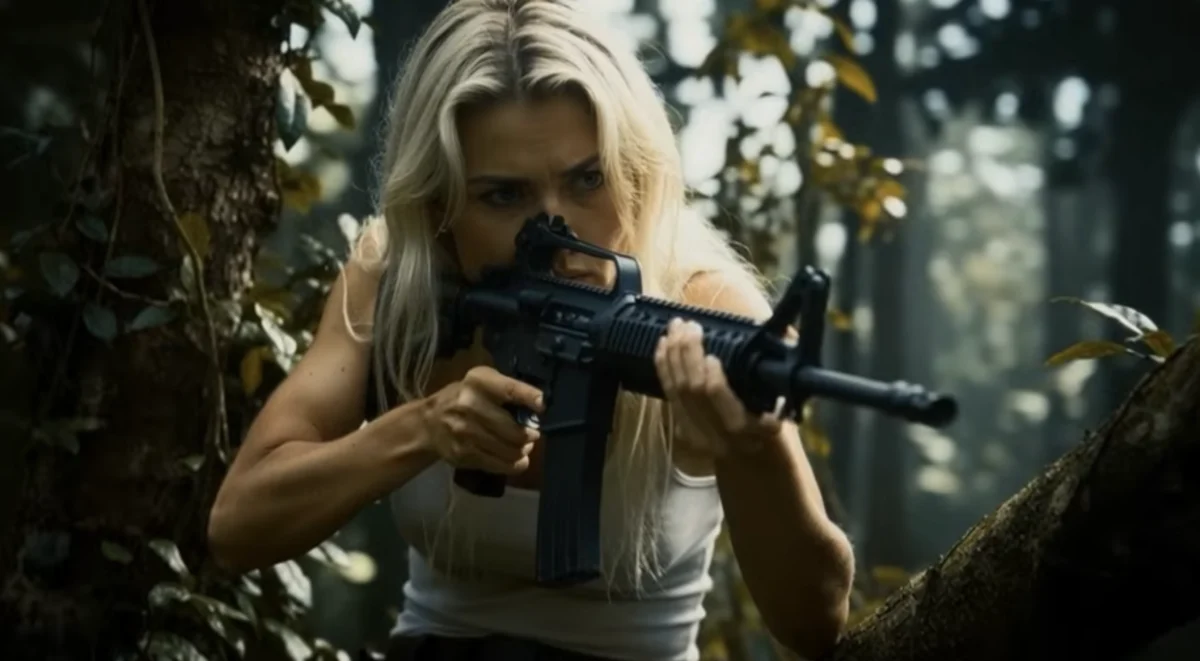
The landscape of unscripted television is undergoing a seismic shift, one driven not by human drama in exotic locales, but by the cold, calculating, and rapidly evolving world of artificial intelligence. At Deadline’s recent Reality TV Summit UK, the industry’s brightest minds gathered to confront a burgeoning reality: the world’s first 100% AI-generated reality series is not only finding an audience, but it is also attracting the attention of some of the biggest names in the U.S. entertainment industry.
As the lines between human performance and synthetic creation blur, creators and producers are grappling with the potential, the pitfalls, and the profound ethical implications of a medium that is no longer science fiction, but a functioning streaming reality.
The Rise of Non Player Combat
The vanguard of this movement is Tom Paton, the visionary behind AiMation Studios. His brainchild, Non Player Combat, has carved out a niche that is as controversial as it is compelling. Described by its creator as a high-octane, dystopian fusion of The Hunger Games, Fortnite, and The Traitors, the series features six AI-generated contestants engaged in a ruthless, simulated battle for survival.
During his keynote at the summit, Paton revealed that Season 2 is currently in active development, with a scope that aims to surpass the experimental nature of the inaugural season. Perhaps most surprising is the disclosure that high-profile figures within the American reality television space are currently in negotiations to join the project. While Paton remained tight-lipped regarding specific names, his assertion that these individuals are "known for spearheading the reality space" suggests that established television titans are taking the potential of synthetic entertainment seriously.
"The interest around it is kind of crazy," Paton told the panel. "One of the real goals for Season 2 is to make it feel more like Big Brother, where what you are watching is what happened yesterday. The episodes come in real time off the back of a simulation."
By moving toward a "real-time" narrative structure, Paton hopes to bridge the gap between static scripted content and the unpredictable, visceral nature of traditional reality TV. The show, which currently airs on YouTube and the dedicated AiMation streaming platform, has reportedly piqued the interest of global broadcasters eager to capture the next wave of viewer engagement.
Chronology of a Tech Disruption
The emergence of AI in unscripted media did not happen overnight. It is the culmination of years of iterative development in generative video and neural networking.
- Early 2024: AiMation Studios launches the first season of Non Player Combat, testing the appetite for entirely autonomous, AI-driven storytelling.
- Late 2024: The industry observes a surge in AI-assisted documentary production, with indie studios like Spirit Studios utilizing generative tools to recreate historical settings and figures.
- April 2026: Katrien Grobler’s platform, Twinnin, draws significant scrutiny regarding the ethics of "AI twinning," sparking a wider debate about likeness rights and the future of performance.
- June 2026: The Reality TV Summit UK serves as the nexus for these disparate threads, marking the first time major players have openly discussed the integration of A-list talent with synthetic AI frameworks.
This timeline reflects a rapid transition from "proof of concept" experiments to serious commercial ventures. The industry has moved from merely using AI to touch up background elements to using it as the primary engine for character development and narrative arcs.
The Commercial Reality: Funding and Friction
While the potential of AI is immense, the financial reality remains complex. Matt Campion, head of Spirit Studios—the indie outfit behind the acclaimed Ed Gein: Original Psycho—offers a tempered view of the current market. Spirit Studios recently made headlines for using AI to reconstruct the surroundings of infamous serial killer Ed Gein, a move that highlighted the utility of the tech in documentary filmmaking.
However, Campion notes that the enthusiasm from broadcasters is inconsistent. "Some broadcasters are up for [AI], some aren’t, and some are up for it as long as you use their tools—and their tools are s**t," he admitted.

A significant hurdle for producers is the "truth" threshold, particularly in the true-crime genre. American networks, in particular, remain "averse" to funding AI-centric projects at the pre-sell stage. The hesitation stems from a fear of compromising the perceived authenticity of the narrative. Yet, Campion remains optimistic about the long-term prospects. "Because of this idea of truth… they are averse to putting money in at the pre-sell stage. But it doesn’t mean they won’t buy the finished product."
Campion advocates for a "human-AI combined" approach, where generative technology acts as a force multiplier for human creativity rather than a replacement. "This is additive; it doesn’t take anything away and isn’t trying to be too clever. The future is to move on as an indie, and to be a modern-facing indie, you have to embrace AI."
The Ethics of "Twinning" and Likeness Rights
Perhaps the most contentious area of AI in media is the cloning of human likenesses. Katrien Grobler, the founder of the controversial app Twinnin, finds herself at the center of this firestorm. Twinnin allows for the creation of digital clones of actors, which can then be licensed to studios or brands for commercial use.
As the industry approaches a turning point, with SAG-AFTRA in the United States implementing strict contractual clauses regarding AI usage, Grobler maintains that her platform is "compliant" with new regulations because it focuses on protecting the agency of the artist.
"I believe 99% of content will be AI-generated by 2030," Grobler predicted. Given this trajectory, she argues that the primary goal of any AI platform must be the protection of a performer’s digital rights. Her "dream get" for the platform is none other than Matthew McConaughey.
McConaughey, who has been vocal about protecting his image and voice from unauthorized AI replication, represents the high-stakes battleground of celebrity identity. Grobler, however, remains undeterred. "He is open to AI and is a good dude," she said, teasing that Twinnin is currently working on a premium tier designed to capture a "higher level of emotion," hoping to entice A-list talent to view AI not as a threat, but as an extension of their personal brand.
Implications for the Future of Television
The convergence of these technologies suggests that the television industry is on the cusp of a total metamorphosis. The implications are far-reaching:
- Economic Disruption: If AI can generate compelling reality narratives at a fraction of the cost of human-led productions, the economics of production companies will change drastically. Smaller indies may find themselves competing on equal footing with major networks.
- The Crisis of Authenticity: As viewers become more accustomed to synthetic content, the baseline for "reality" will shift. If a show like Non Player Combat can simulate the emotional stakes of Big Brother, the audience may eventually lose the ability—or the interest—to distinguish between human-generated and AI-generated social dynamics.
- Legal and Moral Frameworks: The ongoing negotiations regarding likeness rights, as evidenced by McConaughey’s trademarking and the SAG-AFTRA contract clauses, are just the beginning. We are entering an era where the ownership of one’s persona will be as legally complex as the ownership of intellectual property.
- Creative Evolution: For the creators, the challenge lies in maintaining a "human touch." As Campion noted, the goal is for AI to be "additive." The winners in this new landscape will likely be those who can harness the efficiency of AI without losing the erratic, soulful, and deeply human unpredictability that makes reality television a cultural cornerstone.
Conclusion
The Reality TV Summit UK has made one thing abundantly clear: the genie is out of the bottle. Whether through the dystopian, high-stakes simulations of Non Player Combat or the sophisticated digital twinning models proposed by platforms like Twinnin, AI is no longer a peripheral tool—it is the next frontier of human entertainment.
As the industry navigates this transition, the focus must remain on a delicate balance: embracing the technological revolution that promises to redefine how we tell stories, while fiercely guarding the human essence that makes those stories matter in the first place. The coming years will be defined by those who can navigate this binary landscape, proving that even in a world of algorithms, the human connection remains the most valuable asset of all.











No comments yet. Be the first to join the conversation!