

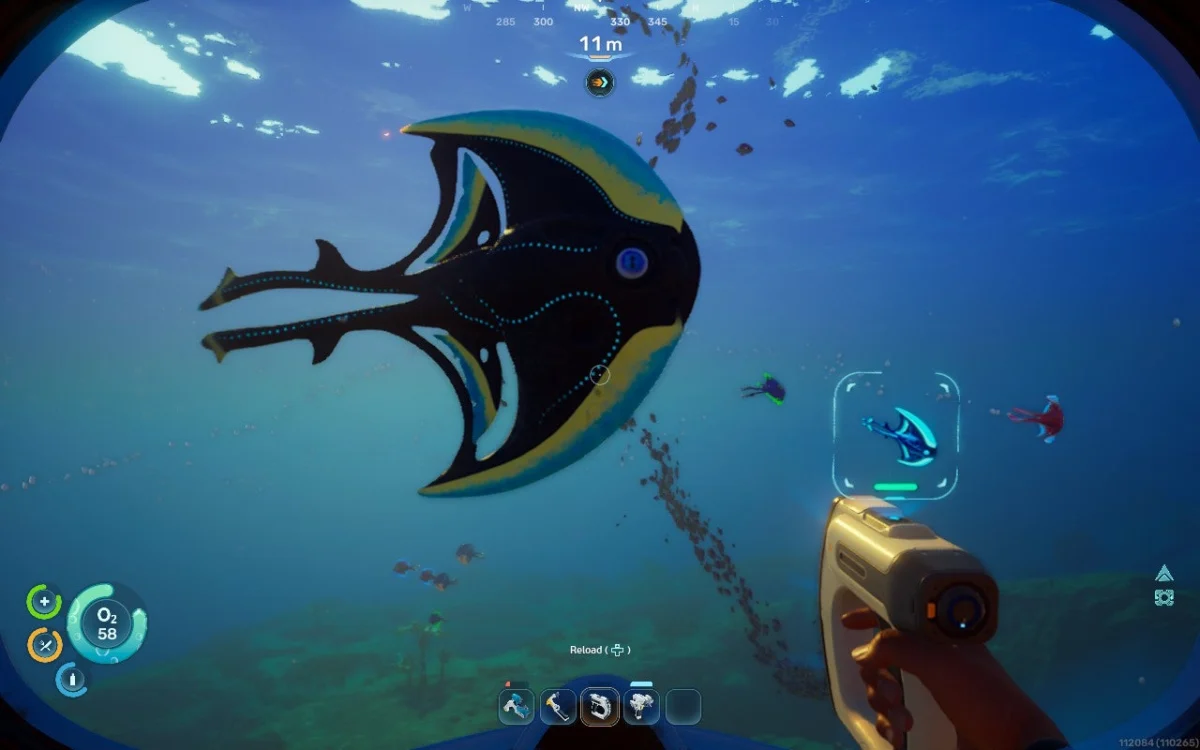
The arrival of Subnautica 2 into early access has reignited one of the most persistent debates in modern survival gaming: the ethics of player agency versus the sanctity of a designer’s vision. As players plunge back into the alien, bioluminescent depths, many have once again voiced a desire for traditional combat mechanics—specifically, the ability to manufacture weaponry to neutralize the game’s apex predators. However, for Unknown Worlds, the developers behind the franchise, the absence of guns is not a technical oversight or a lack of imagination. It is a foundational philosophy.
In a recent roundtable interview, design lead Anthony Gallegos addressed this "continued point of resistance," acknowledging that while the team listens to community feedback, they remain steadfast in their commitment to a world where players are guests, not conquerors.
The Philosophy of Non-Violence: A Historical Context
To understand the design choices behind Subnautica 2, one must look back to the inception of the original game. Following the 2012 Sandy Hook Elementary School shooting, Unknown Worlds co-founder Charlie Cleveland made a conscious decision to shift the studio’s creative direction. While the team had previously found success with the Natural Selection series—a franchise rooted in the conventions of military science fiction and tactical combat—Cleveland felt a moral imperative to pivot.
In a candid post on the Steam forums during the original game’s development, Cleveland explained, "I’ve never believed that video game violence creates more real-world violence. But I couldn’t just sit by and ‘add more guns’ to the world either. So Subnautica is one vote towards a world with less guns. A reminder that there is another way forward."
This vision sought to challenge the "power fantasy" trope prevalent in the survival genre. In most games of this ilk, progression is measured by how effectively a player can dominate their environment. In Subnautica, progression is measured by how effectively a player can understand, adapt to, and survive within an ecosystem that is fundamentally indifferent to their existence.
The Designer’s Dilemma: Balancing Player Agency and Vision
Despite the studio’s clear stance, the tension between the "optimal play" and the "intended experience" remains palpable. In the first Subnautica, players discovered that by using tools like the drill-armed Prawn suit, they could technically "murder" even the most terrifying Leviathan-class creatures. While this was never the developer’s intent, it became a common strategy for players seeking to "clear" an area of the map to ensure safe passage.
Gallegos admits that this behavior is a source of frustration for the design team, as it strips the game of its core tension. "One of the things that’s always bothered me is that when people play Subnautica 1… they would go into an area and be like, ‘All right, how am I going to murder this Leviathan, so that I don’t have to deal with it anymore?’" Gallegos said. "Which I think is unfortunate because it takes away a lot of the tension of the region."
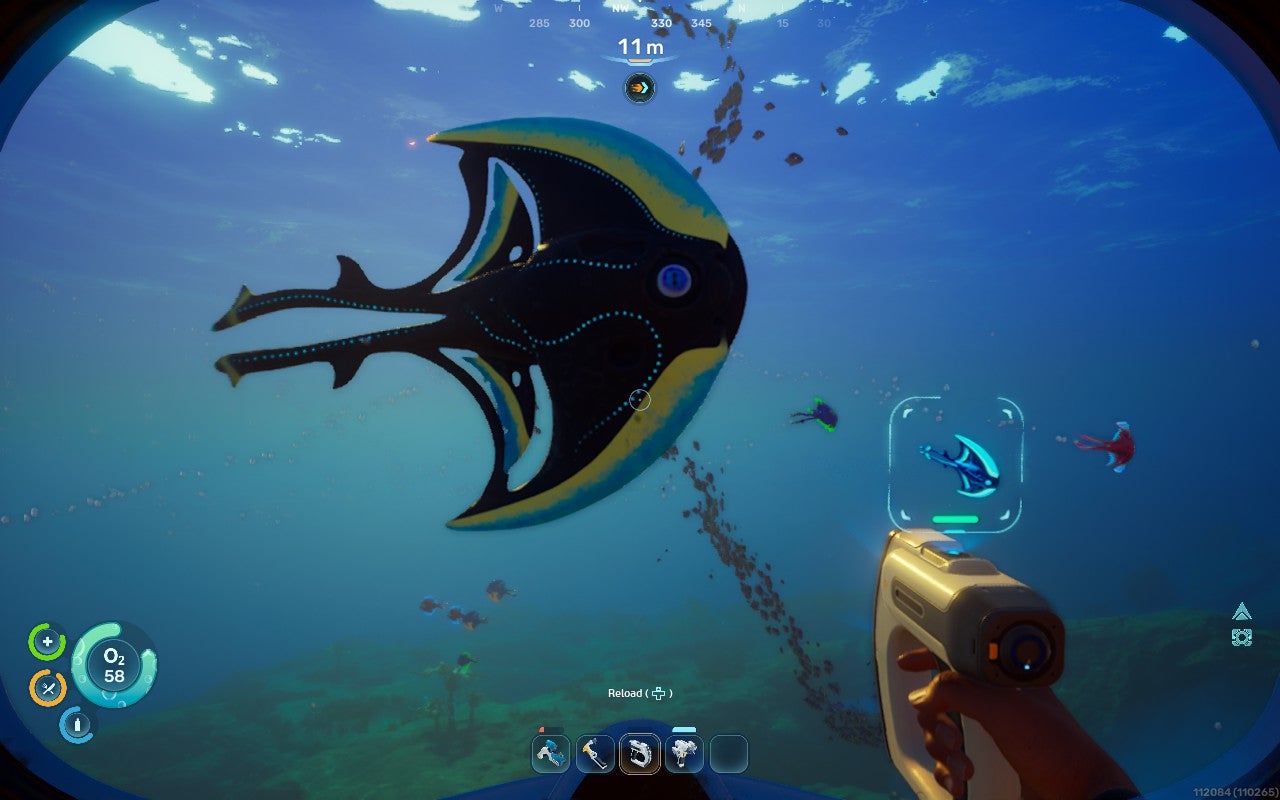
For Subnautica 2, the team is attempting to solve this by providing players with more sophisticated, non-lethal tools. Rather than simply stripping away defense, the game now features items like the emergency flare—a device used to distract predators or shift their focus. The goal is to provide agency without allowing dominance. "We’re trying to push players away from [killing] and say that you’re meant to be here, alongside these creatures," Gallegos added.
Challenging the "Frontiersman" Archetype
A common critique leveled at the Subnautica series is the narrative dissonance regarding the protagonist’s background. If the player character is a human explorer arriving on a space-faring vessel, why aren’t they equipped with standard-issue sidearms?
Gallegos acknowledges the validity of this question, noting that the lore of the Subnautica universe does indeed account for armed personnel. "I do know that the sort of theming of what we’re doing, where the character started out in the colony ship, it would make sense that there would have been some means of self-defense," he explained. "We plan on tackling that in the story, over time."
Within the narrative, the player is distinct from the "frontiersmen"—the military or security-focused individuals who might be trained to handle hostile wildlife with force. The player is an explorer, scientist, or civilian, separated from their squad. This distinction is vital to the game’s tone: you are a survivor, not a soldier.
The "Survival-Horror" Misconception
Interestingly, while Subnautica is frequently tagged as a "horror" game on digital storefronts, the developers argue that they are not making a horror game in the traditional sense. The fear induced by the game is a byproduct of being in an unfamiliar environment, not the result of being hunted by monsters that you are meant to fight back against.
Gallegos compares the experience to the evolution of the horror genre itself. "You’ve seen a move from a lot of horror games—we don’t consider ourselves a horror game—where they’ve moved from empowering the player with a knife and letting them kill everything to saying, ‘Actually, we’re going to move to where you have to hide from monsters.’ We view ourselves as much more in that lane of it."
This design choice shifts the player’s cognitive load. Instead of managing a combat encounter, the player is managing environmental awareness, resource conservation, and navigational planning. It turns the act of survival into a puzzle of avoidance rather than a contest of attrition.

Global Feedback and the "Weapon Manufacturing" Debate
The refusal to add guns has been met with varying levels of intensity depending on the region. Gallegos shared an anecdote about early feedback from a specific country, where the community was overwhelmingly demanding the ability to manufacture weaponry.
"I won’t mention which country this was, but they were, like, overwhelmingly ‘we want to manufacture weapons,’" Gallegos noted. "And I was like, ‘Man, I feel like people got a very different vibe out of the original Subnautica than being a weapons manufacturing video game!’"
This highlights a fundamental divide in gaming culture: some players view survival games as platforms for engineering and domination, while others view them as immersive simulation experiences. For Unknown Worlds, sticking to their guns—or rather, not sticking to them—is a matter of protecting the game’s identity. They are willing to iterate on mechanics to make survival more intuitive, but they are unwilling to change the core tenet of non-confrontational exploration.
Looking Ahead: The Evolution of Subnautica 2
While the combat philosophy remains fixed, the gameplay loop of Subnautica 2 is far from static. The developers are currently iterating based on real-time data from the early access build. Among the upcoming changes are a highly requested sprint button, improved co-op mechanics (including player revives), and proximity chat. These quality-of-life improvements are designed to make the cooperative experience smoother and more engaging, reinforcing the idea that the "adventure" is in the exploration, not the elimination.
Ultimately, Gallegos’s perspective on the game’s violence is nuanced. It isn’t about creating a world devoid of conflict or risk; it is about creating a world where the player acknowledges the life of the entities around them. "To me, it’s not about the fact that there has to be zero implications of violence," he concluded. "Just that we don’t want them to go out with the express intent that ‘I’m gonna go kill these things in the environment.’ In the same way that a diver might see a shark and be like, ‘I’m gonna bop the shark in the nose, to make it turn away,’ but I still respect that the shark wanted to live."
As Subnautica 2 continues to grow through its early access phase, it remains a bold experiment in game design. By removing the player’s ability to "solve" the game through violence, Unknown Worlds forces us to engage with the unknown on its own terms—a reminder that in the vast, deep blue, we are only ever visitors.











No comments yet. Be the first to join the conversation!