Basiran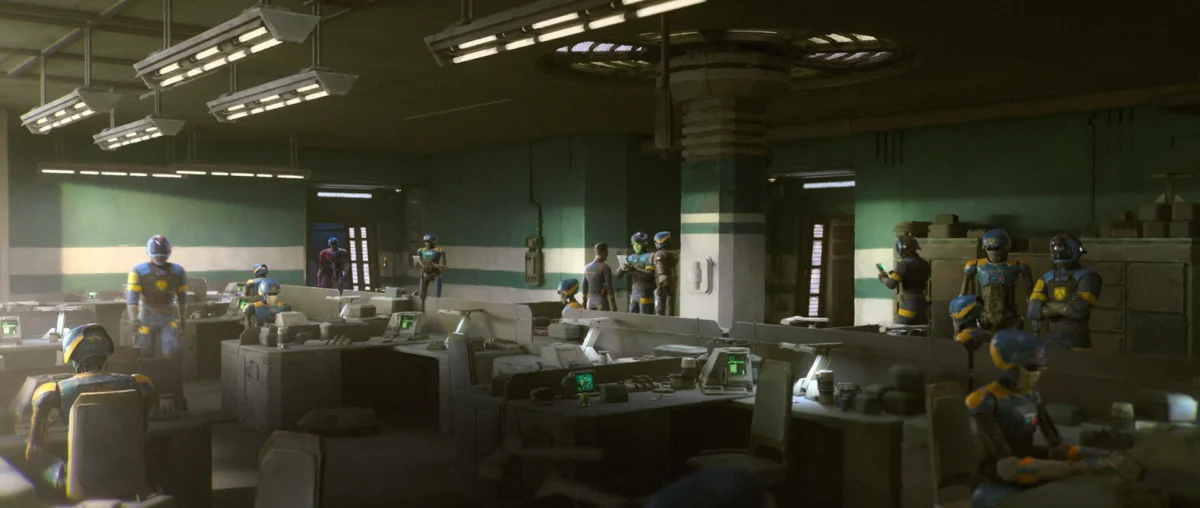
In the vast, expansive galaxy of Star Wars, the visual spectacle is often what captures the imagination first. However, the emotional resonance—the hum of a lightsaber, the whir of a droid, the unsettling silence of a panic-stricken moment—is the domain of the sound supervisor. For the new Disney+ animated series Star Wars: Maul — Shadow Lord, that sonic landscape has been masterfully curated by David W. Collins, a veteran whose history with the franchise spans over a quarter-century.
As both the sound supervisor and the voice of the enigmatic, cat-like droid companion "Spybot," Collins is currently defining the auditory texture of a darker, more noir-inspired corner of the galaxy. His work on the series represents a culmination of years spent navigating the intersection of technical precision and raw, personal storytelling.
The Foundation: A Career Forged in the Force
David W. Collins is no newcomer to the Star Wars audio booth. His resume reads like a map of the franchise’s most iconic moments in digital entertainment and television. He provided the distinct, metallic voice of the "Fondor" ship computer in the critically acclaimed Andor, and lent his vocal talents to the 1-JAC bounty hunter droid in Obi-Wan Kenobi.
However, long-time fans of the expanded universe will recognize his work from 2008’s The Force Unleashed video game, where he voiced PROXY, the multi-faceted droid companion to Starkiller—the secret apprentice of Darth Vader, played by Sam Witwer. That project not only marked a milestone in gaming voice acting but also cemented a professional partnership and personal friendship between Collins and Witwer that has lasted more than 25 years.
"It’s in our nature to hold ourselves back a little bit, whether it’s modesty or anxiety or something else," Collins explains, reflecting on his long-time collaborator. "But Sam Witwer doesn’t do that. He does not hold back. He is 110 percent all the time. I have seen him continuously go in front of a microphone and blow people away on the other side of the glass. It’s the clarity of purpose that he gives to every line."
Chronology of a Creative Partnership
The professional synergy between Collins and Witwer dates back to the early 2000s at LucasArts. During that era, Collins was transitioning into a role as a voice director. Recognizing Witwer’s budding talent, Collins was instrumental in bringing him into the Star Wars fold.
"His generosity, his kindness, and his passion all led to us easily becoming fast friends," says Collins. "When I started to voice direct at LucasArts, I threw him auditions. Finally, The Force Unleashed came up. He literally looked like the concept art for Starkiller, so I slipped his headshot into the pile. I was the actor reading across from him in that audition."
Now, nearly two decades later, that history has come full circle. In Maul — Shadow Lord, they are once again playing off one another, with Collins voicing Spybot, a droid orbiting the orbit of Maul’s dark, vengeful narrative.
Defining the "Spybot" Soundscape
Creating a new droid voice in the Star Wars universe is a daunting task, given the legacy established by legends like R2-D2, BB-8, and Chopper. For Spybot, Collins sought a voice that was both alien and intelligible.
"I thought a lot about the older droids," Collins notes. "Because there were actual lines of dialogue in the script, it needed to sound like gibberish but also be understandable. I went into the booth and tried all kinds of accents, and what emerged was this homage to Peter Lorre."
The character evolved further during the post-production process. As the show’s sound supervisor, Collins found himself uniquely positioned to refine the performance. "Because I was actually mixing the show, I would pitch new lines later in the process. I was trying to get reactions from executive producers Brad Rau and Athena Portillo. Spybot took on a life of his own—a bit like a Hidden Fortress junkyard dog. He’s a little jerk, but he’s so fun."
To create Spybot’s unique hovering hum, Collins eschewed traditional synthesizer patches. Instead, he utilized the resonance of a crystal wine glass filled with water, rubbing his finger along the rim to create a haunting, melodic frequency. This was then sampled and processed, ensuring that Spybot sounded distinct from the classic astromechs that populate the rest of the galaxy.
Technical Innovation and Personal Vulnerability
While droids and action sequences are staples of the franchise, Collins’ work on Maul — Shadow Lord shines most brightly in its quietest, most psychologically intense moments. He points to the fifth episode as a career high, where he utilized sound design to externalize a character’s internal panic.
In the scene, the protagonist, Lawson, is surrounded by Imperial troopers. Sensing the character’s internal state, Collins opted to strip away the music, leaving a vacuum of silence. He then layered in his own recorded breathing, filtered to sound muffled and labored, alongside the high-pitched ringing of tinnitus and the sound of blood rushing in ears.
"If you’re an artist, any good art is personal," Collins asserts. "I was experiencing a panic attack during a medical scare in my late 20s, and I remember the sounds of that moment. I thought, ‘What if I recorded myself breathing, just reliving that memory?’ If I’m not putting myself into whatever art I’m asked to work on, then what’s the point?"
World-Building Through Audio
The team’s commitment to world-building extends to the background noise of the planet Janix. To capture the frantic, noir-inspired atmosphere of the police bullpen, Collins orchestrated a series of improvisational sessions with voice actors. These actors recorded background chatter regarding mundane issues—a trash fire downtown, a broken water main, or spaceport traffic—creating a layer of "lived-in" realism that rewards attentive viewers.
Furthermore, the show’s lightsaber combat received a specialized update. Collins returned to Ben Burtt’s original The Phantom Menace sound files for Maul’s lightsaber, adding an "unsteady sizzle" to match the show’s painterly, evolving art style. Even more strikingly, he processed screams recorded by Sam Witwer to serve as the harmonic base for the lightsaber swings themselves. "When Maul is fighting, you actually hear the sound of Sam screaming built into the saber. There’s something about that vocal that makes the fight more personal."
Implications for the Star Wars Legacy
The work of David W. Collins on Maul — Shadow Lord underscores a broader shift within the Star Wars creative philosophy. Under the guidance of figures like Skywalker Sound’s Matthew Wood, the franchise is increasingly encouraging its contributors to move beyond the rote imitation of the past.
"It’s not about staying in your lane," Collins says, echoing the ethos of George Lucas. "It’s about bringing who you are to the work."
By blending technical sound engineering with profound personal experience—whether it’s the anxiety of a panic attack or the decades-long rapport with a co-star—Collins has ensured that the "sound" of Star Wars remains as vital and evolving as the stories themselves. As the finale of Maul — Shadow Lord approaches, audiences are not just witnessing a high-stakes struggle for power; they are experiencing an auditory masterclass that proves the Force, and the artistry behind it, remains stronger than ever.
The finale of Star Wars: Maul — Shadow Lord debuts on Disney+ this May 4th, promising a conclusion that is as much a sonic triumph as it is a narrative one.


 Evan Lee Salim
 Nana Wu