

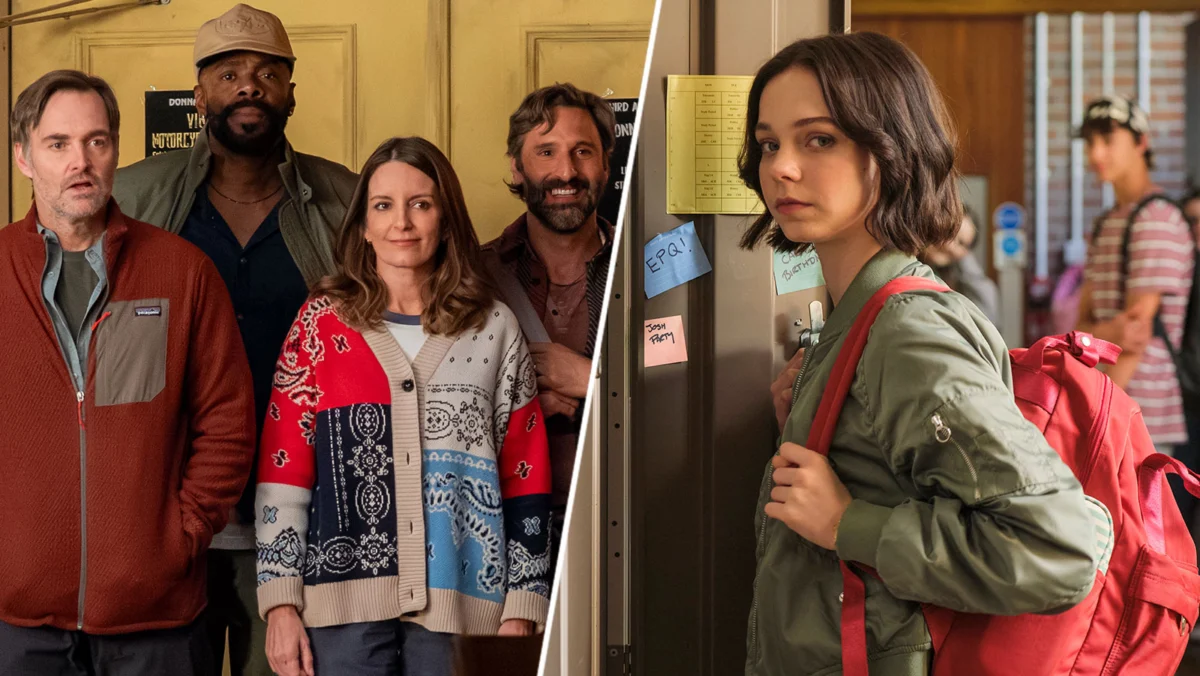
In the hyper-competitive landscape of streaming television, the "sophomore slump" has traditionally been a concern relegated to broadcast network executives worried about audience retention. However, in the era of streaming giants like Netflix, where data is king and every view is tracked with surgical precision, the inability of a second season to match its predecessor’s debut has become a defining industry trend. Recent performance data from the week of May 25, 2026, to May 31, 2026, paints a concerning picture: even the platform’s most lauded series are struggling to recapture the initial magic that launched them into the cultural zeitgeist.
Main Facts: A Challenging Week for Returning Hits
Two prominent series that once commanded the summit of Netflix’s weekly Top 10 for English-language programming—The Four Seasons and A Good Girl’s Guide to Murder—returned to the platform with their sophomore installments last week, only to find the audience landscape significantly shifted. Neither series could reclaim its debut glory.
The Four Seasons landed at No. 3 on the charts, garnering 4.4 million views. Meanwhile, A Good Girl’s Guide to Murder faced a more difficult reception, debuting at No. 9 with a modest 1.8 million views. To put these figures into perspective, the performance represents a significant regression from their initial launches. The Four Seasons saw a 63% decline in viewership compared to its Season 1 opening week. A Good Girl’s Guide to Murder experienced an even more dramatic drop, falling more than 76%. Alarmingly, this 76% decline is likely an optimistic floor; because Season 2 launched on a Wednesday—providing it with more tracking time than the Thursday debut of Season 1—the actual audience attrition is arguably even steeper.
Chronology of a Trend: The Growing Pattern
The underperformance of these two series is not a statistical anomaly; it is the latest evidence of a systemic trend plaguing Netflix’s library of returning shows. As industry analysts have observed throughout the first half of 2026, the platform is witnessing a recurring cycle where established titles return to a colder reception than they enjoyed during their initial release.
The pattern began to emerge clearly in early 2026. The basketball drama Running Point returned to a 43% decline in viewership. The critically acclaimed Beef, despite its status as an awards-season darling, saw a 58% drop-off in its second season. Even more pronounced was the slide for the comedy A Man on the Inside, which saw a decline of more than 66%. In fact, the series failed to even register on Netflix’s Top 10 during its sophomore launch, leaving the true extent of its audience evaporation in the shadows of proprietary data.
In contrast, the only bright spot in this trend has been Nobody Wants This. Proving that the "sophomore slump" is not an inevitability, the series managed to mitigate its losses, recording only a 17% decline in its second-season opening week compared to its premiere.
Supporting Data: Why the Numbers Matter
The data suggests a disconnect between critical reception and commercial velocity. It is a unique paradox of the modern streaming era: many of the shows currently suffering from viewership declines are simultaneously seeing their quality ratings improve.
For instance, Running Point, The Four Seasons, and A Good Girl’s Guide to Murder have all achieved something rare: their second seasons boast higher Rotten Tomatoes scores than their strong first-season outings. This creates a complex scenario for content executives. If a show is objectively "better" in its second year, why is the audience turning away?
The answer may lie in the "wait time" variable. A critical factor in the decline of both A Good Girl’s Guide to Murder and Beef appears to be the extended hiatuses between seasons. A Good Girl’s Guide to Murder returned after a nearly two-year gap, while Beef returned after three years. In an ecosystem defined by rapid consumption and an endless influx of new content, three years is an eternity. When the cultural conversation moves on, re-engaging a fragmented audience—even for a high-quality product—requires a marketing effort that many streamers are finding increasingly difficult to execute.
Furthermore, the case of Bad Thoughts highlights that the trend is not limited to high-brow or critically adored fare. The Tom Segura-led series, which received mixed reviews, made a quiet return on Sunday, May 24. It failed to crack the Top 10 entirely, recording fewer than 1.8 million views, a 53% drop from the 3.8 million views the first season captured in its first six days.
Official Responses and Strategic Implications
Netflix’s internal calculus for renewal is clearly evolving. The fact that the streamer renewed A Man on the Inside for a third season, despite its failure to crack the Top 10 in its second, reveals that viewership numbers are only one variable in a much larger equation.
Industry insiders suggest that Netflix is shifting its focus toward "long-tail" value, brand prestige, and library building. The streamer is increasingly willing to look past the "opening week" metrics if a show continues to resonate with a specific, loyal demographic or if the critical consensus remains high. By investing in shows that critics love—even when those shows struggle to maintain their initial viral momentum—Netflix is attempting to curate a reputation as a home for "prestige television" rather than just "viral hits."
However, the financial implications cannot be ignored. Producing a second or third season is almost universally more expensive than the first, due to salary escalations and the rising costs of production. If viewership continues to trend downward by 50% or more, the return on investment (ROI) for these projects enters a precarious territory.
The Road Ahead: Can the Slump Be Broken?
As we move further into the second half of 2026, the industry will be watching closely to see if Netflix can stabilize its returning series. The data suggests that success in the second year is highly sensitive to three factors:
- The "Gap" Factor: Shorter intervals between seasons appear to be critical in maintaining audience momentum.
- Marketing Continuity: The ability to reignite the buzz that characterized a successful debut is failing, suggesting that marketing strategies for second seasons are currently insufficient.
- Algorithmic Visibility: As the library grows, shows are competing not just with other new series, but with the entire back catalog of the platform. If a show’s sophomore season doesn’t trigger the algorithm effectively in its first 72 hours, it risks being buried by newer, fresher content.
For fans of The Four Seasons and A Good Girl’s Guide to Murder, there is reason for cautious optimism. The fact that both shows spent multiple weeks at the No. 1 spot during their maiden voyages indicates a strong foundation of fan interest. If the platform continues to prioritize critical acclaim and brand identity over raw, short-term viewership spikes, these shows may have the runway needed to stabilize their audience and perhaps even find growth in future seasons.
Ultimately, the "sophomore slump" of 2026 is a mirror held up to the streaming industry itself. It is a reminder that in a world of infinite choice, loyalty is the most difficult commodity to maintain. Whether Netflix can pivot its strategy to better serve its returning hits, or if the era of the multi-season streaming powerhouse is fading in favor of a constant churn of new content, remains the most significant question in the television business today.











No comments yet. Be the first to join the conversation!