In an era defined by hyper-curation and digital safety, a quiet battle is being waged in the aisles of our libraries and bookstores. It is a conflict over the intellectual autonomy of the next generation. The central question—whether children possess the cognitive capacity to engage with complex literature—has been reignited by a viral social media discourse that pits modern "age-appropriate" gatekeeping against the historical reality of childhood reading.
The Anatomy of an Intellectual Barrier
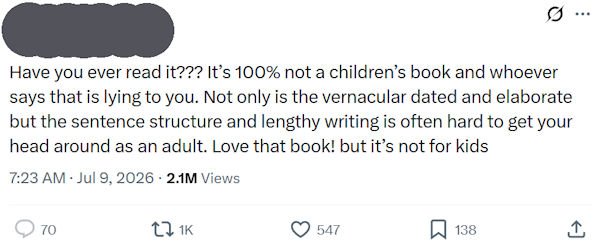
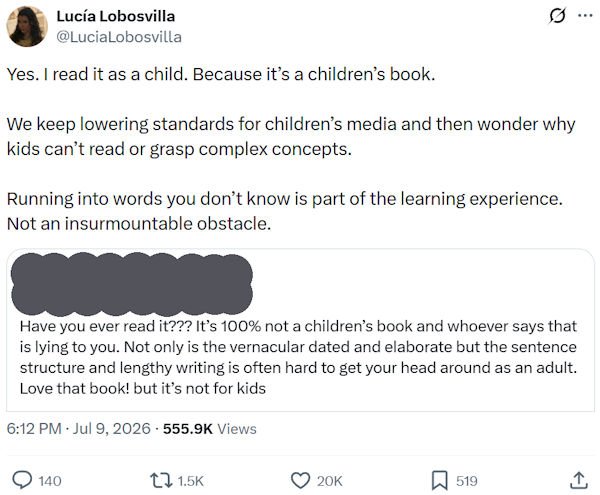
The debate began, as many cultural flashpoints do, with a seemingly innocuous post on X (formerly Twitter). A user sparked outrage by claiming that J.R.R. Tolkien’s The Hobbit is "100% not a children’s book," citing "dated vernacular," "elaborate sentence structure," and "lengthy writing" as insurmountable hurdles for young readers. The post asserted that these structural complexities are often difficult even for adults to grasp, effectively categorizing a classic work of children’s fantasy as inaccessible to its target audience.
The backlash was swift and incisive. Lucia Lobosvilla, a prominent voice in the literary community, quote-tweeted the sentiment with a sharp critique: "We keep lowering standards for children’s media and then wonder why kids can’t read or grasp complex concepts. Running into words you don’t know is part of the learning experience. Not an insurmountable obstacle."
This exchange highlights a growing trend in modern parenting and education: the tendency to insulate children from "difficult" texts under the guise of protection, inadvertently stripping them of the very challenges that foster cognitive growth.
A Chronology of Control: From 1980s Autonomy to Modern Helicoptering
To understand the current climate, one must look at the historical trajectory of how we treat children as consumers of information. In the 1980s and 90s, the social contract regarding children and media was vastly different. Children were, in many respects, treated as "mini-adults" in waiting.
- The Era of Neglectful Freedom (1980–1995): During this period, children navigated library shelves with minimal adult oversight. The concept of a "YA" (Young Adult) section was virtually non-existent; children moved from picture books to the adult section with ease. Movies were far less rigidly categorized—the PG-13 rating did not exist until 1984—and media consumption was rarely scrutinized by parents.
- The Digital Shift (1995–2005): As the internet began to permeate the home, the perception of knowledge changed. Information was no longer just in the library; it was everywhere. This access coincided with the rise of "helicopter parenting," where the mandate shifted from "letting kids be" to "monitoring everything."
- The Modern Enclosure (2010–Present): With the ubiquity of smartphones and social media, the last bastion of parental control moved to physical books. We have seen the explosion of the middle-grade and YA market, which, while providing diverse content, has also created rigid, age-coded silos. Today, books are frequently stamped with grade-level indicators, effectively telling children which intellectual "box" they belong in.
The Price of "Age-Appropriateness"
The push for stricter age-gating is not merely a logistical preference; it is a pedagogical philosophy that carries heavy consequences. Educational psychologists have long argued that "productive struggle"—the process of encountering vocabulary and concepts just beyond one’s current grasp—is essential for linguistic development.
When adults act as censors or gatekeepers, they rob children of the chance to develop reading stamina. Data suggests that literacy levels are inextricably linked to the diversity and difficulty of the texts a student encounters. By restricting a child to "appropriate" content, we may be suppressing their ability to decode complex syntax, understand nuanced themes, and develop critical thinking skills.
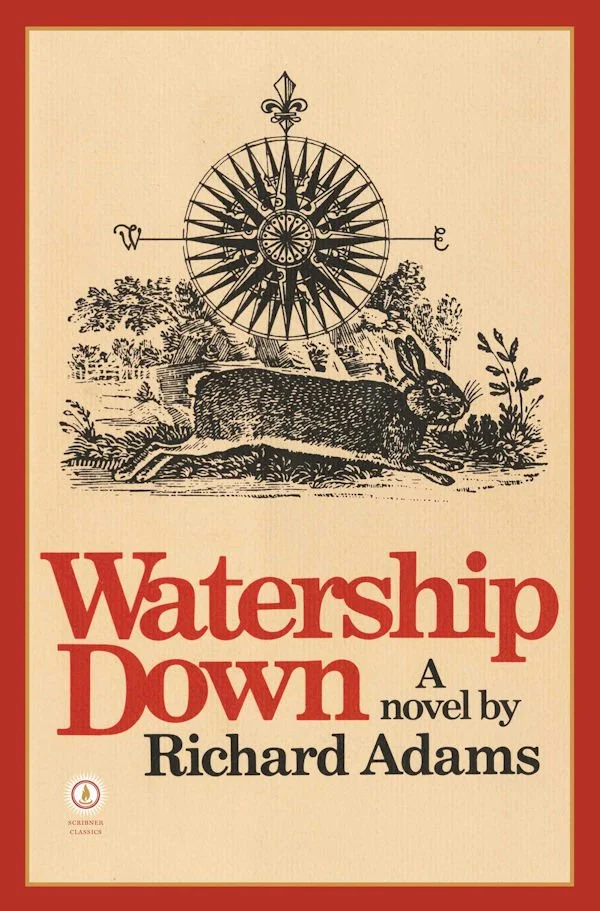
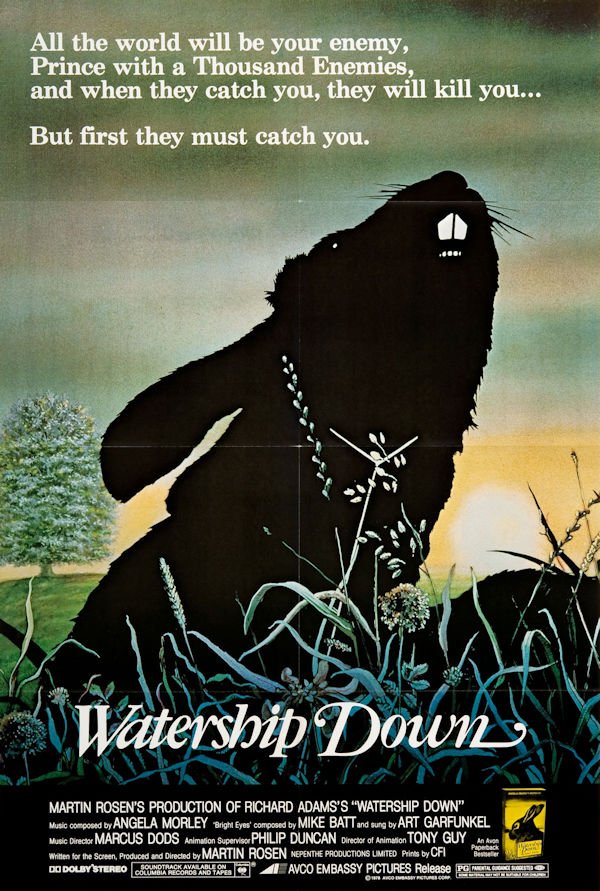
Furthermore, the "gatekeeping" often relies on a deficit model of intelligence. In many school settings, a child who struggles with traditional testing—perhaps due to undiagnosed ADHD, dyslexia, or learning differences—is often categorized as "incapable" of handling complex literature. This creates a self-fulfilling prophecy: if the system tells a child they aren’t smart enough for a book like Watership Down, they may stop trying to engage with challenging material altogether.
Official Perspectives and the Role of Educators
Educational institutions face a dual pressure: the need to provide accessible materials and the mounting demand from parents to protect children from "advanced" or "controversial" themes.
Library associations and educators often find themselves in the crosshairs of this debate. While library boards generally advocate for "intellectual freedom," the day-to-day reality in classrooms often trends toward the conservative. Teachers are increasingly cautious about recommending challenging books for fear of backlash from parents who view specific vocabulary or themes as "too mature."
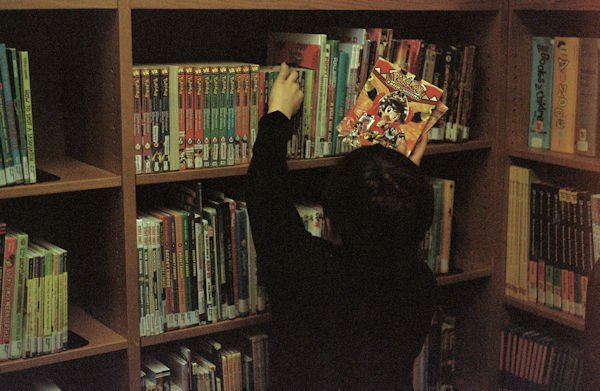
The irony, as noted by many critics, is that by shielding children from "hard" books, we are not protecting them; we are under-preparing them. A child who learns to navigate the dense prose of a classic novel is also learning how to navigate the complex, often messy, reality of the adult world.
The Psychological Implications for the Next Generation
The psychological impact of removing autonomy from children’s reading lives is significant. When a child is told that a book is "too big" or "too advanced" for them, it creates an artificial ceiling on their potential.

- The Loss of Discovery: When reading becomes a prescribed list of age-appropriate tasks, it ceases to be an act of discovery. The thrill of finding a book that feels "too big for your boots" is a formative childhood memory for many.
- The Erosion of Self-Correction: One of the most important skills a reader develops is the ability to recognize when a book is boring, confusing, or simply not for them. By curating their reading lists, parents remove the child’s ability to "fail" and learn from that failure.
- The "Dumbing Down" Effect: As society relies more on quick-fix answers from AI and short-form social media, the patience required for deep reading is atrophying. If we treat children as though they are incapable of understanding complex ideas, we shouldn’t be surprised when they grow into adults who struggle to engage with them.
Moving Forward: Reclaiming the Stacks
The solution is not to abolish middle-grade or YA categories—which serve as useful guides for many—but to dismantle the walls surrounding them. Parents and educators should adopt a policy of "invitation, not regulation."
Encouraging a child to pick up a book that is "above their level" is an act of trust. It tells the child that you believe in their intelligence and their ability to navigate confusion. If a child picks up a book, encounters a word they don’t know, and puts it down, no harm has been done. If they stay, they may find themselves transported to a world they didn’t know existed, equipped with a slightly larger vocabulary and a more expansive worldview.

We must stop treating childhood as a static, fragile state and start treating it as a period of profound plasticity. A child’s potential is not defined by their age, but by their curiosity. By allowing them the freedom to explore the "adult" shelves, we are not just helping them read; we are helping them grow.
Ultimately, the most dangerous thing in a library is not an "advanced" book. It is the belief that a child is not capable of understanding it. It is time to trust the readers of tomorrow to navigate the stacks themselves. If they stumble, they will learn to walk. If they reach, they will grow. That is the true purpose of literature: to stretch the boundaries of what we think we know, regardless of how old we are.