

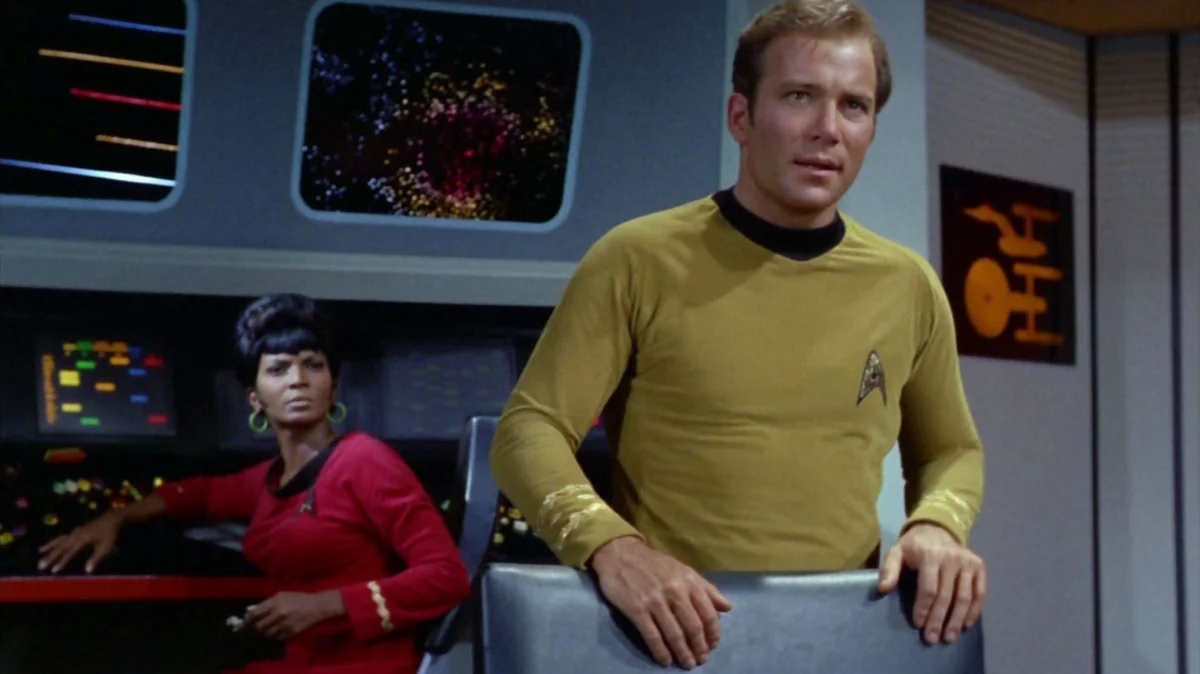
For over half a century, Star Trek has been heralded as a beacon of progressive television, a visionary tapestry that wove a multicultural future into the fabric of the 1960s. Created by Gene Roddenberry, the show famously featured a diverse bridge crew that defied the era’s social norms, signaling a post-Cold War, post-racial future. Yet, behind the scenes of the U.S.S. Enterprise’s utopian bridge lay a starkly different reality. Recent retrospectives and historical accounts, including insights from the late Nichelle Nichols herself, reveal that the show’s vision of equality was constantly under siege by network executives who systematically undermined the role of Nyota Uhura.
The Architect of Equality vs. The Network Machine
Gene Roddenberry’s vision for Star Trek was, for its time, radical. He sought to populate the bridge of the Enterprise with a crew that reflected a global humanity: a Japanese-American helmsman in Hikaru Sulu, a Russian navigator in Pavel Chekov, and, most iconically, a Black woman as the ship’s communications officer, Nyota Uhura.
However, Roddenberry’s idealism was not shared by the power brokers at the network. While the creator fought to normalize this diversity, he was trapped in a tug-of-war with executives who viewed his progressive casting as a liability rather than an asset. As Nichols would later recount in her 1994 autobiography, Beyond Uhura: Star Trek and Other Memories, the scripts often contained rich, substantive material for her character that was systematically excised before cameras ever rolled.
A Chronology of Suppression: The "White Pages" Phenomenon
To understand the frustration Nichols felt, one must look at the mechanical process of television production in the 1960s. Scripts underwent multiple revisions, tracked by the color of the pages used. The first drafts—the "white pages"—contained the raw, ambitious vision of the writers. Subsequent drafts, printed on colored paper, represented the "corrections" forced by studio and network oversight.
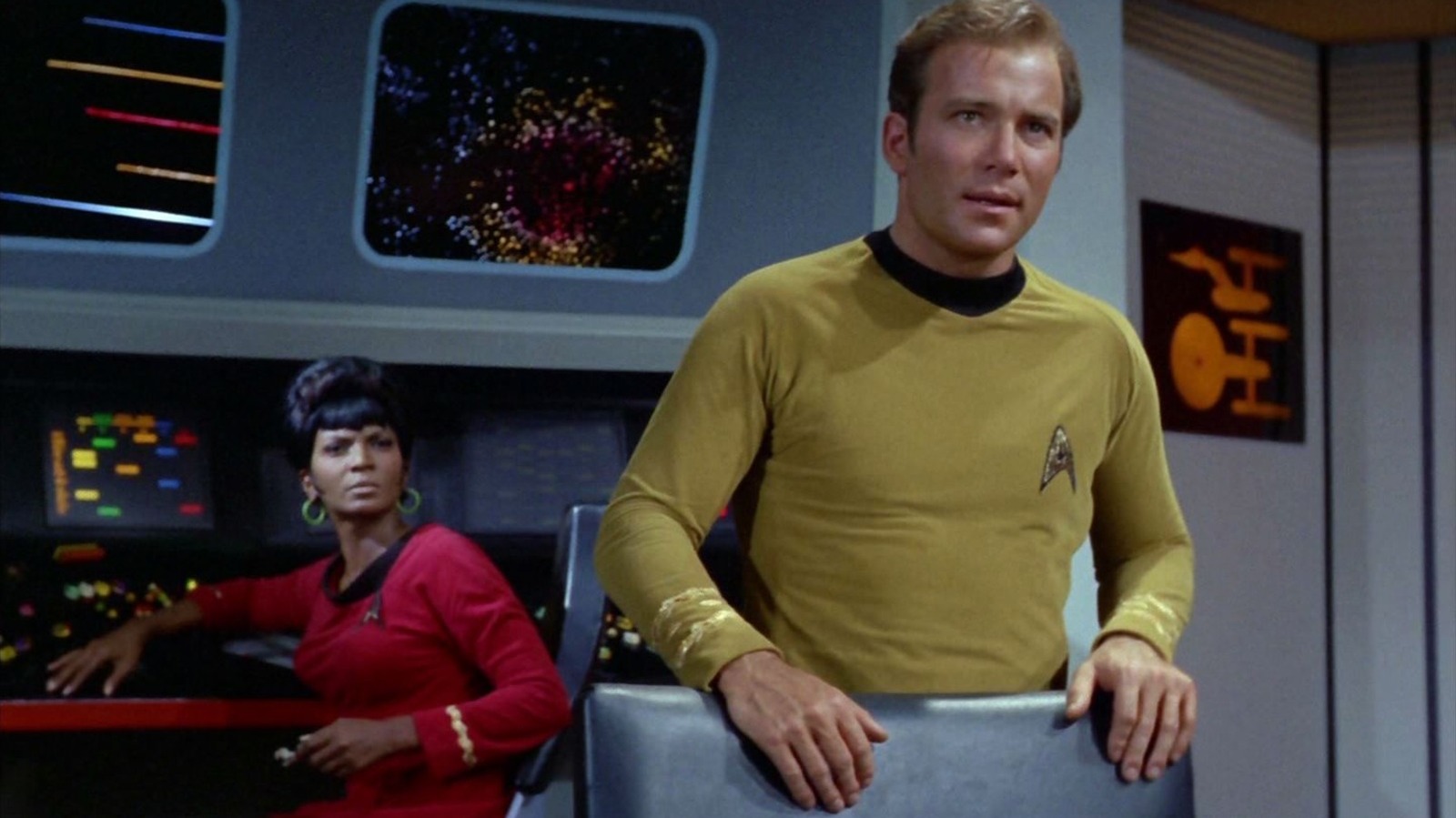
For Nichols, the white pages became a source of heartbreak. She noted in a 1996 interview with Cinefantastique Magazine that she eventually stopped reading the initial drafts entirely. "There were wonderful roles written," she explained. "Gene really meant to achieve that equality of the people, in scripts as well as deed and fact. What happened… is that it kept getting killed in the rewrites."
By waiting for the final, locked-in scripts, Nichols attempted to shield herself from the emotional toll of seeing her character’s agency and dialogue gutted by network censors. This was not a one-time occurrence; it was a repetitive, institutionalized pattern of interference that spanned the show’s three-season run.
The Industry’s Fear of the "Ensemble"
Why would a network actively sabotage a character who was already proving to be a cultural touchstone? According to Nichols, the answer lay in the archaic, rigid hierarchy of 1960s television. At the time, networks were comfortable with the "star system," which prioritized one or two lead actors. In Star Trek, this meant William Shatner (Captain Kirk) and Leonard Nimoy (Mr. Spock).
The rest of the cast was considered secondary, often relegated to the end of the credits. It was a structural limitation that the industry was not yet prepared to abandon. Nichols observed that the studio and the network simply had no frame of reference for an ensemble show where multiple characters held equal weight. "Gene had made me too strong a character," Nichols remarked. "They didn’t want that much involvement [from the supporting cast]."
The industry’s inability to grasp the concept of an ensemble meant that every time Uhura was given a moment of authority or complex dialogue, it was perceived by executives as a challenge to the established star-centric hierarchy. They were not just editing scripts; they were policing the perceived boundaries of television stardom, fearing that audiences would reject a show that dared to distribute importance so broadly.
The Weight of Representation
The suppression of Uhura’s role carried heavy social implications. In an era where Black women were routinely relegated to domestic or stereotypical roles in media, Nichols’ portrayal of a high-ranking officer on a starship was revolutionary. The impact was profound, famously resonating with a young Whoopi Goldberg, who saw Nichols on screen and realized that the horizon of possibility for Black women had shifted.
Perhaps most tellingly, when Nichols considered quitting the show after its first season due to the frustration of these constant rewrites and limited screen time, it was Dr. Martin Luther King Jr. who personally urged her to stay. He recognized that her presence on the bridge was not merely about dialogue lines or scene duration; it was about the visibility of a Black woman in a position of authority. He told her that she could not quit because she was a role model for millions.
The Long Road to Recognition
The implications of this meddling persisted long after the original series concluded. The practice of minimizing the ensemble cast was so entrenched that it took decades to rectify. It was not until the 1991 feature film Star Trek VI: The Undiscovered Country that the entire original cast finally received equal billing—a milestone that corrected a wrong that had persisted since the mid-1960s.
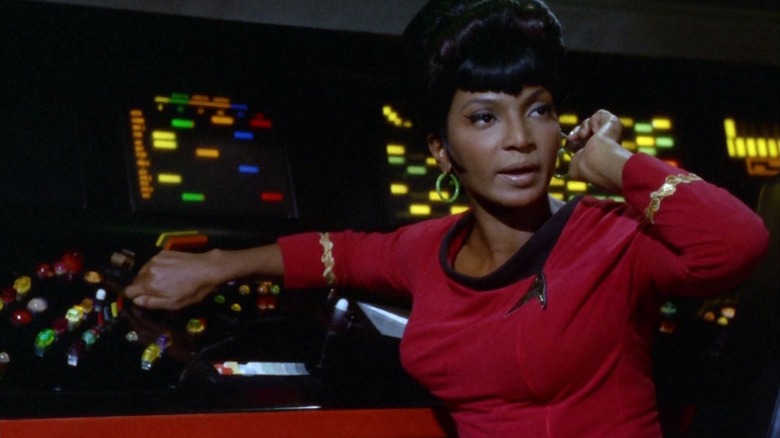
Furthermore, the "Roddenberry Rule"—a mandate introduced in Star Trek: The Next Generation that prohibited interpersonal conflict between main characters—can be seen as an evolution of Roddenberry’s earlier battles. Having spent years fighting the network to preserve his characters’ dignity, Roddenberry eventually imposed his own rigid rules on his writers, perhaps in an attempt to protect the ensemble from further external manipulation.
Conclusion: A Legacy Defined by Resilience
The story of Uhura’s reduced role is a sobering reminder that the "utopian" version of Star Trek was not a gift bestowed by the television industry, but an achievement wrenched from it by the persistence of its creator and the quiet strength of its actors.
While the network executives sought to keep Uhura in the background—visually present but narratively muted—Nichelle Nichols and the character of Uhura transcended the page. They succeeded not because of the studio’s support, but in spite of its interference. Today, as we look back at the original series, we are reminded that the bridge of the Enterprise was never just a set; it was a battlefield for representation, where every line of dialogue kept in the script was a victory against an industry that was not yet ready for the future it was helping to create.











No comments yet. Be the first to join the conversation!