

In the sprawling, gothic landscape of Anne Rice’s The Vampire Chronicles, few dynamics have sparked as much fervor and academic dissection among the fandom as the volatile connection between Armand and Daniel Molloy. As AMC’s adaptation, The Vampire Lestat, expands its reach, the spotlight turns toward the "Devil’s Minion"—a shorthand term used by devotees to describe the profound, often traumatic, and undeniably magnetic bond between the ancient leader of the coven and his mortal-turned-vampire protégé.
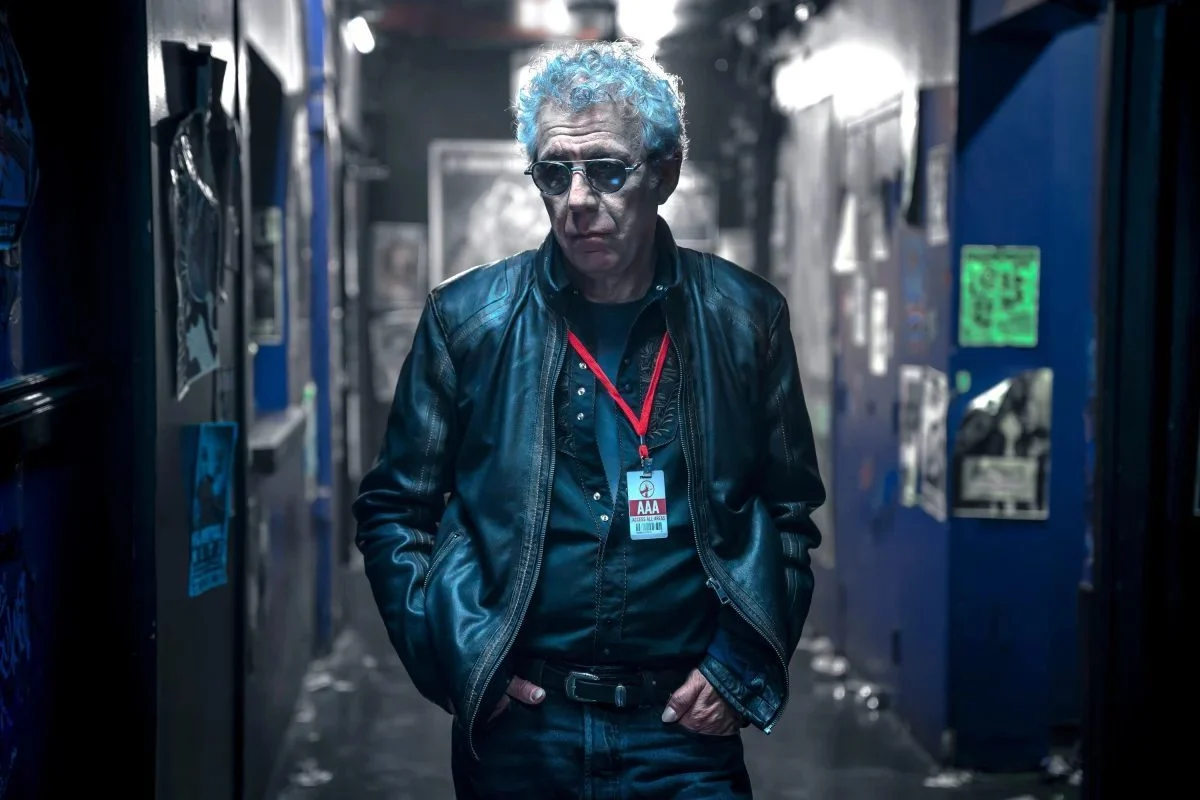
While the new season centers primarily on the flamboyant and enigmatic Lestat de Lioncourt, the peripheral narrative woven around Armand (Assad Zaman) and Daniel (Eric Bogosian) has emerged as a narrative cornerstone, providing a dark, intimate counterpoint to the series’ grander operatic arcs.
Main Facts: The Anatomy of a Gothic Connection
At its core, the relationship between Armand and Daniel is defined by the inescapable gravity of maker and fledgling. It is a connection that transcends simple mentorship; it is a parasitic, codependent, and deeply psychological entanglement.
In the television adaptation, the chemistry between Assad Zaman and Eric Bogosian has been widely praised for its ability to convey decades of unspoken history through nothing more than a glance or a subtle shift in tone. The "Devil’s Minion" dynamic—a term that captures the essence of their historical connection—is not merely a romance or a rivalry; it is a manifestation of the "thin line between love and hate" that the actors themselves have alluded to in promotional interviews.
For the uninitiated, the relationship serves as a lens through which we view the burden of immortality. Daniel, who began his journey as an inquisitive journalist, has been irrevocably altered by his proximity to the supernatural, with Armand serving as both his tormentor and his tether to a world he never asked to inhabit.

A Chronological Descent into Darkness
To understand the current tension in The Vampire Lestat, one must trace the timeline of their entanglement. The narrative does not present their history as a linear progression of events, but rather as a series of fractures that have never quite healed.
The Foundation of Discontent
The early seeds of their connection were sown long before the events of the current season. Even in the brief, acerbic mentions Daniel makes of Armand while speaking to Louis de Pointe du Lac, there is an palpable sense of ache. This is not the nostalgia of a former lover; it is the raw, exposed nerve of someone who has been discarded and reclaimed by a power they cannot hope to outrun.
The Mid-Season Shift
As the first six episodes of The Vampire Lestat demonstrate, the narrative forces these two together even when their dialogue suggests a desire for distance. The "vampiric bond"—that unique, non-verbal frequency of communication shared between maker and fledgling—is depicted here as a double-edged sword. It is a conduit for intimacy, but also a weapon used to inflict psychological distress.
There is a pivotal moment in the latter half of the season’s first act that fans have already begun comparing to the most evocative prose of fan fiction. It is a moment of raw, unvarnished character truth that forces a shift in their status quo, suggesting that despite the manifest hatred Daniel harbors for his maker, the gravitational pull remains absolute.
Supporting Data: The Craft Behind the Screen
The success of this dynamic relies heavily on the performances of Zaman and Bogosian. The casting directors have achieved a rare synergy, allowing the age-old tropes of vampire lore to feel grounded in contemporary psychological reality.

- The Emotional Weight: While the show’s primary focus is Lestat’s journey, the scenes between Armand and Daniel are meticulously crafted to provide depth. These sequences are frequently cited by critics as the "emotional anchors" of the season.
- The Narrative "Fanfic" Factor: The writers have clearly leaned into the fan-favorite status of this pairing. By including moments that acknowledge the intensity of the "Devil’s Minion" trope, the series validates the audience’s investment without sacrificing the integrity of the source material.
- The "Maker" Dynamic: A recurring point of contention and discussion is the nomenclature used to define their relationship. While the script frequently uses the term "Dad" to denote the maker/fledgling dynamic, there is a vocal segment of the audience—and indeed, some within the creative circle—who argue that the subtext points toward a much more complicated, "Daddy" archetype, echoing the themes of power and submission that define the series.
Official Responses and Creative Direction
The production team, led by showrunner Rolin Jones, has been careful to balance the demands of the original novels with the necessity of a fresh television perspective. In interviews, both Zaman and Bogosian have acknowledged the difficulty of playing characters who are fundamentally trapped in a cycle of mutual destruction.
"It’s a thin line between love and hate," Bogosian noted during a recent press junket, reflecting on the paradox of his character’s development. "And Daniel hates Armand. He hates him with a passion that is only possible when you have been made to love someone against your better judgment."
Assad Zaman, in turn, has highlighted the vulnerability inherent in Armand. "He isn’t just a monster. He is a creature of immense loneliness who uses his power as a shield. Daniel is the only one who truly sees through that shield."
Implications: What Awaits in the Finale?
As we look toward the season finale, the implications for the Armand-Daniel arc are significant. The series has set a precedent for subverting expectations, and the "Devil’s Minion" trajectory is no exception.
The Lestat Factor
Because this is, fundamentally, The Vampire Lestat, the protagonists are subject to the whims of the titular character. Lestat’s own complex relationships—most notably his deeply uncomfortable, intense bond with his mother, Gabrielle—serve as a thematic mirror to what is happening between his peers. If the show is willing to explore the boundaries of familial and romantic taboo with Lestat, it stands to reason that no narrative door is closed for the Armand-Daniel pairing.

The Viewer’s Perspective
For the audience, the first six episodes have provided a satisfying, albeit haunting, look at what becomes of these characters when they are forced to confront the wreckage of their past. The fascination lies in the unknown: will they find a form of reconciliation, or will the "thin line" finally snap under the weight of their mutual resentment?
As The Vampire Lestat prepares for its grand debut on June 7, the anticipation surrounding the Armand-Daniel arc remains at an all-time high. It is a testament to the show’s writing that in a story filled with gods and monsters, the most compelling drama is found in the quiet, agonizing, and darkly romantic spaces between two people who were never meant to be together, yet are forever incapable of walking away.
Whether you are a longtime reader of Anne Rice or a newcomer to the neon-soaked, blood-drenched world of AMC’s adaptation, the saga of the "Devil’s Minion" is one that demands your full attention. It is a masterclass in gothic tension, and if the first six episodes are any indication, the finale will be a reckoning that no viewer will soon forget.










No comments yet. Be the first to join the conversation!