

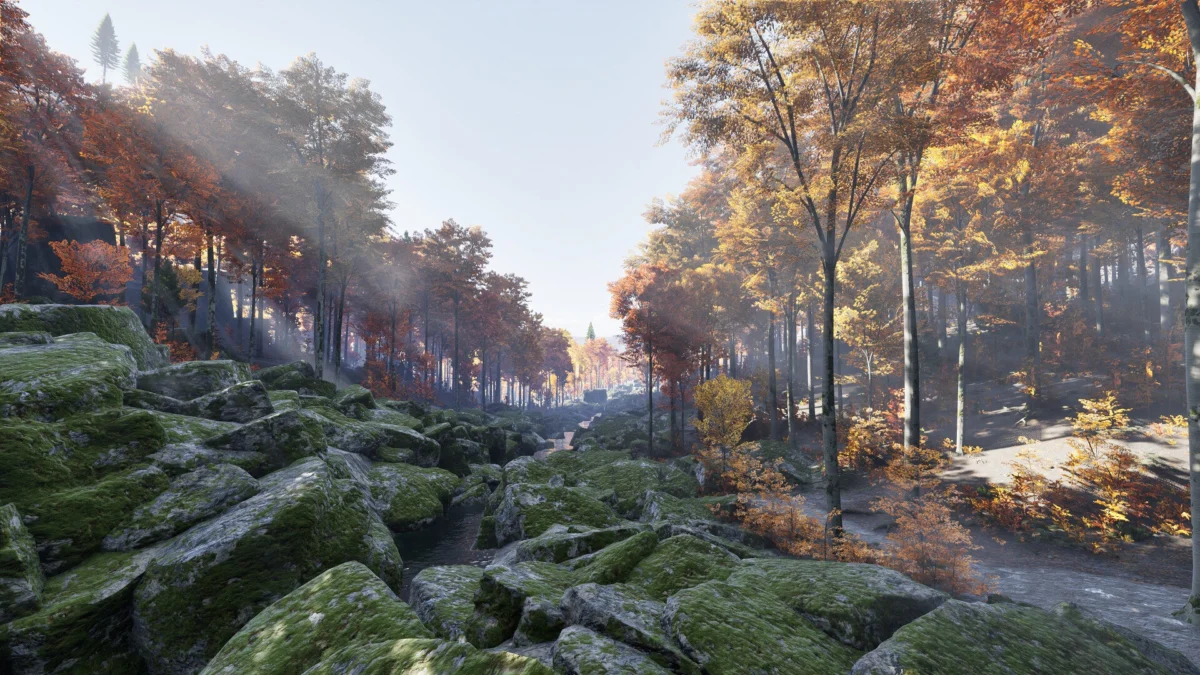
AMSTERDAM, NETHERLANDS – [Date of Publication, e.g., June 20, 2024] – Brendan Greene, the visionary creator behind the global phenomenon PlayerUnknown’s Battlegrounds (PUBG), has announced a significant restructuring of his independent studio, PlayerUnknown Productions. The decision, driven by the limitations of personal funding, will see the indefinite halt of development for the ambitious single-player title, Prologue: Go Wayback!, which will now transition to a free-to-play model for all future users. The studio will consolidate its efforts, focusing on the continued development of its groundbreaking "Melba" technology with a reduced team.
The announcement, delivered via a statement posted on the studio’s official X/Twitter account, underscores the formidable challenges inherent in pioneering large-scale technological innovation within the independent game development sector. Greene candidly acknowledged, "I have reached the limits of how far I can continue to fund this journey in its current form," signaling a strategic pivot to safeguard the core technological aspirations of the company.
The Core Announcement: A Strategic Pivot
The news reverberated through the gaming community, marking a pivotal moment for PlayerUnknown Productions, which Greene established in 2021 after departing from Krafton, the South Korean publisher of PUBG. The studio’s initial mission was audacious: to push the boundaries of virtual world scale through the development of "Melba" technology, while simultaneously applying this innovation in a practical gaming context with Prologue: Go Wayback!.
The Funding Imperative and Studio Restructuring
Brendan Greene’s statement illuminated the economic realities facing even well-regarded independent studios pursuing high-concept projects. The development of cutting-edge technology like Melba, coupled with the creation of an experimental game, requires substantial and sustained financial investment. Greene’s personal commitment, while significant, ultimately reached its threshold. "It has been a hard decision to restructure the studio," the statement read, reflecting the gravity of the situation. This restructuring inevitably entails a reduction in workforce, with the studio prioritizing support for affected employees during this difficult transition. The objective is to streamline operations and allocate resources exclusively to the most promising avenue: the Melba technology.
"Go Wayback!" Shifts to Free-to-Play, Refunds Under Consideration
One of the most immediate and tangible consequences of the restructuring is the fate of Prologue: Go Wayback!. Originally conceived as a single-player open-world emergent survival roguelike, promising a unique journey with every playthrough, the game was available for purchase at approximately $20/£17. Following the announcement, PlayerUnknown Productions confirmed that Go Wayback! will soon become free for all future players through an upcoming update.
For existing players who have already invested in the title via Steam and the Epic Games Store, the studio is actively "investigating offering players who have purchased the game… a way to receive a refund." This commitment to existing customers, while a complex logistical undertaking, aims to mitigate dissatisfaction and honor their early support for the experimental project. The move to free-to-play, while signifying the end of active development, ensures that the game remains accessible, potentially serving as a historical artifact of the studio’s initial ambitions and a showcase of the early iterations of their terrain generation technology.
A Vision Unfolding: The Chronology of PlayerUnknown Productions
To fully appreciate the significance of this announcement, it is crucial to trace the trajectory of Brendan Greene’s career and the founding principles of PlayerUnknown Productions.
From Battle Royale King to Independent Innovator
Brendan Greene rose to international prominence as "PlayerUnknown" – the creative force behind PlayerUnknown’s Battlegrounds. PUBG not only popularized the battle royale genre but also became one of the most commercially successful video games of all time, selling tens of millions of copies and generating billions in revenue. His innovative approach to multiplayer survival games solidified his status as a major figure in the industry.
However, Greene’s ambitions extended beyond the confines of existing game genres. He expressed a deep-seated desire to explore the fundamental architecture of virtual worlds, to create digital spaces of unprecedented scale and complexity. This vision ultimately led to his amicable departure from Krafton in 2021. Greene’s move was not a retirement but a deliberate step towards greater creative freedom and the pursuit of a long-held dream. As he stated at the time, "I’m so thankful to everyone at Krafton for taking a chance on me and giving me the opportunities I’ve been given. Today, I’m excited to take the next step on my journey to create the kind of experience I’ve envisioned for years." This statement perfectly encapsulates the spirit that would define PlayerUnknown Productions.
The Ambitious Genesis of PlayerUnknown Productions
Founded in Amsterdam, Netherlands, PlayerUnknown Productions began its journey as an independent studio with a clear, albeit challenging, mandate. The studio’s formation was predicated on an "ambitious vision for the future," as detailed in their recent statement. The core goal was not merely to create another game, but to develop foundational technology capable of transcending the current limitations on the size and complexity of virtual environments. This undertaking placed the studio squarely in the realm of research and development, blurring the lines between game development and pure technological innovation.
The choice of Amsterdam as a base reflected a desire to tap into a diverse talent pool and foster a creative, experimental environment away from the traditional pressures of large-scale commercial game development. Greene’s reputation undoubtedly attracted top-tier talent eager to contribute to a project with such far-reaching implications.
Dual Development Tracks: Melba and Go Wayback!
From its inception, PlayerUnknown Productions operated on two distinct but interconnected development tracks:
- Melba Technology Development: This involved building a dedicated research team focused on developing the core technology designed to "break the boundaries of scale." The specifics of Melba have always been somewhat shrouded in conceptual ambition, hinting at procedural generation, advanced streaming, and innovative rendering techniques that could allow for virtual worlds vastly larger and more detailed than anything currently possible. The vision was to create persistent, dynamic, and believable environments that could truly feel like alternate realities.
- Prologue: Go Wayback! Game Development: Simultaneously, a separate team was tasked with creating Prologue: Go Wayback!. This game was not just a standalone title; it was explicitly designed as "our first practical application of our terrain generation technology." In essence, Go Wayback! served as a proof-of-concept and a testing ground for the nascent Melba technology. Its roguelike nature, emphasizing emergent gameplay and unique journeys, aligned perfectly with the idea of exploring vast, procedurally generated landscapes that Melba aimed to enable. The game was an early access title, reflecting its experimental nature and the iterative process of development.
This dual-track approach, while ambitious, presented significant logistical and financial challenges, as it essentially required funding two distinct projects simultaneously, one being pure R&D and the other a commercial product that also served as a tech demo.
Unpacking the Technology: Melba and the Vision for Virtual Worlds
The heart of PlayerUnknown Productions’ ambition lies in its Melba technology. Understanding its potential helps contextualize the difficult decisions now being made.
Melba: Pushing the Boundaries of Scale
The studio’s stated goal for Melba is to "develop technology that can break the boundaries of scale, which currently limit how large virtual worlds can be." This is a monumental technical challenge. Traditional open-world games, while impressive, often rely on pre-designed maps, clever loading zones, and various tricks to create the illusion of vastness. Truly massive, seamless, and dynamic virtual worlds pose significant hurdles in terms of:
- Procedural Generation: Creating believable and varied terrain, flora, fauna, and environmental details algorithmically, rather than hand-crafting every element.
- Data Streaming and Management: Efficiently loading and unloading vast amounts of data as players move through the world, without performance hitches.
- Server Architecture: Supporting a truly massive multiplayer experience (though Melba’s initial application wasn’t strictly multiplayer, the underlying tech could support it) across expansive areas.
- Asset Creation and Optimization: Developing systems to generate and manage an unprecedented volume of assets without overwhelming system resources.
Melba aims to tackle these challenges head-on, potentially laying the groundwork for future generations of virtual environments, metaverse applications, or even highly realistic simulation platforms. The decision to narrow the focus to Melba indicates a strong belief in its long-term transformative potential, even if it comes at the cost of immediate game releases.
Prologue: Go Wayback! – A Testbed for Innovation
Prologue: Go Wayback! was introduced as a "single-player open-world emergent survival roguelike where ‘every journey is unique’." This description hints at a game designed to showcase Melba’s capabilities in generating diverse and unpredictable environments. In a roguelike, player death often means starting a new run, which would naturally lend itself to exploring new, procedurally generated terrain each time, demonstrating the technology’s ability to create endless variations.
The game’s premise likely involved players navigating these vast, dynamically generated landscapes, facing emergent challenges, and surviving through resourcefulness. While specific gameplay details were somewhat sparse, the emphasis on exploration, discovery, and unique experiences aligned perfectly with the vision of boundless virtual worlds. The shift to a free model means that while the game won’t receive further development, it can still serve its original purpose as a public demonstration of the underlying Melba tech, albeit in a frozen state.
Official Statement and Immediate Priorities
Brendan Greene’s statement on X/Twitter served as the primary official communication regarding the restructuring. Its candid tone offered a rare glimpse into the personal and financial pressures faced by even highly successful industry figures when pursuing ambitious independent ventures.
Brendan Greene’s Candid Assessment
Greene’s admission, "Unfortunately, I have reached the limits of how far I can continue to fund this journey in its current form," is a stark reminder of the financial realities of game development. Even with the immense personal wealth likely accumulated from PUBG’s success, funding a cutting-edge research and development studio for several years without significant external investment or a revenue-generating product can quickly deplete resources. His transparency in this regard is notable, offering insight into the often-invisible struggles behind game development. The phrase "in its current form" implies that the previous operational model, likely involving a larger team and dual project development, was no longer sustainable.
Supporting Affected Employees
A crucial aspect of the official statement was the commitment to the team members impacted by the restructuring. "Our immediate priority is to support our affected employees to the best of our abilities during this difficult transition," the studio affirmed. This indicates that the restructuring involves layoffs, a regrettable but often unavoidable consequence of such strategic pivots. Providing support, whether through severance packages, outplacement services, or professional networking assistance, is a standard and ethical practice during such difficult times, reflecting the studio’s responsibility towards its workforce. The reduction to a "smaller team" implies a focused core group will remain to continue the Melba development.
Broader Implications for the Gaming Landscape
The restructuring at PlayerUnknown Productions carries several implications for the gaming industry, independent developers, and the future of virtual world technology.
The High Stakes of Independent Game Development
Brendan Greene’s experience highlights the inherent risks and substantial financial requirements of independent game development, particularly for projects that aim to innovate fundamentally rather than iterate on existing formulas. Even with a proven track record and considerable personal resources, sustained R&D without immediate commercial returns is a precarious endeavor. This situation serves as a cautionary tale for aspiring independent studios, underscoring the need for robust funding strategies, clear milestones, and potentially more conservative initial scopes. It also illustrates that passion and vision, while essential, are not always sufficient to overcome the economic realities of a competitive and capital-intensive industry. The pressure to deliver a viable product or secure external investment is constant.
The Future Trajectory of Melba Technology
The decision to funnel all remaining resources into Melba technology suggests a profound conviction in its ultimate value and potential. While the team size has been reduced, the core mission of "breaking the boundaries of scale" remains intact. The leaner operation might necessitate a more focused, perhaps slower, development cycle, but it also allows for a singular, undiluted pursuit of this ambitious goal. The future of Melba could involve licensing the technology to other developers, partnering with larger entities, or eventually integrating it into a new game project once it reaches a more mature and demonstrable state. The success or failure of Melba will be a significant data point in the ongoing quest for truly expansive and dynamic virtual worlds. Its progress will be closely watched by those interested in the evolution of digital environments and the nascent metaverse.
Impact on Players and the Free-to-Play Model
For players, the halting of Go Wayback!’s development means no new content, features, or significant bug fixes. However, the game becoming free offers a unique opportunity for a wider audience to experience what was developed, even if it’s an incomplete vision. The refund investigation, while complex, demonstrates a commitment to early supporters. This situation also reflects a broader trend where experimental or early access games sometimes pivot or cease development, highlighting the risks players undertake when investing in such titles. The free-to-play model, in this context, allows the game to exist as a legacy piece, accessible to anyone curious about PlayerUnknown Productions’ initial gaming endeavors.
Brendan Greene’s Enduring Legacy and Future Endeavors
Brendan Greene’s journey continues to be one of bold ambition and a willingness to challenge conventions. From modding ARMA 2 to creating PUBG, and now pursuing Melba, he has consistently aimed to innovate. This restructuring is a setback for Go Wayback!, but it also reaffirms his dedication to his core vision for virtual worlds. His legacy will not just be defined by PUBG but also by his persistent efforts to push technological envelopes. The focus on Melba suggests that Greene remains committed to shaping the future of digital interaction and environment creation, even if the path is fraught with financial and developmental hurdles. His next move, once Melba reaches a significant milestone, will undoubtedly be watched with keen interest by the entire industry.
Conclusion: A Challenging Chapter, A Persistent Vision
The restructuring at PlayerUnknown Productions marks a challenging chapter in Brendan Greene’s post-PUBG career. It is a stark reminder of the inherent difficulties in pioneering new technologies and games, even for individuals with immense success and resources. The decision to halt Prologue: Go Wayback! and focus solely on Melba technology, while painful, is a strategic imperative born from financial realities.
As the studio navigates this leaner, more focused path, the gaming world will be watching to see how Melba technology evolves. Brendan Greene’s "ambitious vision for the future" persists, now refined and concentrated on its most fundamental component. This pivot underscores that innovation often demands difficult choices, but the pursuit of groundbreaking ideas, however arduous, remains a driving force in the ever-evolving landscape of virtual entertainment.












No comments yet. Be the first to join the conversation!